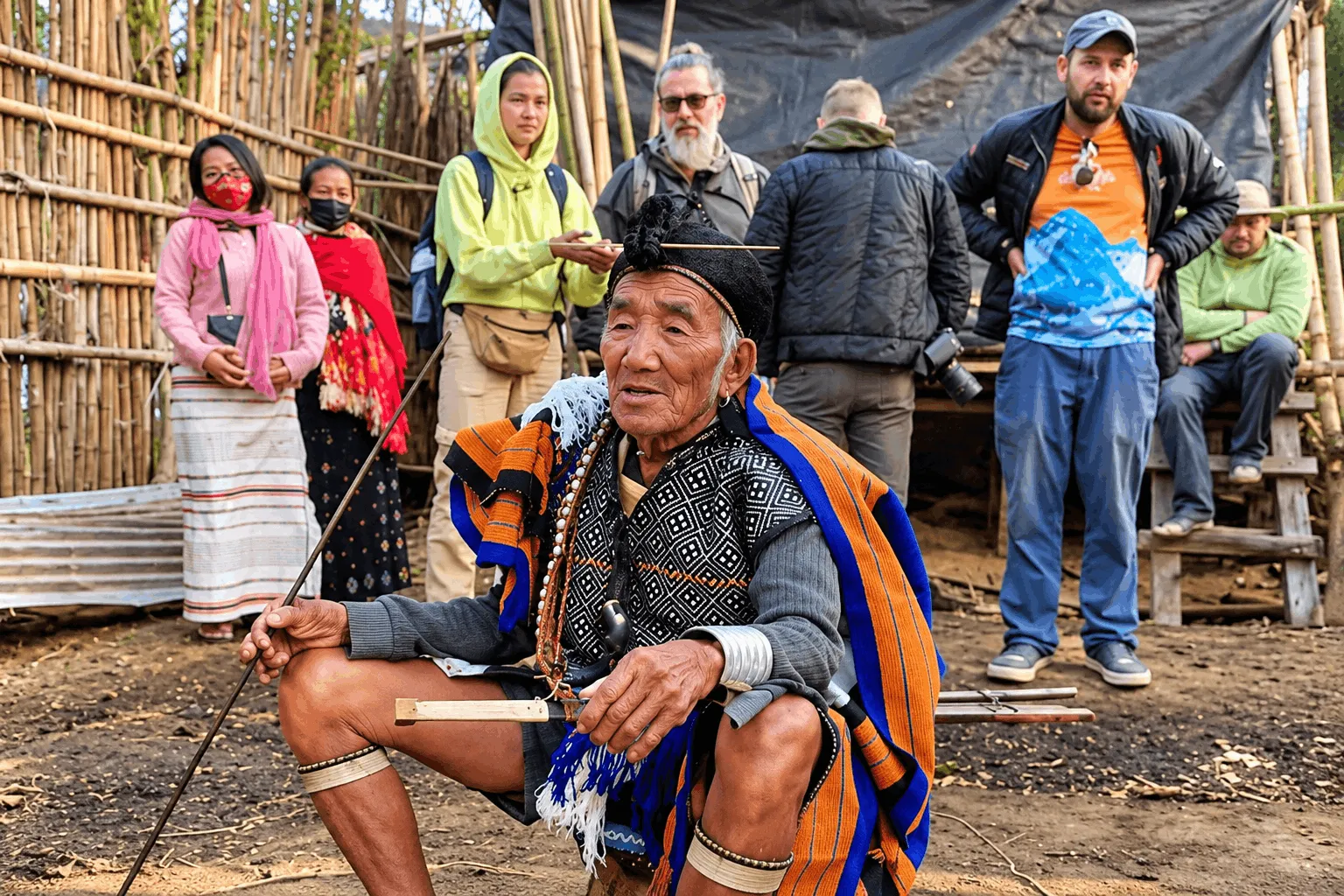
Northeast India is home to a great many communities, each with its own language, belief, dress, food and way of organising village life. For travellers, that variety is a large part of the region's appeal. For the people who live there, it is simply home.
That difference in perspective is why responsible behaviour matters. A visit that feels small to you can be disruptive to a village. A photograph that takes a second can expose a ceremony to thousands of strangers. A purchase made carelessly can undercut the people who make the object. Responsible tribal tourism is about noticing these effects before they happen and choosing to travel in a way that treats communities as hosts with their own say.
This guide offers practical advice. It does not describe rules for any particular community, because those differ and are theirs to set. Where we mention specifics, they are flagged for checking.
What Is Responsible Tribal Tourism?
Responsible tribal tourism means visiting communities in ways that respect their autonomy, culture and environment, and that leave them better off or at least no worse off. It puts decisions in the hands of the people being visited, and it asks visitors to adapt to local expectations, not the other way round.
The related terms overlap. Ethical tribal tourism emphasises fairness and consent. Sustainable tribal tourism looks at long-term effects on culture, economy and environment. Community-based tourism refers to arrangements where a community plans, runs or shares in the benefits of tourism. Cultural tourism is the broader category of travel focused on heritage and living traditions.
Responsibility also runs in both directions. Operators, guides and tourism departments have duties as well, and a traveller cannot make up for a poorly managed system alone. But individual choices still count, and they shape what hosts experience.
Why Cultural Respect Matters
Many communities in the region have faced outside attention for generations, often framed through stereotypes about being remote, exotic or frozen in time. That framing does real harm. People live modern lives, go to school, use phones, run businesses and hold varied views, while also keeping, adapting or sometimes setting aside traditions.
Respect starts with accepting that you are a guest, and that the community decides what it shares. Some festivals are open, while some rituals are private. Some places are sacred, and some knowledge is held by particular people. None of this is meant to inconvenience visitors. It reflects a community's right to manage its own culture.
It also protects the quality of the experience. Hosts who feel respected are more likely to welcome visitors, answer questions and share stories. Hosts who feel used may stop offering access altogether, and that is a loss for everyone.
How to Visit Tribal Villages Respectfully
Customs differ from village to village, so the most useful habit is to ask. Your guide or host is the best source of local guidance.
Ask permission before entering private spaces. Homes, compounds, granaries, shrines and fields are not public attractions. Wait to be invited, and ask before going inside or taking anything.
Follow local instructions. If a village elder, host or guide asks you to stay on a path, remove shoes, lower your voice or leave an area, do so without argument. You may not be told the reason, and you do not need it.
Respect ceremonies. Treat prayer, ritual and festival events as community occasions. Stay behind lines, keep your distance unless invited and do not interrupt. If you are unsure whether you may attend, ask in advance.
Avoid intrusive questions. Ask about food, crafts or the landscape before asking about personal beliefs, family matters or politics. Let conversations develop naturally and accept it if someone prefers not to answer.
Avoid disturbing daily activities. Villages are working places. People farm, cook, weave and care for children. Do not block paths, crowd people at work or treat daily life as a display.
Dress modestly unless you are told otherwise, arrive at agreed times and keep group sizes small. A smaller group is easier for a village to host and less likely to overwhelm it.
Photography and Social Media Etiquette
Photography is where many visitors cause the most harm without meaning to.
Ask before photographing people. Ask each person, in a way they can easily refuse. A guide can help with language. Do not assume that a smile means yes, and do not pay for photographs unless the person has suggested it and your guide agrees it is appropriate.
Ask before photographing ceremonies. Rituals, funerals, prayers and sacred spaces may not be photographed at all, and that can differ even between events in the same village. If permission is given, follow any conditions about flash, distance and timing.
Respect requests not to photograph. Accept a refusal immediately and without persuasion. Do not take pictures from a distance as a workaround.
Avoid turning sensitive cultural practices into social-media content. A reel of a ritual can reach audiences the community never intended, and it can be copied and reused. If you would not be comfortable with a stranger filming your family's religious observance, think carefully.
Be careful when geotagging. Exact location tags can send crowds to small villages or sacred places that cannot handle them. Consider tagging only the wider region, and ask your host whether a place should be named at all.
Children deserve particular care. Ask parents or guardians before photographing them, and avoid posting images of children online. Photography near border or security-sensitive areas may be restricted, so check local rules. Avoid flying drones near villages, ceremonies or sacred places unless you have clear permission.

Supporting Local Communities
Where your money goes matters as much as how you behave. Spending locally keeps more of it in the community.
Local guides. Guides from the area know the customs, speak the languages and can arrange visits properly. Pay a fair rate and ask how they work with villages.
Homestays. A family-run stay puts income directly into households and gives you a closer view of daily life. Expect simple facilities.
Local restaurants and food stalls. Eat where local people eat, and buy local produce where you can.
Local transport. Using local drivers and vehicles spreads income more widely than big outside operators.
Local artisans and handicrafts. Buying from makers supports skills and livelihoods. More on this below.
Community-based tourism initiatives. Some communities run or co-manage visitor programmes. These are worth supporting when they are genuinely led by the community.
Ask your operator how much of what you pay reaches local people. A transparent answer is a good sign, and a vague one is worth noticing.
Buying Tribal Handicrafts Responsibly
Handwoven textiles, cane and bamboo work, beadwork and woodcraft are valuable expressions of skill and identity. Buying them well helps artisans. Buying them badly can harm them.
Buy directly from artisans where possible. This puts more money in the maker's hands. If you buy from a shop or market, ask whether the items come from local makers.
Ask about authenticity. Ask who made the piece, where, with what materials and how long it took. Be wary of items that look mass-produced or very cheap, since imitations and factory copies exist in many markets.
Respect traditional designs. Some patterns, garments and ornaments carry meaning for particular clans, ages or roles, or are used only for ceremonies. Do not ask artisans to copy them for a quick sale, and do not copy a design for commercial use without the community's agreement. If an item is ceremonial, it may not be for sale.
Avoid exploitative bargaining. Weaving a textile can take days or weeks. Haggling hard over small amounts hurts makers far more than it helps you. Pay the asking price when it is fair.
Avoid anything made from wild animal parts or protected materials. Do not buy items that appear to involve protected species, and ask if you are unsure. Check whether any item can legally be carried or exported.
Food and Homestay Etiquette
Sharing a meal is often central to hospitality. Accept it gratefully.
Tell your host about allergies, dietary needs and religious restrictions before you arrive. If you are offered something you cannot or do not wish to eat or drink, decline politely and say why. Do not make a show of refusing, and do not comment on the food as strange or unusual. Rice-based drinks are part of hospitality in some places, so ask whether and how to take them, and never pressure others.
In a homestay, you are a guest in a family home. Follow the household's rhythm on meals and quiet time, ask before using spaces such as kitchens, and remove your shoes where asked. Offer to help, and accept it if help is declined. Keep noise low, and ask before inviting others into the house. Pay what was agreed on time, and consider leaving a modest gift or tip in line with your host's advice. Ask the host what is appropriate, and do not assume.
Facilities may be simple, with shared bathrooms, limited hot water and intermittent power. Plan for that, and avoid complaining in front of your hosts.
Environmental Responsibility
Communities in the region often depend on forests and rivers for food, water and income, so protecting them is part of respecting people.
Avoid plastic waste. Waste collection can be limited in rural areas, and a piece of plastic left behind may stay there. Bring as little single-use packaging as possible.
Carry reusable items. A refillable bottle, a cloth bag and your own cutlery cut down what you leave behind. Carry your rubbish out if no system exists.
Do not litter. This includes small items such as wrappers, cigarette ends and batteries.
Respect forests and rivers. Keep soap, shampoo and chemicals out of water. Do not collect plants, animals, stones or other natural items. Keep noise low and do not feed or chase wildlife.
Stay on designated routes where applicable. Paths protect fields, sacred areas and fragile ground. Follow your guide.
Avoid damage to natural or cultural sites. Do not climb on structures, write on walls or move ritual objects.
Follow forest-department and local rules. Entry to protected areas often needs permission.

What NOT to Do During Tribal Tourism
- Do not enter homes, compounds or sacred places without an invitation.
- Do not photograph people, children or ceremonies without clear permission.
- Do not offer money, sweets or gifts to children, and ask your guide before giving anything to anyone.
- Do not treat villages, people or rituals as entertainment or a photo opportunity.
- Do not use stereotypes, or describe people as primitive, backward or untouched.
- Do not interrupt ceremonies or demand performances.
- Do not touch sacred objects, shrines or ritual items.
- Do not post exact locations of sensitive places online without asking.
- Do not bargain aggressively over crafts or buy items made from wild animal parts.
- Do not leave litter, or pollute rivers and forests.
- Do not drink alcohol in front of people or at events where it would be inappropriate, and ask your host about local expectations.
- Do not ignore local instructions, even when they seem inconvenient.
- Do not fly drones near villages or ceremonies without permission.
Responsible Tribal Tourism in Arunachal Pradesh
Arunachal Pradesh is home to many distinct communities, and travellers moving between valleys may meet very different customs within a day's journey. Treat each place on its own terms. Avoid describing "Arunachal culture" as if it were uniform, and try to learn each community's name for itself.
Practical points apply. Entry to the state is regulated, and Indian citizens who are not residents generally need an Inner Line Permit, while foreign nationals have separate requirements. Rules and procedures change, so verify them with official sources. Many areas are remote, with limited connectivity, simple accommodation and roads that are affected by rain. Plan extra days, keep your schedule flexible and use local guides who know the area.
Some places have additional rules, such as protected forests, border areas and sacred sites. Ask your operator and follow local instructions. For regional planning, for context on the wider region, read Tribes of Northeast India.
Learning About Communities Before You Visit
Research is a form of respect. Before you travel, learn the following:
Community history. Read about the people you will meet, preferably from sources written by community members or developed with them.
Local customs. Learn about greetings, dress, food and any taboos that your host can explain.
Photography etiquette. Ask your host or operator what is acceptable before you arrive.
Festival rules. If you plan to attend a festival, find out what is open to visitors and what is not. See our Tribal Festivals of Northeast India.
Village-specific guidance. Ask your guide or host about anything particular to the place you are visiting.
Our community guides may help: Nyishi Tribe Guide and Apatani Tribe Guide.
How Tribal Tourism Can Benefit Local Communities
Tourism done well can bring real benefits. It can provide income for households through homestays, guiding, food and crafts. It can give younger people reasons to stay in or return to their villages. It can support the continuation of crafts, languages and festivals by creating interest and demand. It can also give communities a platform to tell their own stories.
None of these outcomes is automatic. Tourism can also bring pressure, from crowds and waste to commercialisation of ritual and changes in local economies. Benefits are more likely when communities have a say in whether tourism happens, how it is managed and how income is shared. Visitor numbers need to stay within what a village can handle, and benefits should reach households broadly and not only a few.
As a traveller, you can help by choosing operators who work openly with communities, travelling in small groups and paying fairly. Tribal Discovery Tour aims to follow these principles.
Frequently Asked Questions
What is responsible tribal tourism?
It means visiting tribal communities in ways that respect their culture, autonomy and environment, and that benefit them fairly. The community decides what it shares.
How should tourists behave in tribal villages?
Ask permission before entering private spaces, follow local instructions, dress modestly, respect ceremonies and avoid disturbing daily activities.
Can tourists photograph tribal people?
Only with clear permission. Ask each person, accept a refusal and never photograph rituals or sacred places without consent.
How can tourists support local communities?
Use local guides, homestays, restaurants and transport, buy crafts directly from makers and choose genuine community-based initiatives.
Is it appropriate to buy tribal handicrafts?
Yes, when you buy respectfully, ideally directly from makers, at fair prices. Avoid sacred or ceremonial items and anything made from protected materials.
How should visitors behave during tribal festivals?
Ask whether visitors are welcome, stay behind lines, dress modestly, ask before photographing and follow organisers' instructions.
What should tourists avoid?
Avoid entering homes uninvited, photographing without permission, treating culture as entertainment, using stereotypes, littering and ignoring local guidance.
How can travellers reduce environmental impact?
Avoid single-use plastic, carry reusable items, take your rubbish out, keep chemicals out of rivers and stay on designated routes.
What is community-based tourism?
It is tourism that a community plans, runs or shares in, so that decisions and benefits stay with the people who live there.
How can I plan a respectful tribal tourism trip?
Research the communities, use local guides and homestays, confirm festival and permit details, travel in a small group and follow local guidance.