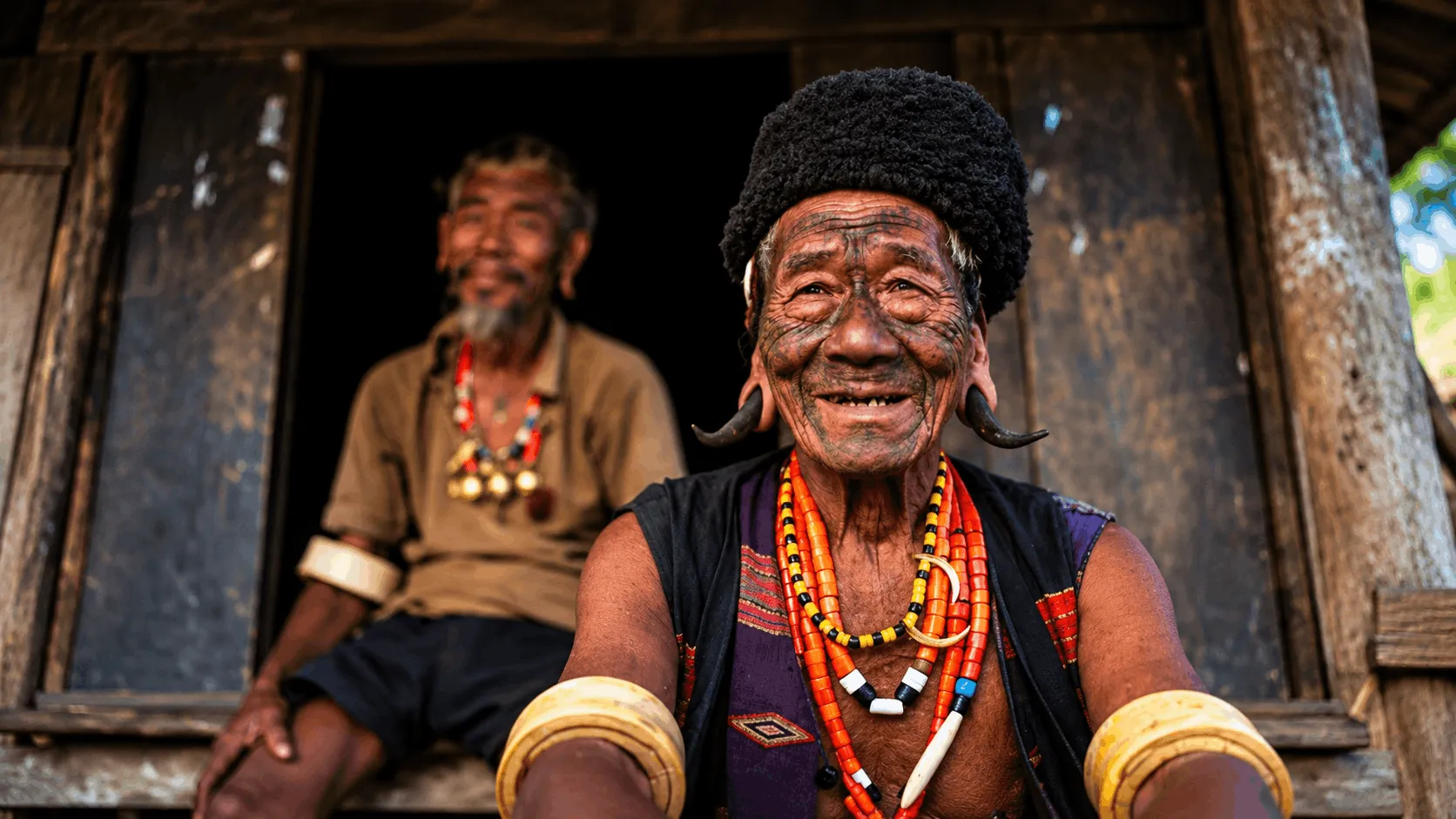
Northeast India is one of the most culturally varied regions in the country. Hills, river valleys and plains hold communities that speak different languages, follow different customs and tell their own histories. Many of them have lived in these landscapes for generations, and they would not describe themselves as part of one single culture.
For travellers, that variety is both the appeal and the responsibility. Learning a little before you arrive helps you ask better questions, avoid assumptions and treat people as hosts and neighbours, not as exhibits. This guide introduces the tribal communities of the region state by state, outlines the cultural themes that recur and others that do not, and explains how to travel respectfully. It is an overview, and each community deserves its own deeper reading from sources written by or with its members.
How Many Tribal Communities Are There in Northeast India?
There is no single number worth quoting here. The answer depends on who is counting and how. India's constitution recognises Scheduled Tribes through state-wise lists, and those lists differ from state to state and have been revised over time. Within each recognised tribe there are often sub-groups, clans and dialects that people consider important.
What can be said safely is that the region is exceptionally varied. Languages belong to several families, broadly including Tibeto-Burman, Austroasiatic and Tai languages, and neighbouring villages can speak languages that are not mutually understood. Faiths include Christianity, Buddhism, Hinduism and a range of indigenous belief systems. Social structures differ too, with some communities tracing descent through the mother and others through the father.
Northeast India is usually described as eight states. This article covers the seven that make up the traditional grouping, and the eighth, Sikkim, is outside its scope. Travellers should also remember that not every community in the region is tribal, and that tribal identity is a legal and social category, not a measure of how traditional or modern someone is.
Which States of Northeast India Have Major Tribal Communities?
Every state in this list has significant tribal communities, though their size, history and political status vary. The names below are illustrative, not complete, and they are not a ranking.
Arunachal Pradesh
Arunachal Pradesh is home to a large number of communities, spread across river valleys and mountain districts.
The Monpa live mainly in the Tawang and West Kameng areas and are associated with Tibetan-style Buddhism. The Apatani of Ziro Valley are known for their wet-rice farming and for their distinctive social and ritual life. The Idu Mishmi live largely in the Dibang Valley region, and the wider Mishmi group includes other communities. The Nyishi are widely documented as one of the larger communities in the state. The Adi live along the Siang and neighbouring valleys.
Others include the Galo, Tagin, Tangsa, Nocte, Wancho, Singpho and Khamti, the last of whom follow Theravada Buddhism. Many belong to communities who practise indigenous faiths such as Donyi-Polo, alongside Christian and Buddhist communities.
Nagaland
Nagaland is home to a number of Naga tribes, each with its own language and customs. Names commonly cited include the Angami, Ao, Lotha, Sumi, Konyak, Chakhesang, Chang, Phom, Rengma, Sangtam, Yimkhiung, Khiamniungan and Zeliang. Village identity, clan and land are central to community life. Christianity is widely practised today, and older customs continue in many forms.
Meghalaya
The Khasi, Jaintia (also called Pnar) and Garo are the three main tribal groups. A well-documented feature across these communities is matrilineal descent, with family lineage and, in many cases, inheritance passing through the mother's line. The Khasi and Jaintia languages belong to the Austroasiatic family, while Garo is Tibeto-Burman. The state is also known for its living root bridges, shaped over time by communities in the Khasi and Jaintia hills.
Assam
Assam's population includes many communities, and the tribal ones include the Bodo, Karbi, Dimasa, Mising, Tiwa, Rabha, Deori and Sonowal Kachari, among others. They live in the hills and in river plains, and the state's culture is a mixture shaped by many groups over time. Some festivals are shared widely across communities, while others belong to particular groups.
Manipur
Manipur's hills are home to a number of tribal communities, commonly grouped as Naga and Kuki-Zo communities, among others. Tangkhul, Mao, Maram, Zeme, Liangmai and Rongmei are examples among the Naga groups, and Thadou, Paite, Hmar and Vaiphei are examples among Kuki-Zo groups. The state has faced serious ethnic tensions in recent years, and travellers should check current official advisories and local conditions before planning any visit.
Mizoram
Mizoram's population is largely made up of communities often grouped under the Mizo name, with a number of sub-groups and neighbouring peoples such as the Lai and Mara. Church life is central to social life for many. Traditional music, dance and festivals continue, including the well-known bamboo dance, Cheraw.
Tripura
Tripura's tribal communities include the Tripuri (Debbarma), Reang (Bru), Jamatia, Chakma, Halam and Mog, among others. The state has a tribal autonomous council for part of its territory. Bengali-speaking communities form a large part of the population, and tribal cultures exist alongside them.

Culture and Traditions of Northeast Indian Tribes
The safest summary is that there is no single "tribal culture" here. What follows are themes that appear in many places, with the understanding that each community does things its own way.
Traditional lifestyles. Many communities have long histories of farming, forest use and fishing. Shifting cultivation, often called jhum, is documented in many hill areas, and it is debated in policy circles, so it is better described neutrally than praised or condemned. Apatani wet-rice farming, combined with fish in some fields, is a well-known example of a different system. Modern life has added schooling, jobs and migration, and many people live between traditional and contemporary worlds.
Clothing. Textiles are a major form of identity. Weaving, often on a backstrap or handloom, produces patterns that can mark a community, clan or occasion. Everyday dress has often changed, but traditional clothes and jewellery appear at festivals and ceremonies.
Food. Rice is central across much of the region, with local vegetables, bamboo shoots, fermented preparations, fish and meat depending on the community. Dietary rules differ by household and faith, so ask before assuming.
Crafts. Bamboo and cane work, weaving, wood carving, pottery and metalwork are practised in various places. Techniques and designs are tied to communities and are not interchangeable.
Agriculture, music and dance. Farming calendars shape festivals, and songs and dances often accompany sowing and harvest. Instruments, rhythms and dance styles vary widely.
Oral traditions. Many communities have passed on history, law and stories orally, and some have since developed written scripts. Elders and storytellers hold important knowledge.
Community life and nature. Villages often organise around councils, clans or customary institutions, and land is frequently held collectively. Many communities have close relationships with forests and rivers, expressed in belief, custom and practical stewardship. Be careful not to romanticise this. People are neither inherently "closer to nature" nor frozen in the past.
Famous Tribal Communities and Where to Learn About Their Cultures
A short introduction cannot do justice to any of these communities. Use these as starting points, then read more from sources produced by the communities themselves.
Monpa. Associated with Tawang and West Kameng, with Buddhist monasteries central to community life.
Apatani. Known for Ziro Valley, its farming system and distinct social customs.
Idu Mishmi. Associated with the Dibang Valley region and the wider Mishmi Hills, with their own language and traditions
Nyishi. One of the larger communities in Arunachal Pradesh, with strong traditions of dress and ceremony.
Khasi, Jaintia and Garo. The three main communities of Meghalaya, each with its own language, festivals and customs.
Naga communities. The many tribes of Nagaland and neighbouring areas, each with its own traditions.
Tribal Festivals of Northeast India
Festivals matter because they carry community history, belief and social life. Many are tied to the agricultural year, with ceremonies for sowing, harvest, thanksgiving or remembrance. They often involve music, dance, food, traditional dress and rituals that outsiders may not be invited to see.
Some festivals are open to visitors, and others are private or sacred. Dates can depend on a lunar calendar, community decisions or local conditions, and they change from year to year, so I have not listed any. If you plan a trip around a festival, check with local organisers or tourism offices, and be ready for changes.
Learn more in our Tribal Festivals of Northeast India.
Tribal Villages and Cultural Tourism
Visiting a village can be rewarding when it is done with permission and in a way that benefits the community.
Village visits. Go through a local host, guide or community organisation, and treat the visit as entering someone's home. Do not wander into private compounds or sacred areas.
Homestays. Staying with a family offers a closer understanding of daily life, and it puts income directly into households. Facilities are often simple.
Local guides. Guides from the community can explain customs accurately and tell you what is appropriate. Pay a fair rate.
Handicrafts. Buy directly from makers where possible, and ask about the materials and meaning behind a piece.
Local food. Eat what is offered with thanks, and ask about ingredients. Meals are often one of the best ways to connect.
Community-based experiences. Some villages have organised cultural programmes or visitor committees. These usually have rules about timing, dress and photography. Follow them.
Responsible Tribal Tourism
Respectful travel is not optional, since the people you meet live in the places you are visiting.
Ask before photographing people, homes, textiles and ceremonies, and accept a refusal gracefully. Respect ceremonies by observing quietly, following instructions and staying out of sacred spaces unless invited. Follow local rules, which may cover timing, dress, alcohol, photography and access to certain areas.
Support local businesses by using local guides, homestays, restaurants and craft sellers. Buy authentic local crafts from the people who make them, and be wary of cheap imitations. Avoid treating culture as entertainment. A festival or ritual is not a show, and communities are not obliged to perform on request.
Finally, avoid generalisations, both in conversation and in what you post online. Describing a community accurately and by its own name shows respect.
Best Places to Experience Tribal Culture in Northeast India
These suggestions are organised by state and are not a ranking. Each depends on the season, your interests and current conditions.
Arunachal Pradesh. Tawang and West Kameng for Monpa and Buddhist culture, Ziro Valley for Apatani culture, the Siang region for Adi communities, and Lohit and Namsai for Mishmi and Khamti cultures.
Nagaland. Kohima and surrounding villages for Angami culture, and the Mon area for Konyak culture. The state's annual cultural festival draws many visitors.
Meghalaya. Shillong and the Khasi Hills, the Jaintia Hills and the Garo Hills each offer different cultural experiences. Living root bridges are a well-known highlight.
Assam. Majuli, associated with Mising communities among others, and the hill districts for Karbi and Dimasa cultures.
Manipur. Hill districts for Naga and Kuki-Zo cultures. Check current advisories before any trip.
Mizoram. Aizawl and surrounding districts for Mizo culture, church life, music and festivals.
Tripura. Agartala as a base, with local tourism offices able to advise on visits to tribal communities.
Planning a Tribal Tourism Trip
Local guides. A good guide opens doors and helps you avoid mistakes. Book through reputable local operators, and ask about their relationships with communities.
Transportation. Roads in hill regions are slow and affected by monsoon rain. Allow extra time and use drivers who know the routes.
Accommodation. Options range from hotels in towns to homestays in villages. Book ahead around festivals.
Weather. Conditions vary widely by state and elevation. Check seasonal forecasts and pack accordingly.
Permissions. Some states and areas require permits or other permissions for certain visitors, and rules change. Verify the current requirements for each destination with the official authority before you travel.
Cultural etiquette. Greet politely, dress modestly, accept hospitality with thanks and follow your host's lead.
Photography etiquette. Ask first, show people the picture if they want to see it, and never photograph sacred objects or rituals without clear permission.

Frequently Asked Questions
What are the main tribes of Northeast India?
The region has many tribes, including the Monpa, Apatani, Nyishi and Adi in Arunachal Pradesh, the Angami, Ao and Konyak in Nagaland, and the Khasi, Jaintia and Garo in Meghalaya.
How many tribes are there in Northeast India?
There is no single figure. Counts depend on official state lists, which differ and change, and on how sub-groups are counted.
Which Northeast state has the most tribal communities?
Arunachal Pradesh is often cited as home to many communities, but the answer depends on the source and definition. Verify with official lists.
Are all Northeast Indian tribes the same?
No. Languages, beliefs, clothing, food, festivals and social structures differ widely between communities and even between villages.
What languages do Northeast tribes speak?
Several language families are represented, broadly including Tibeto-Burman, Austroasiatic and Tai languages. Many communities have their own distinct languages.
Can tourists visit tribal villages?
Often yes, but with permission and through a local host, guide or community organisation. Some villages and ceremonies are not open to visitors.
Is it okay to take photographs of local people?
Ask first, every time. Respect a refusal, and avoid photographing sacred objects or ceremonies without clear permission.
When are tribal festivals held?
Dates vary by community and year, and some depend on lunar calendars or local decisions. Check with local organisers or tourism offices.
Do I need a permit to visit tribal areas?
Some states and areas require permits for certain visitors, and rules change. Verify current requirements with the relevant authority.
What is the best time to visit Northeast India for cultural travel?
It depends on the state and the festival or experience you want. The cooler, drier months are often easier for travel, while the monsoon can disrupt roads.
How can I support local communities when I travel?
Use local guides and homestays, buy crafts directly from makers, eat at local places and follow community rules.
Are homestays a good way to learn about tribal culture?
They can be, because they give direct contact with a family and keep income local. Facilities are usually simple, so set your expectations accordingly.