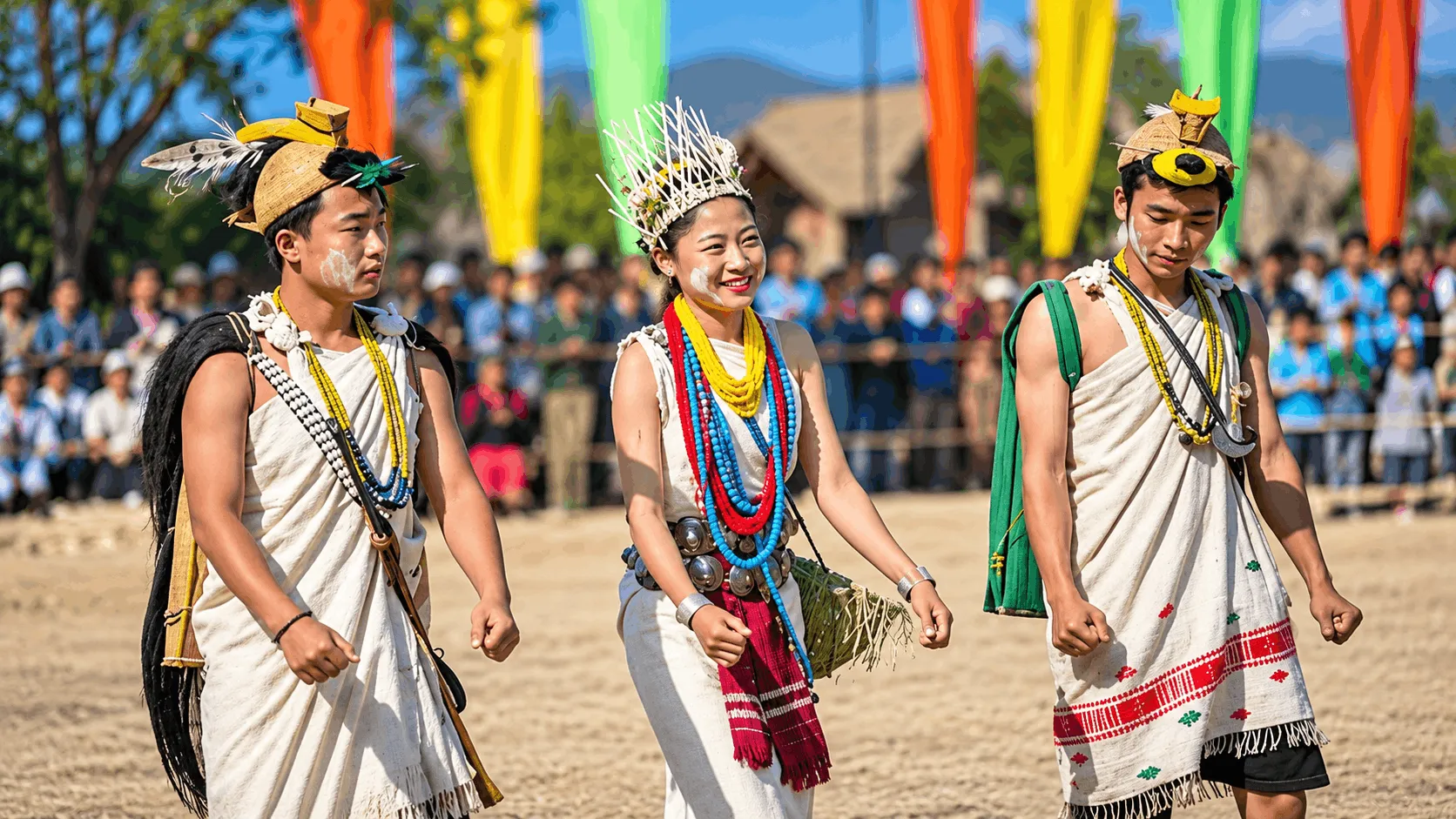
The Nyishi are one of the best-known indigenous communities of Arunachal Pradesh, living in the forested hills and river valleys of the central and eastern parts of the state. They have their own language, festivals, ritual traditions and ways of dressing, farming and building, and these have shaped the cultural landscape that many visitors encounter when they travel through the state.
This guide introduces the Nyishi people, where they live, what is documented about their culture and how travellers can approach a visit with respect. It is an outside overview, and the most reliable voices on Nyishi life are Nyishi people themselves.
Who Are the Nyishi?
The Nyishi are an indigenous community of Arunachal Pradesh and are officially recognised as a Scheduled Tribe. They are widely described as one of the larger communities in the state, but I have not given a population figure, since numbers differ by source and year.
The name is spelled in several ways in older and outside sources, including Nishi and Nissi. Many people today use "Nyishi", and it is sensible to follow the community's own spelling.
Linguistically, the Nyishi language is generally classed as Tibeto-Burman and belongs to the Tani group, which also includes languages of neighbouring communities such as the Adi, Apatani and Galo. These communities share some cultural and linguistic roots, but each has its own identity, and they should not be treated as one.
Where Do the Nyishi Live?
The Nyishi live across several districts in the western and central parts of Arunachal Pradesh, including areas such as Papum Pare, Kurung Kumey, Kra Daadi, East Kameng and Pakke-Kessang, with communities in neighbouring districts as well. Some Nyishi also live in the foothills across the border in Assam.
The capital region around Itanagar lies within Nyishi homeland, which means many visitors pass through Nyishi country without realising it. Beyond the capital, settlements are spread across hillsides, ridgelines and river valleys, with forests, bamboo groves and terraced or jhum fields around them.
The landscape is hilly and green, and rain falls heavily in the monsoon. Roads wind through steep terrain, and travel between villages can be slow.
Nyishi Culture and Traditional Lifestyle
What follows is a general picture. Practices differ between families, clans and villages, and many Nyishi people combine traditional customs with modern education, work and faith.
Community life. Kinship and clan relationships are central to Nyishi society, and village life is shaped by family obligations, shared work and customary institutions. Decisions and disputes have traditionally been handled through customary councils and elders.
Traditional livelihoods. Agriculture has long been central. Households have traditionally grown rice and other crops, and they have used both settled farming and shifting cultivation, called jhum, depending on the terrain. Forest produce, fishing and hunting have also played a part. Livestock matter too, and the mithun, a semi-domesticated bovine, is widely described in Arunachal as a measure of wealth and a feature of ceremonies and exchange. Today livelihoods also include government service, trade, teaching and tourism.
Family and social traditions. Marriage, kinship and inheritance customs have their own rules and have changed over time. Because these topics are personal and vary between families, it is best not to ask visitors' questions about them unless a host raises them.
Traditional knowledge. Knowledge of farming, plants, hunting, building and ritual has been handed down largely through speech and practice. Elders and ritual specialists, often called priests, hold a great deal of this knowledge. Many Nyishi have been working to record and teach it.
Relationship with nature. Forests, rivers and animals are woven into daily life, belief and story. Many Nyishi people follow an indigenous faith, alongside other religions that are practised in the community. These beliefs include respect for natural forces and spirits, and are described differently by different people.
Nyishi Traditional Clothing and Ornaments
Traditional Nyishi dress is most often seen at festivals, weddings and important gatherings, though many people also wear woven garments in daily life. Textiles are typically handwoven, and colours and patterns can vary by region, family and occasion. Designs may carry meanings that are best learned from community members, not guessed.
The most recognisable item is the traditional headgear worn by men, made from cane and decorated with a hornbill beak. This is a distinctive symbol of Nyishi identity in the public eye. It also raises conservation questions, since hornbills are threatened in parts of their range. Reports describe community-led conservation work and the use of replica beaks made from synthetic materials, which let people keep the tradition while reducing pressure on wild birds.
Beads, ornaments and woven accessories are also part of traditional dress. Ask before photographing clothing or ornaments, and avoid asking to try on or buy items that are worn for ritual or ceremonial reasons.

Nyishi Festivals and Celebrations
Festivals are one of the clearest expressions of Nyishi culture. They are tied to agriculture, community well-being and ritual, and they bring families and villages together for prayers, feasting, music and dance.
Two festivals are commonly mentioned. Nyokum Yullo is a major festival associated with prayers for prosperity, good harvests and the well-being of the community, and it is widely reported as being celebrated in February. Boori Boot Yullo is another well-known celebration, associated with the agricultural year.
I have not given dates. Dates and venues can differ by village and year, and some rituals are private.
If you want to attend a festival, contact a local tourism office, community organisation or trusted host well in advance. Ask which parts are open to visitors, what to wear, where to stand and whether photography is allowed. Treat the festival as a community ceremony, not as a show.
Traditional Food and Cuisine
Meals in Nyishi households vary, but they commonly centre on rice, with vegetables, bamboo shoots, forest greens, fish and meat depending on the family and the season. Cooking is often simple, with boiling, steaming and roasting common. Forest herbs and wild plants add flavour.
Rice-based fermented drinks are part of social life in many households. If you are offered food or a drink that you do not wish to take, decline politely and explain, and your host will usually understand. Let your host know about allergies and dietary needs in advance.
Food also appears in ceremony. Some dishes and drinks are part of festivals and rituals, and you may be asked to follow particular customs when eating at those events.
Nyishi Villages and Cultural Experiences
Many traditional Nyishi settlements have long houses built of bamboo and wood, raised above the ground on stilts, though building styles are changing, and many families now live in modern homes.
Visiting a village is a chance to see daily life, but it needs planning and permission. Villages are homes, not attractions. Possible experiences, where offered and welcomed, include staying with a family, sharing a meal, walking village paths with a local guide, learning about weaving or cane work and meeting community members. Some community-led tourism efforts have been reported in the region.
Arrange visits through a local host, guide or community organisation. Do not arrive unannounced, enter compounds without invitation or photograph people without asking. Facilities are usually simple, so expect basic rooms and limited power and connectivity.
For comparison with neighbouring communities, see our Apatani Tribe Guide and Idu Mishmi Tribe Guide.

Traditional Crafts and Cultural Knowledge
Bamboo and cane work is one of the most notable Nyishi crafts. Households make baskets, containers, mats, hats, headgear and tools, and the skill of working with local materials is passed down through families. Weaving and beadwork are also practised.
Cultural knowledge goes beyond objects. It includes songs, stories, ritual chants, plant knowledge and building methods, much of it learned by watching and doing. When you meet artisans or elders, listen first, and ask how they would like their work to be described.
If you wish to buy crafts, buy directly from makers or reputable local sellers. Ask how and where an item was made, pay a fair price and avoid bargaining aggressively. Be cautious about items made from wild animal parts, and do not buy anything that appears to involve protected species.
Nyishi Culture and the Natural Environment
Nyishi country includes some of the most forested parts of Arunachal Pradesh, with rivers, bamboo and mixed forest and a range of wildlife. Protected areas in the region, such as Pakke Tiger Reserve, are well known to nature travellers.
For the Nyishi, the environment supplies food, materials and medicine, and it carries meaning in story and belief. The hornbill's place in Nyishi culture is a good example of how identity and conservation can meet, with community members taking part in efforts to protect nesting birds. Treat this as something people have chosen, and read their own accounts where you can.
Visitors can support the environment by staying on paths, carrying out rubbish, keeping noise low, leaving plants and animals alone and following local and forest-department rules. Do not expect to see wildlife. Sightings are never guaranteed.
How to Experience Nyishi Culture Responsibly
Photography etiquette. Ask before photographing people, homes, clothing and ceremonies, and accept a refusal. Do not photograph rituals or ritual specialists without clear permission. Avoid posting images in ways that identify people or places without their agreement, and avoid drones near villages or ceremonies.
Village etiquette. Arrange visits in advance, greet people politely, dress modestly and follow your host's lead. Do not enter homes or compounds uninvited.
Religious and cultural spaces. Treat prayer sites, ritual spaces and ceremonies with care. Observe quietly, stay at a distance unless invited and never touch sacred objects.
Local guides. A guide from the community can explain customs, translate and tell you what is appropriate. Pay a fair rate and ask how they work with villages.
Supporting local artisans. Buy crafts directly from makers, pay fair prices and ask about materials and meaning.
Environmental responsibility. Carry out your waste, avoid single-use plastic and keep soap and chemicals out of rivers.
Planning a Nyishi Cultural Experience
Transportation. Itanagar is the usual hub for exploring Nyishi country. The nearest airports have included Donyi Polo Airport near Itanagar and airports across the border in Assam, with Guwahati as the major gateway. Railway access is usually via stations near Naharlagun or in Assam.
Accommodation. Itanagar and larger district towns have hotels and guesthouses. Homestays and simple lodges may be available in some villages. Book ahead, especially around festivals.
Weather. The region is wet, with heavy monsoon rain. The cooler, drier months are generally easier for travel, though higher areas can be cold. Check forecasts before you go.
Road conditions. Hill roads can be slow and prone to landslides. Allow extra days and keep plans flexible.
Permissions. Arunachal Pradesh regulates entry. Indian citizens who are not residents generally need an Inner Line Permit, and foreign nationals have separate requirements. Some areas have additional rules. Procedures and fees change, so verify them with the official sources.
Nyishi Culture and Tribal Tourism
Tribal tourism can bring income, pride and interest to communities, and it can also bring pressure. The difference lies in who decides and who benefits. The best tourism is arranged with the community, keeps money in local hands and respects limits on what visitors can see and photograph.
For the Nyishi, whose homeland includes both the capital region and remote forest areas, this plays out differently from place to place. Choose hosts and operators who work openly with villages, travel in small groups and listen when told no. Learn before you go, and read community-authored sources where you can.
Tribal Discovery Tour approaches this with community consultation in mind. For wider context, see our guide to Tribes of Northeast India.
Frequently Asked Questions
Who are the Nyishi?
The Nyishi are an indigenous community of Arunachal Pradesh, widely described as one of the larger communities in the state, with their own language, festivals and customs.
Where do the Nyishi live?
Mainly in the western and central districts of Arunachal Pradesh, including areas around Itanagar, with some communities in the Assam foothills.
What language do the Nyishi speak?
They speak Nyishi, generally classed as a Tibeto-Burman language of the Tani group.
What are the main Nyishi festivals?
Nyokum Yullo and Boori Boot Yullo are commonly mentioned. Dates and arrangements vary, so check locally.
What is the Nyishi traditional headgear?
It is a cane headgear traditionally decorated with a hornbill beak. Replicas have been reported as a way to protect hornbills.
What do the Nyishi eat?
Meals commonly centre on rice, with vegetables, bamboo shoots, forest greens, fish and meat, depending on the family and season.
Can tourists visit Nyishi villages?
Some visits are possible, but they should be arranged with permission through a local host, guide or community organisation.
Can I photograph Nyishi people and ceremonies?
Always ask first. Do not photograph rituals or sacred sites without clear permission.
Do I need a permit to visit Nyishi areas?
Non-resident Indian citizens generally need an Inner Line Permit, and foreign nationals have separate rules. Verify current requirements with official sources.
How can I visit responsibly?
Ask permission, use local guides and homestays, buy from local makers, respect ceremonies and carry out your rubbish.