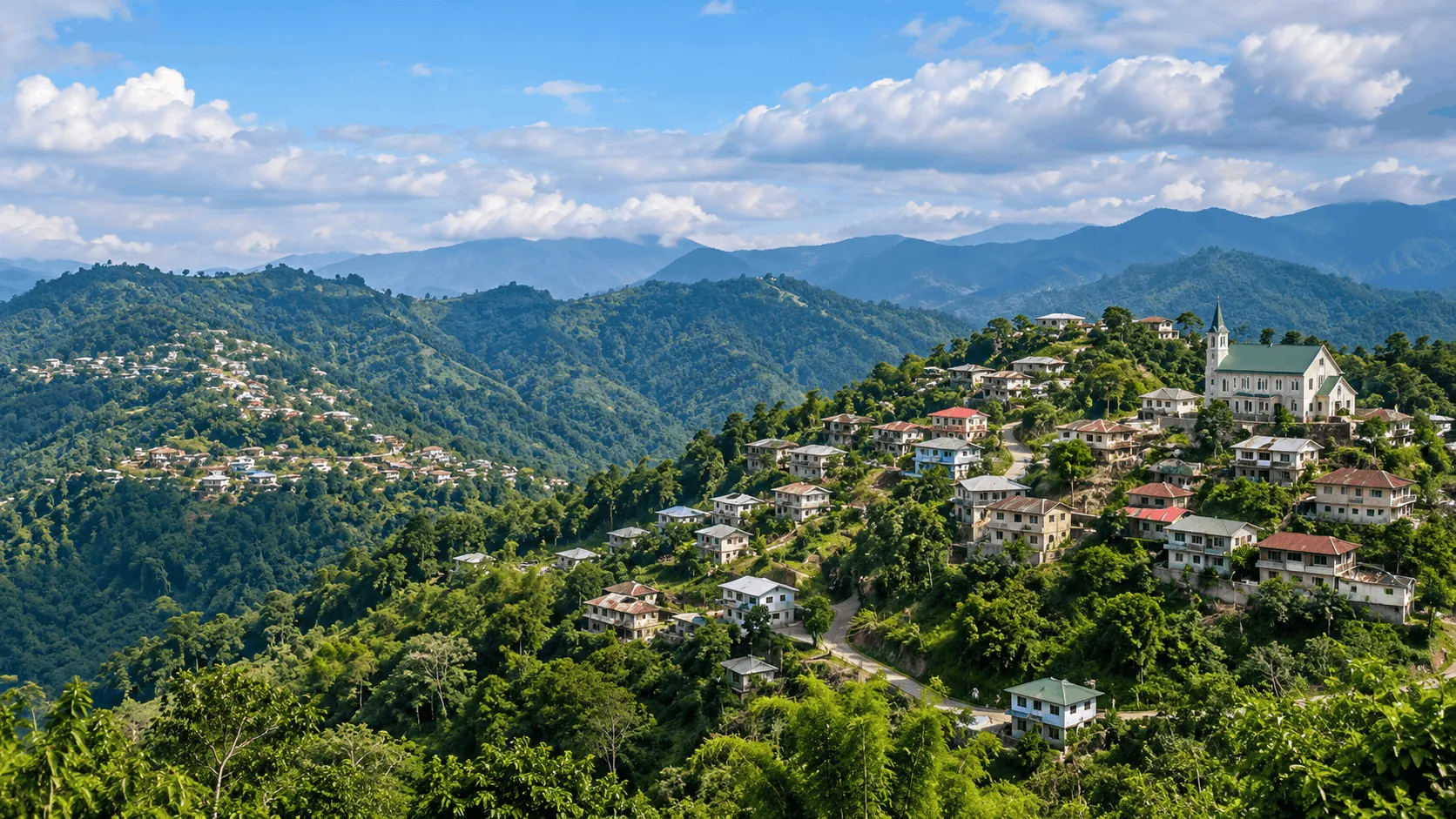
Hnahthial is one of the youngest district headquarters in Mizoram, and it is also one of the least documented places for visitors. Searching for it turns up district facts, a few reference pages and very little that a traveller could treat as a confirmed attraction. A guide that pretended otherwise would send you somewhere with high expectations and no plan.
So this guide is deliberately candid. It explains where Hnahthial is, how the town and the district fit together, what is known about reaching it, how to behave in villages and what a short, realistic visit could look like. It does not list attractions, trails, viewpoints, lodging, fares or travel times, because we could not verify any of them from reliable sources. Where something needs local confirmation, it says so.
Where Is Hnahthial?
Hnahthial is a town in southern Mizoram and the headquarters of Hnahthial district. The Government of Mizoram ordered the creation of the district's administrative offices by a notification dated 3 June 2019, and the district became operational afterwards, alongside Khawzawl and Saitual, according to reference sources. Until then, the area fell within Lunglei district, where Hnahthial was a sub-division.
That history explains why older maps, guides and census data still place Hnahthial in Lunglei district. The Lunglei district website describes Hnahthial district as lying to the east of Lunglei district. When you search, look for both names.
The town's name is a Mizo word for Phrynium capitatum, a plant that grows in abundance there, according to a reference page. A travel magazine also notes that waterproof leaves of this name are used to make the khumbeu, a traditional Mizo bamboo hat. We could not verify whether the hat is made in the town today, so treat that as background and not as something to seek out.
For the wider state and how its regions connect, see our Mizoram travel guide.

What Makes Hnahthial Worth Exploring?
Be clear about what you are choosing. Hnahthial is not an established tourist destination, and we found no official visitor listing for it. What it offers is a look at an ordinary Mizo district town and the hill roads around it, away from the usual circuits.
It suits travellers who enjoy slow, flexible trips and who are comfortable asking local people what is worth seeing. It also suits people who want to understand how newly created districts work in practice, with local government, schools, markets and small businesses at the centre of daily life. The town has a college affiliated to Mizoram University, according to reference sources, and that tells you something about its role as a regional centre.
It is a poor fit if you want a list of sights, organised activities or good tourist facilities. If that is what you want, our Lunglei travel guide covers the nearest larger town in the south, where the documented sights are easier to plan around.
Best Time to Visit
We found no official seasonal guidance for Hnahthial, so this section reflects general conditions in Mizoram.
The cooler, drier months, roughly October to March, usually bring clearer skies and easier roads, and they are the sensible choice for a first visit. The monsoon, roughly late spring to early autumn, brings heavy rain, landslides, leeches and slow roads, and long journeys in the south can be disrupted. If you travel then, add spare days and check conditions with local people every morning.
Weather and roads change from year to year, so check the forecast close to departure. We are not quoting temperature or rainfall figures for the town.
Places to Visit in and Around Hnahthial
We could not verify any named visitor attraction in Hnahthial town or district, and we are not inventing any. The honest summary is as follows.
In Hnahthial town: the town itself is the main thing to see. Walk through the market, notice how the settlement sits on the hillside and talk to people. Ask at the district administration office about anything that is open to visitors.
Darzo and South Vanlaiphai: a reference page lists both among settlements in Hnahthial district, but we could not verify their exact locations, whether visitors can go there, or what they would find. We also found other places with similar names, including North Vanlaiphai, which census records place in a different district. Do not assume that a Vanlaiphai you see on a map is the one you want. We have left both out of the itinerary, and we recommend including them only after a local contact or the district administration confirms the place, the road and the reason to go.
In the wider region: the nearest well-documented stops lie in other districts. Our Thenzawl travel guide covers a handloom town and waterfalls on the main highway in Serchhip district, and we could not verify how far that is from Hnahthial. Treat it as a separate stage of a longer journey.
Protected areas: Tawi Wildlife Sanctuary is sometimes listed among central Mizoram's protected areas, and our Tawi Wildlife Sanctuary guide explains what is known about access. Sources place Tawi in the Serchhip and Aizawl area, and we found no evidence that it is near Hnahthial, so we are mentioning it only as a separate trip, and you may prefer to remove this link if the connection feels weak.
Village Life, Culture and Local Experiences
The language of administration in the district is Mizo, and church life is central in much of Mizoram. Sundays are generally quiet, with many shops and services closed, so plan meals, travel and sightseeing around that. You may hear choirs in the evenings, and community events often involve singing.
Village visits are the most likely way to see local life, and they come with responsibilities.
- Arrange visits through a local contact, a host or the village council, not as drop-in tourism.
- Ask before photographing people, homes, farms, churches or ceremonies, and accept a refusal.
- Dress modestly, greet people and wait to be invited into homes.
- Do not treat daily life, dress or customs as a show, and do not offer money for photographs.
- Do not assume that what you read about one Mizo community applies to every village or family. Customs vary.
We could not verify festivals, handicrafts or markets specific to Hnahthial, and we are not describing any. If you hope to meet a festival, ask local people about dates and whether visitors are welcome, and do not plan around a date you read online.

Things to Do
With no verified attractions, think of things to do as ways to spend time respectfully, each needing local confirmation.
- Walk through the town and its market in daylight, and ask local people what they would show a guest.
- Visit the district administration office or the local tourism office to ask what is open to visitors and whether any guides are available.
- Drive the hill roads with a driver who knows them, stopping where it is safe and respectful.
- Spend time in a village if a host invites you, following their lead.
- Eat in small local eateries and ask what is made fresh that day.
- Use Hnahthial as an overnight stop on a longer southern route, with sightseeing planned in better-documented towns.
How to Reach Hnahthial
Most travellers start in Aizawl, which has Lengpui Airport and, since 2025, a rail link to Sairang near the capital. Check current flights and train services before you plan.
By road, a reference page that cites Mizoram's state information site gives about 172 kilometres between Aizawl and Hnahthial by National Highway 54, with bus and jeep or maxi cab services. That source is older, so we are not repeating the distance as fact, and we are not giving a journey time. Ask your driver or the district administration about the current route and its condition.
The same reference page mentions a helicopter service operated by Pawan Hans between Aizawl and Hnahthial. We could not verify whether it operates now, how often or at what cost, and we are not planning anything around it.
Local transport is informal. Shared vehicles and buses serve the main towns, but timings, fares and frequency change, and services may be limited on Sundays and holidays. A hired vehicle with a driver who knows the district is usually the most flexible choice.
Because the district is new, some official information, signs and maps may still show Hnahthial as part of Lunglei district, so confirm that you and your driver mean the same place. Visitors from other parts of India have generally needed an Inner Line Permit to enter Mizoram, and foreign nationals have separate arrangements. Local reporting in 2026 said new guidelines had been approved, with details not fully published at that time, so check official Mizoram government channels before you travel.
Accommodation, Food and Connectivity
We could not verify any specific accommodation, restaurant or visitor facility in Hnahthial, and we are not naming any. Expect simple lodging at best, and possibly very little. Many travellers use Lunglei or Thenzawl as a base and treat Hnahthial as a day or overnight stop. Ask the Mizoram tourism department, the district administration or your operator what is currently available, and request written confirmation of any booking.
Food is generally simple and rooted in rice, vegetables and boiled or smoked meat, as elsewhere in Mizoram. Menus in small places are limited, so vegetarians and anyone with allergies should say so early and carry snacks. Alcohol has been restricted in Mizoram, and rules can change, so check the current position.
Mobile coverage varies and can drop on hill roads and in valleys. Download offline maps, share your plan with someone and do not rely on a call to arrange transport at short notice. ATMs and digital payments may be unreliable, so carry enough cash for the whole trip.
Suggested 1-Day or 2-Day Itinerary
This is a planning option, not a guaranteed route. We cannot verify travel times or what is open, so adjust it to local advice, the weather and the roads, and do not assume that places are close together.
One day, if you are already in the area: Arrive in the morning, visit the district administration or tourism office to ask what is open, then walk the town and market. Have a local lunch, and use the afternoon for a short drive or a village visit if a host has arranged one. Leave early enough to be on the road in daylight.
Two days, starting from Aizawl:
Day 1: Travel toward Hnahthial with an early start, allowing for slow hill roads. Arrive with enough daylight to settle in, walk the town and ask local people about the next day.
Day 2: Spend the morning on any visit you have confirmed, such as a village or a place a local contact recommends. Then return toward Aizawl or continue to Lunglei, with a spare hour or two for delays. If nothing can be confirmed, treat the day as a quiet one and move on rather than forcing a plan.
Keep a spare day in your wider trip, and do not schedule tight flights or trains after a road journey.
Practical Travel and Safety Tips
- Carry enough cash, water, snacks and any medicines for the whole trip, since facilities may be limited.
- Pack layers, rain gear, sturdy shoes, insect repellent, leech protection in wet conditions and a first aid kit.
- Download offline maps, and tell someone your plan and your expected return.
- Travel in daylight where possible, and expect journeys to take longer than the map suggests.
- Check the weather and landslide reports before you set out, especially in the wet season.
- Fill your fuel tank before leaving larger towns, and confirm availability.
- Keep printed and digital copies of permits and identification.
- Plan around Sundays, when many services are closed.
- Follow instructions from local authorities, and do not approach restricted or unfamiliar areas without guidance.
Responsible Tourism
- Do not treat local communities as attractions. Ask before entering villages, homes or farms, and respect a refusal.
- Ask permission before photographing people, and do not photograph children, ceremonies or places of worship without clear consent.
- Respect church services and Sunday routines, and keep noise low.
- Buy food, supplies and crafts from local sellers, hire local drivers and pay fairly.
- Carry out all rubbish, avoid single-use plastic and keep roadsides and viewpoints clean.
- Stay on paths, keep away from wildlife and do not collect plants or other natural items.
- Do not enter forest or protected areas without permission, and follow official instructions.
- Avoid generalising about any community, and listen to how people describe themselves.
Frequently Asked Questions
Where is Hnahthial?
Hnahthial is a town in southern Mizoram and the headquarters of Hnahthial district, which became operational after a notification dated 3 June 2019. It was previously part of Lunglei district.
Is Hnahthial in Lunglei district?
Not any more, according to current administrative arrangements. Older maps, guides and census data still place it in Lunglei district, so search under both names.
What are the main places to visit in Hnahthial?
We could not verify any named visitor attraction. The town and its surrounding villages are the main draw, and you should confirm anything else with the district administration.
How do I reach Hnahthial?
Most travellers go by road from Aizawl. An older reference gives about 172 km by National Highway 54, with bus and jeep services, but check current routes and conditions locally.
What is the best time to visit Hnahthial?
The cooler, drier months, roughly October to March, are generally easier. The monsoon brings heavy rain and slow roads, and no official seasonal guidance for the town was available.
Are there hotels and restaurants in Hnahthial?
We could not verify any specific accommodation or restaurant. Ask the district administration or your operator, and consider using Lunglei or Thenzawl as a base.
Do I need a permit to visit Hnahthial?
Visitors from other parts of India have generally needed an Inner Line Permit to enter Mizoram, and foreign nationals have separate rules. Requirements are being updated, so verify with official sources.
Conclusion
Hnahthial rewards the kind of traveller who is comfortable with uncertainty. It is a new district headquarters with few documented visitor sights, and the best way to see it is slowly, with local help and flexible plans. Go in the dry months, confirm access and lodging before you commit, treat villages and people with respect and pair the trip with better-documented stops elsewhere in the south.