Tawi Wildlife Sanctuary is one of the oldest protected forests in Mizoram, set in hilly country roughly a hundred kilometres from Aizawl. It is also one of the least documented in public sources. Government tourism pages give a short description, a species list and a note about an old forest rest house, while most other material repeats the same few lines. That makes it a place to approach with research and modest expectations, not with a fixed itinerary.
This guide sets out what the sources say about the sanctuary, where they conflict, what a visitor should and should not assume, and how to find out whether and how a visit is possible. It does not describe any activity, facility or route as available unless a reliable source supports it, and it does not promise wildlife sightings. For the wider state, see our Mizoram travel guide.
A note on sources: this guide draws on the Aizawl district tourism page, Wikipedia entries that cite Mizoram Forest Department and national notifications, and a handful of secondary travel sites. Where they differ, we say so. Many of those pages are undated or old, so treat every practical detail as something to confirm.
Where is Tawi Wildlife Sanctuary?
The Aizawl district tourism page places Tawi Wildlife Sanctuary about 101 km from Aizawl, in the hills of central Mizoram. Wikipedia lists its location as Aizawl, Serchhip and Lunglei districts, which suggests the protected area touches more than one district. One secondary travel site places it in Lunglei district. The Mizoram Forest Department administers the sanctuary.
Distances are not consistent either. The same district page that gives 101 km also quotes about 92.5 km by road from Aizawl. Treat both as rough figures, and ask the forest department or a local driver for the current route and distance.
Wikipedia cites a national notification declaring the sanctuary, and the Mizoram Forest Department publishes pages on its protected areas. The notification is the document to check for the exact boundary. The district page gives the area as about 35.75 square kilometres, though that same figure appears on another Mizoram sanctuary page, so confirm it against the notification before quoting it.
Forest landscape and ecological importance
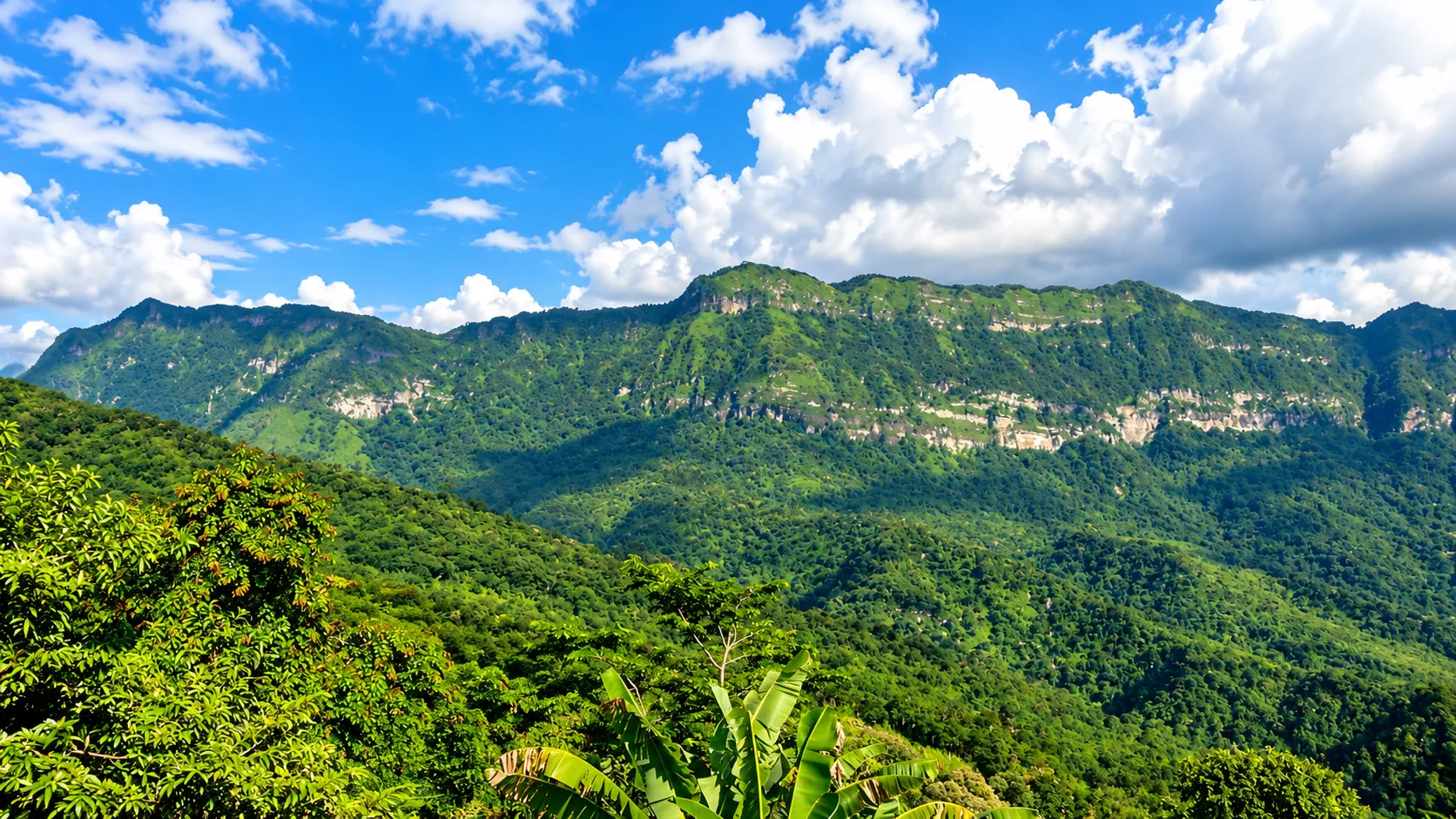
The district tourism page says Tawi was notified as a sanctuary in 1978, and Wikipedia describes it as among the oldest wildlife sanctuaries in Mizoram. It describes the altitude as ranging from about 400 to 1,300 metres above sea level, with tropical evergreen and semi-evergreen forest, and scrub and secondary forest in parts.
Plant species named on the district page include canes and bamboos, Michelia champaca, Duabanga, Schima wallichii, Terminalia and Gmelina arborea. A secondary travel site adds rivulets, high cliffs and natural salt lakes, but we could not verify those features from an official source.
Why does this matter ecologically? Protected forest in Mizoram's hills helps keep habitat connected, protects watersheds and gives wildlife space away from cultivation and settlement. Wikipedia and the district page describe the sanctuary's forests as largely evergreen and semi-evergreen, which is the habitat type that supports the animals listed for the area. We found no published ecological survey, species-count document or conservation-status assessment specific to Tawi, so we make no claims about population numbers or rarity.

Wildlife and biodiversity: what reliable sources tell us
The district tourism page lists the following animals and birds for the sanctuary: tiger, leopard, sambar, barking deer, jungle cat, serow, hoolock gibbon, rhesus macaque, kalij pheasant, jungle fowl, common partridge, hill myna and dark-rumped swift. A secondary site repeats the list.
Two things are worth keeping apart.
First, a species appearing on a tourism page means it is reported for the area. It is not the same as a verified, current population. We could not find survey data, camera-trap results or a peer-reviewed checklist for Tawi, and the list reads like a general summary. Treat it as a record of what is reported, not as a guarantee of what lives there today.
Second, presence is not the same as likelihood of seeing an animal. Large carnivores such as tigers and leopards are secretive and wide-ranging in any forest, and many forest animals are active at night or stay out of sight. A visitor who walks quietly in good forest may see birds, insects and signs of animals, and may see nothing notable at all. No source we found offers any basis for expecting a particular sighting.

We do not name rare, endangered or threatened species, and we do not give conservation statuses, because the sources do not tie any status to Tawi in a way we could verify. The district page says the sanctuary hosts rare and endangered species in general terms, but it names none.
What visitors should know before planning a visit
This is where the sources thin out. We found no official statement of the following for Tawi, and so we do not state them:
- Whether the sanctuary is currently open to tourists, and on which days.
- Entry fees, permit rules or opening hours.
- Whether guided walks, wildlife drives, trails or safaris are offered.
- Whether any viewpoints, trails or facilities exist for visitors.
The district tourism page mentions an inspection hut with two rooms and four beds at the Hualtu Range headquarters. That is an old forest-department building listed on an undated page. We cannot confirm that it is open to the public, how to book it or its condition, so do not plan around it.
What can be said is general. Wildlife sanctuaries in India are managed by state forest departments, and entry for tourism, photography or overnight stays normally depends on their permission. Unauthorised entry can be an offence, so do not enter the forest simply because a road leads there. Treat the sanctuary as a protected working forest, not an open-access attraction.
How to research access and travel arrangements
Start with the people who manage the area, and work outward.
- Contact the Mizoram Forest Department, Environment, Forests and Climate Change Department, or the relevant divisional forest office, and ask whether the sanctuary is open to visitors for your dates. Ask which office covers the area you intend to visit.
- Ask about permits, entry arrangements, fees, guides and any conditions on photography, camping or overnight stays.
- Ask about the current road condition and whether a particular vehicle type is needed. Do not rely on older web pages for this.
- Ask whether any rest house or lodging is available and how it is booked, if you need it.
- Check with the Mizoram tourism department for current information, and with the local village council if your route passes through villages.
- Confirm Inner Line Permit requirements, since Indian citizens who do not live in Mizoram have historically needed one, and other rules apply to foreign nationals.
On transport, Lengpui Airport near Aizawl is the usual air gateway, and the district page names Silchar in Assam as the nearest main railway station. From Aizawl, access is by road. We found no verified public transport timetable to the sanctuary, so we do not describe one. A hired vehicle with a local driver who knows the area is the usual approach, but confirm the route with the forest department first.
If you cannot reach an official source, treat the visit as unconfirmed. A long drive to a closed or restricted forest is a poor outcome.
Best time to consider a visit
We found no official guidance on seasons for Tawi. Two secondary travel sources suggest a window from roughly October or November to March, which matches the drier part of the year across much of Mizoram. Mizoram has a monsoon climate, and heavy rain, landslides and leeches can make hill roads and forest paths difficult in the wet season.
We give no temperature or rainfall figures, since we could not find reliable data for the sanctuary itself. Cloud and mist are common in Mizoram's hills at any time of year.
Whatever the season, check the forecast and road conditions close to your date, and confirm with the forest department that the sanctuary is open. Do not assume a dry month means access is permitted.
What to prepare
These are general recommendations for forest travel in Mizoram, not claims about facilities at the sanctuary.
- Waterproof jacket or poncho and quick-drying clothing, since forest weather changes quickly.
- Long sleeves and trousers, plus insect repellent and, in wet weather, leech protection.
- Sturdy shoes with good grip for wet and uneven ground.
- Drinking water, snacks and a way to carry out your rubbish. Assume there are no shops or food stalls nearby.
- A torch or headlamp, a power bank and offline maps, since mobile coverage can be patchy.
- A basic first-aid kit and any personal medication.
- Printed copies of permits and photo ID, and some cash.
- Binoculars, if you enjoy watching birds, and a camera with a zoom lens so you never need to get close.
- A local guide or contact if one can be arranged through the forest department or village council.
- A contingency plan: a spare day, an alternative stop if the sanctuary is closed, and someone who knows your route and expected return.
Responsible wildlife and forest tourism
A wildlife sanctuary exists to protect animals and habitat, and visitor behaviour matters.
- Never approach, feed, touch, chase or call out to wildlife. Keep your distance, stay quiet and leave if an animal shows signs of stress.
- Do not expect sightings, and do not pressure guides to find animals.
- Follow forest-department staff instructions and any posted rules at all times.
- Stay on authorised routes and do not cut new paths or damage vegetation.
- Do not collect plants, shells, feathers or other natural items.
- Carry out all rubbish, including food waste, and avoid single-use plastic.
- Keep noise low. Avoid loud music, shouting and drones unless you have explicit permission.
- Never use flash close to animals, and do not play recorded calls to attract birds or other wildlife.
- Do not light fires, and camp only where it is permitted and arranged in advance.
- Respect the villages around the sanctuary. Ask before photographing people or homes, and do not enter private land without permission.
- Support local communities by hiring local guides and drivers where possible, paying fairly.
Photography etiquette is simple. Wildlife photographs are never worth disturbing an animal, damaging habitat or ignoring instructions. If an animal changes its behaviour because of you, you are too close.
Nearby destinations to consider
We could not verify precise distances between Tawi and specific nearby towns or attractions, and sources associate the sanctuary with several districts. For that reason we do not recommend a nearby stop. If you are building a wider Mizoram itinerary, treat other protected areas as separate trips with their own rules, habitat and access.
Mizoram's other main protected areas are in different parts of the state. Phawngpui National Park protects the state's highest mountain in the far south-east and has its own permit and seasonal arrangements, covered in our Phawngpui National Park guide. Dampa Tiger Reserve is in western Mizoram and is managed as a tiger reserve, as our Dampa Tiger Reserve guide explains. Murlen National Park lies in the north-east, and our Murlen National Park guide covers it.
These areas differ in habitat, species, access rules and visitor arrangements, so do not assume that what applies to one applies to another.
Visitor checklist: what to confirm before travelling
- The sanctuary is open to visitors on your dates, confirmed by the forest department.
- Which forest office covers your visit, and how to contact it.
- Permits, entry fees and any guide requirement.
- Whether any lodging, including the Hualtu Range inspection hut, is available and how it is booked.
- Current road conditions and the vehicle you will need.
- Weather forecast and any seasonal restrictions.
- Inner Line Permit and ID requirements for your nationality and residence.
- Rules on photography, drones, camping and overnight stays.
- Emergency contacts, the nearest medical facility and your return plan.
- Mobile coverage along your route, and an offline map.
- A backup plan if access is refused.
Frequently asked questions
Where is Tawi Wildlife Sanctuary?
It is in central Mizoram, about 101 km from Aizawl according to the district tourism page. Sources link it to Aizawl, Serchhip and Lunglei districts.
When was Tawi Wildlife Sanctuary established?
The district tourism page says it was notified in 1978, and Wikipedia describes it as among the oldest sanctuaries in Mizoram.
What wildlife is reported in Tawi Wildlife Sanctuary?
Tourism pages list animals such as tiger, leopard, sambar, barking deer, serow, hoolock gibbon and rhesus macaque, along with several birds. These are reported, not guaranteed, and we found no survey data.
Can tourists visit Tawi Wildlife Sanctuary?
We could not confirm current visitor arrangements. Contact the Mizoram Forest Department before travelling, and do not enter without permission.
Will I see wildlife at Tawi?
Nothing can be promised. Many forest animals are secretive, and a visit may produce few or no sightings.
What is the best time to visit?
Secondary sources suggest roughly October or November to March, but we found no official guidance. Confirm with the forest department.
Is there accommodation at the sanctuary?
The district page mentions an old inspection hut at the Hualtu Range headquarters. We cannot confirm that it is open to visitors, so verify before relying on it.
Conclusion
Tawi Wildlife Sanctuary is an old protected forest in the hills of central Mizoram, described in public sources as tropical evergreen and semi-evergreen forest with a reported mix of mammals and birds. What it offers a visitor is less clear, because current access, permits and facilities are not well documented online.
The responsible way to approach it is to start with the forest department, confirm what is permitted, prepare for uncertain conditions and treat any sighting as a bonus. If the answer is that the sanctuary is not open, the forest is better served by leaving it undisturbed, and your time better spent on one of the state's more established protected areas.