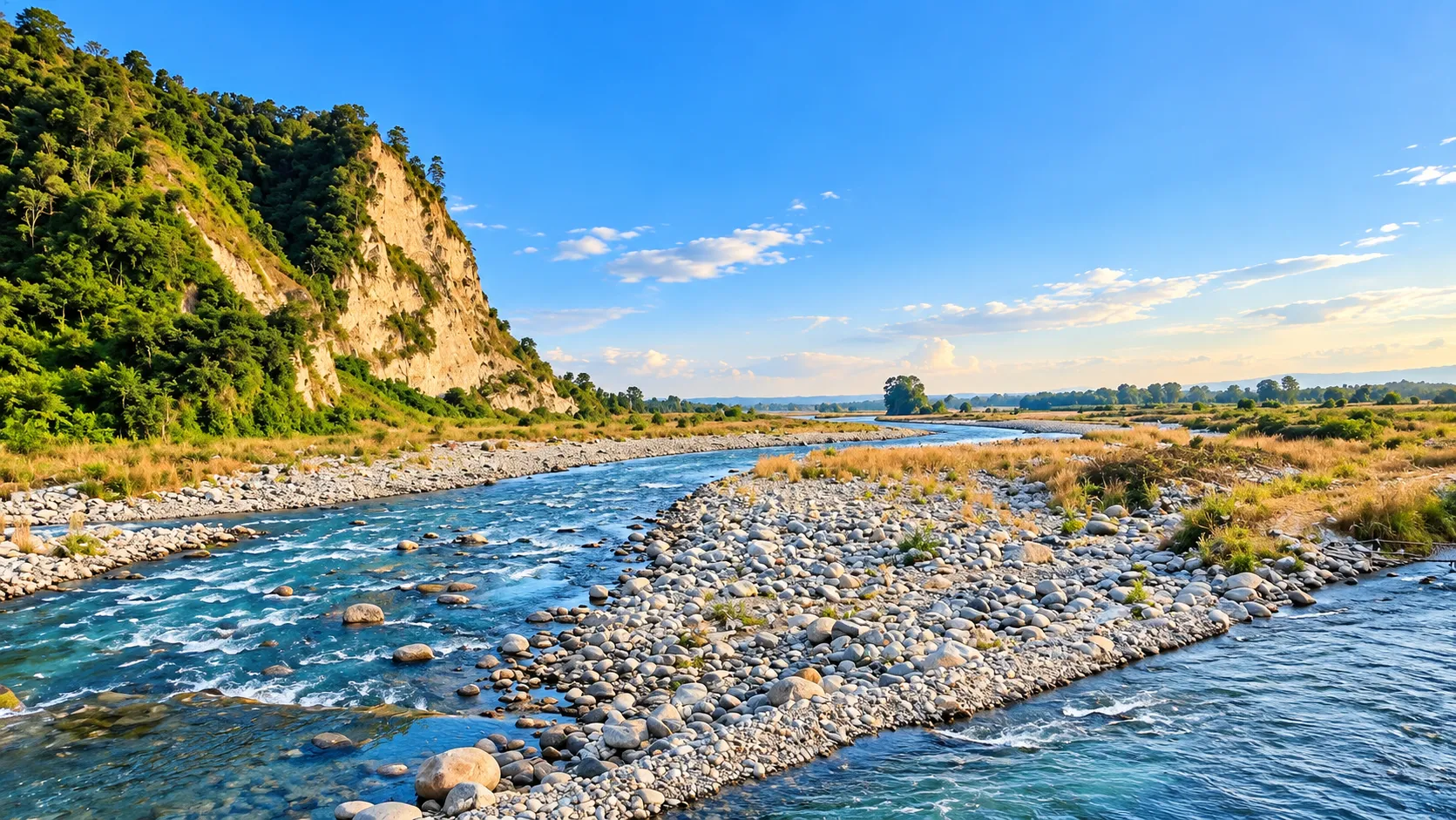
Bhairabkunda is a riverside spot in the foothills where Assam's plains meet the first rises of Arunachal Pradesh. It sits close to Bhalukpong, the border town that most travellers pass through on the road to Bomdila, Dirang and Tawang, and it is the sort of place that people reach on a short detour, a picnic day or a pause before the climb. Water, stones, forest and a long view of the hills are the main attractions.
This guide to Bhairabkunda explains where it is, what you can reasonably expect, how to reach it, when to go and how it fits into a wider Arunachal journey.

Where Is Bhairabkunda?
Bhairabkunda lies on the Kameng River, known as the Bhareli in Assam, in the foothills near the Arunachal Pradesh and Assam boundary. It is usually described as being close to Bhalukpong, the border town on the main road into western Arunachal.
The setting is low and green. The river comes out of the hills over rocks and gravel, forest covers the slopes behind it and the plains open out to the south. It is a very different landscape from the high valleys of Tawang or the east, and it is warmer and more humid.
In the wider network of Arunachal travel, it works as a gentle entry point. It is not a destination for a long stay, but it can be a useful stop at the start or end of a journey. If you are comparing it with other parts of the state, our Eastern Arunachal Pradesh travel guide explains how very different the eastern valleys are.
Why Visit Bhairabkunda?
Landscape. A wide river, rocky banks and forested hills make for pleasant scenery. In the dry season the river runs clearer, and in the monsoon it is powerful and brown.
Cultural significance, where supported. The name points to Bhairab, a form associated with Shiva in Hindu tradition, and the site may be linked with local religious practice. Treat any stories about its origins as belief, not verified history, and ask local people how they understand the place.
Nature. The forests and river here are part of a wider foothill ecosystem that includes protected areas on both sides of the boundary. You may notice birds and butterflies, but do not expect wildlife sightings.
Road-trip appeal. The route to western Arunachal passes nearby, which makes it an easy add-on or a relaxed first stop before the mountains.
Relevance to western Arunachal travel. Because it is close to the gateway at Bhalukpong, it suits travellers who want to ease into the region or fill an extra half day. For a sense of how different lesser-known corners of the state can be, see our Hawai travel guide, which covers a remote district in the far east.
If you want a long list of sights, Bhairabkunda is probably too modest. If you want an easy riverside outing, it fits.
Best Places to Visit in and Around Bhairabkunda
The riverbank at Bhairabkunda. The main attraction. Walk along the bank, watch the river and take photographs. Take great care near the water, since currents are strong and rocks are slippery, particularly after rain. Plan an hour or two, longer for a picnic.
Bhalukpong. The border town has its own riverside scenery and is the main service point for the area. It is the usual place to arrange permits, food and vehicles.
Tipi orchid centre. Near Bhalukpong, a centre for orchid research and display is often mentioned by travellers. Opening arrangements and flowering seasons vary, so check locally.
Protected forests nearby. Pakke Tiger Reserve lies in Arunachal Pradesh, and Nameri National Park lies across the boundary in Assam. They are separate trips with their own rules and are not part of a Bhairabkunda stop.
How to Reach Bhairabkunda
Road approach. Almost all visitors arrive by road from Assam, since the area lies close to the plains. The usual approach follows the highway toward Bhalukpong, with Bhairabkunda reached by a side route.
Nearby transport hubs. Tezpur is the nearest sizeable town in Assam, and Guwahati is the main long-distance hub, with an airport and a major railway station.
Practical route planning. Hired cars and taxis are the most flexible option, and local drivers will know the roads. If you are combining it with a journey toward Tawang, treat it as a stop on the first day, not as a major objective.
Travel considerations. Roads in the foothills can be affected by rain and maintenance. Allow extra time, ask locally about current conditions and avoid tight connections.
Bhairabkunda as Part of an Arunachal Road Trip
Bhairabkunda is best seen as a first or last stop. For travellers heading toward Bomdila, Dirang and Tawang, it can serve as a pleasant pause before the climb, a place to stretch, eat and watch the river. For travellers returning to Assam, it is an easy way to end a mountain journey beside the water. I have not given distances or times for the route toward Tawang, because they depend on conditions, and you should confirm them with a local operator.

The foothills nearby suit nature-focused trips as well. Our Pakke Kessang travel guide covers a district of forest and protected land close to this part of the border, which can be combined with a Bhairabkunda stop on a western Arunachal itinerary.
For travellers who want something much more remote, the far east of the state offers a very different kind of road trip. Our Hayuliang travel guide covers a distant corner of Anjaw district, where roads are slow and plans need plenty of slack. It is a separate journey from anything in the west, reached from a different part of Assam, so it is not a natural add-on to Bhairabkunda. It is simply a reminder of how varied the state is.
Best Time to Visit Bhairabkunda
Cooler, drier months. The months after the monsoon through the winter are generally the most comfortable. The river is clearer, paths are easier and picnics are pleasant. Mornings can be misty.
Spring. Weather warms and showers become more frequent, though many days are still pleasant.
Monsoon. Heavy rain is common, the river rises and runs strong and roads can be disrupted. The river becomes dangerous near the banks, and access to the site may be restricted.
For safety, the cooler months are the better choice, and the monsoon is the time to be most cautious.
Permits and Travel Documents
Arunachal Pradesh regulates entry. Indian citizens who are not residents of the state generally need an Inner Line Permit to enter, and foreign nationals have separate requirements. If you plan to continue into Arunachal, for example toward Tawang, you will need to sort out your permit before you cross. Confirm the current requirements with official sources or a reputable local operator, and again close to departure.
Carry printed copies of your permits, a valid photo ID and any booking confirmations, since checkpoints are common.
Where to Stay
There is little accommodation directly at the site. Most travellers stay in Bhalukpong, in towns on the Assam side such as Tezpur, or in the other places along the main road. Options generally include small hotels and guesthouses, with a wider choice in larger towns.
Book ahead through a reputable operator, particularly in the cooler months and on weekends, when local visitors come for picnics. Confirm what is included, such as meals, hot water and power backup.
Food, Fuel and Basic Travel Considerations
Food. Facilities at the site itself may be limited or seasonal, so carry water and snacks, and plan to eat in Bhalukpong or in a larger town. Tell your host or driver about dietary needs in advance.
Fuel. If you are driving yourself, fill up in a larger town before heading into the foothills, since fuel stations may be fewer and farther apart than you expect.
Cash and connectivity. ATMs and digital payments may be unreliable away from towns, so carry cash. Mobile coverage can be patchy, so download maps and keep key numbers offline.
Safety. Keep away from the river's edge, particularly after rain, and do not swim unless local people say it is safe. Follow any signs and instructions.
What to Pack
- Comfortable, grippy shoes for rocky riverbanks
- A lightweight waterproof jacket or umbrella
- Light, quick-dry clothing, with a warmer layer if you are continuing toward the mountains
- Sun protection, a hat and insect repellent
- A refillable water bottle and snacks
- Personal medication and a small first-aid kit
- A camera, a power bank and a bag for your rubbish
- Printed permit copies, photo ID and some cash
Responsible Travel
Riverbanks that are popular for picnics suffer from litter more than almost any other kind of place, so the most useful thing you can do is take everything you bring back out. Carry a bag for rubbish, avoid single-use plastic and do not leave food waste behind, since it attracts animals and harms the river.
Keep soap, detergent and chemicals out of the water. Stay on established paths, do not collect stones or plants and keep noise down, especially early and late in the day. If the site has any religious significance, treat it with respect, dress modestly and follow local practice.
Ask before photographing people, and follow instructions from local residents and officials. Support local businesses by buying food and supplies from nearby shops and stalls, and by using local drivers and guides.
Suggested Bhairabkunda Itinerary
1-day plan
- Start from Tezpur or another Assam base in the morning.
- Spend time at the riverbank at Bhairabkunda, taking a picnic and keeping away from the water's edge.
- Continue to Bhalukpong for lunch and a look around, and, if time and opening arrangements allow, the Tipi orchid centre.
- Return to your base by late afternoon, leaving margin for traffic and weather.
2-day plan
- Day 1: As above, then stay overnight in Bhalukpong or on the Assam side.
- Day 2: Use the morning for a second look at the river in better light, or for a nature outing nearby, subject to access and rules. Then continue your journey toward the mountains, or return to Assam.
If you are heading to Tawang, treat Bhairabkunda as the first stop of a longer trip, and confirm your permit and onward arrangements the day before.
FAQs About Bhairabkunda
Where is Bhairabkunda?
Bhairabkunda lies on the Kameng (Bhareli) River in the foothills near the Arunachal Pradesh and Assam boundary, close to Bhalukpong.
Is Bhairabkunda worth visiting?
As a short riverside stop, yes. It has few formal attractions, so it suits relaxed travellers more than sightseers.
How do I reach Bhairabkunda?
Most travellers go by road from Assam, via Tezpur or Guwahati, toward Bhalukpong. Verify the current route and transport.
Is Bhairabkunda on the way to Tawang?
It is near the road toward western Arunachal that leads to Tawang, so it can be a stop at the start of the journey. Confirm the route locally.
What is the best time to visit Bhairabkunda?
The cooler, drier months after the monsoon are generally best. The monsoon brings a strong river and possible access limits.
Do I need a permit for Bhairabkunda?
It depends on which side of the boundary you visit and where you continue. Non-resident Indian citizens generally need an Inner Line Permit for Arunachal Pradesh. Verify current requirements.
Can I swim at Bhairabkunda?
Currents are strong and rocks are slippery, so do not swim unless local people say it is safe. Keep away from the river's edge, especially after rain.
How long should I spend at Bhairabkunda?
A few hours is enough for most visitors. It works well as part of a one-day or two-day plan.
Conclusion
Bhairabkunda is a modest place that pays off for people who treat it that way: a quiet hour by the river, a break in a longer journey, a chance to slow down before the mountains. Confirm permits and access before you go, keep away from fast water, carry out every scrap of rubbish and leave room in your plans for weather and the road. Arunachal Pradesh rewards travellers who prepare carefully and tread lightly.