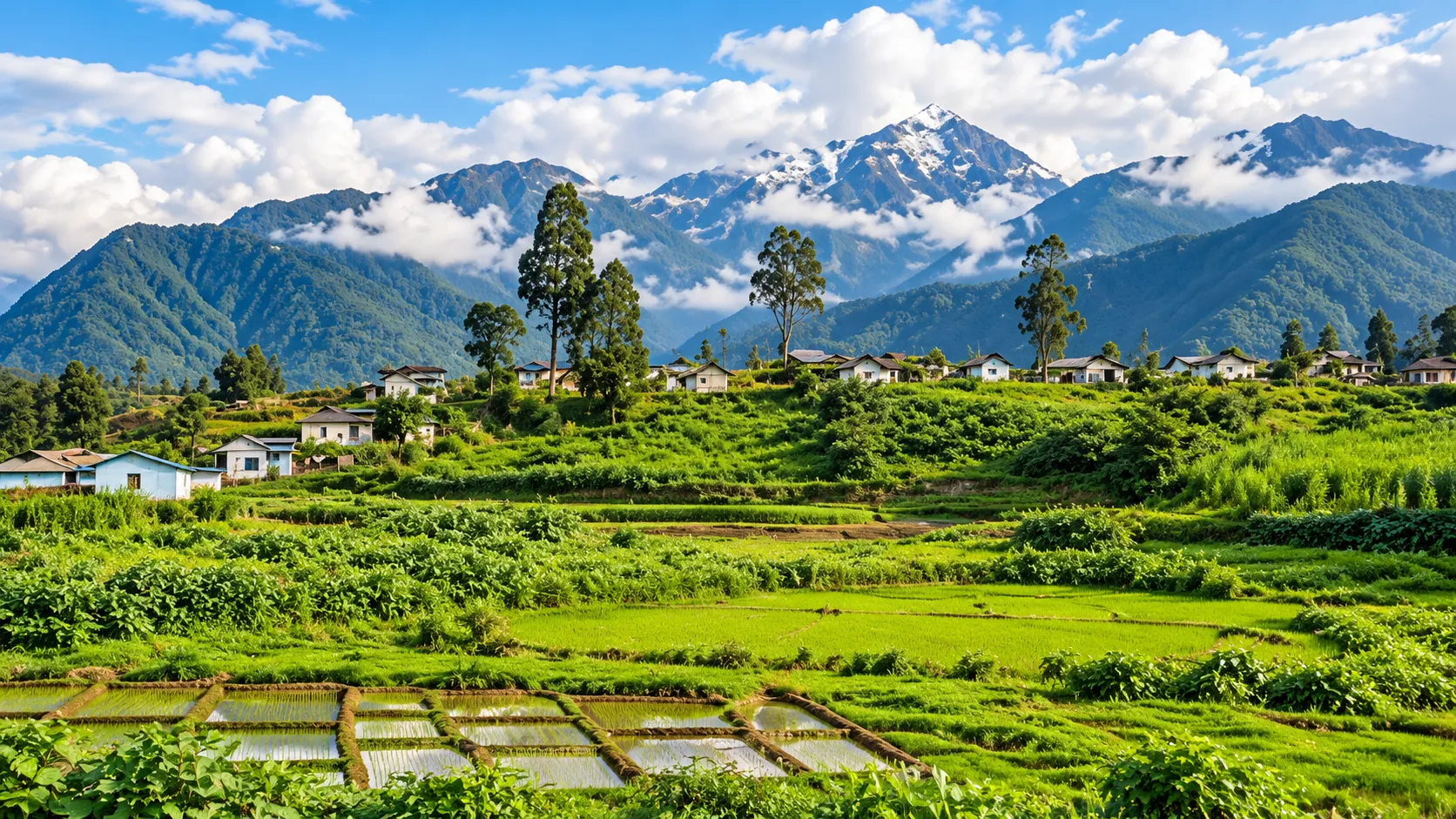
Yingkiong is the headquarters of Upper Siang district, in the north of Arunachal Pradesh, and it sits on the Siang River as it runs down from the high mountains. It is not a destination people stumble across. You get here by choosing a longer road, and that choice shapes the trip: slow days, wide river views and a lot of time to look at the country you are passing through.
For travellers interested in the Adi communities, river landscapes and the quieter parts of Eastern Arunachal Pradesh, Yingkiong makes a useful base. This guide explains where it is, what you can reasonably see and do, how to plan the journey and how to travel respectfully.
Where Is Yingkiong?
Yingkiong lies in Upper Siang district, in the northern part of Arunachal Pradesh, on the banks of the Siang River. It serves as the district headquarters and as the main base for the surrounding area. Further north, the valley narrows toward the international border, and the Siang comes down through deep gorges.The Siang is the name given to the great river here, and it continues downstream into Assam, where it becomes part of the Brahmaputra system. The valley is steep and forested, and the hills around it are among the greener parts of the state.
In the wider region, Yingkiong belongs to the Siang valley, which is separate from the Dibang and Lohit valleys. The usual approach is from the south, through Pasighat and the East Siang area. See our Pasighat Travel Guide for the usual starting point, and our Eastern Arunachal Pradesh Travel Guide for how the valleys fit together.
Why Visit Yingkiong?
Mountain scenery. Forested ridges, deep valleys and high peaks on clear days make for dramatic views. The scale is large and the landscape is mostly untouched by large buildings.
The Upper Siang region. The district is one of the more remote parts of the state, which means fewer crowds and a stronger sense of distance. It is a place for people who enjoy the journey.
Rivers and valleys. The Siang and its tributaries shape the land and the settlements. Following the river gives the trip a clear thread.
Cultural experiences. The area is home to Adi communities, with their own festivals, crafts and village traditions. A thoughtful visitor can learn a great deal, as long as they go through proper channels.
Slower travel. Long road days, simple stays and unhurried conversations are the point. If you like to tick off sights, you may find Yingkiong quiet.
Adventure and exploration. The region suits travellers who like remote roads, short walks and the chance to explore beyond the main routes. Specific adventure activities should be confirmed locally.

Places to Visit in and Around Yingkiong
Yingkiong has few formal tourist attractions, and I would rather say so than invent them. The places and experiences below are ones the region reasonably supports. Time estimates are rough visit lengths, not travel times.
Yingkiong Town and the Siang River
The town itself is worth a slow walk, with its markets, local life and views over the river. The Siang here is wide and powerful, and riverside viewpoints give a sense of the scale of the valley. Take care near the water, since currents are strong and banks can be slippery. Plan a few hours, longer if you enjoy photography. It suits anyone staying overnight.
Adi Villages in the Surrounding Hills
Villages around Yingkiong give a view of daily life and the landscape of farms, forest and river. Visits should be arranged through a local host or guide, never as unannounced drop-ins. Plan half a day for a single village, including time to talk and eat if invited. It suits travellers interested in culture who can accept simple facilities. See the section on Adi culture below.
Tuting and the Upper Siang Gorge
Farther north lies Tuting, in the same district, near the point where the Siang comes into India through deep gorges. It is a longer, more remote extension, and it is often mentioned by travellers who want to see the upper river. It needs extra days and careful planning, and access can involve additional permissions. It suits experienced, patient travellers.
Protected Areas in the Region
The Siang region includes protected natural areas, and Mouling National Park is one that is often mentioned in connection with Upper Siang. Access, permissions and facilities for such areas can be limited and change over time. Treat them as possible extensions, not guaranteed stops, and ask locally.
Adi Culture and Responsible Cultural Tourism
The Adi are one of the larger indigenous communities of Arunachal Pradesh, and they live across the Siang region. The name covers a number of sub-groups, each with its own customs and dialect, so it is better not to describe all Adi people as one.
What is widely documented includes a strong tradition of village councils, often called kebang, which guide community decisions; a major indigenous faith known as Donyi-Polo, alongside other religions in the community; agricultural festivals such as Solung and Aran; and a long tradition of cane, bamboo and weaving work. Details vary between villages and families, so listen to what your hosts say about themselves instead of relying on generalisations.
A few principles help.
Approach communities respectfully. Arrange visits through a local host, guide or community organisation. Greet politely, dress modestly and let your host guide the pace of conversation.
Ask permission before photography. Ask people before you photograph them, and ask before photographing ceremonies, homes and traditional spaces. Accept a refusal at once.
Learn instead of treating culture as a spectacle. Come with questions, not expectations. A festival is a community event, and people are not performing for visitors.
Support local communities. Use local guides and homestays, eat in local places and buy crafts directly from makers at fair prices.
Respect traditional spaces. Do not enter prayer sites, ritual spaces or community buildings uninvited, and never touch sacred objects.
How to Reach Yingkiong
Most travellers reach Yingkiong from Assam by way of Pasighat. Gateways include Dibrugarh and other points in upper Assam, and there are airports and railheads in the region, though services change. Pasighat also has an airport. From Pasighat, the road continues north into Upper Siang.
Hired vehicles are the usual way to travel, and a driver who knows the route is strongly recommended. Shared transport may operate on parts of the route, but I cannot confirm what is running.
Roads in the Siang valley are affected by rain, landslides and maintenance work. Leave generous buffer time, ask locally about conditions each day and expect that plans may change.
Permits. Arunachal Pradesh regulates entry. Indian citizens who are not residents generally need an Inner Line Permit, and foreign nationals have separate requirements. Areas close to the border, such as parts of Upper Siang, may have additional rules. Procedures change, so verify current requirements with official sources before you travel. Our Arunachal Pradesh ILP Guide gives general background, but it is not a substitute for current rules.
Best Time to Visit Yingkiong
Cooler, drier months. The months after the monsoon through the winter are generally the best for travel. Roads are more reliable, skies are clearer and views are better. Nights can be cold, particularly at higher elevations.
Spring. Weather warms up, flowers appear and showers become more likely. Conditions vary from year to year.
Monsoon. Heavy rain is common, the river rises, landslides become likely and roads can be blocked for days. The scenery is lush, but it is the hardest season for travel.
Festival timing adds a trade-off. Some Adi agricultural festivals fall at times that overlap with wetter weather, so you may have to choose between cultural events and easier roads.

How Many Days Do You Need?
The distances are large and the roads are slow, so allow more days than a map suggests.
Short trip (about 4 days). This gives a night near Pasighat, a day to reach Yingkiong, a day around Yingkiong and a return day. It is tight, so keep a spare day if you can.
Extended trip (6 to 8 days or more). This allows time for village visits, a slower pace and a possible extension north toward Tuting, subject to permissions. It also leaves room for weather delays.
Combining Yingkiong with Pasighat is natural. Combining it with the Dibang or Lohit valleys needs a return to Assam between them, so it is usually a separate trip.
Sample Yingkiong & Upper Siang Itinerary
Day 1. Arrive at Pasighat, confirm permits and vehicles, and rest. Explore the town and the river if time allows.
Day 2. Travel north to Yingkiong, stopping at viewpoints and villages along the Siang. Settle in and walk through the town in the evening.
Day 3. Spend the day around Yingkiong, with a visit to the riverside and, if arranged, an Adi village through a local host. Eat locally and talk to your hosts about the area.
Day 4. Use this as a flexible day. It could be an extension toward the upper Siang, subject to permissions and road conditions, or a second day of village visits and photography, or a buffer for weather.
Day 5. Begin the return journey toward Pasighat.
Add a spare day for landslides and permits, particularly in the monsoon.
What to Pack for Yingkiong
Clothing. Layers that dry quickly, with a warm jacket for cold mornings and evenings, and modest clothes for village visits.
Rain protection. A reliable waterproof jacket, pack cover and spare dry clothes.
Footwear. Grippy shoes or boots for wet, uneven ground.
Medicines. Your regular medication, a first-aid kit and motion-sickness tablets for winding roads. Medical help can be far away.
Documents. Printed permit copies, photo ID and booking confirmations, kept in a waterproof bag.
Cash. Carry enough, since ATMs are scarce and digital payments may not work.
Power bank. Electricity can be unreliable. Carry a power bank and spare batteries.
Camera equipment. Bring spare batteries and a way to protect gear from rain and dust. Ask before photographing people, and avoid drones near villages.
Connectivity, Food & Accommodation
Connectivity. Mobile coverage can be patchy, especially in valleys and villages, and it varies by network. Do not rely on being reachable. Download maps and keep key numbers offline.
Food. Expect simple meals, often rice with vegetables, dal, fish or meat, and local greens. Choice may be limited, so carry snacks and tell your host about dietary needs in advance. Rice-based drinks are part of hospitality in many Adi households, so ask before drinking, and decline politely if you prefer not to.
Accommodation. Options in Yingkiong are generally simple and may include small hotels, guesthouses, government lodges or homestays, with limited availability. Book ahead through a reputable operator, and confirm what is included, such as meals, hot water and power backup. Pasighat has more choice, and many travellers base themselves there.
Responsible Travel in Upper Siang
Cultural guidelines. Treat villages as homes. Ask permission before entering, follow your host's lead and avoid intrusive questions. Be careful with photography, and do not post exact locations of sensitive places.
Environmental guidelines. Carry out your rubbish, avoid single-use plastic and keep soap and chemicals out of rivers. Stay on paths, keep noise low, leave plants and animals alone and do not feed wildlife. Follow forest-department rules in protected areas.
Safety and respect for sensitive areas. Parts of Upper Siang are near the border. Follow all signs and instructions from officials, do not photograph military installations or personnel, and avoid flying drones.
River safety. The Siang is powerful and cold. Do not swim or wade unless local people say it is safe, and stay away from edges.
Supporting local people. Use local guides, homestays and restaurants, and buy crafts directly from makers.
FAQs
Is Yingkiong worth visiting?
For travellers who enjoy remote river valleys, slow travel and cultural visits, yes. It is not suited to people wanting formal sights or comfortable facilities.
What is Yingkiong known for?
It is the headquarters of Upper Siang district, set on the Siang River in Adi country, and it is a base for exploring the upper Siang valley.
How do you reach Yingkiong?
Most travellers go by road from Assam through Pasighat, then north into Upper Siang. Verify current routes, transport and road conditions.
How many days are needed?
About four days is a tight minimum from Pasighat. Six to eight days allows a slower pace and a possible extension north.
What is the best time to visit?
The cooler, drier months after the monsoon are generally best. The monsoon brings heavy rain and landslides.
Is a permit required for Yingkiong?
Non-resident Indian citizens generally need an Inner Line Permit, and border areas may have additional rules. Verify current requirements with official sources.
Is Yingkiong suitable for first-time Arunachal travellers?
It can be, especially with a local driver or guide, but it suits patient travellers who accept slow roads and simple facilities.
What should you pack?
Layers, rain protection, grippy footwear, medication, a power bank, permit copies and cash.
Can Yingkiong be combined with other Upper Siang destinations?
Yes. Pasighat is the usual starting point, and Tuting and the upper river can be added with extra days and permissions. Verify access first.