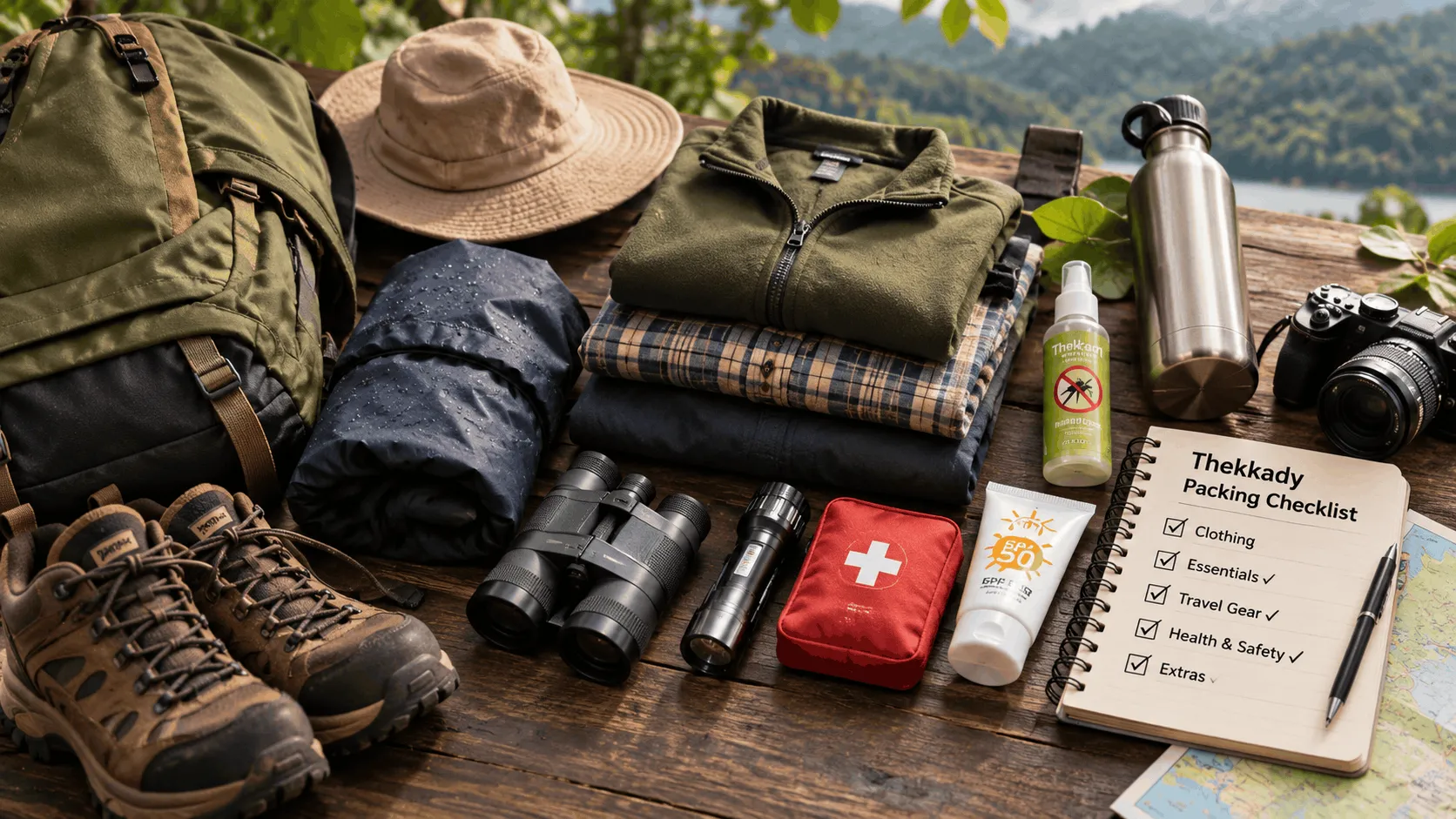
Thekkady rewards travellers who pack with a plan. A single day can include a boat ride on a breezy lake, a damp walk through forest, a warm afternoon in town and a cool evening on a verandah. If you wonder what to pack for Thekkady, the honest answer is that it depends on the month you travel and the activities you choose, so no single list works for every trip.
This guide explains how to make those decisions. It covers clothing, footwear, rain gear, personal care, health basics, electronics, documents and activity-specific items, then ends with a checklist you can print or copy. It stays with packing choices. For the wider picture of the destination, our Thekkady travel guide is the place to start.
Understanding Thekkady's weather and travel conditions
Thekkady sits in the Western Ghats at a moderate altitude, and the surrounding forest keeps the air fresher and cooler than the Kerala plains. Climate figures differ between sources, so treat the ranges below as a rough guide and check the forecast close to your dates.
The cooler months, from about October to February, are commonly described as pleasant, with mild days and cool mornings and evenings. Visitors often want a light extra layer after dark. March to May is hot and humid, with temperatures rising into the mid-30s °C in many accounts, and sun protection becomes important. The monsoon runs from roughly June to September, bringing heavy rain at times, wet trails and leeches.
Conditions inside the forest also differ from conditions in town. Tree cover can make a trail feel cooler and damper than the road, and weather can turn within the hour. Packing in layers handles most of these swings better than packing for one temperature.
Essential clothing to pack
Comfort, coverage and colour are the three things to weigh. Lightweight, breathable clothing works for most of the year, and the reserve's visitor guidance asks for clothing that covers the skin in neutral shades.
- Long trousers or lightweight pants, ideally quick-drying. Shorts are generally not permitted for the reserve's guided activities, so plan on trousers for any day you enter the forest.
- Loose T-shirts or shirts in green, brown, beige or grey, plus one or two long-sleeved tops for forest days and for sun and insect protection.
- A light fleece, sweater or shawl for cool mornings and evenings, particularly from October to February.
- Comfortable casual clothes for town, restaurants and your stay.
- Modest, comfortable outfits if you plan to visit temples or take part in cultural experiences.
- Sleepwear, underwear and spare socks, with a few extra pairs in the rainy season.
- A hat or cap and sunglasses.
Avoid bright colours and strong perfume on forest days, since the reserve's guidance discourages them. Cotton is comfortable in dry weather, but it dries slowly once wet, so a synthetic or blended fabric is a better choice for the monsoon and for treks.
Footwear for sightseeing and nature walks
Footwear affects your comfort more than any other item. Forest paths can be uneven, muddy and slippery, and a day of walking on loose soil is tiring in the wrong shoes.
Bring closed walking shoes or light trekking shoes with good grip, already broken in before the trip. They should be comfortable with socks and suitable for damp ground. A second pair of casual shoes or sandals is useful for town, boat rides and evenings, and a pair that dries quickly helps in rainy weather.
Avoid new shoes on a trek, flip-flops on forest trails and smooth-soled fashion shoes on wet ground. The reserve's guidance prefers shoes for walks, and leech socks are sometimes provided for activities when needed, though you should bring your own in the rainy season.

Rain protection and monsoon essentials
Rain can show up outside the monsoon, and the forest holds moisture long after a shower, so some rain protection is sensible in most months. In the rainy season it moves from optional to essential.
For a monsoon trip, add these items:
- A lightweight rain jacket or poncho, which is easier to manage in the forest than an umbrella.
- A compact umbrella for town walks.
- Waterproof covers or dry bags for your phone, camera, documents and daypack.
- Quick-drying clothes and spare socks, with a plastic-free way to separate wet items, such as a cloth bag.
- Leech socks or protective socks and a pair of shoes that can get wet.
- A small towel.
Do not rely on a thin umbrella on forest trails, where branches, wind and narrow paths make it awkward. If rain is your main concern, our guide to Thekkady in monsoon explains what the season is like so you can judge how much gear you need.
Toiletries and personal care items
Thekkady has shops in Kumily for basics, but it is easier to arrive with the items you rely on. Pack travel-size versions of your regular toiletries, keeping the reserve's plastic restrictions in mind for anything you take into the forest.
- Toothbrush, toothpaste, soap or body wash, shampoo and a comb.
- Sunscreen and lip balm, which matter in the hot months and at midday in any season.
- Moisturiser, since air-conditioned rooms and cooler weather can dry the skin.
- Deodorant without a strong scent for forest days.
- Hand sanitiser and tissues or wet wipes.
- Sanitary products and any personal items you prefer a particular brand of.
- A quick-drying towel if your stay does not provide one.
- Spare glasses or contact lens supplies.
Keep strongly scented lotions and perfumes for evenings in town. On walks and boat rides, unscented products are the safer choice.
Insect protection and basic first-aid essentials
Mosquitoes, ticks and leeches are part of life in a wet forest region, and a little preparation goes a long way.
Pack an insect repellent that is suitable for your skin, and use it according to its instructions. Long sleeves, long trousers and leech socks give protection that no spray replaces. After a forest walk, check your skin and clothing for leeches and ticks.
A small first-aid kit is useful on any trip. Consider including:
- Adhesive bandages and blister plasters.
- Antiseptic wipes or solution.
- Pain relief and any medicine you use regularly, in original packaging.
- Oral rehydration salts.
- Antihistamine tablets or cream, if suitable for you.
- A small pair of scissors and tweezers.
- Personal prescriptions, with a copy of the prescription.
Speak to your doctor about anything specific to your health, such as vaccinations, allergies or long-term conditions. Remember that medicine you rely on should travel in your hand luggage, with enough supply for the full trip and a little extra.
Electronics, camera equipment and accessories
Thekkady is a place for photographs, but the forest rewards patience more than gear.
- Phone, charger and a power bank for long days out.
- A universal adapter if you travel from abroad.
- A camera with a zoom lens, if you own one, since wildlife is often seen at a distance.
- Spare memory cards and batteries, kept dry.
- A small dry bag or silica packets to protect equipment from humidity.
- Binoculars for birds and distant animals. The reserve has been reported to rent binoculars for a small fee, but bringing your own is more reliable.
- A headlamp or small torch for evenings, when moving around a plantation or homestay.
Camera rules apply inside the reserve. Still cameras and video cameras have been reported to carry separate fees, and photography is allowed with conditions, so ask staff and your guide before you shoot. Never use flash on animals. Do not bring a drone to the reserve unless the authorities confirm in writing that it is allowed.
Documents, cash and travel essentials
Reserve staff may ask you to show identification when you collect tickets, so keep your documents handy.
- A valid photo ID for every traveller, such as a passport or another accepted government ID.
- Booking confirmations for the reserve, boat tickets, stays and transport, saved on your phone and printed if you prefer.
- Travel insurance details, if you have a policy.
- Some cash in small notes, alongside cards and a payment app, since acceptance varies in small shops and for local transport.
- A small daypack for day trips.
- A refillable, non-plastic water bottle.
- Snacks for long days, packed in reusable containers.
- A small notebook or your phone's notes app for addresses and contacts.
Keep documents and valuables in a zipped pocket or a waterproof pouch, and carry digital copies in case the originals get wet.
What to pack for trekking and forest activities
Guided walks and treks call for a few additions to your basic kit. The reserve's programmes run as guided activities with trained guides, and a pre-booked group follows a briefing before it starts, so pack with that in mind. Our guide to trekking in Thekkady explains the programmes and how to prepare for them, and this list covers the gear.
- Closed trekking or walking shoes, and leech socks in wet months.
- Long trousers and a long-sleeved top in neutral colours.
- A light daypack with a rain cover.
- A refillable non-plastic water bottle, with enough water for the walk.
- A light snack in a reusable container, with all wrappers carried out.
- Insect repellent, sunscreen and a hat.
- A light rain layer.
- Binoculars and a camera if permitted.
- Your ID and booking confirmation.
Dress and carry as little as you need. A heavy bag slows you down and tires you on slopes, and your guide will set the pace.
Packing for families and children
Children add weight to the bag, but a few choices keep things easy.
- Pack an extra set or two of clothes, since children get wet, muddy and sticky quickly.
- Bring child-sized rain jackets, hats and closed shoes with grip.
- Carry snacks, water and any familiar comfort items for long travel days.
- Bring a small first-aid kit with child-suitable medicines, and ask your doctor what is appropriate.
- Pack sunscreen and insect repellent that suit children, and read the label for age guidance.
- Keep a toy, book or tablet for waiting time at queues and on road journeys.
Age limits apply to many reserve activities, and the minimum age differs by programme, so check before you pack for an activity your child may not be able to join. Plan quieter days between busy ones.
Winter versus monsoon packing checklist
The same trip needs different luggage in different seasons. Use this comparison to adjust your bag.
| Item | Cooler months (about October to February) | Monsoon (about June to September) |
| Main clothing | Light, breathable layers, with a sweater or shawl | Quick-drying fabrics and spare sets |
| Evening wear | A light warm layer for cool nights | A dry layer for damp evenings |
| Rain gear | A compact poncho or umbrella for the odd shower | Rain jacket or poncho, umbrella and dry bags |
| Footwear | Walking shoes and sandals | Waterproof or quick-drying shoes, leech socks |
| Sun protection | Hat and sunscreen for midday | Lighter need, though still useful |
| Insect protection | Repellent | Repellent plus leech protection |
| Electronics | Standard kit | Waterproof covers and silica packets |
Summer, from March to May, needs the lightest clothing, plenty of sunscreen, a hat and extra water, and little else. If you are comparing the cooler season with other times of year, our guide to Thekkady in winter describes what that season offers.
What not to pack or carry into restricted areas
Periyar is a protected area, and the reserve's rules apply to everything you carry. The reserve's visitor information states that firearms and inflammable materials are prohibited under the Wildlife (Protection) Act, 1972, and that smoking and lighting fires are not allowed. Feeding animals is not allowed either. The reserve is also a plastic-free zone, so single-use plastic is discouraged and plastic bottles and wrappers should be left out.
Leave these at your stay or at home:
- Single-use plastic bottles, bags and wrappers.
- Lighters, matches, firecrackers and anything inflammable.
- Food intended for animals, and strongly scented food that can attract them.
- Loud speakers and anything that adds noise.
- Drones, unless you have explicit permission.
- Weapons of any kind.
- Anything you cannot carry out again, including litter.
Visitors enter the reserve only through the official gate and in organised programmes. Do not carry items that would encourage you to leave the trail or approach wildlife, such as bait or equipment for collecting plants. Rules can change, so confirm the latest list at the time of booking.

Printable Thekkady packing checklist
Copy this list into a notes app or print it. Remove what does not apply to your season and plans.
Clothing
- Long trousers (2 or more)
- Neutral-coloured shirts or T-shirts
- Long-sleeved tops
- Light sweater, fleece or shawl
- Casual clothes for town
- Sleepwear and underwear
- Spare socks
- Hat or cap and sunglasses
Footwear
- Closed walking or trekking shoes, broken in
- Sandals or casual shoes for town
- Leech socks, for wet months
Personal care
- Toiletries
- Sunscreen and lip balm
- Unscented deodorant
- Hand sanitiser and wipes
- Personal medicines with prescriptions
- Insect repellent
- Basic first-aid kit
Electronics
- Phone and charger
- Power bank
- Adapter, if travelling from abroad
- Camera, spare card and battery
- Binoculars
- Torch or headlamp
- Dry bag or waterproof covers
Documents
- Photo ID for each traveller
- Booking confirmations
- Insurance details
- Cash in small notes, plus cards or payment app
Activity essentials
- Daypack with rain cover
- Refillable non-plastic water bottle
- Snacks in reusable containers
- Rain jacket or poncho
- Umbrella, for town
- Small towel
Frequently asked questions
What should I pack for a short trip to Thekkady?
Pack light, breathable clothes in neutral colours, long trousers for forest activities, closed walking shoes, a light layer, sunscreen, insect repellent, a refillable bottle and your ID and bookings. Adjust for the season, and add rain gear in the monsoon.
What are the best clothes to wear in Thekkady?
Lightweight, long trousers and loose tops in neutral colours work for most days, with a light layer for cool evenings. The reserve's guidance asks for clothing that covers the skin, and shorts are generally not allowed for guided forest activities.
Do I need a jacket in Thekkady?
A light layer is useful in the cooler months, especially in the morning and evening. In other seasons, a rain jacket or poncho matters more than warmth.
What should I pack for the Thekkady monsoon?
Bring a rain jacket or poncho, quick-drying clothes, spare socks, waterproof covers for electronics and documents, leech socks and shoes that can get wet. Keep plans flexible, since weather affects activities.
What are the main Thekkady trekking essentials?
Comfortable closed shoes, long neutral clothing, a water bottle, insect repellent, sunscreen, a light daypack, a rain layer and your ID and booking confirmation. Add leech socks in wet months.
Can I bring a plastic water bottle into the reserve?
The reserve has operated as a plastic-free zone, so carry a refillable non-plastic bottle instead. Confirm the current rules when you book.
Can I bring a drone or professional camera?
Do not bring a drone unless the reserve gives explicit permission. Cameras are allowed with conditions, and fees and rules vary by activity, so ask staff before you shoot.
Is a single packing list suitable for all seasons?
No. Cool months, summer and the monsoon each call for different clothing and gear. Use this guide as a base and adjust for the month and your plans.
What should I pack for children?
Extra clothes, closed shoes with grip, rain protection, snacks, water, sunscreen, repellent and a small first-aid kit with child-suitable medicines. Ask your doctor about anything specific.
Conclusion
Good packing in Thekkady comes down to a few decisions: dress in light layers, choose shoes with grip, bring rain protection that fits the season and keep your forest kit simple and plastic-free. Check your plans against the activity rules, leave prohibited items behind and use the checklist to avoid last-minute stress. A small, thoughtful bag leaves you free to enjoy the forest, the lake and the slow pace of the hills.
If you would like help matching your plans and your packing to the season, Tribal Discovery Tour can help you shape a Thekkady itinerary that suits your dates.