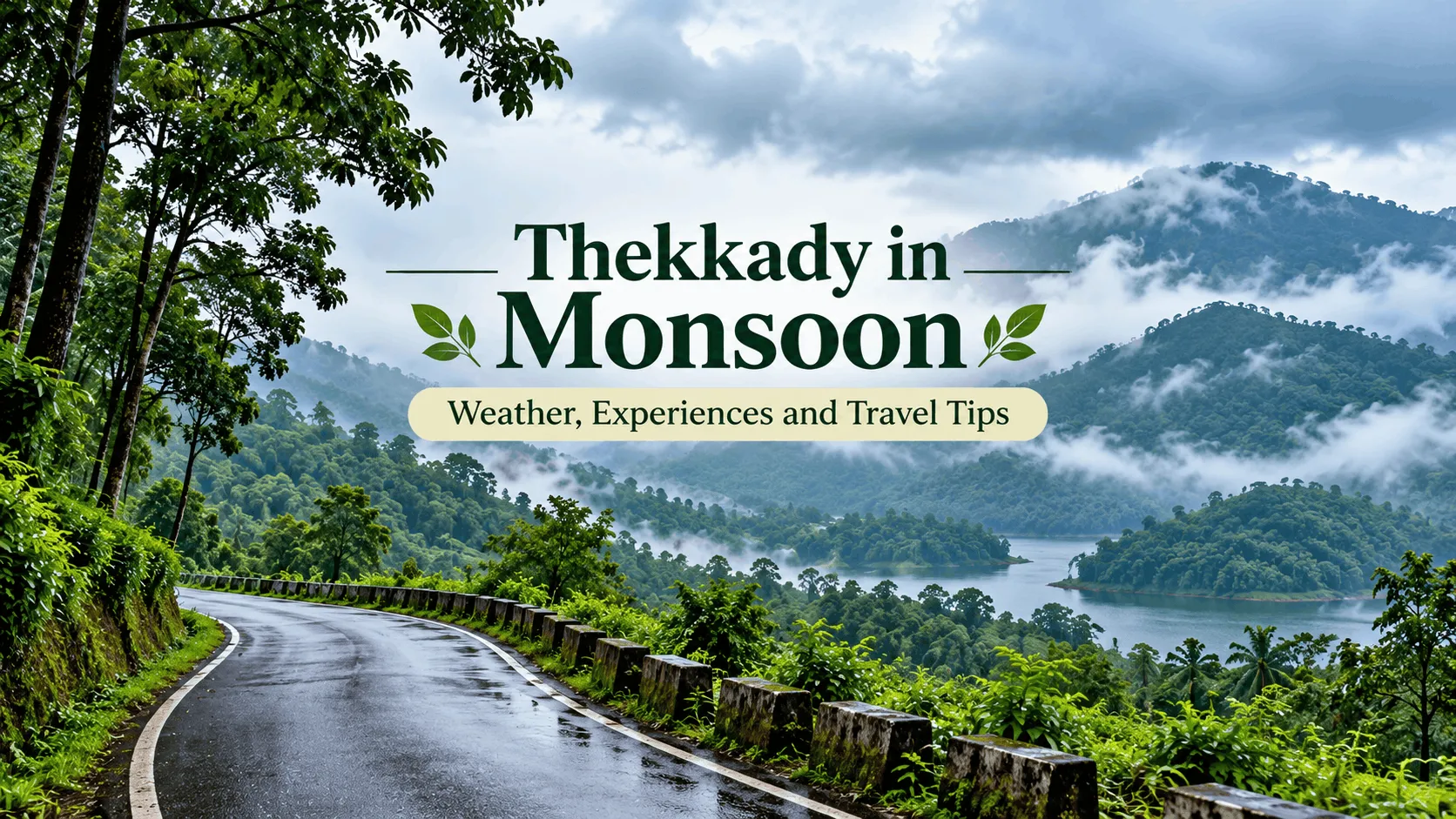
Thekkady in monsoon looks very different from the postcard version most visitors know. The hills around Periyar Tiger Reserve turn deep green, mist settles into the valleys, and the spice plantations drip with water. It is also a quieter, wetter and less predictable time to travel. Some activities may pause, roads can be slow, and plans need room to change.
This guide explains what the Thekkady rainy season is usually like, what you can reasonably expect to see and do, and how to prepare. It is written for travellers who are still deciding whether to go, so it is frank about the limits as well as the appeal. If you want a broader overview of the destination first, our Thekkady travel guide covers the basics.

Understanding the monsoon season in Thekkady
Most travel sources place the Thekkady rainy season between June and September, when the southwest monsoon reaches the Western Ghats. Heavy rain is usually reported for July and August, with June as the onset and September as a gradual retreat.
Thekkady also sits in a region that receives a second round of rain. One regional guide to Periyar describes a northeast monsoon from roughly October to December, which is why you may still meet showers in the months many people call the dry season. In practice, the transition between seasons is not a clean line, and the year you travel may differ from the average.
Keep one distinction in mind throughout this article. What follows is typical seasonal behaviour. It is not a forecast. Before you commit to dates, check the Indian Meteorological Department and local weather updates for the week you plan to travel.
Weather conditions and rainfall considerations
Travel sources describe monsoon temperatures in Thekkady as mild compared with the hot months before them, often in the low to high twenties in degrees Celsius. The hills stay humid, and the air feels damp even between showers.
Rain tends to arrive in different patterns. Some days bring steady drizzle for hours. Others have a bright morning followed by a heavy afternoon downpour. Because Thekkady lies in the hills, weather can change quickly, and a clear view can disappear into cloud within minutes.
If you are searching for the best time to visit Thekkady, the monsoon is generally not the first answer. Many guides recommend the cooler months from around October or November to February or March for wildlife and outdoor activities, with September sometimes suggested as a shoulder month as the rain eases. The monsoon suits a different kind of traveller, and the rest of this guide is meant to help you decide whether that is you.
How the landscape changes during the rainy season
The most obvious change is colour. Forest canopy, grass, tea and cardamom slopes all turn a saturated green, and dust disappears from the air. Streams and small waterfalls that are thin or dry in other months can run strongly, and travel writers often single these out as a highlight of the season.
Mist is the second change. In the early morning and after rain, cloud can sit low across the ridges, so the views are softer and more atmospheric than sharp and far-reaching. Photographers often like this. Anyone hoping for long clear panoramas may be disappointed on wetter days.
The third change is the ground itself. Trails become muddy, leaf litter turns slippery, and leeches are common in wet forest across the Western Ghats. That affects how and where you can walk, and it is one reason some forest activities are limited at this time of year.
Nature and plantation scenery during monsoon
Plantations are among the most rewarding places to be during the rains. Tea, coffee, cardamom and pepper all grow in the hills around Thekkady, and the wet season brings out rich foliage and a strong smell of damp earth and spice. Covered or semi-covered walkways, estate verandas and tea tasting rooms make it easier to enjoy the view without staying in the rain.

Short plantation visits work best in the gaps between showers, so ask your host or guide about the hours when rain usually eases. Wear closed shoes with a good grip, because stone and mud paths turn slick. If you are comparing sightseeing options, our guide to the best places to visit in Thekkady can help you separate viewpoints and plantations that suit wet weather from those better left for clearer days.
Outdoor activities and possible seasonal restrictions
Outdoor plans need the most flexibility in monsoon. Sources agree that trekking and lake based activities become less reliable in the rainy season, and some reports describe heavy rain leading to landslides and blocked roads in the hills.
Activities typically run by the forest department, such as guided walks, treks, bamboo rafting and overnight programmes, can be paused or cancelled when conditions are unsafe. Whether a particular activity is open on a particular day is decided by the authorities and operators, not by travel blogs. We have not listed any schedules here for that reason.
A practical approach is to treat every outdoor activity as weather dependent:
- Book refundable or changeable options where possible.
- Confirm availability with the Periyar Tiger Reserve or the operator a day or two before, and again on the morning itself.
- Keep an indoor or low risk alternative ready for each day, such as a spice market visit, a cooking class, a spa session or a plantation tasting.
Many visitors enjoy the season most when they plan for slower, sheltered experiences and treat any outdoor activity as a bonus. For more ideas to mix and match, see our list of the things to do in Thekkady, and check each one for rain suitability before adding it.
Periyar and wildlife experiences during rainy weather
Periyar Tiger Reserve is the main reason many people come to Thekkady, so it is worth being realistic. In the rainy season, thick vegetation and plentiful water mean animals are not drawn to the lake edge the way they can be in drier months. Several travel sources report that wildlife sightings are less reliable at this time of year. That is a general pattern and not a guarantee in either direction.
Boating on Periyar Lake is the best known activity, and it is also one that can be affected by weather and water conditions. Reports vary on how often services are reduced during heavy rain, so do not assume cruises will run every day. The reserve's own booking system is the place to check current availability, and visitors are asked to arrive at the boat landing well before departure on the days when services operate.
Birdlife, butterflies, frogs and insects often become more noticeable when it rains. If you enjoy small wildlife and the sounds of a wet forest, a guided walk on a day when walks are permitted can be memorable. Go with a licensed guide and follow every instruction, since wet ground changes both safety and animal behaviour.
Road conditions and transport considerations
Thekkady is reached by hill roads, and the final stretches can be narrow and winding. In heavy rain, drivers may face slow traffic, reduced visibility, waterlogged patches and occasionally landslides or fallen trees. Some sources note that road blockages can make travel difficult during the strongest rainfall.
We do not give live road information here, because it changes by the hour. Before you leave, check district announcements and local news, and ask your hotel or driver about the current state of the route you plan to use.
A few habits help:
- Travel in daylight whenever possible, and aim to reach the hills before dusk.
- Add buffer time to every journey and avoid tight onward connections on the same day.
- Choose an experienced local driver who knows the ghat roads, particularly if you are not used to hill driving in rain.
- Keep phone chargers, a power bank and some snacks in the car in case of delays.
Choosing suitable accommodation during monsoon
A good stay matters more in monsoon than in sunny months, because you may spend longer indoors. Look for a property with covered seating, a dry and well ventilated room, reliable hot water and a restaurant you can reach without walking far in the rain. A balcony or large window facing the forest turns a wet afternoon into part of the experience.
Check practical details before booking. Ask about access roads and parking in heavy rain, backup power during outages, and whether the property can arrange transport if your own plans change. Some travel sources suggest accommodation can be better value in the rainy season, but offers vary, so compare current rates rather than assuming a discount.
If you are still choosing where to stay, our overview of Thekkady resorts and stays explains the main options and what to look for in each. Whatever you pick, read recent guest reviews from the rainy months, since they show how a property copes with wet weather.
What to pack for a monsoon trip
Pack for rain, humidity and uneven ground, and keep everything dry.
- A light waterproof jacket or poncho and a compact umbrella.
- Quick drying clothes, plus a spare set, since cotton can stay damp for a long time in humid air.
- Closed shoes with strong grip and a pair of sandals for the room.
- Waterproof covers or dry bags for phones, cameras, documents and chargers.
- Socks long enough to tuck trousers into, and leech repellent if you plan any forest walk.
- Insect repellent, a small first aid kit and any regular medicines.
- A torch or headlamp for power cuts.
- A light layer for cool evenings in the hills.
Safety precautions and responsible travel
Weather in the hills can turn quickly, so give safety decisions priority over the itinerary. Follow instructions from forest staff, guides and hotel teams without argument, even if a closure disappoints you. Avoid walking near swollen streams or waterfalls, do not cross flooded paths, and stay off steep slopes after heavy rain.
Responsible travel matters here too. Periyar is a protected area, so keep to permitted routes, do not feed or disturb animals, and carry your waste out. Cut down on single use plastic, which is especially harmful in wet forest where it washes into streams. If your trip includes village or community visits, ask permission before taking photographs and treat local hosts with respect, particularly when rain changes their working day.
Finally, buy travel insurance that covers weather related delays and cancellations, and keep emergency numbers saved on your phone.
Who should consider visiting during monsoon?
Thekkady in monsoon tends to suit people who are comfortable with uncertainty. It can work well if you:
- Enjoy mist, greenery and slow, indoor friendly holidays.
- Value quieter surroundings and are happy to skip crowded viewpoints.
- Are flexible with dates and activities and do not mind changes at short notice.
- Care more about landscapes, plantations, food and rest than about guaranteed wildlife sightings.
It may be a poor fit if you have only a short window and want a full programme of boating, walks and treks. It is also harder for visitors with limited mobility, small children or health concerns, because wet paths and hill roads add risk. If wildlife is the main goal, consider the drier months instead.
Suggested monsoon trip-planning approach
Plan around flexibility rather than a fixed day by day schedule.
- Choose your dates after checking the typical pattern for the month, then look at the forecast as your trip approaches.
- Allow at least three nights, so a wet day does not take up your whole stay.
- Book your stay and transport with flexible or refundable terms where you can.
- Put the most weather dependent activity early in the trip, which leaves later days free to reschedule.
- Mix indoor and outdoor ideas for each day, and decide each morning based on current advice from local staff.
- Confirm every activity directly with the official authority or operator before you rely on it.
An experienced local operator can help with this kind of changeable planning, because they know which routes and experiences hold up in the rain and can adjust quickly when conditions change.
Frequently asked questions
Is Thekkady worth visiting in monsoon?
It can be, if you want green landscapes, mist and a quieter pace and you accept that some activities may be limited. If your priority is wildlife viewing or a full activity schedule, the drier months usually offer better odds.
Which months are the Thekkady rainy season?
Most sources place it between June and September, with the heaviest rain commonly reported in July and August. Showers can also occur in the months either side, so check the forecast for your dates.
Is Periyar open during the monsoon?
Many parts of the reserve generally stay accessible to visitors, but individual activities can be paused or cancelled when conditions are unsafe. Confirm current availability for the exact day with the Periyar Tiger Reserve or your operator.
Will boating on Periyar Lake run in the rainy season?
It depends on weather and water conditions on the day, and reports differ on how often services are affected. Check the official booking system and arrive early if a cruise is confirmed.
Will I see wildlife in Thekkady during the rainy season?
Sightings are generally described as less reliable than in drier months, though birds, insects and amphibians can be more active. No season guarantees sightings.
Are roads safe in Thekkady during monsoon?
Roads are usable on most days but can be slow, and heavy rain may cause blockages or landslides. Travel in daylight, allow extra time and ask locals about current conditions before you set off.
Is Thekkady cheaper during the monsoon?
Some travel sources report lower rates and fewer crowds in the rainy season, though this varies by property and week. Compare current prices before you book.
What should I carry for a monsoon visit?
Bring waterproof outerwear, quick drying clothes, grippy closed shoes, dry bags for electronics, repellent and a small first aid kit.
Can families with children visit Thekkady in monsoon?
Many do, but wet paths, hill roads and changing weather need extra care. Choose sheltered activities, a comfortable stay and a flexible schedule.
Is it better to visit Thekkady in September or later?
September is often described as the season easing, while October to February is widely recommended for wildlife and outdoor plans. Choose based on whether you value fewer crowds and green scenery or more reliable activities.
Conclusion
Thekkady in monsoon rewards travellers who go with the right expectations. You get lush hills, mist, flowing streams and a calmer atmosphere, in exchange for less predictable activities, slower roads and a wildlife experience that cannot be promised. Treat the weather as part of the trip, stay flexible, and check current conditions with the Periyar Tiger Reserve, local authorities and your operator before you travel.
If those trade-offs suit you, the rainy season can be one of the most atmospheric times to see the Western Ghats. If they do not, the drier months are a safer choice, and you can always return when the weather matches your plans.