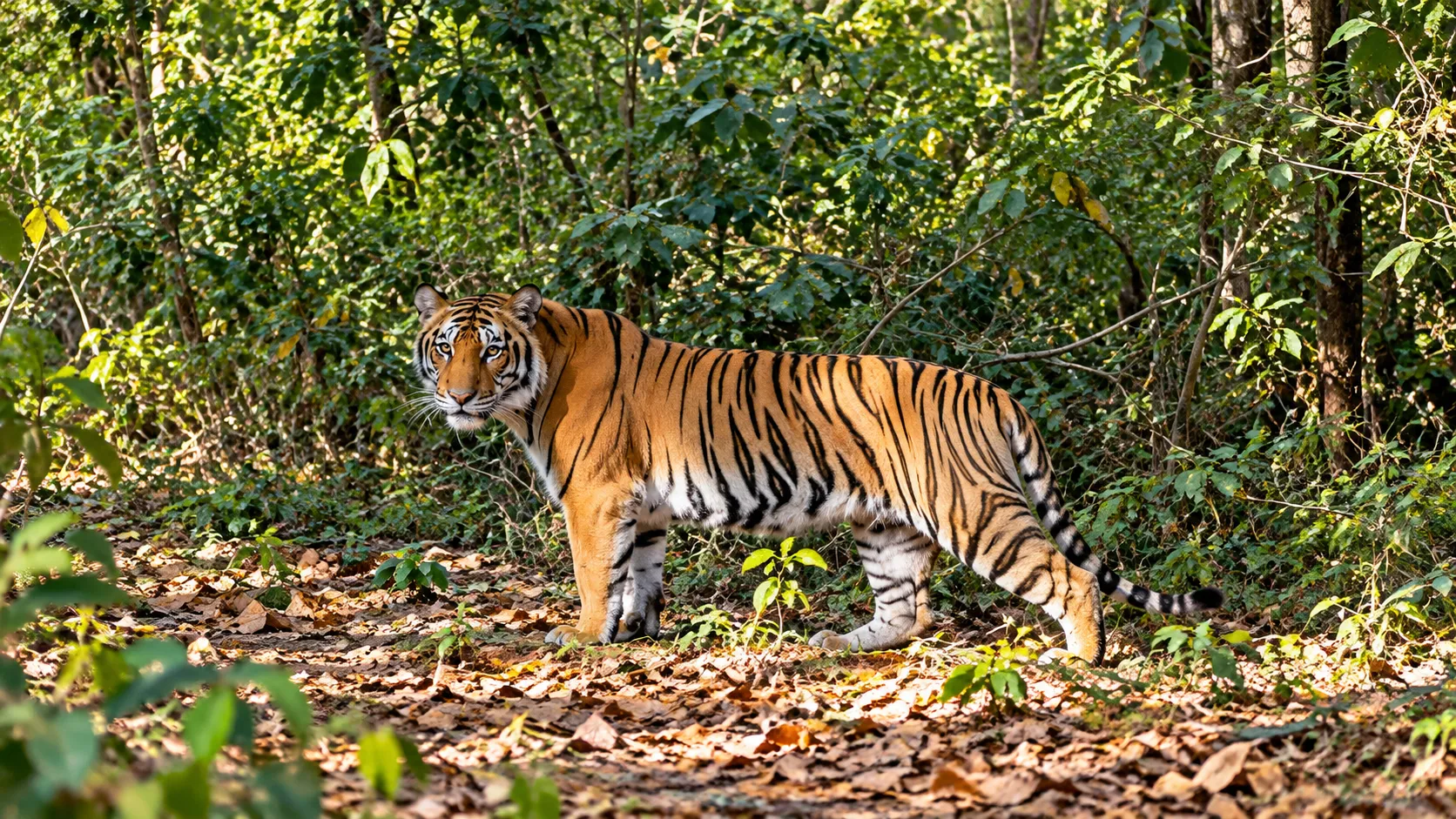
Dampa Tiger Reserve is not a place to arrive at with a safari checklist. It is a large protected forest on Mizoram's western edge, set against the border with Bangladesh, and its main job is conservation. Visitors are guests in a working protected area where access depends on forest-management decisions, and where the animals that make the reserve important are wild, shy and rarely seen.
That is worth understanding before you plan anything. This guide explains where Dampa is, what its forest and wildlife are known for, how its conservation role differs from what visitors can actually do, how to reach the area and what to check with the forest authorities. It gives no fees, timings, distances, journey times or lodging names, because we could not verify them from official sources, and it tells you what to confirm instead.
Where Is Dampa Tiger Reserve?
Dampa Tiger Reserve lies in Mamit district in western Mizoram. According to the Wildlife Institute of India's tiger reserve management profile, it sits at the meeting point of Bangladesh and two Indian states, Mizoram and Tripura, with the Chittagong Hill Tracts of Bangladesh to the west. The reserve's headquarters are at West Phaileng.
It is the largest protected area in Mizoram. The official area is 988 square kilometres in total, made up of a 500 square kilometre core area and a 488 square kilometre buffer, according to the National Tiger Conservation Authority. Older and informal sources quote other figures, often around 500 square kilometres for the original sanctuary, so use the official numbers when you can.
The reserve began as a wildlife sanctuary and was notified as a tiger reserve under Project Tiger in 1994, according to the Mizoram Gazette notification of that year. For a wider view of the state and how its regions connect, see our Mizoram travel guide.
The Reserve and Its Forest Landscape
Dampa is hill country, not open grassland. The terrain is hilly and cut by many streams, with elevation ranging from about 49 to 1,095 metres above sea level, according to the NTCA. The vegetation includes tropical evergreen and semi-evergreen forest, along with moist deciduous and sub-montane types, according to the Wildlife Institute of India profile. In practice, that means dense forest, steep ground and few long views.
The forest is cut by rivers and streams, and the Khawthlangtuipui river drains the western side. The Tropic of Cancer passes through the reserve near the range office at Phuldungsei, which is a small geographical detail that local people and forest staff sometimes mention.
The reserve's wildlife is varied but difficult to see. The NTCA lists tiger, leopard, clouded leopard, golden cat and leopard cat among the cats, and Incredible India's listing adds elephants, gaur, binturong, dhole, bears, primates and hornbills. The Wildlife Institute of India profile notes that eight of India's 15 primate species occur in Dampa. Seeing any of this requires luck, patience and, where allowed, local guidance.

Conservation Importance and What Visitors Can Actually Do
These are two separate questions, and travel writing often blurs them.
Dampa's conservation importance is well established. The NTCA describes the reserve as having a low tiger density, and the Wildlife Institute of India notes that the tiger population is single and probably isolated. The reserve is also connected to forests across the border, which matters for wildlife movement. That makes the forest valuable whether or not anyone ever sees an animal in it.
What visitors may do is a different matter, and it is set by the forest authorities, not by the reserve's reputation. Entry to a tiger reserve is usually regulated, and access can change with forest-management decisions, conservation needs, weather, local conditions and security considerations. We found no official listing of safari services, tourist trails, viewing towers or visitor facilities for Dampa, and we are not describing any. Older travel accounts describe going on foot with forest staff, but they are not a guide to what is open today.
So treat Dampa as a place to ask, not assume. Do not plan a trip around a particular activity until the forest department has confirmed that it is permitted for visitors.
Before You Plan: Access, Permissions and What to Verify
Official tourism material advises visitors to contact Mizoram's forest department before travelling to Dampa. A travel article also says permissions can be obtained from forest officials at West Phaileng or from the department in Aizawl, but we could not confirm this against an official notice, so treat it as a lead and not a rule.
Before you commit to dates, ask the forest authorities the following:
- Is the reserve currently open to tourists, and which parts, if any, can visitors enter?
- What permission or permits are needed, who issues them and how far in advance?
- What fees, timings and group-size rules apply?
- Are visitors required to be accompanied by forest staff or authorised guides?
- What transport and accommodation arrangements, if any, are available?
- Are there any restrictions linked to the border, the season or recent events?
- What is the current security and access situation in the area?
Get the answers in writing where you can, and carry copies. Visitors from other parts of India have generally needed an Inner Line Permit to enter Mizoram, and foreign nationals have separate arrangements. Local reporting in 2026 said new guidelines had been approved, with details not fully published at that time, so check official Mizoram government channels as well. We are not quoting any fee, timing or permit procedure, because we could not verify them.
How to Reach Dampa Tiger Reserve
Most travellers begin in Aizawl, which has Lengpui Airport and, since 2025, a rail link to the nearby Sairang station. Check current flights and train services before you plan, because schedules change. Our Aizawl travel guide covers the city and how onward journeys begin.
From Aizawl, the reserve is reached by road, towards Mamit district and West Phaileng, where the reserve headquarters are. We have not given distances or journey times, because published figures differ and hill-road conditions change. Ask the forest department or a local driver which approach is current and whether the road to the reserve is passable.
Local transport is informal. Shared vehicles and buses serve towns in Mamit district, but timings, fares and frequency may change, and services may be limited on Sundays and holidays. A hired vehicle with a driver who knows the roads is usually more flexible. Do not assume that vehicles or guides will be available at the reserve gate, because we could not confirm this.
The Role of Forest Staff and Authorised Guides
In many Indian protected areas, visitors are required to move with forest staff or authorised guides, and Dampa may follow similar rules. If guides are required, they do more than lead the way. They know which routes are open, where animals have recently been, which areas are closed and what the local rules are.
Follow their instructions without argument. If a guide says to stop, turn back or stay quiet, that is part of the conditions of entry, not a negotiation. Do not hire unofficial guides to take you into restricted areas, and do not pay anyone who is not clearly authorised. Ask the forest department who can legitimately accompany visitors.
Best Time to Visit
Official tourism material describes October to April as the best time to visit Dampa. This is the drier part of the year in Mizoram, when roads are generally more reliable and forest conditions easier. Cool mornings and evenings are likely at higher elevations, so carry a warm layer.
The monsoon, roughly from late spring into early autumn, brings heavy rain, landslides, leeches and slow or blocked roads, and access to the forest may be limited. Even in the dry months, conditions vary, and the reserve may be closed to visitors for management reasons. Check the forecast and the reserve's status close to departure.
Responsible Wildlife Viewing
Wildlife in Dampa is wild, and sightings are unpredictable. Dampa is described as having a low tiger density, so you should not expect to see a tiger, and you may not see any large animal at all. A good visit can mean birdsong, forest sounds, tracks, the shape of the terrain and the knowledge that animals are present. Treat anything more as a bonus.
Responsible behaviour protects both animals and people.
- Stay on authorised routes and follow your guide or forest staff.
- Do not leave the path to look for animals, and do not enter closed areas.
- Do not feed wildlife or leave food waste.
- Keep your voice low, and do not shout, play music or make sudden noises.
- Keep a respectful distance from any animal, and never try to approach it for a closer view.
- Do not litter. Carry out everything you bring in, including small items such as wrappers.
- Avoid single-use plastic where you can.
- Do not collect plants, feathers, bones or other natural items.
- Do not light fires or smoke in the forest.
- Respect closures and rules, even if they limit what you can see.

Photography Etiquette
Photographing wildlife and forest scenery is part of many nature trips, but it comes with rules.
Ask your guide or the forest staff what is permitted before you start. Some protected areas restrict drones, flash, tripods or photography near certain installations, and the border location means that photographing security posts or personnel is not appropriate.
Do not chase an animal for a photograph, use flash on animals or use recorded calls to attract them. Keep your camera quiet and your movement slow. Never put yourself or wildlife at risk for an image.
Ask before photographing local people, villages or homes, and accept a refusal. The communities living near the reserve have their own relationship with the forest, and travellers should not treat them as part of the scenery.
What to Pack
Conditions in the forest and on the road call for practical gear.
- Sturdy, closed shoes with good grip, and long trousers and sleeves for brush and insects.
- Rain gear and a light warm layer, since weather changes quickly in the hills.
- Insect repellent, and leech protection in wet conditions.
- A refillable water bottle and snacks, since facilities near the reserve may be limited.
- A basic first aid kit and any personal medicines.
- Binoculars, which help you watch without approaching, and a camera with a quiet setting.
- A torch or headlamp, and a power bank.
- Printed and digital copies of your permits, identification and the forest department's contact details.
- Cash, since ATMs and digital payments may be unreliable in small towns.
Mobile coverage can drop in the forest and on rural roads, so download offline maps and tell someone your plan.
Itinerary Considerations
An itinerary for Dampa depends entirely on what the forest authorities allow, so keep it flexible.
Treat Aizawl as your base for planning. Spend time there confirming permission, arranging transport and checking road conditions before you set out. Allow at least a full day each way for the journey, and more if the roads are affected by weather. Because you cannot rely on same-day return, do not schedule tight flights or trains after your trip.
If the reserve is open to visitors and a guide is arranged, plan your time around the guide's advice. Early morning and late afternoon are often the quietest times in forests, but the forest staff will decide what is possible. Build in spare time in case a visit is delayed, shortened or cancelled.
If access is not possible, Dampa's wider area may still be reachable for road travel and local culture, but you should not assume this. Have an alternative plan elsewhere in Mizoram, so your trip does not depend on one permission.
Where to Stay
We could not verify any official accommodation for visitors at or near the reserve, and we are not naming properties. Options near West Phaileng and in Mamit district are likely to be limited and simple. Ask the forest department and local contacts what is available, and whether staying overnight in the area is permitted.
If lodging near the reserve is unclear, many travellers choose to base themselves in Aizawl and make arrangements from there, though the journey is long. Book ahead, ask for written confirmation and expect basic facilities with variable hot water and power cuts.
Border Location and Safety
Dampa lies along the Bangladesh border, and the reserve's location has shaped how it is managed. Reporting from 2015 described parts of the reserve as difficult to patrol and said forest staff had cited safety concerns in some areas. That reporting is old, and conditions may differ today, but it is a reason to ask the forest department about current access and security before you plan.
Do not try to approach the border line, and follow any instruction from officials. Do not photograph security installations, and carry your identification and permits. If staff or guides tell you an area is closed, accept that.
Planning a Wider Mizoram Trip
Dampa is in the far west of Mizoram, while other protected areas lie elsewhere in the state, and combining them takes planning because journeys on hill roads are long. Our Phawngpui National Park guide covers the state's best-known mountain and trek in the south-east, and our Murlen National Park guide covers a forest park in the east near Champhai. Treat each as a separate trip stage, with its own permissions and travel time, and do not assume you can fit them into a short itinerary.
Frequently Asked Questions
Where is Dampa Tiger Reserve?
Dampa Tiger Reserve is in Mamit district in western Mizoram, on the border with Bangladesh and close to Tripura. Its headquarters are at West Phaileng.
How big is Dampa Tiger Reserve?
The National Tiger Conservation Authority lists a total area of 988 square kilometres, made up of a 500 square kilometre core and a 488 square kilometre buffer.
Can I see tigers at Dampa?
Sightings cannot be promised. The reserve is described as having a low tiger density, and tigers are rarely seen. Treat any sighting as unlikely and unpredictable.
How do I reach Dampa Tiger Reserve?
Most travellers start from Aizawl and continue by road toward Mamit district and West Phaileng. Check current road conditions and access with the forest department before travelling.
Do I need permission to visit?
Official tourism material advises contacting Mizoram's forest department before visiting. Requirements, fees and timings were not verifiable, so confirm them directly and in writing.
What is the best time to visit Dampa?
Official tourism material describes October to April as the best period. The monsoon brings heavy rain and slow roads, and access may be limited at any time.
Are there safaris or accommodation inside the reserve?
We could not verify any official safari services or visitor accommodation. Ask the forest department what, if anything, is currently available.
Conclusion
Dampa Tiger Reserve matters because of what its forest protects, and a visit is best planned around that fact. Confirm access and permission with the forest department first, travel with authorised staff where required, stay on permitted routes and expect forest and quiet more than animals. If the reserve is open to you, treat it as a privilege. If it is not, the forest is still doing its work.