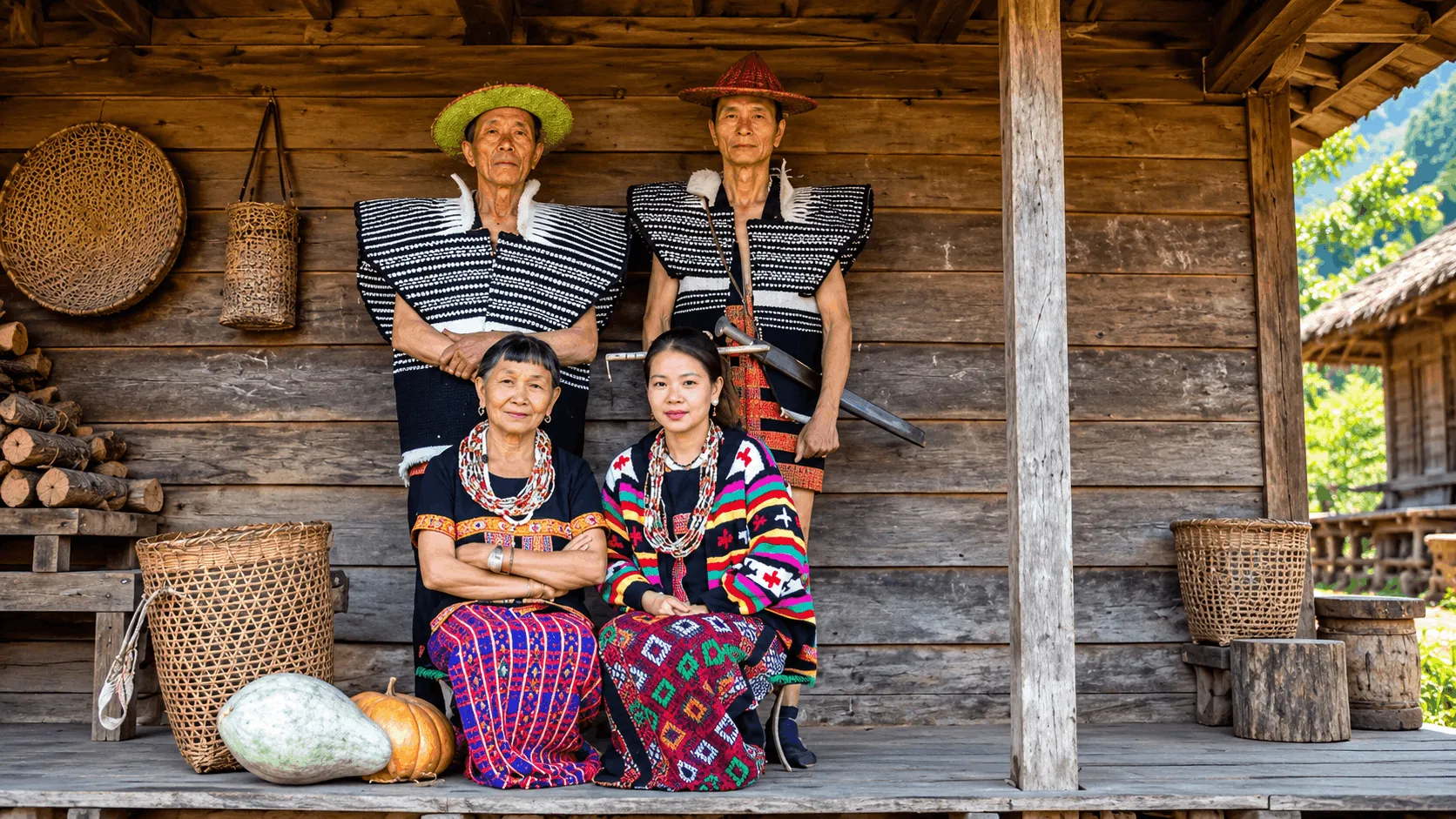
The Idu Mishmi live in the forested hills and river valleys of north-eastern Arunachal Pradesh, in a region shaped by the Dibang River and its tributaries. Theirs is one of the many distinct communities in the state, with its own language, ritual specialists, festivals and relationship with the land.
This guide introduces the Idu Mishmi people, where they live, what is documented about their culture and how travellers can visit respectfully. It is an outside overview, and the most reliable voices on Idu Mishmi life are Idu Mishmi people themselves.
Who Are the Idu Mishmi?
The Idu Mishmi are an indigenous community of Arunachal Pradesh. They belong to the wider group known as the Mishmi, which also includes other communities such as the Digaru (also called Taraon) and the Kaman (also called Miju). Each of these has its own language and customs, and they are not interchangeable. A careful writer says "Idu Mishmi" when talking about the Idu, and "Mishmi" only when speaking of the wider group.
The Idu are officially recognised as a Scheduled Tribe in India. I have not given a population figure, since numbers vary by source and year.
Some Idu communities also live across the border in Tibet, where outside writers sometimes use other names for them. Names applied by outsiders do not always match the names people use for themselves, so it is best to follow the community's own terms.
Where Do the Idu Mishmi Live?
The Idu Mishmi live mainly in the Dibang Valley and Lower Dibang Valley districts of Arunachal Pradesh. Anini is the headquarters of Dibang Valley district, and Roing is the headquarters of Lower Dibang Valley district. Villages are scattered across river valleys, forested slopes and higher ground
The landscape is steep and green, with fast rivers, deep gorges and dense forest. The Dibang River is the main waterway, and settlements often follow it and its tributaries. This is a remote part of the state. Roads exist but can be slow and affected by rain, and many villages are small and far apart.
Idu Mishmi Culture and Traditional Lifestyle
The following is a general picture. Practices differ between families, clans and villages, and many people combine traditional customs with modern work, schooling and faith.
Community life. Family and clan ties are central to Idu Mishmi society. Villages are organised around kinship, and customary institutions play a role in resolving disputes and guiding community decisions.
Traditional livelihoods. Agriculture has long been important, and many households farm small plots, often using methods suited to hillsides, along with fishing, gathering forest produce and, historically, hunting. Today livelihoods also include government jobs, trade, tourism and other work. The Dibang region is also known for medicinal plants, including a plant often called Mishmi teeta, which has had a documented role in local and regional trade.
Religion and ritual specialists. Many Idu Mishmi follow an indigenous belief system, though other faiths are also present in the community. Ritual specialists known as Igu play an important part in ceremonies, healing and the passing on of knowledge.
Oral traditions. Knowledge, genealogies, ritual chants and stories have traditionally been passed on by speaking and remembering, not through writing. Elders and ritual specialists are therefore important keepers of cultural memory.
Relationship with nature. Forests, rivers and animals carry meaning in Idu Mishmi belief and daily life. The best-known example reported in recent years is the community's traditional respect for tigers, which some accounts describe in terms of kinship. This should be presented as a belief that people hold, not as a scientific claim, and it is worth reading about in the words of Idu Mishmi people.
Idu Mishmi Language and Cultural Identity
The Idu Mishmi speak their own language, usually called Idu, which is generally classed as Tibeto-Burman. The Digaru and Kaman communities speak different languages, so Mishmi is a family of communities more than a single language group.
Language is a major part of identity, and like many smaller languages, Idu faces pressure from widely spoken languages used in schools, media and government. Efforts to document and teach it have been reported.
For travellers, a few polite words in the local language are appreciated, though Hindi and English are widely understood in towns. Ask your host how to say hello and thank you, and use the phrases they teach you.
Traditional Food and Cuisine
Meals in Idu Mishmi households vary, but they commonly centre on rice, with vegetables, forest greens, bamboo shoots, fish and meat depending on the season and the family. Cooking is often simple, with boiling, steaming and roasting more common than heavy frying. Herbs and wild plants from the forest add flavour.
Rice-based drinks are part of social life in many households, and offering food or drink is a sign of welcome. If you are offered something you do not wish to eat or drink, decline politely and explain that you cannot, and your host will usually understand. Tell your host about allergies and dietary needs in advance.
Food is also tied to ceremony. Some dishes and drinks appear at festivals and rituals, and you may be asked to follow particular customs when eating at such events.

Idu Mishmi Festivals and Cultural Celebrations
Festivals are among the most visible parts of Idu Mishmi culture. The best known is Reh, a major community celebration associated with ritual, thanksgiving and family and clan gatherings. It involves prayers led by ritual specialists, feasting, music and traditional dress.
Reh is traditionally held early in the year, but dates, venues and formats can differ between villages and can change from year to year, and some rituals are private.
If you want to attend a festival, contact the local tourism office, a community organisation or a trusted host well in advance. Ask what is open to visitors, what to wear, where to stand and whether photography is allowed. Treat the event as a community ceremony, not as a performance for tourists.
Other seasonal and agricultural observances may also be part of community life. Ask locally and rely on community sources.
Traditional Clothing, Jewellery and Crafts
Traditional dress among the Idu Mishmi includes woven textiles, beadwork and ornaments, and it is most often worn at festivals, ceremonies and important gatherings. Mishmi textiles in general are known for their patterns and colours. Specific designs and ornaments can carry meaning related to family, clan, status or occasion, and these meanings are best learned from community members and not guessed.
Weaving is a significant craft, and bamboo and cane work are also practised in many households. Handmade items include textiles, baskets and utility objects. If you wish to buy crafts, buy directly from makers or from reputable local sellers, ask how and where items were made and pay a fair price. Avoid bargaining aggressively, and do not ask to buy items worn as part of ritual dress.
Ask before photographing clothing, jewellery or people wearing them, and accept a refusal.
Idu Mishmi Villages and Cultural Experiences
Visiting an Idu Mishmi village is a chance to see daily life, but it needs planning and permission. Villages are homes, not attractions.
Possible experiences, where they are offered and welcomed, include staying with a local family, joining a meal, walking through village paths with a local guide, learning about weaving or farming and meeting community members. Some community-led tourism efforts have been reported in the region.
Arrange visits through a local host, guide or community organisation. Do not turn up unannounced, enter compounds without invitation or photograph people without asking. Facilities in villages are usually simple, so expect basic rooms and limited power and connectivity.
For wider cultural context, see our Tribes of Northeast India.
Idu Mishmi and the Natural Environment
The Dibang region is one of the more biologically rich parts of Arunachal Pradesh. It includes protected forest areas and a range of habitats from low valleys to high mountains.
For the Idu Mishmi, the environment is not just scenery. Forests provide food, medicine and materials, and rivers and mountains figure in belief and story. Respect for animals, including the traditional regard for tigers described in several accounts, is part of how many people talk about their relationship with nature. Remember that this is a belief system held by people, and that individual views differ.
Visitors can support this by staying on paths, carrying out rubbish, keeping noise low, leaving plants and animals alone and following local and forest-department rules. Do not expect to see wildlife. Animals are rarely seen, and no guide can promise it.
How to Experience Idu Mishmi Culture Responsibly
Respect begins with asking. Ask before entering a village, before photographing anyone, before attending a ceremony and before buying an object.
Dress modestly and follow local guidance on clothing. Be quiet and respectful at ceremonies, and stay at a distance from rituals unless invited closer. Never touch sacred objects, shrines or ritual items.
Photography needs particular care. Do not photograph rituals, ritual specialists or sacred sites without clear permission, and do not post images in ways that identify people or places without their agreement. Avoid using drones near villages or ceremonies unless you have permission.
Use local guides and homestays, buy from local makers, eat at local places and pay fair prices. Avoid treating culture as entertainment. A festival or ceremony is a living event, and community members are not obliged to perform for visitors.
Read more in our Responsible Tribal Tourism in Northeast India.
Planning a Cultural Trip
Transportation. Most travellers approach through upper Assam and continue by road into Lower Dibang Valley, with Roing as the usual hub. Dibrugarh and Tinsukia are widely used gateways.
Accommodation. Roing has more options than the villages, usually hotels and guesthouses, while homestays and simple lodges may be available elsewhere. Book ahead, especially around festivals.
Local guides. A guide who knows the community can arrange visits, translate and explain etiquette. Ask how they work with villages and how they pay people.
Weather. The region is wet, and the monsoon brings heavy rain. The cooler, drier months are generally easier for travel. Higher areas can be cold. Check forecasts before you go.
Road conditions. Roads in the hills can be slow and are prone to landslides. Allow extra days and keep plans flexible.
Permits. Arunachal Pradesh regulates entry. Indian citizens who are not residents generally need an Inner Line Permit, and foreign nationals have separate requirements. Some areas may have additional rules. Procedures and fees change, so verify them with official sources before you travel.

Idu Mishmi Culture and Tribal Tourism
Tribal tourism can bring income, pride and interest to communities, and it can also bring pressure. The difference lies in who decides and who benefits. Good tourism is arranged with the community, keeps money in local hands and respects limits on what visitors can see and photograph.
For the Idu Mishmi, whose communities are small and live in remote and ecologically important areas, this matters especially. Choose operators and hosts who work with villages openly, travel in small groups and listen when told no. Learn before you go, read community-authored sources where you can and accept that some things are not for outsiders.
Tribal Discovery Tour approaches this with community consultation in mind.
Frequently Asked Questions
Who are the Idu Mishmi?
The Idu Mishmi are an indigenous community of Arunachal Pradesh, part of the wider Mishmi group, with their own language, festivals and customs.
Where do the Idu Mishmi live?
Mainly in the Dibang Valley and Lower Dibang Valley districts of Arunachal Pradesh. Some communities also live across the border.
What language do the Idu Mishmi speak?
They speak Idu, generally classed as a Tibeto-Burman language. Other Mishmi communities speak different languages.
What is the Reh festival?
Reh is a major Idu Mishmi celebration involving ritual, feasting and community gathering. Dates and arrangements vary, so check locally.
What do the Idu Mishmi eat?
Meals commonly centre on rice with vegetables, bamboo shoots, forest greens, fish and meat, depending on the family and season.
Are Idu Mishmi villages open to tourists?
Some visits are possible, but they should be arranged with permission through a local host, guide or community organisation.
Can I photograph Idu Mishmi people and ceremonies?
Always ask first. Do not photograph rituals, ritual specialists or sacred sites without clear permission.
Do I need a permit to visit the Dibang Valley?
Non-resident Indian citizens generally need an Inner Line Permit, and foreign nationals have separate rules. Verify current requirements with official sources.
What is the best time to visit the Dibang region?
The cooler, drier months are generally easier. The monsoon brings heavy rain and road disruption.
How can I visit responsibly?
Ask permission, use local guides and homestays, buy from local makers, respect ceremonies and carry out your rubbish.