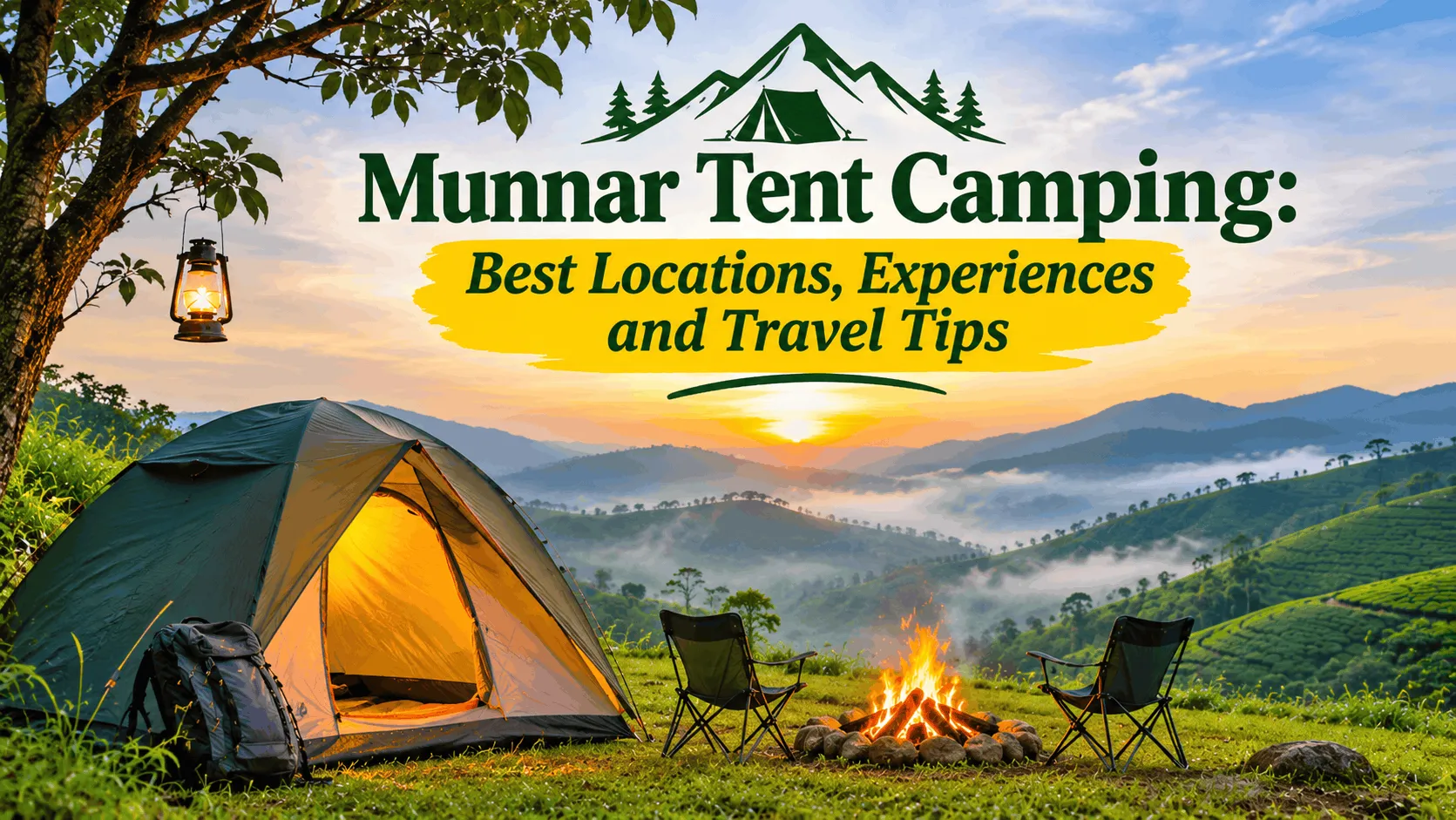
Waking up in a tent in the hills above Munnar is a different trip from staying in a hotel in town. You hear the morning before you see it: birds starting up, a distant tea-estate vehicle, wind moving through the slopes. Then you unzip the flap and the valley is there, sometimes clear, sometimes lost in cloud.
Munnar tent camping suits travellers who want cool air, quiet and a closer connection to the landscape without a full wilderness expedition. This guide explains what the experience is like, the settings you are likely to come across, what to check before choosing a campsite, and how to plan around weather, safety and comfort. It also covers packing, advice for couples, families and adventure travellers, and how to camp responsibly.
One note on approach. Campsites, facilities and rules change, and they differ between private operators and forest or plantation areas. We do not name campsites or quote prices here. Where details matter, we tell you what to ask so you can verify them yourself.

What munnar tent camping is actually like
Munnar sits at roughly 1,600 metres in Kerala's Western Ghats, in Idukki district. At that height, evenings cool down quickly and mornings can feel properly cold, which is a large part of the appeal for people travelling from warmer parts of India.
A typical camping stay follows a simple rhythm. You arrive in the afternoon, settle in, and spend the evening outdoors, perhaps around a campfire if the site allows one. The night is quiet, with the occasional sound of wildlife or wind. Morning is the highlight, with early light on the hills and a slow start over tea or breakfast.
The experience varies a lot from one site to another. Some campsites are basic, with a tent and shared facilities. Others offer more comfort, with beds, bedding and attached washrooms. Because there is no single standard, the details of any specific campsite should come from the operator directly, not from general descriptions like this one.
If you are still building the wider trip around your camping night, our Munnar Travel Guide covers how to combine the hills with sightseeing, food and transport.
Camping settings around Munnar
Camping near Munnar generally falls into a few kinds of setting. Which of them are available to you at any given time depends on operators, land use and local rules, so treat the list below as a way of thinking about options, not a catalogue of places.
Tea estate surroundings
Many travellers picture tent camping with tea slopes in the background, and it is easy to see why. Rows of tea bushes, cool mornings and long views give the area its identity. Camping near plantation land can feel peaceful and scenic, and it is a good way to see the working landscape up close.
Keep in mind that tea estates are working land, often privately held. Access depends on the owner and on local arrangements, and wandering through the rows on your own is rarely appropriate. If you want to understand what staying on or near an estate involves, our tea estate stay guide explains the options and what to ask.
Mountain and hilltop landscapes
Higher campsites tend to offer wider views, stronger wind and colder nights. The trade-off is often a rougher access road, fewer nearby shops and a greater need to be self-reliant. These settings suit travellers who want scenery and star-filled skies and who are comfortable with basic arrangements.
Weather changes fast at height. Fog can arrive within minutes, and a clear afternoon can turn into a wet evening, so bring layers and a flexible mindset.
Nature camps and forest-edge areas
Some campsites sit near forest edges, streams or reservoirs. These can feel more secluded and offer a stronger sense of being in nature, but they also bring more attention to wildlife, insects and rules set by forest or local authorities.
Camping in or near protected forest areas can be restricted, and rules can change. Never assume that a place is open for camping because you have seen photographs of tents there. Ask the operator what permissions they hold and, if in doubt, confirm with the relevant local authority.
Camps linked to treks and adventure activities
Some travellers camp as part of a trek or an adventure itinerary, where the tent is a base for walking, hiking or exploring at dawn. If that sounds like your style, our Munnar trekking guide covers routes, fitness and what to expect, and it is worth reading before you decide how remote a campsite you actually want.
What to consider before choosing a campsite
Photographs sell almost every campsite. Questions will tell you more. Before you pay or travel, work through the points below and get the answers in writing where possible.
Access and the journey
Find out how you reach the site and how long the last stretch takes. Some campsites need a steep or rough road, and a regular car may not manage it. Ask whether pickups are arranged, whether you can arrive after dark, and what happens if heavy rain affects the road.
Munnar has no airport or railway station of its own, and the usual routes come in from Kochi and other cities. Plan the arrival so that you are not trying to reach a remote campsite in the dark.
Facilities
Facilities vary widely, and you should not assume anything. Ask about:
- The type of tent and bedding provided, or whether you bring your own
- Toilets and washing arrangements, and whether they are shared
- Drinking water and food, including whether meals are provided or you cook
- Electricity or charging points, and lighting at night
- Whether campfires are allowed and who arranges them
Safety and the operator
Look for a campsite that can explain how it handles emergencies, weather and wildlife. Ask whether staff stay on site overnight, how far the nearest medical help is, and whether there is mobile reception. In hill areas, coverage can be patchy, so share your plan with someone before you go.
Rules and permissions
Ask what permissions apply to the site and whether there are limits on group size, music, fires or night-time movement. Reputable operators should be able to answer clearly. Vague answers are a reason to look elsewhere.
Booking and cancellation
We cannot tell you what any operator's booking terms are. Ask about the cancellation policy in case of heavy rain, check what is included, and keep a record of what was promised.
Weather and the best season for camping
Munnar's weather decides how comfortable your camping trip will be, so it is worth choosing the season with some care.
The monsoon brings heavy rain, and the landscape turns very green, but it can also bring landslides, slippery roads, leeches and damp gear. Many people find camping less comfortable then unless the campsite has solid shelter and good drainage.
Cooler months tend to bring clearer and more pleasant days, and cold nights that make a campfire or a warm layer welcome. These months are also busier, so enquire early. Warmer months are generally drier, but afternoons can still turn cloudy.
Whatever the season, check the forecast just before you travel and ask the operator how they handle bad weather. A good camp will have a plan, such as moving guests to a sheltered area or rescheduling.
Camping advice for couples, families and adventure travellers
Couples
Couples often look for privacy, views and an unhurried pace. Pick a campsite that offers a comfortable tent and clean facilities, and prioritise a setting where mornings are quiet. A site with a clear view at dawn is worth a little extra effort to find. If you want an early light, our guide to Munnar sunrise points can help you decide which area to base yourselves in.
Families
Families should favour easy access, reliable facilities and staff on site. Ask about the safety of the tent area, the distance to the nearest road and what the operator does about wildlife and insects. Keep children close after dark, carry a first aid kit and pack warm clothes, because evenings in the hills get cold quickly. A shorter stay of one night is often a good first try.
Adventure travellers
If you want more than a quiet night, consider a campsite that suits a trek, a sunrise hike or a longer outdoor itinerary. Be honest about your fitness and experience, hire a licensed local guide for anything beyond easy walking, and confirm the rules for the area before heading out. Do not walk in the dark on unfamiliar ground.

Safety tips for camping in Munnar
Hill camping is generally straightforward, but a few sensible habits make it safer.
Tell someone where you are going and when you plan to return. Keep a torch, a power bank and a basic first aid kit within easy reach. Store food securely and away from your sleeping area, since food attracts insects and animals. Follow your host's advice about wildlife, and never approach or feed animals.
Avoid camping close to steep drops, stream beds or unstable slopes, especially after rain. Do not leave a fire unattended, and extinguish it fully before you sleep. If the weather turns severe, move to shelter and follow the operator's instructions without delay.
Packing essentials for munnar tent camping
Pack for cold, damp and changeable conditions, even if the day looks warm.
- Warm layers, including a fleece or jacket, a cap and socks for cold nights
- A rain jacket or poncho, and a waterproof bag cover
- Sturdy closed shoes with good grip, plus a spare pair of socks
- A torch or headlamp with spare batteries
- A sleeping bag or extra blankets, unless the operator provides bedding
- Water bottle, snacks and any medication you need
- Insect repellent and a small first aid kit
- A power bank, sunscreen and a basic toiletry kit
- A rubbish bag so you can carry out what you bring in
If the campsite supplies equipment, ask what is included before you decide what to carry.
Responsible camping and protecting the landscape
Munnar's hills are a home, a working landscape and a habitat all at once, so how you camp matters.
Carry out all rubbish, including food waste and small items such as wrappers. Avoid single-use plastic where you can. Keep to existing paths and campsites to limit damage to vegetation, and do not pick plants or disturb wildlife. Use fire only where it is allowed, and use existing fire spots instead of making new ones.
Keep noise low, especially at night, because sound travels far in quiet valleys and affects both wildlife and neighbours. Respect plantation workers and local residents, and ask before photographing people. Where possible, choose operators who employ local staff and who can explain how they manage waste and water. These small choices help keep the hills worth visiting.
Frequently asked questions
Is tent camping allowed in Munnar?
It depends on the location. Private campsites run by operators are set up for guests, but camping in forest areas or on plantation land can be restricted. Always confirm permissions with the operator or the relevant local authority before you go.
What is the best time for munnar tent camping?
Cooler, drier months are generally more comfortable, while the monsoon brings heavy rain and difficult roads. Check the forecast close to your dates and ask the campsite how they handle bad weather.
Is camping in Munnar safe for families?
It can be, if you choose a campsite with staff on site, clear safety arrangements and easy access. Keep children close, especially after dark, and ask about wildlife and emergency support beforehand.
Do I need to bring my own tent and sleeping bag?
Some campsites provide tents and bedding and others do not. Ask what is included before you book, and pack your own warm layers either way.
Will I have mobile network and electricity at a campsite?
Not necessarily. Hill areas can have patchy reception, and electricity varies by site. Ask the operator, and carry a power bank and a torch.
How cold does it get when camping in Munnar?
Nights can be cold, particularly at higher locations and in cooler months. Bring layers and a warm sleeping setup instead of relying on daytime temperatures.
Can I light a campfire?
Only where the campsite allows it. Rules vary, and fires can be restricted for safety or environmental reasons, so ask your host first.
Final thoughts on Munnar tent camping
Munnar tent camping rewards travellers who prepare a little. Choose a setting that matches your group, whether that is a quiet tea-estate slope, a windy hilltop or a forest-edge camp, and ask direct questions about access, facilities, permissions and weather before you commit. Pack for cold and rain, travel with the season in mind, and leave the site as you found it.
Done well, a night under canvas here gives you what a hotel room rarely can: cool air, quiet hills and a morning view you earned by waking up outdoors.