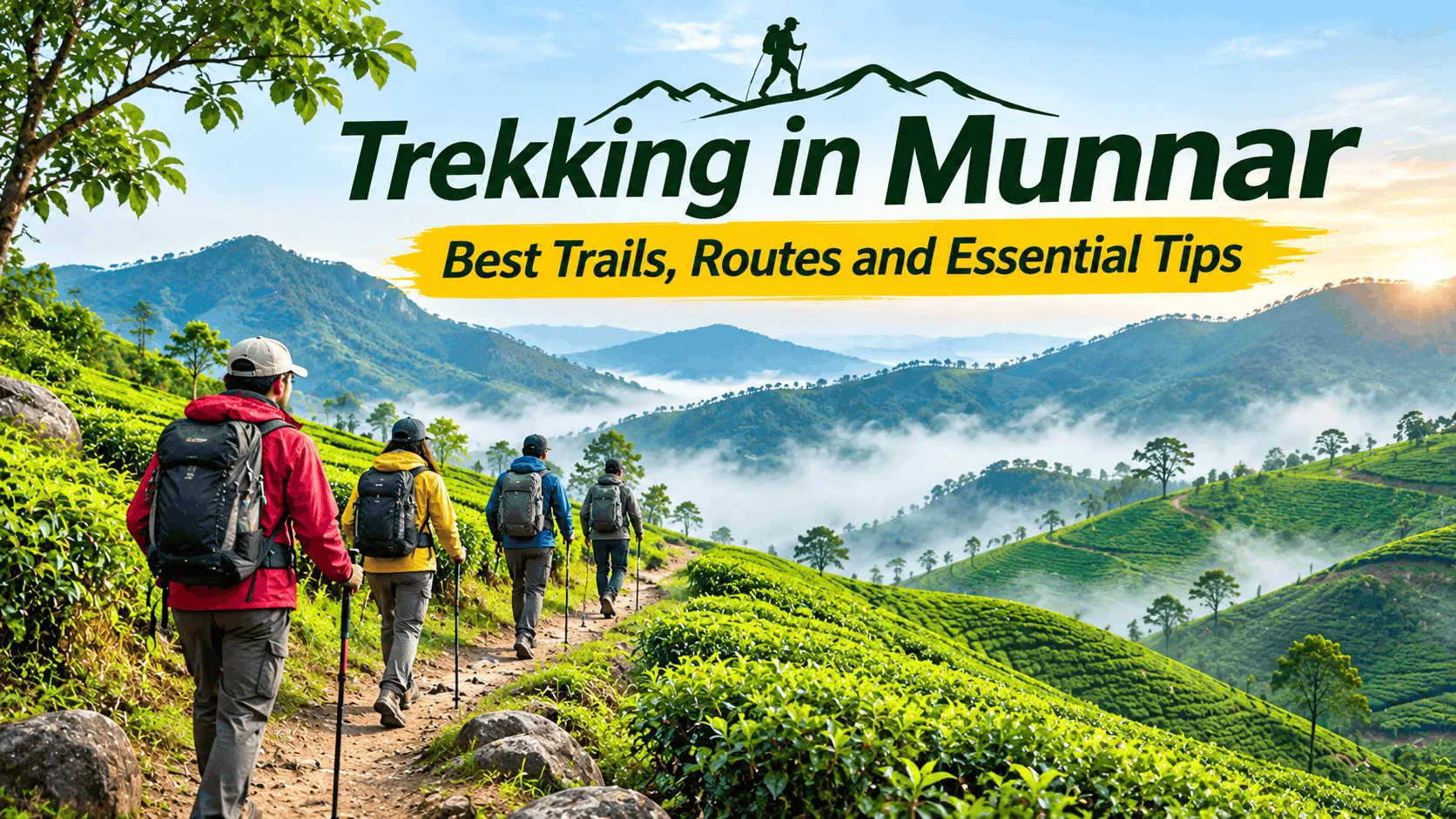
Most visitors meet Munnar from the road: tea slopes through a car window, a viewpoint, a quick photograph. Walking it is a different experience. On foot you notice the change in vegetation as you climb, the sound of water in the folds of the hills, and how quickly the weather can shift when you are high up.
Munnar trekking suits a wide range of travellers, from people who want a gentle walk through the hills to experienced hikers looking for a proper mountain day. This guide introduces trekking as an outdoor experience in the area, covers the trek areas we can name with confidence, explains what to know about guides, permissions, weather and safety, and sets out what to pack. It also covers responsible trekking and wildlife awareness.
A note on what you will not find here. We do not quote trail distances, trekking fees, guide charges or availability. Those details change, and some depend on local authorities and licensed operators. Where a number or rule matters, we tell you what to ask and who to ask, so you can confirm it yourself before you go.

Trekking as an outdoor experience in Munnar
Munnar sits at roughly 1,600 metres in Kerala's Western Ghats, in Idukki district. The terrain is a mix of rolling grassland, tea estates, forest and rocky peaks, and the climate is cooler than in the plains. That combination makes it a popular base for walking, hiking and mountain trekking.
Treks here range widely. Some are short walks near a stay or viewpoint. Others are full mountain outings that need fitness, a guide and an early start. What links them is that conditions change fast: a clear morning can become a foggy, wet afternoon, and trails that are easy in dry weather can be slippery after rain.
If you are still shaping the wider trip, our Munnar Travel Guide explains how to combine trekking with sightseeing, stays and transport.
Recognised trekking areas around Munnar
The areas below are commonly discussed by travellers and tour operators. We describe them in general terms only. Access, permissions and conditions can change, so confirm the current position before you plan around any of them.
Meesapulimala
Meesapulimala is one of the better-known trekking destinations in the Munnar region. It is often described as one of the highest peaks in South India, and it sits some distance outside Munnar town, so reaching the start of the trek is itself part of the plan. Travellers describe it as a demanding outing that takes much of a day, with a long climb and wide views above the cloud line on a good day.
It suits fit, experienced walkers and people comfortable with long ascents. It is not a casual add-on to a sightseeing day. Go with a licensed local guide, and check current permission, route and safety requirements before you commit, because access can depend on conditions and local authorities.
Kolukkumalai
Kolukkumalai is known mainly for its high tea-estate landscape and sunrise views. The upper stretch is reached by authorised jeeps, and private vehicles are generally not allowed to the top, so many visitors treat it as a jeep and viewpoint experience, not a trek. If you want to combine some walking with the view, ask a local operator what is permitted and safe on the day.
Our guide to jeep safaris around Munnar explains how these off-road trips work and who they suit, which is useful if you are weighing a jeep ride against a longer walk.
Eravikulam National Park and the high hills
Eravikulam National Park is one of the most recognised protected areas near Munnar, and it is known for its high grassland landscape and wildlife. Walking inside a national park is governed by park rules, which can include limits on where visitors may go and when. Do not assume that you can wander freely.
Peaks such as Anamudi are also part of the regional landscape, but access to higher or protected areas is controlled. We do not describe any route there, and we recommend that you ask the relevant authority or a licensed operator what, if anything, is currently open to visitors.
Tea estate and village walks
Not every trek in Munnar is a summit push. Gentle walks through tea country, along quiet roads or around a hillside stay can be a good introduction, and many hosts can point you to a safe local route. These walks are a better choice for beginners, families and days when weather rules out a bigger outing.
Remember that tea estates are working, often privately held land. Stay on roads and clear paths, and ask your host before entering plantation rows.
Trail difficulty, terrain and duration
Because we do not quote distances or timings, here is how to judge difficulty for yourself.
What affects difficulty
Difficulty depends on climb, terrain, weather and your own fitness. A short route with a steep, slippery slope can be harder than a longer, gentler one. Rocky, uneven ground and exposed ridges slow you down, and rain or mist makes both slower and riskier.
Estimating how long a trek will take
Ask the guide or operator for an expected duration, and then add a margin for rest, photographs and weather. Plan to be off the trail well before dark, and be prepared to turn back if conditions worsen. A realistic plan matters more than a heroic one.
Matching a trek to your level
Beginners should start with short, well-marked walks and build up. Experienced trekkers can consider mountain outings such as Meesapulimala, but should still go with a guide and check current requirements. If you are unsure, choose the easier option. A good walk you finish comfortably beats an ambitious one you abandon halfway.
Guided treks, permissions and local rules
Why a guide matters
In hill country with fast-changing weather and few signposts, a local guide adds real safety. They know the ground, read the weather, and can tell you what is appropriate in a given area. For mountain treks, a licensed guide is the sensible default and may be required.
Permissions
Some trails and protected areas require permission, and rules change. We cannot list them. Before you plan a route, ask a licensed operator or the relevant local authority what permissions apply, what you need to carry (such as identification), and whether any areas are closed. Do not trek into restricted areas, and do not rely on old information from a blog or social media post.
Choosing an operator or guide
Look for operators who can explain their safety arrangements, group sizes, emergency plans and what is included. Ask how they handle bad weather. Vague answers are a reason to look elsewhere. We do not recommend or name any operator here, and you should verify fees and inclusions directly.
Weather, seasons and safety
Weather and seasons
Munnar's weather shapes every trek. The monsoon brings heavy rain, slippery trails, leeches and sometimes landslides or road disruption, although the hills turn intensely green. Cooler, drier months tend to bring clearer views and easier walking, though they are also busier. Mornings are usually the best time to walk, because cloud often builds later in the day.
Check the forecast close to your dates, and be willing to change plans. Mist can hide views entirely, so treat a good view as a bonus and not a promise.
Safety precautions
Tell someone your route and expected return time. Carry a charged phone and a power bank, though mobile coverage can be patchy in the hills. Start early, keep to marked paths and stay with your group. Do not trek alone on remote trails, and do not walk after dark on unfamiliar ground.
Carry water, a basic first aid kit and any personal medication. Turn back if the weather turns, if someone in the group is struggling or if the trail feels unsafe. Know the signs of altitude discomfort and exhaustion, and rest or descend if they appear.
Essential gear, clothing and packing for munnar trekking
Pack for cold, wet and changeable conditions, even if the morning is clear.
Footwear
Good grip is the most important thing. Wear sturdy trekking shoes or boots that are already broken in, and carry spare socks. Avoid sandals and smooth-soled shoes on wet or rocky ground.
Clothing
Dress in layers: a moisture-wicking base layer, a warm mid-layer such as a fleece, and a waterproof outer layer. A cap or sun hat, and a warm hat for cold mornings, are both useful. Avoid cotton where you can, since it stays damp and cold.
Essentials to carry
- A comfortable daypack with a rain cover
- Plenty of drinking water and light, energy-giving snacks
- A torch or headlamp with spare batteries
- A basic first aid kit, personal medication and blister care
- Sunscreen, sunglasses and insect repellent
- A power bank and a charged phone
- Identification and any documents your guide asks for
- A small bag to carry out your rubbish
Trekking poles help on steep or slippery descents, and leech socks or repellent can be useful in wet months. If your operator provides equipment, ask what is included before you decide what to bring.
Responsible trekking and wildlife awareness
The hills around Munnar are a habitat, a working landscape and a home for local communities, so how you walk matters.
Carry out all rubbish, including small wrappers and food scraps. Stay on existing trails to protect vegetation and avoid erosion. Do not pick plants, remove rocks or disturb nesting sites. Keep noise low, since sound carries in quiet valleys and unsettles animals.
Wildlife can include large animals as well as snakes, insects and leeches. Never approach, feed or chase any animal, and keep a respectful distance. Follow your guide's instructions at once if wildlife is nearby, and do not walk through forest edges at dusk or after dark. In protected areas, follow all posted rules.
Respect local people too. Ask before photographing residents or plantation workers, and be considerate when passing homes and fields. Where you can, use local guides and services so the benefits of trekking stay in the community.
Advice for beginners and experienced trekkers
Beginners
Start with short, gentle walks, preferably with a local guide or host who knows the area. Build fitness before your trip with regular walking, and wear footwear you have already used. Keep your first outing modest, bring enough water, and treat the day as a chance to enjoy the place instead of covering ground.
Experienced trekkers
Experience helps, but it does not replace local knowledge. Weather in the Western Ghats can change quickly, and trails can be harder than they look. Confirm permissions, go with a licensed guide for mountain treks, carry proper gear, and keep a conservative turnaround time. Sunrise treks and combined outings need extra planning, and our guide to camping around Munnar is worth reading if you want to pair a trek with a night outdoors.
For a gentler way to enjoy the hills at dawn, our article on Munnar sunrise points covers viewpoints that do not need a full trek.

Frequently asked questions
What is the best trek in Munnar?
It depends on your fitness and experience. Meesapulimala is a well-known mountain trek for fit walkers, while gentle tea estate walks suit beginners. Check current access and conditions before you decide.
Do I need a guide for munnar trekking?
For mountain treks, a licensed local guide is strongly recommended and may be required. For gentle walks near your stay, your host can usually advise. Confirm requirements locally.
Is trekking in Munnar suitable for beginners?
Yes, if you choose short, easy routes and go with someone who knows the area. Longer mountain treks are better left until you have more experience and fitness.
What is the best time of year to trek in Munnar?
Cooler, drier months generally offer clearer views and easier trails, while the monsoon brings heavy rain and slippery ground. Check the forecast close to your dates and ask your guide.
Do I need permission to trek in Munnar?
Some trails and protected areas need permission, and rules change. Ask a licensed operator or the relevant local authority before you plan a route.
What should I wear and carry on a Munnar trek?
Wear layers, sturdy trekking shoes and a waterproof outer layer, and carry water, snacks, a torch, a first aid kit and a power bank.
Is it safe to trek in Munnar during the monsoon?
Monsoon conditions can make trails slippery and increase the risk of landslides and leeches. Many travellers prefer drier months, and you should always follow local advice and your guide's judgement.
Final thoughts on munnar trekking
Good munnar trekking comes down to matching the trail to the trekker. Beginners will enjoy gentle walks through tea country, and experienced walkers can aim for mountain outings with a licensed guide and current permissions. Check weather and local rules close to your dates, pack for cold and rain, and respect the land and wildlife on every step.
Do that, and a morning on foot in these hills will show you a Munnar that most road-bound visitors never see.