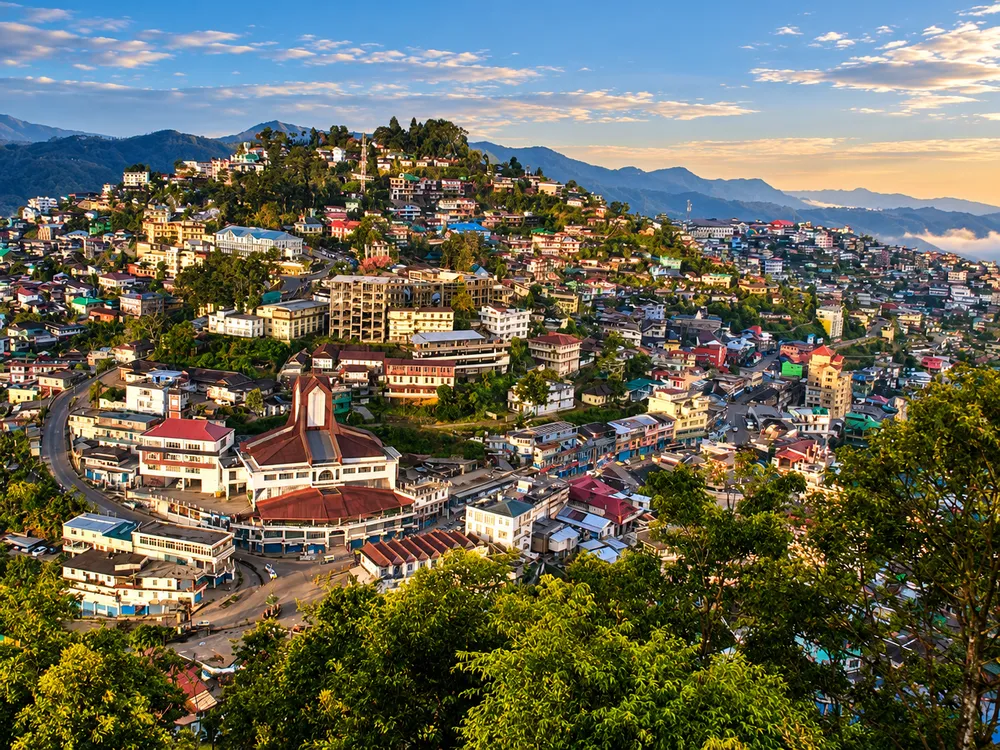
Mokokchung sits in the northern hills of Nagaland, a state in India's far Northeast known for its many distinct tribal communities, each with its own language, dress and traditions. As the headquarters of Mokokchung district, the town is widely regarded as the cultural home of the Ao Naga people, one of the major Naga tribes and among the first in the region to establish contact with Christian missionaries in the nineteenth century, a history that still shapes daily life and community identity here today.
For travellers, Mokokchung offers something different from Nagaland's more visited destinations: not one headline attraction, but a cluster of Ao Naga villages within reach of a single base, each with its own character, set against the ridge-and-valley landscape typical of this part of Nagaland. This guide covers what to see in and around Mokokchung, how Ao Naga culture and history shape the area, how to plan a realistic visit, and what to keep in mind as a respectful traveller.
Why Visit Mokokchung?
Mokokchung's main appeal is cultural rather than purely scenic, though the two are closely connected. The town and the villages around it form the traditional heartland of the Ao Naga tribe, and a visit here is less about ticking off sights and more about spending time in villages where Ao identity, language and community life remain strong.
The surrounding landscape adds to this. Mokokchung district sits across ridges and valleys typical of Nagaland's hill country, and several nearby villages are known specifically for their views, particularly at sunrise and sunset. Local food is another draw, since Ao Naga cooking reflects broader Naga food traditions, smoked meats, fermented ingredients and locally grown vegetables, prepared in ways that differ from most of India.
Photography interest centers on landscape views, traditional architecture and everyday village life rather than staged performances, and travellers should expect an experience built around observing and learning. A festival falling within a visit can be a highlight, but festivals follow their own calendar and are not something to build a trip around without checking dates in advance.
Places to Visit in Mokokchung
Longkhum Village. Longkhum is one of the best-known villages near Mokokchung, sitting on a ridge with wide views over the surrounding hills. It is particularly known for sunset views, and the area includes orange orchards, part of why it draws visitors beyond its cultural interest. A visit typically takes two to three hours including travel and viewpoint time, longer if orchards are in season and open. The village is reachable by road from town; conditions vary with season, so check locally before setting out, particularly in the monsoon. As with any inhabited village, stay on marked paths and remember this is people's home, not a formal tourist site.
Ungma Village. Ungma is widely described as one of the oldest and largest Ao Naga villages, close to Mokokchung town, and holds a significant place in Ao oral history and identity. It gives a sense of a large, established settlement rather than a small hamlet, with traditional architecture alongside contemporary village life. A visit can be done in an hour or two given its proximity to town. As a living, populated village rather than a museum, it calls for respect of private property and asking before photographing people or homes.
Mopungchuket Village. Mopungchuket is known for its handloom weaving tradition and for efforts to present traditional Ao architecture and heritage to visitors in a structured way, making it a reference point for cultural tourism in the district. A stop here can range from a short walk-through to a longer visit if weaving demonstrations or a heritage complex are accessible. Facilities and opening arrangements can change, so it is worth confirming current visitor access before including it firmly in an itinerary.
Chuchuyimlang Village. Chuchuyimlang holds particular significance in Ao Naga tradition and is associated with the Moatsu festival, one of the community's major agricultural festivals, discussed below. Outside the festival period, the village can still be visited for its setting and its place in Ao cultural history, though festival-related activity should not be expected outside the actual dates.
Impur. Impur is historically significant as an early center of Baptist Christian mission work among the Ao Naga, and played a notable role in spreading Christianity in this part of Nagaland. It is worth including for travellers interested in the region's religious and social history, though it is a place of historical and community significance rather than a conventional tourist site, and visits should be correspondingly respectful.
Mokokchung Town. The town itself is worth some time beyond being a base, with its market giving a straightforward, unstaged look at local produce, textiles and everyday commerce, and a sense of how a Naga district headquarters functions day to day. An hour or two is generally enough to get a feel for the center.
Ao Naga Culture and Traditions
The Ao Naga are one of the major recognised Naga tribes, with Mokokchung district as their traditional homeland. Their culture is distinguished by its own dialects and customary practices and, since the nineteenth century, a strong Baptist Christian tradition that now shapes much of community life alongside older Ao customs. Ao Naga society today is a living, contemporary community, not a preserved historical display, and long-standing customs coexist with modern education, technology and religious practice.
Traditional villages historically centered around fortified hilltop settlements with a clear communal structure, and some of this layout and its architecture can still be seen today alongside contemporary housing. Traditional Ao architecture, timber-and-thatch structures with distinctive carved elements, is best appreciated in villages that have preserved or reconstructed examples, since much everyday housing now uses modern materials.
Food is a strong thread in Ao Naga identity, with smoked meats, fermented soybean and bamboo shoot, and rice-based dishes forming the basis of much home cooking, similar in character to food traditions elsewhere in Naga communities. Music and dance carry cultural and historical meaning and are most visibly performed during festivals and significant community occasions rather than as a standing attraction.
Moatsu Mong, an agricultural festival marking the end of the sowing season, is among the most significant events in Ao Naga cultural life, generally observed over several days in early May, though exact dates should always be confirmed with an official or local source before planning travel around it, since dates can be set or adjusted locally each year.
Responsible cultural tourism here means treating villages as people's homes rather than exhibits: asking before photographing individuals, dressing modestly, avoiding entry into homes or restricted areas without invitation, and not requesting private ceremonies performed for visitors. Genuine cultural exchange tends to happen through respectful conversation and observation, not staged demonstrations, and travellers should be cautious of any arrangement promising access to private or sacred practices.
Villages and Experiences Around Mokokchung
The wider value of these villages lies in the range they offer collectively: Longkhum for landscape, Ungma for scale and history, Mopungchuket for craft and architecture, Chuchuyimlang for festival heritage, and Impur for missionary and social history. Visiting several across a short trip gives a broader picture of Ao Naga life than any single stop could.
It is worth being direct about what a realistic visit involves: travellers can walk through villages, view architecture and landscape, and often buy local produce, textiles or handicrafts where available, but should not expect or seek out private rituals or staged performances arranged for tourists. Where a genuine interaction happens, such as a conversation with a village elder or weaver, it tends to arise naturally rather than being something a tour can guarantee, and should be treated as a privilege rather than an expected part of the itinerary.
Things to Do in Mokokchung
Sightseeing centers on the villages described above, ideally spread across more than a rushed single day, with unhurried walking rather than a drive-through approach, since the interest lies in small architectural and everyday details. Photography is natural given the setting, though photographing people should always involve asking first. Sampling local food, in town or at a village stop, is one of the most accessible ways to engage with Ao Naga culture, with regional specialities such as smoked meats or bamboo shoot preparations worth seeking out. Cultural experiences are best approached through observation and conversation rather than expecting formal programming, and nature walks around villages such as Longkhum add a straightforward outdoor element.
Best Time to Visit Mokokchung
Winter (roughly November to February) is generally the most comfortable season, with cool, dry weather and clear skies that suit village visits and viewpoint stops such as Longkhum. Warm layers are advisable, since hill temperatures drop noticeably in the evenings.
Spring (roughly March to April) typically brings milder temperatures and can be a pleasant shoulder season, though local weather patterns should be checked closer to the travel date.
Summer (roughly May to June) is warmer and coincides with the general period of the Moatsu festival, worthwhile for travellers interested in Ao Naga cultural events provided exact dates are confirmed in advance.
Monsoon (roughly June to September) brings heavy rainfall that can affect road conditions and travel reliability between villages, so this period calls for flexibility and awareness that landslides or road disruption are a realistic possibility.
Autumn (roughly October to November) often sees improving weather as the monsoon eases, making it another reasonably comfortable window.
Because festival dates in Naga communities can be set locally and vary by year, travel planned around a festival should be confirmed with an official tourism source closer to the date.
How to Reach Mokokchung
By road. Mokokchung is connected by road to other parts of Nagaland and to neighbouring Assam, typically via routes through Assam's Brahmaputra valley towns before climbing into Nagaland's hill districts. Road conditions vary with season and maintenance, so check current status before travelling, particularly outside the winter dry season.
Nearest airport. Dimapur has Nagaland's main commercial airport and is the most common air gateway, with onward travel by road. Flight schedules change over time and should be checked directly with airlines or a booking platform.
Nearest railway. Dimapur also has Nagaland's principal railway station, with connections to major cities elsewhere in India, making it the typical starting point for the road journey onward.
From major Assam and Nagaland gateways. Travellers commonly route through Dimapur or through Nagaland's capital Kohima, depending on their starting point. Both involve a road journey of several hours through hill terrain, and current travel times, road conditions and any permit requirements should be verified with a local operator or official source before finalising plans.
How Many Days Are Enough?
One day allows a focused visit to Mokokchung town and one nearby highlight, such as Longkhum, with little room for more than a single stop.
Two days allow a comfortable pairing of Mokokchung town with two or three nearby villages, such as Longkhum and Ungma, without rushing.
Three days allow a fuller circuit including Mokokchung town, Longkhum, Ungma, and either Mopungchuket or Chuchuyimlang and Impur, with enough time to walk through each village unhurried rather than treating them as brief photo stops.
Suggested Mokokchung Itinerary
Day 1. Arrive in Mokokchung and settle in. Spend the afternoon exploring the town center and market, getting a first sense of local life and any practical information needed for the following days.
Day 2. Head to Longkhum in the morning, allowing time to walk around and take in the views before the light gets harsher. Return for lunch, then visit Ungma in the afternoon given its proximity to town.
Day 3. Depending on interest and current accessibility, spend the day at Mopungchuket for its handloom and architectural heritage, or combine Chuchuyimlang and Impur for their cultural and historical significance. Allow a relaxed pace, since travel time between villages in hill terrain can take longer than distance alone suggests.
This itinerary assumes reasonable road conditions and should be adjusted based on current travel times confirmed locally, particularly during the monsoon.
Where to Stay in Mokokchung
Accommodation in Mokokchung town includes a small number of hotels and guesthouses suited to independent travellers, and some surrounding villages may offer homestays, giving a closer look at everyday Ao Naga household life than a town hotel would. Specific names, rates, facilities and availability are not included here, since these change over time and should be checked directly with providers or a current booking platform before travel. Given the relatively limited number of options compared with larger tourist towns, booking ahead is advisable, particularly around the Moatsu festival period.
Practical Travel Tips
Weather and clothing. Pack layers suited to hill temperatures, warm clothing for winter evenings, rain protection for the monsoon, and comfortable footwear for uneven village paths.
Transport. Road travel between Mokokchung and its villages generally requires a private vehicle or arranged local transport, since public transport between smaller villages can be limited; arranging this in advance through a local operator is more reliable than expecting to find it on arrival.
Cash. Carry sufficient cash for smaller villages and markets, since card and ATM access may be limited outside town.
Connectivity. Mobile coverage can be inconsistent in hill and village areas, so don't rely on constant connectivity once outside Mokokchung town.
Local etiquette. Dress modestly, greet people respectfully, and ask permission before entering homes or photographing individuals, treating villages as living communities rather than sightseeing stops.
Photography. Landscape and architectural photography is generally welcome, but photographing people should always involve asking first, and a decline should be respected without argument.
Responsible tourism. Support local guides, homestays and craft producers where possible, avoid leaving litter, and remember that Ao Naga communities are hosting visitors into their everyday lives rather than performing for them.
Frequently Asked Questions
Where is Mokokchung located? Mokokchung is a town in northern Nagaland, in Northeast India, and the headquarters of Mokokchung district.
What is Mokokchung famous for? It is known as the cultural heartland of the Ao Naga tribe and for nearby villages including Longkhum, Ungma and Mopungchuket, along with the region's hill landscapes.
Which tribe lives in Mokokchung? Mokokchung district is the traditional homeland of the Ao Naga, one of the recognised Naga tribes of Nagaland.
What is the best time to visit Mokokchung? Winter, roughly November to February, is generally the most comfortable, with cool, dry and clear weather. Spring and autumn are also reasonable shoulder seasons.
How do I reach Mokokchung? By road, typically from Dimapur, which has Nagaland's main airport and railway station, with the final stretch completed by road through hill terrain.
Is Mokokchung good for a short trip? Yes, two to three days allows a comfortable combination of the town with two or more nearby villages such as Longkhum and Ungma.
What is Longkhum known for? A village near Mokokchung known for its ridge-top views, particularly at sunset, and the orange orchards in its surrounding area.
Can visitors attend Ao Naga festivals? Visitors can potentially observe some public elements of festivals such as Moatsu, but exact dates vary and should be confirmed in advance, and private or community-specific ceremonies should not be expected or requested.
Is Mokokchung safe for tourists? Generally yes, without particular safety concerns specific to tourism, though as with any travel in India's Northeast, check current local conditions and any regional advisories before your trip.
Do I need a permit to visit Mokokchung? Documentation requirements for travel in parts of Nagaland have existed historically and can change, so confirm current requirements with an official source before planning.
What food should I try in Mokokchung? Ao Naga cuisine features smoked meats, fermented bamboo shoot and soybean preparations, and rice-based dishes, broadly reflecting wider Naga food traditions.
Conclusion
Mokokchung offers a way into Nagaland that is less about a single headline sight and more about spending unhurried time in the villages that make up the Ao Naga homeland, from the views at Longkhum to the history at Ungma, Mopungchuket, Chuchuyimlang and Impur. Visited with respect for the communities involved, and realistic expectations about what a village visit can and cannot include, Mokokchung rewards travellers genuinely interested in Ao Naga culture and Nagaland's hill landscapes rather than a packed checklist. Planning around the right season, confirming travel details in advance, and approaching each village as someone's home rather than an attraction are what make a trip to Mokokchung worthwhile.