There is a part of Odisha that most travelers never reach, a vast, forested southern highlands where 62 distinct indigenous communities, each with its own language and lore, have lived in harmonious connection with nature for millennia. This is not heritage preserved in a museum. It is heritage lived daily in weekly markets, harvest rituals, handwoven shawls, and hilltop villages that the modern world has barely touched. If you are looking for one of India's most genuinely transformative travel experiences, Odisha's tribal heartland deserves to be your next destination.
Why Odisha Is India's Tribal Tourism Capital
Odisha is home to 62 tribal groups, each with their own dialect, customs, and way of life, including Particularly Vulnerable Tribal Groups who preserve age-old traditions and maintain a close bond with nature. The state's southern districts of Koraput, Rayagada, Malkangiri, and Kandhamal form the core tribal belt, where dense forests, terraced hillsides, and river valleys create a landscape as dramatic as the cultures living within it.
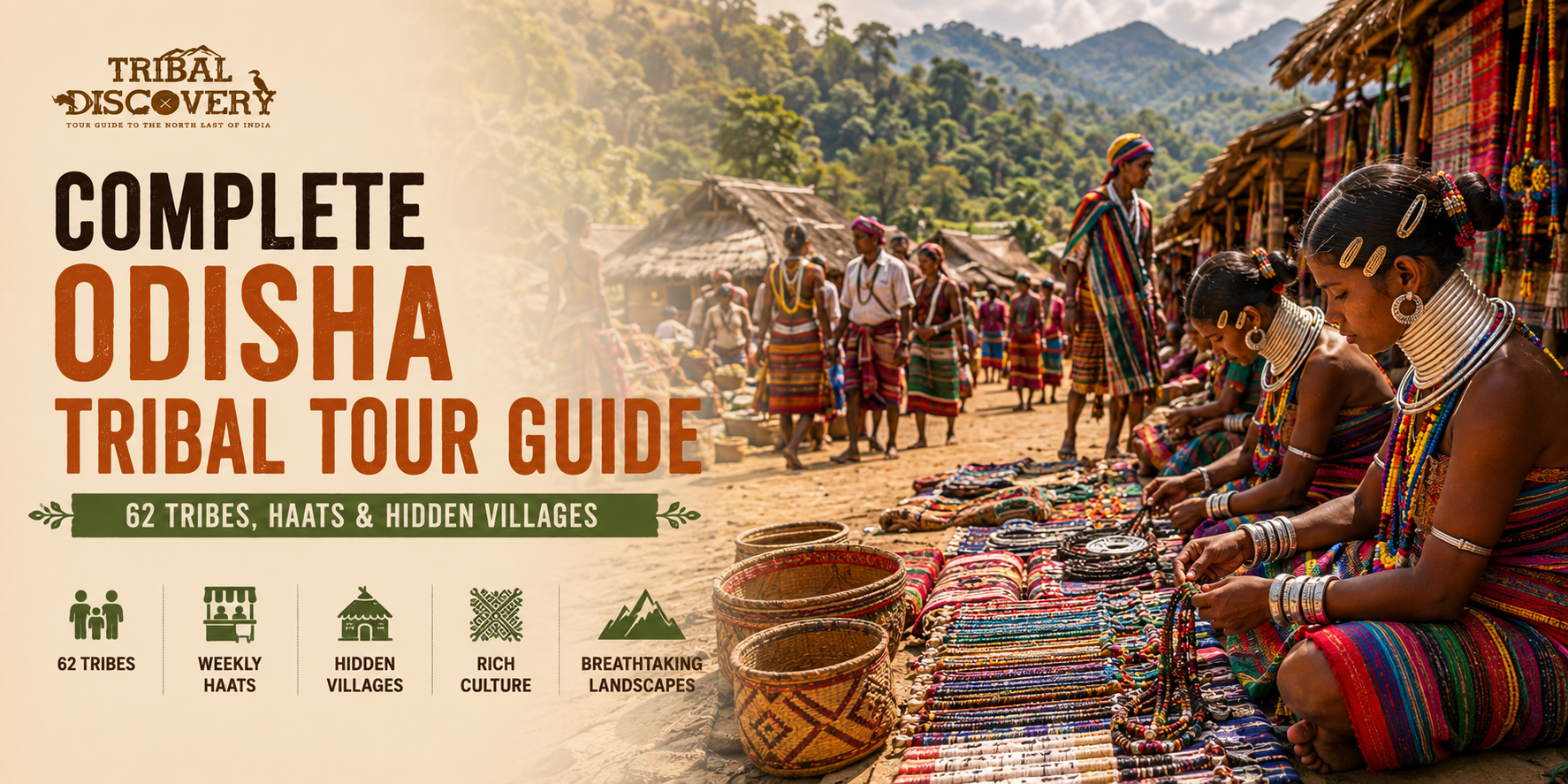
Weekly tribal haats are full of handicrafts, handmade jewelry, and organic produce, while most tribal villages are surrounded by lush hills, forests, and rivers, creating the perfect blend of nature and culture.
The Major Tribes You Will Encounter
The Bonda tribe of Malkangiri are among the most distinctive communities in all of India. Bonda women wear incredible silver neck rings and colourful beaded skirts, while every Thursday they descend from the hills to the Onukudelli weekly market, a riot of colour, barter trade, and homemade rice beer.
The Dongria Kondh, inhabiting the sacred Niyamgiri Hills of Rayagada, are known as the protectors of the hills. They are famous for their intricate hand-woven shawls and deep ecological wisdom, and they played a pivotal role in protecting their beloved Niyamgiri Hills from a proposed mining project, inspiring people around the world.
The Gadaba tribe near Duduma Waterfall in Koraput are celebrated for their Dhemsa dance, a communal celebration of life and nature that visitors can witness during village festivals and seasonal gatherings.
The Bonda people speak Remo, a language from a bygone era that stands as a testament to their ancient lineage, and they are skilled in crafting jewellery using beads, shells, and local materials in ways that reflect a deep creativity and connection to nature.
The Weekly Haats: Where Culture Comes to Trade
Planning your itinerary around the tribal haat calendar is the single most important decision you can make for an Odisha tribal tour.
The Onukudelli market near Jeypore operates every Thursday and is world-famous as the place where the fierce and colourful Bonda people descend from the hills of Malkangiri to barter goods. Arriving early gives you the best opportunity to witness the full energy of the market before the midday heat sets in.
The Chatikona market in Rayagada on Wednesdays introduces you to the Dongria Kondh men and women coming down from the mountains with different kinds of fruits and animals, interacting with other communities in a genuine barter exchange.
The Kunduli haat near Koraput on Sundays draws multiple tribal communities and is one of the most visually diverse markets in the entire region, with handmade textiles, silver jewelry, medicinal herbs, and agricultural produce all traded within a single colourful gathering.
Hidden Villages Worth Seeking Out
Beyond the famous haats, the most rewarding encounters in Odisha happen in the villages that most tour circuits bypass entirely.
Kani tribal village near Koraput is a quiet, rarely visited settlement where daily agricultural life unfolds without any tourist infrastructure, offering a genuinely unmediated glimpse into tribal routines. Villages in the Niyamgiri Hills foothills around Rayagada take you into the Dongria Kondh's remarkable terrace farming landscape, where hillsides have been carefully sculpted into productive agricultural land over generations. The Gadaba settlements near Duduma Waterfall combine natural drama with cultural depth since the waterfall itself is considered sacred by the local community, and visiting both together creates an experience that is far more layered than either alone.
Responsible Travel in Odisha's Tribal Areas
From local pottery to weaving and traditional cooking, travelers can actually participate in daily activities with the tribes, but this kind of access depends entirely on approaching communities with respect rather than as a spectacle. Always hire a local guide with existing community relationships. Ask before photographing anyone. Buy directly from artisan communities rather than through middlemen. Stay in locally run homestays wherever possible.
Accommodating in eco-lodges or homestays gives you a true taste of local living and ensures your travel spend supports the communities you are visiting.
Frequently Asked Questions
Q1. How many tribes are there in Odisha?
Odisha is home to 62 distinct tribal communities, each with its own language, cultural practices, and traditions. Together they make up around 22 percent of the state's population, the highest tribal concentration in India.
Q2. What is the best time to visit tribal areas in Odisha?
October to March is the best overall window, combining pleasant weather, accessible roads, and the most significant tribal festivals. February is especially productive at southern district haats when the cooler weather brings the most activity.
Q3. What is the Onukudelli Haat?
The Onukudelli haat is a Thursday weekly market near Jeypore in Koraput district where the Bonda tribe descends from their hilltop villages to trade. It is one of the most celebrated tribal markets in all of India.
Q4. Which tribe in Odisha is the most isolated?
The Bonda tribe of Malkangiri is widely considered the most isolated indigenous community in Odisha, maintaining strict independence and minimal outside contact while living in hilltop villages accessible only with a local guide.
Q5. Do I need a permit to visit tribal areas in Odisha?
Indian nationals do not need special permits for most tribal areas in Odisha. Foreign nationals require restricted area permits for certain zones, particularly in Malkangiri. Travelling with a registered operator is the most reliable way to navigate these requirements.
Q6. What crafts should I look for during an Odisha tribal tour?
Key crafts include Dongria Kondh hand-woven shawls, Bonda bead jewelry, Saura wall paintings, Gadaba embroidery, and Dhokra bronze castings. The weekly haats are the best and most ethical places to purchase these directly from artisan communities.
Q7. Is it safe to visit remote tribal villages in Odisha?
Odisha's tribal districts are generally safe for visitors who travel with a knowledgeable local guide. Solo exploration of remote villages without local guidance is not advisable. Engaging a registered tour operator is the safest and most culturally respectful approach.
Experience Odisha's Tribal World with Tribal Discovery Tours
Odisha's tribal communities offer some of the most powerful cultural encounters available anywhere in India, and reaching them meaningfully requires local expertise, community trust, and careful planning. At Tribal Discovery Tours, we design responsible, immersive tribal journeys across Odisha's southern highlands, including village visits, haat experiences, homestay stays, and artisan interactions built around genuine connection rather than observation.
Come and experience a world that changes how you see India entirely.
Plan your Odisha tribal tour at Tribal Discovery Tours.