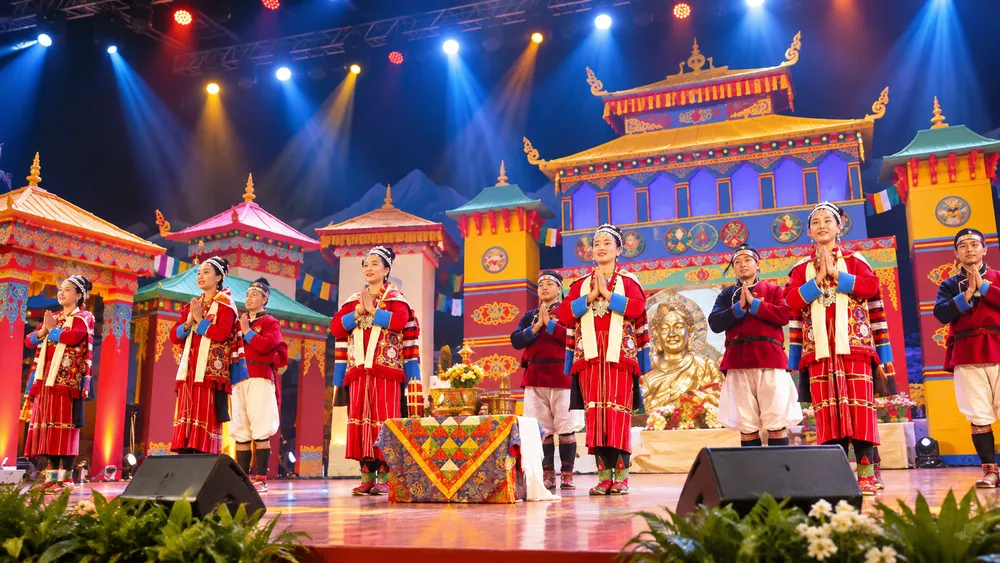
Introduction
Arunachal Pradesh has 26 major tribes and more than 100 sub-tribes, and almost every one of them keeps its own festival calendar. The result is a state where some community is celebrating in nearly every month of the year — a harvest thanksgiving in one valley, a Buddhist masked dance in another, a water festival on the Assam border.
This guide covers the festivals of Arunachal Pradesh in practical detail: which tribe celebrates what, when each festival falls, what actually happens during the rituals, and what a visitor should know before attending one. It is written for travellers planning a trip around a festival, students and exam candidates who need the tribe-festival pairings correct, and anyone researching the state's cultural calendar.
Dates below follow the fixed Gregorian dates the state government observes for most tribal festivals; the Buddhist festivals follow a lunar calendar and shift each year. Both are flagged clearly.
What Are the Festivals of Arunachal Pradesh?
The festivals of Arunachal Pradesh are community celebrations tied to three things: the agricultural cycle, indigenous faith systems, and Buddhism.
Most tribal festivals are agricultural. They mark sowing, ask for protection of the standing crop, or give thanks after harvest. Nyokum, Mopin, Dree and Solung all belong to this group.
A second set is rooted in Donyi-Polo, the indigenous faith followed by several tribes including the Nyishi, Adi, Galo, Apatani and Tagin. Donyi-Polo means "Sun-Moon" and treats these as the visible forms of the supreme power. Rituals in this tradition are led by a priest — the nyibu, miri or equivalent — who chants long recitations and performs animal sacrifice.
A third set is Buddhist, practised by the Monpa, Sherdukpen, Khampti, Singpho and Tangsa communities. Losar, Torgya and Sangken fall here, and their dates move with the lunar calendar.
Almost all of them share a common structure: a priest-led ritual, a community feast, rice beer (apong, opo or local equivalent), folk dance, and the wearing of tribal dress and headgear that is rarely seen outside festival days.
Why the Arunachal Pradesh Festival Calendar Matters
It is the state's living record of identity. Most Arunachal tribes had no written script until recently. Genealogies, migration histories and moral codes survived as chants performed at festivals. When a nyibu recites at Nyokum, he is reciting a text that exists nowhere on paper.
It is the best window into the state for a traveller. Arunachal is a difficult state to experience casually — villages are dispersed, distances are long, and daily life is not staged for visitors. A festival compresses the culture into one place on one day, openly and without performance for tourists.
It has become a real economic driver. Festival-linked tourism now supports homestays, guides and transport operators in Ziro, Tawang, Pasighat and Aalo. The Ziro Festival of Music alone brings several thousand visitors into a valley that otherwise sees limited footfall.
It matters for competitive exams. Tribe-festival pairings from Arunachal appear regularly in UPSC, state PSC and SSC general awareness papers.
Complete List of Arunachal Pradesh Festival Names with Dates
This is the month-wise calendar of the main festivals celebrated in Arunachal Pradesh.
| Festival | Tribe / Community | Usual Date | Type |
| Si-Donyi | Tagin | 6 January | Agricultural, Donyi-Polo |
| Torgya | Monpa (Tawang Monastery) | January (lunar) | Buddhist |
| Pangsau Pass Winter Festival | Multi-tribe, Changlang | January | Government-organised |
| Reh | Idu Mishmi | 1 February | Prosperity, kinship |
| Tamladu | Digaru Mishmi (Taraon) | 15 February | Nature worship |
| Boori Boot Yullo | Hill Miri / Nyishi | February | Agricultural |
| Oriah | Wancho | February–March | Community, spring |
| Losar | Monpa, Sherdukpen, Memba | February–March (lunar) | Buddhist New Year |
| Nyokum Yullo | Nyishi | 26 February | Agricultural, Donyi-Polo |
| Mopin | Galo | 5 April | Harvest, prosperity |
| Sangken | Khampti, Singpho, Tangsa | 14–16 April | Buddhist water festival |
| Longte Yullo | Nyishi | 15 April | Crop protection |
| Moh-Mol | Tangsa | April | Harvest |
| Dree | Apatani | 5 July | Crop protection |
| Solung | Adi | 1 September | Harvest thanksgiving |
| Ziro Festival of Music | Contemporary, Ziro valley | September–October | Music, cultural |
| Chalo Loku | Nocte | October–November | Harvest |
| Tawang Festival | Multi-tribe, Tawang | October | Government-organised |
| Khikshaba | Sherdukpen | November | Community wellbeing |
| Siang River Festival | Multi-tribe, Siang belt | December | Adventure, cultural |
Note: fixed dates are the ones the state observes as public holidays. Buddhist festivals and a few community festivals shift year to year — confirm locally before booking travel.
Main Festivals of Arunachal Pradesh Explained
Nyokum
Nyokum Yullo is the festival of the Nyishi, the largest tribe in the state, celebrated on 26 February. "Nyokum" combines nyok (land) and kum (collective) — the gathering of all gods and spirits of the land.
The nyibu priest conducts the ritual at a central altar built of bamboo, where mithun and other animals are tied. Prayers ask for good harvest, protection from disease, and harmony among people. The Nyishi men wear the podum cane headgear traditionally topped with a hornbill beak, now replaced by fibreglass replicas after a successful conservation campaign — a detail worth knowing, because photographing the older headgear and calling it current is a common error.
Mopin
Mopin is the Galo festival, celebrated on 5 April, and is the state's most visually distinctive. Participants smear rice flour paste on each other's faces, symbolising purification and the warding off of evil. Women perform the Popir dance in white cotton dress, and apong rice beer is distributed freely.
Mopin prays for prosperity, fertility and a good harvest ahead of the agricultural season. It is one of the easiest festivals for an outsider to attend, since the celebration is public and centred on accessible towns such as Aalo and Basar.
Dree
Dree is the Apatani festival of Ziro Valley, celebrated on 5 July. It is fundamentally a crop-protection festival — prayers are offered to Tamu, Metii, Medvr and Danyi to prevent pests, blight and famine.
Dree is agriculturally specific in a way few festivals are: the Apatani practise wet rice cultivation with fish farming in the same fields, a system that supports high yields without draught animals or ploughs. The festival is timed to the vulnerable mid-growth stage of that crop. Ziro Valley is on UNESCO's tentative World Heritage list partly because of this cultivation system.
Solung
Solung is the Adi festival, celebrated from 1 September for up to five days, and is the state's principal harvest thanksgiving. It follows sowing and precedes the main harvest, giving thanks for crops and praying for livestock, especially mithun.
A distinctive element is the Ponung dance, performed by women in a circle led by a male miri singer, and the making of Taktor — weapons and ritual implements placed at the home entrance to ward off evil spirits.
Losar
Losar is the Monpa New Year, following the Tibetan lunar calendar and usually falling in February or March. It is observed most visibly in Tawang and West Kameng.
Families clean homes, hoist new prayer flags, prepare khapse fried pastry, and visit monasteries. Butter lamps are lit, and the Tawang Monastery — the largest Buddhist monastery in India, founded in 1680–81 — becomes the centre of observance. Because it is lunar, Losar dates change every year.
Torgya
Torgya is held annually at Tawang Monastery, on the 28th to 30th of the Monpa month of Dawachukchipa, usually falling in January. Monks perform masked cham dances representing deities and animal forms to drive out evil spirits and secure prosperity for the coming year. Every third year an expanded version, Dungyur, is held.
Sangken
Sangken is the Buddhist New Year of the Khampti, Singpho and Tangsa communities of Namsai, Lohit and Changlang, celebrated 14–16 April. Buddha images are taken from monasteries and placed in specially built structures, where devotees bathe them with scented water.
Water is then sprinkled among people as a symbol of cleansing — the festival shares its character with Thailand's Songkran and Myanmar's Thingyan, reflecting the Tai origin of these communities.
Reh
Reh belongs to the Idu Mishmi of Dibang Valley and Lower Dibang Valley, celebrated from 1 February. It centres on the bond between a family and its married daughters and their descendants, invoking ancestral spirits for prosperity and protection. The Igu priest performs elaborate chants, and the festival traditionally ran for several days with mithun sacrifice.
Si-Donyi
Si-Donyi is the Tagin festival of 6 January. Si means earth and Donyi means sun — the two forces the Tagin hold responsible for existence. Prayers seek wellbeing for family, livestock and crops, and the festival is a formal expression of the Donyi-Polo faith.
Chalo Loku
Chalo Loku is the Nocte harvest festival of Tirap district, usually celebrated between October and November across different villages. It is one of the longer celebrations, historically running up to six days, marked by the Hoi Hoi Hoi chant, ceremonial dress, and the distribution of rice beer and meat across the village.
Oriah
Oriah is the spring festival of the Wancho of Longding district, celebrated over several days in February or March. It combines prayers for a good harvest with community feasting, dance and the exchange of rice beer between households.
Harvest Festivals of Arunachal Pradesh
Because agriculture is the base of most tribal economies, the harvest festival of Arunachal Pradesh is not one event but a category. The clearest examples:
- Solung (Adi, September) — thanksgiving after sowing, protection of crops and cattle
- Mopin (Galo, April) — prosperity and fertility before the agricultural season
- Chalo Loku (Nocte, October–November) — post-harvest celebration
- Moh-Mol (Tangsa, April) — harvest celebration with community dance
- Dree (Apatani, July) — crop protection rather than harvest, but agricultural in the same sense
- Nyokum (Nyishi, February) — invocation for a good agricultural year ahead
The pattern across all of them is the same: a priest-led invocation, animal sacrifice, community feasting, and rice beer shared across households regardless of status.
अरुणाचल प्रदेश के त्योहार (Arunachal Pradesh Ke Tyohar)
अरुणाचल प्रदेश में 26 प्रमुख जनजातियाँ हैं और लगभग हर जनजाति का अपना त्योहार है। यहाँ के मुख्य त्योहार हैं — न्योकुम (न्यीशी, 26 फरवरी), मोपिन (गालो, 5 अप्रैल), ड्री (अपातानी, 5 जुलाई), सोलुंग (आदि, 1 सितंबर), लोसर (मोनपा, फरवरी–मार्च), संगकेन (खाम्पती, 14–16 अप्रैल) और रेह (इदु मिश्मी, 1 फरवरी)।
अधिकतर त्योहार कृषि से जुड़े हैं — अच्छी फसल, पशुधन की सुरक्षा और समुदाय की समृद्धि की प्रार्थना की जाती है। बौद्ध त्योहार चंद्र कैलेंडर के अनुसार मनाए जाते हैं, इसलिए उनकी तिथियाँ हर वर्ष बदलती हैं।
How to Attend an Arunachal Pradesh Festival
Step 1: Pick the Festival and Confirm the Date
Fixed-date festivals such as Nyokum, Mopin, Dree and Solung are reliable to plan around. Buddhist festivals are not — Losar and Torgya move each year. Confirm through the district administration or the Department of Tourism before booking.
Step 2: Apply for the Inner Line Permit
Indian citizens who are not residents of Arunachal Pradesh need an Inner Line Permit (ILP) to enter the state. Apply online at the official portal, eilp.arunachal.gov.in, using a government photo ID and a passport-size photograph. A tourist ILP is typically issued for 15 days and is extendable.
Foreign nationals require a Protected Area Permit (PAP), which takes longer and must usually be arranged through a registered tour operator.
Step 3: Reach the Festival Location
Most festivals are celebrated in district headquarters and larger villages. Ziro (Dree, Ziro Festival of Music) is reached via Naharlagun railway station or Donyi Polo Airport at Hollongi near Itanagar. Tawang (Losar, Torgya) is a two-day drive from Guwahati, now eased by the Sela Tunnel. Pasighat and Aalo (Solung, Mopin) connect via Dibrugarh in Assam.
Step 4: Arrange Accommodation Early
Festival dates strip a small town of its rooms quickly. Ziro during the Dree festival or the music festival, and Tawang during Losar, both book out weeks ahead. Homestays are usually better than hotels here — they are more common, more comfortable, and give access to the household's own participation in the festival.
Step 5: Learn the Etiquette Before You Arrive
Ask before photographing rituals and individuals, particularly priests mid-chant. Accept rice beer if offered, or decline politely — refusing brusquely reads as rejecting hospitality. Do not step over ritual altars or offerings. Dress modestly. In monasteries, walk clockwise and remove shoes at prayer halls.
Documents Required for Visiting
Identity Proof
A valid government photo ID — Aadhaar, voter ID, driving licence or passport — is mandatory for the ILP application and is checked at entry gates such as Bhalukpong, Seijosa and Ruksin.
Photograph
A recent passport-size photograph in digital form is needed for the online ILP application. Keep a clear scan ready to avoid upload rejection.
Inner Line Permit
Carry both the digital copy and a printout. Permits are checked at the state entry point and sometimes again at district boundaries, where mobile network may be unavailable.
Protected Area Permit
Foreign nationals must carry the PAP along with passport and valid Indian visa. Some border districts remain restricted regardless of permit status.
Benefits of Planning a Trip Around a Festival
Authentic Cultural Access
Festivals are held for the community, not for tourists. You see tribal dress, ritual and music in their actual context rather than in a staged cultural show.
Concentrated Experience
Arunachal's attractions are spread over long, slow drives. A festival brings the culture of an entire district into one ground on one day, which is efficient for a short trip.
Direct Support to Local Economy
Homestays, local guides, weavers and food stalls capture most festival spending directly, rather than it flowing to outside operators.
Better Photography and Documentation
Festival days are the only reliable opportunity to photograph traditional dress, headgear, weaving and ritual implements in use.
Easier Social Entry
Arunachal households are hospitable but reserved with strangers. At a festival, the norm is to include visitors — conversation, food and invitations come far more easily.
Common Mistakes to Avoid
Treating Arunachal as Culturally Uniform
Nyishi, Apatani, Adi, Monpa and Wancho cultures are genuinely different — different faiths, languages, dress and food. Writing or planning as though "the Arunachal festival" is one thing is the most common error outsiders make.
Assuming Lunar Festival Dates Are Fixed
Losar, Torgya and Sangken shift each year. Booking flights on last year's dates is a frequent and expensive mistake.
Skipping the ILP
The permit is enforced. Travellers are turned back at entry gates for arriving without it, and the online process takes little time, so there is no reason to risk it.
Photographing Rituals Without Asking
Priests mid-ritual, sacrifices and altars are sensitive. Ask first. A refused photograph costs nothing; an intrusive one damages the welcome for everyone who follows.
Underestimating Travel Time
Road distances in Arunachal do not translate to time the way they do elsewhere. A 180 km stretch can take eight hours. Plan one destination per two to three days, not per day.
Costs and Charges
| Item | Typical Cost |
| Inner Line Permit (Indian citizens) | Nominal government fee, paid online |
| Protected Area Permit (foreign nationals) | Processed through registered operators; charges vary |
| Homestay per night | ₹1,200 – ₹2,500 |
| Mid-range hotel per night | ₹2,500 – ₹5,000 |
| Shared sumo / taxi (inter-town) | ₹500 – ₹1,500 per seat |
| Private vehicle with driver per day | ₹4,000 – ₹7,000 |
| Ziro Festival of Music ticket | Tiered pricing, announced annually |
Festival attendance itself is almost always free — tribal festivals are community events with no entry charge. Costs come from travel, stay and permits. Prices rise sharply during major festival weeks.
Verify before publishing/booking: ILP fee amounts and PAP charges are revised periodically. Check the official portal for current figures.
Practical Examples
A traveller planning a first trip: Target Ziro in the last week of September. The Ziro Festival of Music runs alongside pleasant post-monsoon weather, the valley is compact enough to explore on foot and bicycle, and Apatani villages such as Hong and Hija are within easy reach.
A photographer documenting tribal dress: Mopin at Aalo on 5 April gives the rice-flour ritual and Popir dance in a single accessible location, followed by Longte Yullo on 15 April in the Nyishi belt around Itanagar — two distinct traditions inside a two-week window.
A family travelling with elderly members: Losar in Tawang combines a low-exertion festival — monastery visits, prayer flags, family meals — with the town's main sights. The Sela Tunnel has made the approach road significantly more reliable than it was before 2024.
An exam aspirant: Memorise by tribe rather than by month. Nyishi–Nyokum, Apatani–Dree, Adi–Solung, Galo–Mopin, Monpa–Losar and Torgya, Idu Mishmi–Reh, Tagin–Si-Donyi, Khampti–Sangken, Nocte–Chalo Loku, Wancho–Oriah, Sherdukpen–Khikshaba. These pairings carry most of the marks.
Tribal Festivals vs Organised Festivals
| Basis | Tribal Festivals (Nyokum, Dree, Solung) | Organised Festivals (Ziro Music, Tawang, Siang River) |
| Origin | Centuries-old community tradition | Created by government or private organisers |
| Purpose | Ritual, harvest, faith | Tourism, music, adventure promotion |
| Date | Fixed or lunar, unchanging in principle | Announced annually, can move |
| Entry | Free, community-hosted | Ticketed or registration-based |
| Visitor facilities | Minimal, homestay-dependent | Organised camping, food stalls, stages |
| Best for | Cultural immersion, documentation | First-time visitors, music and adventure travellers |
| Caution | Requires etiquette awareness | Books out early, prices inflate |
Both have value. Someone visiting Arunachal for the first time often finds an organised festival the easier entry point; a return visitor gets far more from a tribal festival.
Latest Updates
Ziro Festival of Music 2026 is scheduled for 24–27 September 2026 in Ziro Valley, with a lineup of over 40 Indian and international artists. It is the festival's continuation since its 2012 founding and remains the state's largest ticketed cultural event.
Sela Tunnel, inaugurated on 9 March 2024 at about 3,000 m — roughly 400 m below the 4,200 m Sela Pass — gives all-weather road access to Tawang. This directly affects winter festival travel: Losar and Torgya fall in the months when the pass previously closed under snow.
Donyi Polo Airport at Hollongi, about 14 km from Itanagar, has operated since November 2022 with IndiGo connections to Delhi, Kolkata and Mumbai, and Alliance Air services to Guwahati and Tezu. It has cut a full day off the journey to central Arunachal festivals.
Hornbill conservation has changed Nyishi festival dress. Fibreglass beak replicas have largely replaced hornbill beaks on the traditional podum headgear, following a long-running campaign with local community support.
Frequently Asked Questions
What is the main festival of Arunachal Pradesh? There is no single main festival, because each tribe has its own. The most widely celebrated by population are Nyokum (Nyishi, the largest tribe), Solung (Adi), Mopin (Galo), Dree (Apatani) and Losar (Monpa).
What is the famous festival of Arunachal Pradesh? Nyokum, Mopin, Dree, Solung and Losar are the best known among tribal festivals. Among organised events, the Ziro Festival of Music is the most famous nationally.
How many festivals are celebrated in Arunachal Pradesh? More than 20 major festivals are recognised at state level, and many more are observed at village and sub-tribe level. The state has 26 major tribes and over 100 sub-tribes, most with their own calendar.
Which is the harvest festival of Arunachal Pradesh? Solung (Adi) is the principal harvest thanksgiving festival. Mopin, Chalo Loku and Moh-Mol are also harvest-linked, while Dree and Nyokum are agricultural festivals focused on crop protection and a good season.
What is the festival of the Apatani tribe? Dree, celebrated on 5 July in Ziro Valley, is the Apatani festival. It asks for protection of standing crops from pests, blight and famine.
When is Losar celebrated in Arunachal Pradesh? Losar follows the Tibetan lunar calendar and usually falls in February or March. The exact date changes annually, so it must be confirmed each year.
Do I need a permit to attend a festival in Arunachal Pradesh? Yes. Indian citizens from outside the state need an Inner Line Permit, available online at eilp.arunachal.gov.in. Foreign nationals need a Protected Area Permit, usually arranged through a registered tour operator.
Can tourists participate in tribal festivals? Generally yes. Most tribal festivals welcome visitors to watch, eat and join the dancing. Ritual acts led by the priest are for the community — observe those rather than participating, and ask before photographing.
Which month is best to visit Arunachal Pradesh for festivals? February to April carries the heaviest concentration — Nyokum, Losar, Mopin, Sangken and Longte all fall in this window. September to October is the second cluster, with Solung and the Ziro Festival of Music.
What is Sangken festival? Sangken is the Buddhist New Year of the Khampti, Singpho and Tangsa communities, celebrated 14–16 April. Buddha images are bathed in scented water and water is sprinkled among people as a symbol of cleansing.
Conclusion
The festivals of Arunachal Pradesh are not a single tradition but a calendar of distinct tribal, agricultural and Buddhist observances spread across the year. Nyokum, Mopin, Dree, Solung and Losar are the anchors; Sangken, Reh, Torgya, Si-Donyi and Chalo Loku fill out a calendar in which some community is celebrating almost every month.
The single most useful takeaway for a traveller: fix your date first, then apply for the Inner Line Permit, then book your stay — in that order. Festival weeks empty small towns of rooms, and the permit is checked at entry.
If you are planning a trip, start by choosing between a fixed-date tribal festival and an organised festival like Ziro, and build the itinerary around the travel time rather than the distance.
Suggested Schema
- Article with about entity for each named festival
- FAQPage on the FAQ block
- Event markup for Ziro Festival of Music 2026 (24–27 September 2026, Ziro, Arunachal Pradesh)
Internal Link Slots
- Link "Inner Line Permit" to the Arunachal tourist places post
- Link "Ziro Valley" and "Tawang" to the tourist places post
- Use full absolute URLs on the live blog path