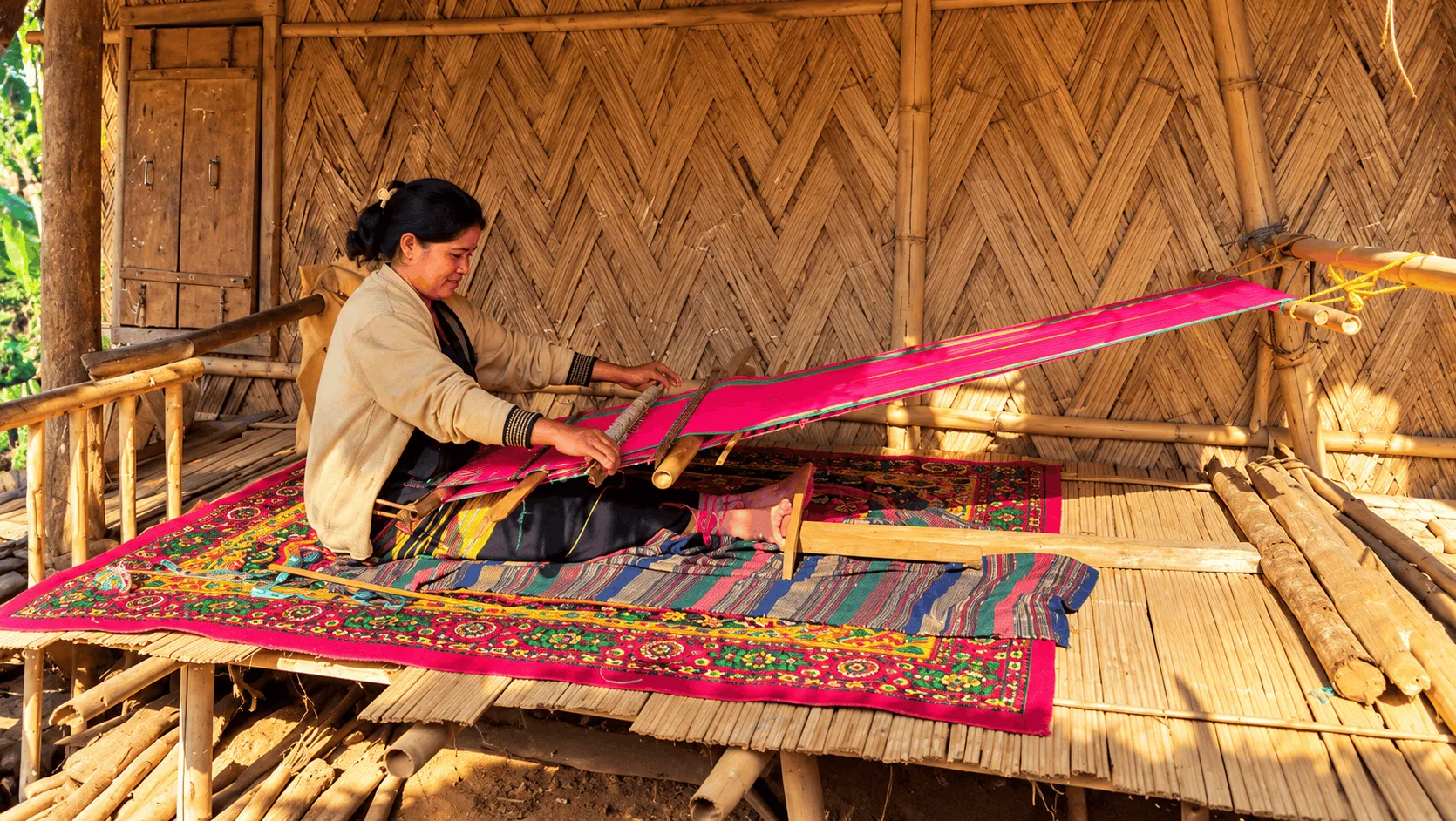
Most travellers first notice Mizo textiles as colour: bands of red, black, white and green on a cloth wrapped at the waist, or a shawl across the shoulders at a festival. It is worth slowing down at that point. Each cloth is the product of skill, time and a set of traditions that belong to the women and communities who keep them going. This guide explains what puan is, how some of the best-known weaves are made, what is and is not known about their meanings, and how to learn about and buy Mizo traditional textiles without reducing them to souvenirs.
It sticks to what credible sources support. Where stories about patterns or origins are told in more than one way, it says so. It names no workshops, shops, artisans, prices or addresses, because we could not verify them.
For the wider state and how its regions connect, see our Mizoram travel guide.

What Is Puan?
In the Mizo language, puan simply means cloth. The word covers everyday wraps, ceremonial garments and woven pieces used in many ways, so when someone says "puan", ask which one they mean. Mizoram has many named weaves, and five of them have earned a Geographical Indication tag, according to Outlook Traveller: puanchei, hmaram, tawlhlohpuan, ngotekherh and pawndum.
A Geographical Indication tag is a form of legal recognition in India for products tied to a particular place and method. It tells you that a textile has been registered, not that every cloth sold under the name is genuine or handmade. That distinction matters when you shop, and we return to it below.
Mizo women are described as the main weavers, and the tradition has been handed down through households. Sources describe weaving as a marker of identity as well as a skill, though descriptions vary, and practice differs between families, villages and communities.
Traditional Clothing and Cultural Significance
Puan is worn as clothing, and some weaves have particular associations. The following are described by credible sources, and each description should be read as general, not as a rule that every family follows.
Puanchei is described as the most colourful of the Mizo puan. Outlook Traveller says it is wrapped around the waist to cover the lower body, and that it forms part of a Mizo woman's trousseau. Travel and craft sources add that it is worn at festivals, dances and ceremonies, and the cloth is often associated with the lively Cheraw bamboo dance, though we could not verify the details of when it is worn in any particular community.
Hmaram is described by India's Ministry of Tourism as one of the oldest patterned textiles of the Mizo, and by the Handloom Export Promotion Council as the oldest patterned textile of the Lusei. Its motifs are mostly inspired by the flora of Mizoram.
Tawlhlohpuan carries a name meaning "to stand firm or not move backward". Outlook Traveller says it is said to have been first woven by the wife of a warrior named Darhnawka from Hualngo village, at her husband's request, and that it became a symbol of courage among Mizo warriors. Notice the wording: this is a tradition passed down, and not a documented fact. Treat it as a story that people tell.
Ngotekherh is described as a traditional cloth highly prized by the Mizo. The Handloom Export Promotion Council explains that ngote is a pet name for a little boy or girl, and kherh is similar in meaning to hruih.
Pawndum is described as deeply integrated into Mizo cultural life with various uses, according to Outlook Traveller, though the source does not list them. We have not guessed.
We are not assigning meanings to colours or individual motifs, because we could not find credible, consistent explanations. If a seller or weaver offers a meaning, listen to it as their account, and ask which community or family it comes from.
Weaving Techniques, Materials and Patterns
Mizo textiles are traditionally woven on a loin loom, a simple loom whose weaver sits on the floor and tensions the warp threads with her own body. The Handloom Export Promotion Council uses the name puanbu for the traditional loin loom used for pawndum. A loin loom produces narrow cloth, so wider garments are often made by sewing narrow pieces together.
Some details from the sources:
- Puanchei is woven in three pieces, with the middle one narrowest, then stitched into one garment, according to Outlook Traveller. The Handloom Export Promotion Council describes the process as starching the warp yarns, warping, weaving, inserting designs by hand and sewing the three pieces together. It describes the cloth as medium to heavy and compactly woven.
- Hmaram is a single loom-width cloth made from handspun, indigo or soot-dyed cotton and natural white cotton, according to the Handloom Export Promotion Council. The Ministry of Tourism says weavers add the motifs using supplementary yarns while weaving, and that the cloth is made so that white shows only in the motifs.
- Ngotekherh was traditionally woven on a backstrap loom, but the Handloom Export Promotion Council says most production now uses fly shuttle looms, a foot-operated loom that moves the weft thread faster.
That last point deserves attention. Traditional weaving and modern production sit side by side, and a cloth woven on a fly shuttle loom is still handloom because a person operates the loom, but it is different from one woven on a loin loom. A humans-of-the-Northeast feature notes that many weavers have adapted to frame looms for larger production while the loin loom remains deeply respected. Neither is wrong, but you can ask which was used and why.
Materials vary. Some traditional cloths use handspun cotton, while many modern pieces use other yarns. We could not verify what is typical in current production, so ask about yarn, dyes and whether a piece is handloom, powerloom or machine made.
Weaving and Handloom in Thenzawl
Thenzawl, in Serchhip district, is widely described as the centre of traditional Mizo handloom, and a fashion-industry feature calls it a hotspot for puan weaving. We could not verify how many weavers, workshops or cooperatives operate there today, how they are organised or which are open to visitors, so we are not naming any.
What you can expect, as a general guide, is that weaving happens in homes and small workshops, and that outlets sell finished textiles. Our Thenzawl travel guide covers the town, its waterfalls and the practicalities of getting there, so this guide focuses on the textiles.
If you visit, remember that you are entering people's workplaces and, in many cases, their homes. Ask before going in, ask before photographing, and do not touch looms or work in progress without being invited. A weaver who is willing to talk is giving you her time, so buy something if you can, or at least thank her.
How to Learn About Local Textile Craft
Start before you buy. A short period of learning changes how you see everything in a shop.
- The Mizoram State Museum in Aizawl has a textile gallery, according to Outlook Traveller, where many of the weaves are displayed. We could not verify its current opening hours, so check before you go. Our Aizawl travel guide covers the city and its museum.
- Ask the Mizoram tourism department or a local guide whether any weaver is open to showing visitors her work, and whether any workshops or demonstrations are offered. We could not verify any organised workshops, so do not assume they exist.
- Ask your host or a Mizo friend about the cloth they wear or own. People often know the name, the occasion and the family story.
- Read before you travel. The Ministry of Tourism, Handloom Export Promotion Council and Mizoram's own cultural institutions have published short descriptions that are more reliable than most shop labels.
Textile and song traditions often sit alongside each other in Mizo culture. If you are interested in wider Mizo heritage, our Champhai travel guide covers a memorial to Mizo composers in the east of the state. We could not verify any textile-specific content there, so we mention it only as context.

Where and How to Buy Mizo Textiles
There are several ways to buy, and each has different strengths. We could not verify specific stores, so we describe categories and not names.
- Directly from weavers or weaving households. This usually gives you the clearest information about who made a cloth and how. It also puts money straight into the craft.
- Cooperatives or government-supported craft outlets. These can offer a range and some assurance about provenance, though availability and quality vary. Ask about their sourcing.
- General markets and shops. These offer variety and convenience, but a stall may mix handloom, powerloom and machine-made cloth, and not all will be labelled.
- Contemporary designers using handloom cloth. Some sources describe younger Mizo designers making modern items from handloom fabric. Treat these as a different category from traditional garments, and ask how the cloth was sourced.
Plan time. A good conversation about a cloth takes longer than a quick purchase, and the best pieces may not be sitting on a shelf. If you want a specific weave, ask whether it can be made to order, and be ready for it to take time.
Identifying Quality and Asking About Provenance
No single check proves a cloth is authentic, so combine questions with your own eyes. These are general shopping suggestions, not verified tests.
Questions to ask:
- Who made this, and where? Was it woven by hand, on which kind of loom, and by an individual weaver or in a production unit?
- What is the cloth called, and what is it made of? Is the yarn cotton, another fibre or a blend, and is it handspun or mill-spun?
- Are the dyes natural or synthetic, and will they bleed when washed?
- Were the motifs woven in, or printed, embroidered or added later? In hmaram, for example, motifs are described as woven using supplementary yarns.
- Is the seller an authorised user of any Geographical Indication registration, and is any certificate, tag or label supplied? We could not verify how such registrations are displayed on products, so ask the seller to explain.
- How long does this piece take to make, and what is the fair price for that effort?
Things to look at:
- Weave and finish. Handloom cloth often shows small irregularities, and a very perfect, uniform pattern can suggest machine production. This is a rule of thumb, not proof.
- Edges and joins. Pieces sewn from narrow strips, as in puanchei, should show careful joins.
- Weight and hand. Puanchei is described as medium to heavy, so a thin, flimsy version may be a different product.
- Consistency of the seller's story. A weaver can usually explain a piece in detail.
Do not assume that a higher price means authenticity, or that a low price means a fake. Ask, compare and be prepared to walk away.
Responsible Shopping and Cultural Etiquette
- Ask before photographing weavers, looms or households, and accept a refusal. Do not pay people to pose.
- Do not touch looms, yarn or unfinished work without permission.
- Pay fair prices. Handwoven cloth represents many hours of work, so avoid bargaining hard. If you are unsure, ask the maker what price she asks and consider it as given.
- Buy from makers or outlets that can explain where the cloth came from, and avoid pieces that look like cheap copies of traditional designs.
- Do not wear or display ceremonial textiles as costume or fashion without understanding their context. Ask a host before wearing a garment, and ask what is appropriate for the occasion.
- Do not generalise. Mizoram has more than one community, and patterns, names and customs differ.
- Avoid treating a weaver as an attraction. A conversation, a purchase and a thank you are better than a photo opportunity.
Carrying and Caring for Textiles
These are general suggestions. Ask the seller for care advice specific to your cloth.
- Fold cloth carefully, with tissue or clean cotton between folds, and avoid tight rolling that creases the weave.
- Pack it in a breathable bag and keep it away from damp, since mildew can damage cotton.
- Wash gently by hand in cool water, or follow the seller's advice. Indigo and other natural dyes may bleed, so wash dark cloths separately and test a small area first.
- Dry in shade, away from direct sun, which can fade colours.
- Keep valuable pieces away from moths, sunlight and hanging for long periods.
Frequently Asked Questions
What is puan?
Puan is the Mizo word for cloth. It covers many woven garments and cloths, from everyday wraps to ceremonial pieces.
What is puanchei?
Puanchei is a colourful Mizo textile, woven in three pieces and stitched together, and worn wrapped around the waist. Sources describe it as part of a woman's trousseau and as worn at festivals.
Which Mizo weaves have Geographical Indication tags?
Five weaves are reported to have the tag: puanchei, hmaram, tawlhlohpuan, ngotekherh and pawndum. A tag registers a product, and it does not guarantee that every cloth sold under the name is genuine.
How are Mizo textiles woven?
Traditionally on a loin loom, which produces narrow cloth. Some pieces are now woven on fly shuttle or frame looms, so ask which was used.
Where can I learn about Mizo textiles?
The Mizoram State Museum in Aizawl is reported to have a textile gallery, and Thenzawl is known for handloom. Check opening and access before you go, since we could not verify them.
How can I tell if a textile is handloom?
Ask who made it, on what loom and from what yarn, and look at the weave and finish. No single check is conclusive, so combine questions with careful observation.
Can I photograph weavers?
Only with clear permission. Ask first, accept a refusal and do not touch looms or work in progress without being invited.
Conclusion
Mizo textiles reward patience. Puan is a word that covers many cloths, each with its own weave, history and uses, and the best-known stories about them are traditions to listen to, not facts to repeat as settled. Learn what you can, ask who made a piece and how, pay fairly and treat weavers as the keepers of a living craft. If you do, whatever you take home will mean more than a souvenir.