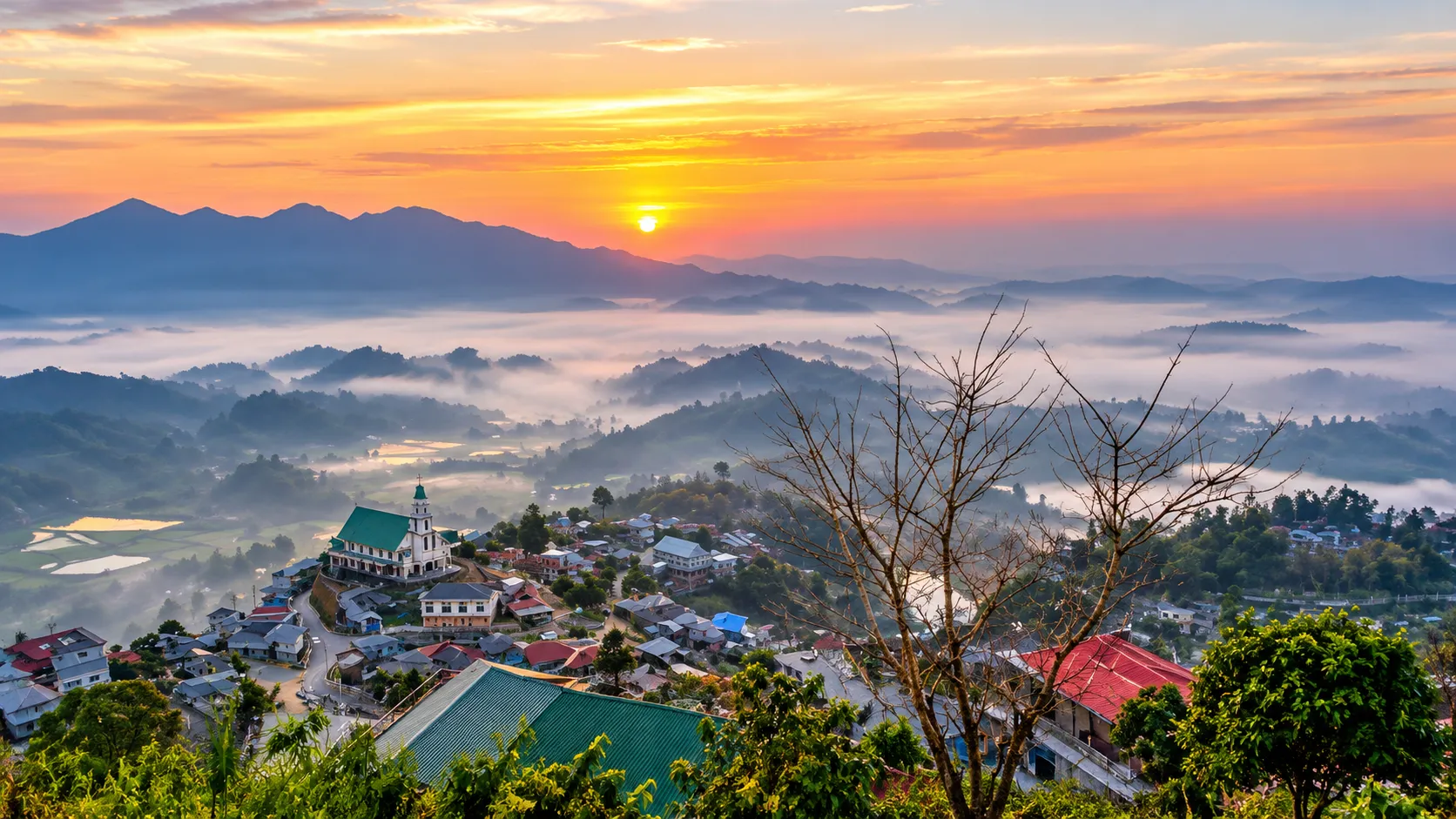
Most visitors to Mizoram stay around Aizawl and the central hills. Champhai sits at the other end of the map, in the east, where the land opens into broad farmland and the Myanmar border is close enough to shape daily life. It is a place for people who like long drives, wide valley views and a working border town more than a list of ticketed attractions.
This Champhai travel guide explains where the district is, why it deserves a detour, which places are worth knowing, how to think about the Myanmar border, what the vineyards and farmland are about, when to go and how to reach it. It gives no prices, schedules, distances or border rules, because they change or vary between sources, and it tells you what to confirm before you travel.
Where Is Champhai?
Champhai is in eastern Mizoram, on the border with Myanmar. The town overlooks a broad valley, and the district is often described as having the largest area of flat farmland in the state, which is unusual in such hilly country. That setting gives Champhai a different feel from Aizawl and the ridge towns of the central hills.
It is a long road journey from the capital, over narrow and winding hill roads, and most travellers reach Champhai from the Aizawl side. We have not quoted distances or journey times, because published figures vary and road conditions change. For a wider view of the state and how its towns connect, see our Mizoram travel guide.
Why Visit Champhai?
The landscape comes first. Champhai has open valley views, farmland on the slopes and distant ranges, and the scenery shifts with the seasons. It feels wider and less crowded than the central hills.
The border region adds character. Trade and movement across the Myanmar frontier shape the town's markets and daily life, and you can see how closely the two sides are connected through family, culture and commerce. It is a place to observe rather than to push boundaries.
Champhai is also useful for understanding Mizo culture beyond the capital. Songs, stories and village life here connect with wider Mizo traditions, and some of the district's best-known places are tied to folk memory and music.
Agriculture is a real draw. Farmland dominates the valley, and some fruit growing, including grapes, has developed around the town. A visit works best if you are curious about how people live and work on the land.
Finally, viewpoints and countryside make the journey worthwhile. If you enjoy drives with changing scenery and unhurried stops, the road itself is part of the trip.
Best Places to Visit in Champhai
This list sticks to places that government tourism sources and reliable travel references mention for Champhai. Confirm access and conditions locally before you go.
Lianchhiari Lunglen Tlang is a ridge and rocky ledge in the district, near the village of Dungtlang, known for sweeping views over valleys and hills. It also has cultural associations with Mizo folk tradition. Go in clear weather, and ask locally about the road and the walk from where the vehicle stops.
Murlen National Park is a forested protected area in the district, known for its wildlife and plant life. It suits travellers who enjoy nature and are comfortable with a long drive on rural roads. Check access, facilities and any entry arrangements with the forest authorities or tourism office, and do not expect guaranteed wildlife sightings.
The Mizo Hlakungpui Mual, a memorial at Khawbung, commemorates Mizo classical composers and poets, and reflects the importance of song and verse in Mizo life. Opening arrangements may vary, so confirm before you travel.
Champhai town and its markets show daily life in a border district, with local produce, household goods and goods that reach the town through nearby border trade. It is a good place for an easy walk and a meal.
Zokhawthar is the border township used for trade with Myanmar and is often mentioned in travel references. The next section explains how to approach it sensibly.

Champhai and the Myanmar Border
Champhai is among the best places in Mizoram to understand what living beside an international border means. Zokhawthar, on the Indian side, is a border township through which trade with Myanmar is conducted, and communities on both sides have long-standing ties. Rih Dil, a heart-shaped lake with deep significance in Mizo tradition, lies on the Myanmar side close to the frontier. That is why many Mizo people regard it as a place of cultural memory, even though it lies across the line.
For visitors, the border is a feature to understand and respect, not a challenge to test. Crossing into Myanmar is subject to official arrangements that may change, and what is possible for one traveller may not be for another. Do not try to cross or approach the line without proper authorisation, do not photograph security installations, and follow any instruction from officials. If you want to see Rih Dil or cross at an official point, ask the relevant authorities or an experienced local operator for the current position before you plan around it.
Even if you do not cross, you can still see the border region from the Indian side by visiting Zokhawthar's trading area and talking to local people, subject to any restrictions that apply.
Champhai's Culture and Local Life
Champhai is part of the wider Mizo world, with church life, community gatherings and music shaping the week. Sundays are quiet, so plan travel and meals around that. Singing is part of everyday life, and some of Champhai's best-known associations are with songs and folk stories.
Farming sets the rhythm of the seasons. Rice is central to life in the valley, and harvest time affects work, festivals and travel. Markets show what the land produces, and what comes across the border.
Food here is simple and rooted in rice, vegetables and smoked or boiled meat, similar to the rest of Mizoram. Mizoram has more than one community, and customs vary, so ask people how they describe themselves and avoid assuming that everyone follows the same traditions.
Treat villages and farms as living places, not scenery. Ask before photographing people, wait to be invited into homes and accept hospitality politely.
Vineyards and Agriculture Around Champhai
Champhai is known for its grape growing, and tourism sources mention vineyards in and around the town, including the upper part of Champhai town and the Hnahlan area. Fruit orchards, including passion fruit and kiwi, are also reported in the district. We are not naming individual vineyards, because we cannot verify them or their opening arrangements.
Treat vineyard visits as something to arrange locally. Ask at your accommodation or the tourism office whether any vineyard can be visited, when and under what conditions, since these are working farms. The grape season, harvest timing and any tastings or sales vary, and we have not given dates.
The wider plain matters just as much. The Champhai valley is widely described as the main rice-growing area of Mizoram, and the farmland is part of what makes the landscape distinctive. If you are interested in agriculture, ask a local host to explain what is grown, when it is harvested and how the work is organised.
Things to Do in Champhai
- Drive or walk to a viewpoint such as Lianchhiari Lunglen Tlang in clear weather.
- Visit Murlen National Park if the access and conditions suit you, with a driver who knows the road.
- Pay a respectful visit to the Mizo Hlakungpui Mual and learn about Mizo composers and poets.
- Walk through Champhai's markets and sample local produce.
- Look at the farmland and ask about the rice and fruit growing, and visit a vineyard if one can be arranged.
- Visit the Zokhawthar area to see a border trading township, within any applicable restrictions.
- Spend time over meals and conversations in small eateries and ask about the area.
- Use the long drive to stop in villages and viewpoints along the way, with permission and good manners.
Best Time to Visit Champhai
October to March is generally the most comfortable and practical period, with clearer skies and more reliable roads. Because Champhai is in the higher hills, mornings and evenings can be cool, so bring warm layers. Clear weather makes a difference at viewpoints.
The monsoon brings heavy rain across Mizoram, usually from late spring into early autumn. Hill roads may be slow or affected by landslides, cloud may hide views and travel plans can change quickly. If you travel in these months, build in spare days and ask about the road each morning.
Seasons vary from year to year, so check the forecast close to departure. We are not quoting temperature or rainfall figures. Spring is often mentioned as a good time for trekking and camping around Champhai, but conditions and access should be confirmed locally.
How to Reach Champhai
Most travellers fly into Lengpui Airport near Aizawl and continue by road. Silchar in Assam is another gateway, with road links into Mizoram. Check flight availability and schedules, and allow buffer time. We cannot confirm regular commercial flights to Champhai itself.
For rail, a line from Bairabi to Sairang was inaugurated in September 2025. Bairabi is also named as the nearest railway station to the Champhai area in some government references. Confirm which services currently run and how you would continue by road.
Road is the main way in. The usual route runs from Aizawl through the hills to Champhai on narrow, winding roads, and some travellers approach from the Assam side through the northern part of Mizoram. Journeys are slow, so leave plenty of daylight and do not schedule tight connections.
Shared vehicles run between Aizawl and Champhai, and a hired vehicle with a local driver is often the most flexible option. Timings are informal and may not operate on Sundays and holidays, so confirm locally and do not rely on any published schedule. We have not quoted fares or departure times.
Visitors from other parts of India have generally needed an Inner Line Permit to enter Mizoram, and foreign nationals have separate arrangements. Local reporting in 2026 said new guidelines had been approved, with details not fully published at that time, so check official Mizoram government channels and your operator before you go.
How Many Days Do You Need?
Two days is the minimum if you are travelling from Aizawl, and most of that time will be on the road. It allows you to see Champhai town and one nearby place.
Three days is more comfortable. You can add a viewpoint, a visit to the memorial and some time with local farms or markets, without rushing.
Four days lets you add Murlen National Park and a slower pace, or time at the border township if access suits you.
Many travellers fit Champhai into a wider Mizoram circuit that includes Aizawl and the south. Our Thenzawl travel guide shows how handloom and waterfall stops fit into that wider route.

Suggested Champhai Itinerary
This is a flexible three-day plan starting from Aizawl. Adjust it to the weather, road conditions and access arrangements.
Day 1: Travel from Aizawl to Champhai, leaving early to allow for slow roads and stops. Break the journey at a village or viewpoint of your choice, and arrive with enough light to look around the town. Check into your accommodation and ask about the next day's roads.
Day 2: Visit Lianchhiari Lunglen Tlang in the morning for the views, then stop at the Mizo Hlakungpui Mual if time allows. Spend the afternoon in the town's markets and, if arranged, a vineyard or farm. If you want to see the border township, ask locally whether Zokhawthar is open to visitors and plan it as a separate half-day.
Day 3: Return toward Aizawl, or add Murlen National Park if you have a spare day and good conditions. Keep the day flexible, because return drives can be slow. If you have time in Aizawl before you leave, our Aizawl travel guide covers the city.
Where to Stay
Accommodation in Champhai is more limited than in Aizawl. Expect simple hotels and guesthouses, and government tourist lodges that have been reported in Champhai and in Zokhawthar. Booking arrangements vary, and we cannot confirm availability. We are not naming properties or quoting rates.
Plan ahead, especially around holidays, festivals and weekends. Ask your operator or a local contact for current options, request written confirmation of your booking and ask about hot water and power backup. Facilities may be basic, and that is normal for this part of Mizoram.
Travel Tips
Carry enough cash for the whole trip, since ATMs and digital payments may be unreliable outside the capital. Mobile coverage varies and can drop in valleys and on remote stretches, so download offline maps and share your itinerary.
Hill roads are slow, and journeys take longer than the map suggests. Travel in daylight, build in spare time and expect weather to disrupt plans, especially in the wet months. A driver who knows the roads is a real advantage.
Pack layers, rain gear, sturdy shoes, a refillable water bottle, any medicines you need and a basic first aid kit. Carry copies of your permit and identification, and keep them accessible for checkpoints.
Plan around Sundays, when many services close and shared vehicles may not run. Dress modestly and keep noise low near churches and homes.
Responsible Travel in Border Areas
- Respect the border. Do not try to cross or approach the boundary without proper authorisation, and follow instructions from officials.
- Do not photograph security installations, checkpoints or officials. Ask before photographing people or trade.
- Carry your identification and permits, and expect checks. Be patient and polite.
- Do not assume what is allowed. Rules for border areas can change, so confirm locally.
- Support local businesses by eating in local places, hiring local drivers and buying produce and crafts directly from sellers.
- Treat villages and farms as living places. Ask before entering, and accept a refusal.
- Avoid single-use plastic and take your waste with you.
- Follow local guidance on safety, roads and restricted areas.
Frequently Asked Questions
Where is Champhai?
Champhai is a town and district in eastern Mizoram, close to the border with Myanmar, in a valley known for the largest stretch of farmland plains in the state.
What are the best places to visit in Champhai?
Commonly mentioned places include Lianchhiari Lunglen Tlang, Murlen National Park, the Mizo Hlakungpui Mual and Champhai's markets. Zokhawthar is the border trading township.
Can I visit the Myanmar border from Champhai?
You can often see the border region from the Indian side, but crossing is subject to official arrangements that may change. Check the current position with authorities before planning.
Are there vineyards in Champhai?
Tourism sources mention vineyards around Champhai town and in the Hnahlan area. Visits depend on local arrangements, so ask locally before you go.
What is the best time to visit Champhai?
October to March is generally the most comfortable period. The monsoon brings heavy rain, slow roads and landslide risk.
How do I reach Champhai?
Most travellers fly into Lengpui Airport near Aizawl or arrive through Assam, then continue by road on winding hill roads. Confirm schedules and conditions locally.
Do I need a permit to visit Champhai?
Visitors from other parts of India have generally needed an Inner Line Permit to enter Mizoram, and foreign nationals have separate rules. Requirements are being updated, so verify with official sources.
How many days do I need in Champhai?
Two days is the minimum from Aizawl, and three or four days gives a more comfortable trip with time for viewpoints, markets and possibly Murlen National Park.
Conclusion
Champhai suits travellers who want to see a different side of Mizoram, with open valley landscapes, farmland, a border-town atmosphere and a slower route. Its viewpoints, cultural sites and agriculture reward curiosity more than speed. Go in the dry months, confirm permits and any border arrangements shortly before you travel, keep your schedule flexible and treat the people, farms and frontier with respect.