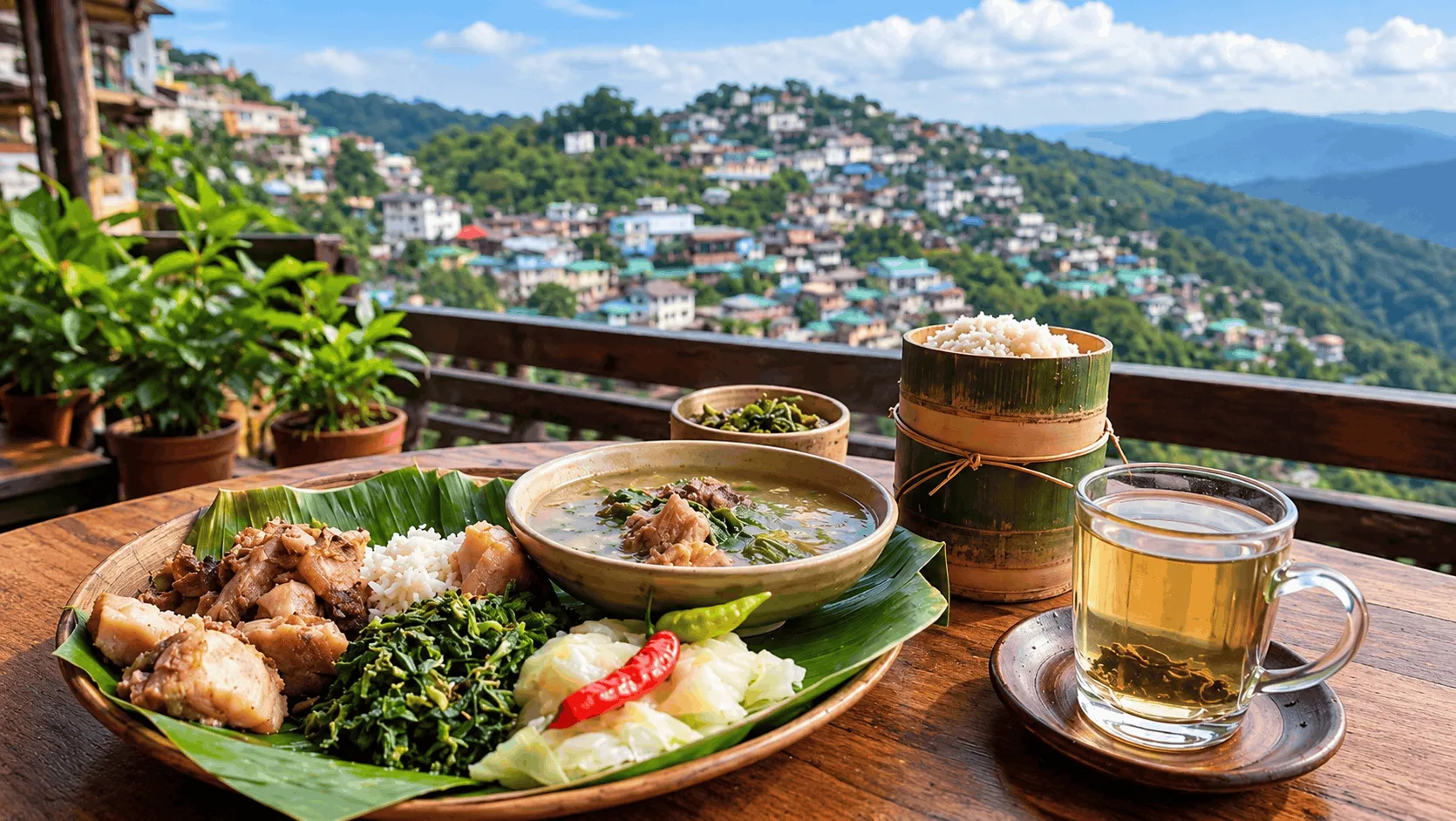
Mizo food is easy to misjudge. Compared with the layered, spice-heavy cooking found in much of India, it can look plain at first: rice, boiled vegetables, a bowl of broth, a piece of smoked meat. A scholarly paper on the cuisine, written by researchers from North-Eastern Hill University and Mizoram University, describes it as notable for its simplicity, and then spends most of its length showing how much cultural meaning sits inside that plainness. Fresh produce, foraging, fermenting, smoking and drying all carry history.
This guide explains the main ingredients and cooking traditions, introduces dishes you are likely to hear about, covers vegetarian and allergy questions, and offers practical advice for eating well and respectfully as a visitor. It describes food as eaten in many Mizo households, but recipes vary between families, villages and communities, and no description here is the only authentic version. It names no restaurants and quotes no prices, because we could not verify them.
Introduction to Mizo Food
"Mizo" is an umbrella term used for a number of closely related communities, and most people in Mizoram speak Mizo, according to the paper above. Mizoram is also home to other communities, including the Mara, Lai, Chakma and Bru, who have their own food traditions. This guide focuses on Mizo food as commonly described, and it does not cover the cooking of those other communities.
A useful starting point is a Mizo saying quoted in the paper, "Sem sem dam dam, ei bil thi thi", which translates roughly as "sharing is living, selfishness is death". Food is a way of sharing, and meals have traditionally reinforced community bonds, a point also made in a recent feature on Mizo cuisine in the Daily Pioneer.
For the wider state and how its regions connect, see our Mizoram travel guide.

Key Ingredients and Cooking Traditions
Rice is central. The paper says the preference for freshly cooked seasonal produce and rice is an essential characteristic of Mizo eating habits. Rice has long been grown by shifting cultivation, known as jhum, and wet rice cultivation was promoted by colonial officials from 1898 in the valley areas of Champhai and Thenzawl before spreading to other areas. Both methods are still used today. If you visit those valleys, our Champhai travel guide and Thenzawl travel guide show how farming shapes the landscape.
Boiling is the main method of cooking. According to the paper, a primary way of cooking for Mizos to this day is simply boiling the ingredients in water, whether meat, grains or vegetables, often with no flavouring agents or condiments added, not even salt. The word chhum han, or tlak, refers to this boiling. Fragrant herbs are commonly added when boiling meat, and frying is less common historically. A scholar quoted in the paper notes that cooks once used rendered animal fat for the occasional frying, since processed oil was not available.
Other defining traits:
- A strong preference for fresh food. The paper describes people gathering whatever they could from gardens and the forest and cooking it fresh, and says stalls selling wild edible plants are common in bazaars across the state.
- Foraging, fishing and hunting alongside farming, which shaped the ingredients people use.
- Fermenting, drying and smoking, covered in their own section below.
Different households use different herbs, vegetables and techniques, so treat any list of ingredients as typical, not universal.
Traditional Mizo Dishes to Know
The dishes below appear repeatedly in credible sources. Spellings vary, descriptions differ between households and regions, and availability depends on the place and the day, so do not expect every dish everywhere.
Bai
Bai is often called the signature Mizo dish. It is a light stew made by boiling seasonal vegetables, according to the paper, which also mentions ash filtrate, known as ching al, traditionally used in the cooking and now largely replaced by cooking soda. The Daily Pioneer describes bai as prepared in many variations across households and regions, with vegetables such as pumpkin leaves, jungle greens, beans or mustard leaves, along with herbs, bamboo shoots and sometimes fermented soybean paste. Some versions include meat or fish. Ask what is in a particular pot.
Sawhchiar and Buhchiar
Both names refer to rice cooked with meat, and the two are often discussed together. The paper describes buhchiar as a boiled meat stew with rice made for celebratory occasions. The Daily Pioneer describes a variant called sawhchiar chawhpawk, enriched with rice flour and made for festivals or for people recovering from illness. The Ministry of Tourism's Aizawl food page names arsa buhchiar, a chicken and rice dish, since arsa means chicken in Mizo. Spellings and exact definitions vary, so ask locally what a given version contains.
Vawksa Rep
Vawksa rep is smoked pork. Several sources describe it as served with rice and sometimes cooked with bamboo shoots, herbs or chilli. The paper notes that sa rep, meaning smoked meat, is one of the foods preserved by smoking, and the Daily Pioneer says traditional Mizo households often preserved meat by smoking it over kitchen fires. Recipes differ widely.
Chhum Han
Chhum han, as noted, means boiling, and the name is also used for plain boiled vegetables. Travel sources describe it as a simple dish of boiled or steamed greens and vegetables served with rice. It is one of the most accessible options for vegetarians, subject to the cautions below.
Bamboo Shoot Dishes
Bamboo shoots appear in stews, fries and accompaniments, and they are covered in the next section.
Other Names You May Hear
Sources also name sanpiau and koat pitha, a fried sweet snack, as popular dishes, and bekang, a fermented soybean preparation, as an accompaniment for meat dishes. Descriptions of sanpiau and koat pitha varied between sources, so we are not describing how they are made. If you see them on a menu, ask the cook.
Rice, Vegetables, Meat and Fish in Local Meals
A typical meal centres on rice with one or more side dishes. Vegetables and leaves are often boiled and served simply. Meat holds a prominent place in Mizo cuisine, and the Daily Pioneer describes pork as a preferred option. The paper also notes that beef is a staple for many Mizo households and that fish and crab appear in some preparations. Several travel and news sources describe Mizo food as predominantly non-vegetarian, though households vary.
Seasoning is often light. Rather than a heavy spice base, flavour typically comes from the ingredients themselves, from herbs, and from fermented or smoked components. Chilli is often served separately so that each person can add heat. If you find a dish plain, that is part of its character, and a side of chilli or a fermented relish may be offered.
Bamboo Shoots and Fermented Ingredients
Bamboo forests dominate much of Mizoram's landscape and influence food as well as housing and tools, according to the Daily Pioneer. Bamboo shoots, known locally as mautak or rawtuai, are used fresh, fermented or dried. Fermented shoots add a mild acidity, and shoot stews, chutneys and fries are common in particular seasons.
The paper lists a wider set of preserved foods made by fermenting, drying and smoking. Some are used as seasonings, such as sa-um (fermented pig fat), chhium (fermented sesame) and bekang-um (fermented soybean). Others are eaten directly, such as tam-um (fermented mustard), ai-um (fermented crab), dawl rep (dried taro) and behlawi rep (dried or smoked cowpea). The paper adds that these processes are primarily carried out by women, that many women sell fermented and smoked products as a livelihood, and that fermented foods can have strong smells.
A note on attitude. The paper discusses how fermented foods from the Northeast have been exoticised or even used to stigmatise people in other parts of India. As a visitor, do not call these foods strange or smelly in front of a host. Ask what something is, taste a little if you wish, and decline politely if it is not for you.
Vegetarian Food and Dietary Considerations
Vegetarian eating is possible but requires care. Dishes such as chhum han, vegetable bai and bamboo shoot fry are described by several sources as vegetarian-friendly. The difficulty is that meat, fat and animal products can sit invisibly in a dish.
Questions worth asking, in plain English or with a host's help:
- Is there meat, fish or stock in this dish, or was it cooked in animal fat?
- Does it include smoked meat, fermented pig fat or fermented fish or crab?
- Is the bai made with vegetables only, or with meat or fish?
- Is rice served with any meat or fish already mixed in?
Allergy cautions follow from the ingredient lists above. Soybean, sesame, mustard, fish and crab all appear in fermented preparations. Carry a short note describing your allergy, ask about each dish and treat any uncertain answer as a no. We cannot verify how reliably a small eatery separates ingredients, so people with severe allergies should be cautious. Vegans will find the choice narrower still.
If you have religious or personal dietary rules, say so early and politely. Hosts generally appreciate being told in advance, and informal places may need time to adapt.
Where to Explore Mizo Food as a Traveller
Aizawl is the easiest place to start. The Ministry of Tourism's Aizawl food page describes the city's cuisine as combining traditional Mizo dishes with influences from neighbouring states and countries, and names bai, arsa buhchiar and vawksa rep as dishes to try. Our Aizawl travel guide covers the city. We could not verify specific restaurants or their opening hours, and we are not naming any, so ask your hotel, host or a local guide for current suggestions.
Markets are the most direct way to see ingredients. The paper notes stalls selling wild edible plants in bazaars across the state, and markets in Aizawl and other towns show fresh produce, leafy greens and preserved foods. Visit in daylight, ask before photographing sellers and buy small amounts directly from them if you are curious.
Home dining is the most meaningful, and also the one that depends most on invitation. We could not verify any organised home-dining experiences, so do not assume they exist. If you are invited into a home, accept the offer graciously, follow the host's lead and treat it as hospitality, not a service.
Smaller towns and rice-growing valleys offer simple local meals, though choice may be limited. Plan around Sundays, when many shops and eateries close, and carry snacks as a backup.

Food Etiquette and Cultural Context
We could not verify a fixed set of dining rules, and customs vary between households, so treat these as respectful habits, not rules.
- Accept hospitality warmly. Food is a form of sharing, and refusing everything can be awkward. If you cannot eat something, say so politely and take a small portion of another dish.
- Wait to be served or invited to start, and watch how others eat.
- Ask before photographing food preparation, homes, kitchens or people eating.
- Do not comment negatively on taste, smell or ingredients, especially fermented or smoked foods.
- Take only what you will finish. Wasting food can seem careless.
- Respect church life. Sundays are generally quiet, and meals may be family or church occasions.
- Alcohol has been restricted in Mizoram, and rules can change, so check the current position and do not assume it will be offered or available.
- Offer to pay fairly for meals, and do not bargain hard with food sellers.
Food Safety and Practical Tips
- Choose freshly cooked dishes served hot. Mizo cooking relies on boiling, so freshly boiled food is usually a reasonable choice, though that does not remove all risk.
- Drink bottled or properly purified water.
- Wash or peel raw fruit and avoid raw salads if you have a sensitive stomach.
- Be cautious with smoked and fermented foods if you are not used to them. Start with small portions.
- Tell your host about allergies and dietary needs before you eat, not after.
- Carry snacks, since small towns and rural areas may have few eateries, and many close on Sundays.
- Carry cash. ATMs and digital payments may be unreliable outside the capital.
- Ask what dishes are called. People are usually happy to explain, and spellings vary.
- Do not assume any dish is available everywhere. Menus change by place, season and household.
Frequently Asked Questions
What is Mizo food known for?
Mizo food is known for its simplicity, with boiled vegetables, rice, smoked meat and fermented ingredients. Freshness and foraged produce are central, and flavours are often mild.
What is bai?
Bai is a light Mizo stew of seasonal boiled vegetables, often with herbs, bamboo shoots and sometimes fermented soybean paste. Some versions include meat or fish, so ask what is in it.
What is vawksa rep?
Vawksa rep is smoked pork. It is often served with rice and may be cooked with bamboo shoots or herbs. Recipes vary between households.
Is Mizo food vegetarian-friendly?
It is possible to eat vegetarian, with dishes such as chhum han and vegetable bai. Meat, fat and fermented animal products can be hidden in dishes, so ask carefully.
What are fermented foods in Mizo cuisine?
Examples include fermented bamboo shoot, soybean, mustard, sesame, pig fat and crab. They are used as seasonings or eaten directly, and have strong flavours and smells.
What should I try in Aizawl?
Official tourism material names bai, arsa buhchiar and vawksa rep. Ask locally where to find them, since we could not verify specific restaurants.
Is Mizo food spicy?
Often not heavily. Flavour tends to come from herbs and the ingredients themselves, and chilli is frequently served separately so you can add your own.