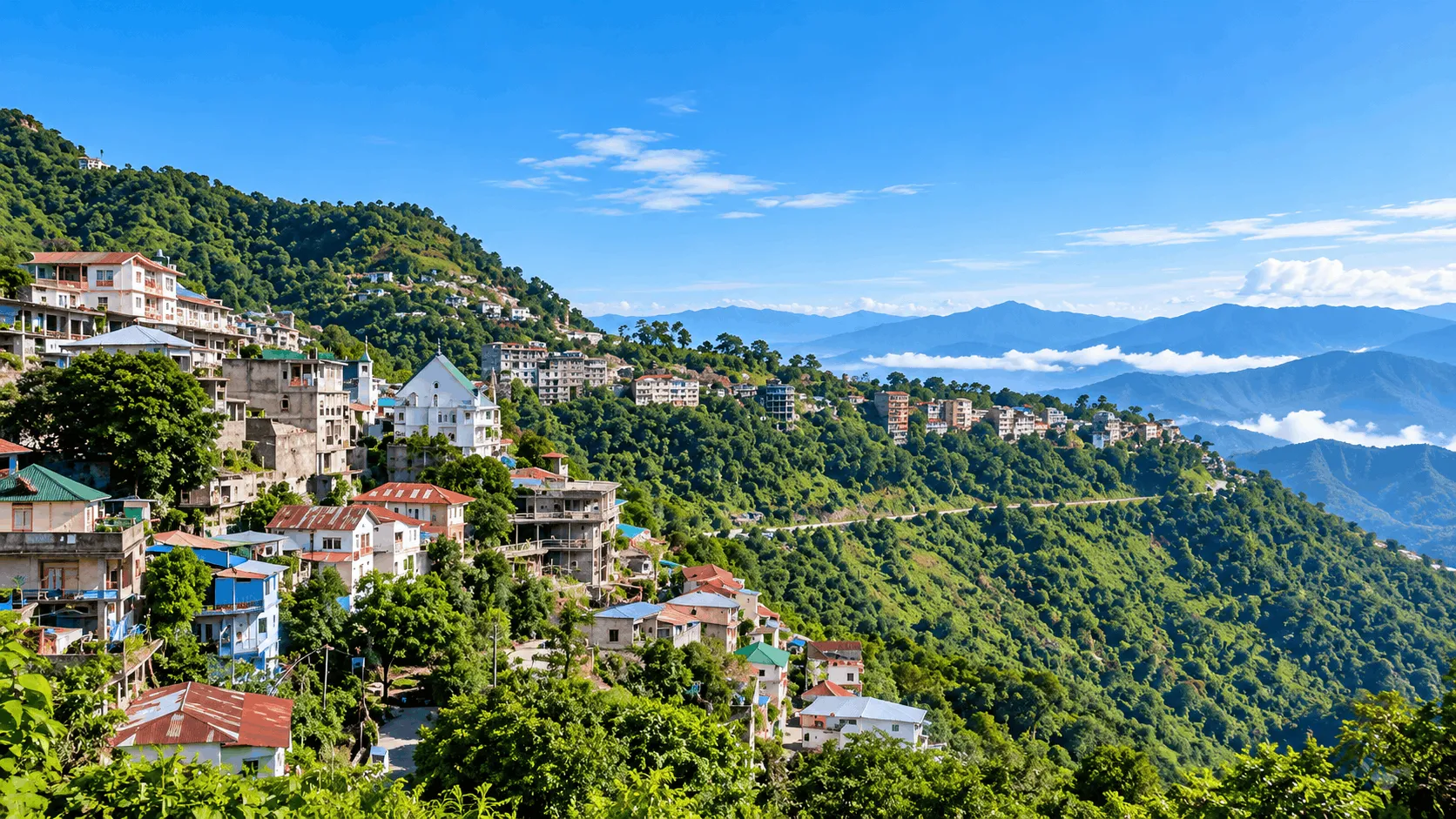
Mamit is the part of Mizoram that many travellers drive past on the way somewhere else. It lies in the north-west of the state, on the border with Tripura and Bangladesh, and its main claim on a travel itinerary is the forest of Dampa Tiger Reserve. Beyond the reserve, the district is mostly orange orchards, farming villages and quiet hill roads. That makes it a place for independent travellers who like slow journeys and who are happy to ask local people what is worth seeing.
This guide explains where Mamit is, how the town, the district and the nearby protected area relate to each other, what is actually documented for visitors, how to reach the area and how to plan two or three days. It separates what official sources confirm from what remains unverified. It gives no prices, schedules, travel times, trail details or lodging names, because we could not confirm them.
Where Is Mamit?
Three different places share the name, and mixing them up causes confusion.
Mamit is a town, and it is the administrative headquarters of Mamit district. It lies at an elevation of roughly 718 metres, according to reference sources. Mamit district is the larger administrative area, and Dampa Tiger Reserve is a separate protected area inside the district, with its headquarters at West Phaileng, not at Mamit town.
According to the district website, Mamit district was created from the former Aizawl district in 1998, by a notification dated 11 March 1998, and began functioning on 24 April 1998. It covers about 3,025 square kilometres, which makes it the fourth largest district in Mizoram. It is bounded by Hailakandi district of Assam to the north, North Tripura district of Tripura and Bangladesh to the west, Lunglei district to the south and Kolasib and Aizawl districts to the east.
The same website calls it the least urbanised district in the state, with West Phaileng as its most populated village. That fits the experience on the ground: small settlements, farmland and forest, with few services between them. For the wider state and how its regions connect, see our Mizoram travel guide.

Best Time to Visit
We found no official visitor-season guidance specific to Mamit town. The district website describes a pleasant climate through the year, with monsoon rain in the summer, and official tourism material describes October to April as the best period for Dampa. That fits the general pattern for Mizoram.
The cooler, drier months, roughly October to March, usually bring clearer skies and easier roads. The monsoon, roughly late spring to early autumn, brings heavy rain, landslides, leeches and slow roads, and access to forest areas may be limited. Orange season would be a draw for some travellers, but we could not verify when it falls or whether visitors can visit orchards, so ask locally.
Weather and road conditions vary from year to year, so check the forecast and the state of the roads close to departure.
Places to Visit in and Around Mamit
The official district tourism listing names only one place: Dampa Tiger Reserve. That is worth saying plainly, because many guides pad this district with attractions we could not verify. The following are the places we can reasonably point to. Confirm access and conditions locally before you go.
Mamit town is the base for most journeys. Expect a small district town with a market, government offices and basic services. Use it to ask about road conditions, check permission for forest areas and stock up on supplies.
Reiek Hills lie in Mamit district and give their name to one of its development blocks. They are best known as a hill and village outing from Aizawl, and our Reiek Hills travel guide covers the walk, the views and what to check before going. Ask your driver whether Reiek can be combined with the road to Mamit, because we cannot verify the route between them.
West Phaileng is a village of some size and the headquarters of Dampa Tiger Reserve. It is the practical gateway to the reserve, and local forest staff are based here.
Phuldungsei is the site of a range office of the reserve, near where the Tropic of Cancer is reported to cross the area. It matters mainly as an administrative point, so do not plan to visit without permission.
Saitlaw and Lungkulh are named in district information as places of interest. We could not verify what visitors can see or do there, so treat them as names to ask about, not as confirmed attractions.
Orange orchards define the district's economy. The district website says Mamit is famous for oranges and hatkora, a citrus fruit, and calls the area the Orange Garden of Mizoram. Seeing the orchards from the road is possible in principle, but entering them requires the owner's permission.
Dampa Tiger Reserve: What Travellers Should Know
Dampa is the reason most people look at Mamit, and it has its own guide. Our Dampa Tiger Reserve travel guide covers the reserve in full. This section gives only what you need to plan around it.
The National Tiger Conservation Authority lists the reserve's total area as 988 square kilometres, made up of a 500 square kilometre core and a 488 square kilometre buffer. The district website quotes 500 square kilometres, so published figures vary by what they count. The reserve lies on the Bangladesh border, and its headquarters are at West Phaileng.
On access, the reliable advice is to ask before you plan. Official tourism material advises contacting Mizoram's forest department before visiting. We found no official listing of safari services, trails, viewing towers, guides or visitor accommodation for Dampa, and we are not describing any. Access can change with forest-management decisions, conservation needs and security conditions.
On wildlife, nothing can be promised. The reserve is described as having a low tiger density, and tigers are rarely seen. Treat any sighting as a bonus. Stay on authorised routes, follow instructions from forest staff, do not feed or approach animals and take your rubbish with you.

Local Culture and Experiences
According to the district website, the dominant community in Mamit is Mizo, followed by Chakma and Reang, who are also known as Bru. Treat them as distinct communities with their own languages, histories and customs, and avoid describing the district as culturally uniform.
The district page notes that Mizo communities celebrate Chapchar Kut and Mim Kut, festivals linked to farming. Dates and arrangements are set locally and can change, so do not plan a trip around a date you read online, and ask first whether outsiders are welcome at any event. We could not verify visitor arrangements for festivals of the Chakma or Bru communities, so do not assume them.
Church life shapes the week in many Mizo communities, and Sundays are generally quiet, with many services closed. Singing is part of daily life, and you may hear choirs in the evenings. Farming sets the rhythm of the year, and the district's economy is mainly agricultural, with animal husbandry as an allied activity.
Food is generally simple, built around rice, vegetables and boiled or smoked meat, as elsewhere in Mizoram. We could not verify specific eateries or dishes in Mamit, and we are not naming any. If you eat in homes or small local places, ask about ingredients, and mention dietary needs early. Alcohol has been restricted in Mizoram, and rules can change, so check the current position.
Things to Do
Be realistic about activities. The following are reasonable ways to spend time, and each needs local confirmation.
- Use Mamit town as a base, walking through the market and asking local people and the district administration about what is open.
- Drive through the district's hill roads and orange country, stopping where it is safe and respectful.
- Visit Reiek Hills as an outing, following the guidance in our dedicated guide.
- Ask the forest department about permitted visits connected with Dampa, and do not assume any activity is available.
- Meet local growers, if a contact can arrange it, to learn about oranges and hatkora.
- Spend time in villages through local hosts, not as drop-in visitors.
How to Reach Mamit
Most travellers start in Aizawl, which has Lengpui Airport and, since 2025, a rail link to Sairang near the capital. Our Aizawl travel guide covers the city and how onward journeys begin. Check current flights and train services before you plan.
By road, the district website says Mamit is connected to Aizawl by a state highway of about 112 kilometres. Other sources give lower figures, from the high 80s to the mid 90s, so we are not repeating any number as fact. Ask your driver or the district administration about the route and its current condition, and leave generous time, since hill roads are slow and affected by weather.
The same page lists two other options. It says a helicopter service operates between Aizawl and Mamit twice a week, and it says the district is connected by rail as far as Bairabi. We could not verify whether the helicopter service currently runs, its schedule or its fares, and we cannot confirm how you would travel between Bairabi and Mamit. Check both before you plan around them.
Local transport is informal. Reference sources describe bus and jeep services between Aizawl and Mamit, but timings, fares and frequency change, and services may be limited on Sundays and holidays. A hired vehicle with a driver who knows the district is usually the most flexible option, especially for reaching West Phaileng and any forest area.
Visitors from other parts of India have generally needed an Inner Line Permit to enter Mizoram, and foreign nationals have separate arrangements. Local reporting in 2026 said new guidelines had been approved, with details not fully published at that time. Because Mamit district borders Bangladesh, ask the district administration whether any additional checks or restrictions apply to border areas.
Accommodation and Food
We could not verify any specific accommodation in Mamit, West Phaileng or near the reserve, and we are not naming properties. Expect small guesthouses and simple lodging in Mamit town at best, and possibly nothing at all near the forest. Many travellers base themselves in Aizawl and make longer day journeys, though the roads are slow.
Ask the Mizoram tourism department, the district administration or your operator what is currently available, and request written confirmation of any booking. Expect basic facilities, variable hot water and occasional power cuts.
For food, plan to eat in Mamit town and carry snacks and water for longer days. Vegetarians and anyone with allergies should say so early.
Suggested 2-Day or 3-Day Itinerary
This is a planning option, not a guaranteed route. We cannot verify travel times between places, so adjust it to local advice, the weather and the roads, and keep a spare day for delays.
Two days, starting from Aizawl:
Day 1: Travel from Aizawl toward Mamit with an early start. If your driver confirms it fits the route, break the journey with a visit to Reiek Hills. Arrive in Mamit with enough daylight to walk the town and ask about conditions for the next day.
Day 2: Use the day to ask the forest authorities about Dampa and what, if anything, is open to visitors. If permission is granted, travel to West Phaileng with a driver who knows the route and keep to whatever arrangements the forest staff set. If it is not, spend the day in the district's villages and orchards with local guidance, then return to Aizawl in daylight.
Three days adds slack. Spend an extra night in the area so that a Dampa visit does not depend on a long same-day drive, and use any spare time for a village visit arranged through a local contact or a slower return journey. If you are not sure the forest will be open to you, plan the third day around Reiek or Aizawl so your trip does not depend on one permission.
Practical Travel Tips
- Carry enough cash, since ATMs and digital payments may be unreliable outside Aizawl.
- Download offline maps. Mobile coverage varies and can drop on hill roads and near the forest.
- Pack layers, rain gear, sturdy shoes, insect repellent, leech protection in wet conditions, a first aid kit and any medicines.
- Carry water, snacks and a power bank.
- Keep printed and digital copies of permits and identification.
- Fill your fuel tank before leaving larger towns, and confirm availability on the way.
- Travel in daylight where possible, and do not schedule tight flights or trains after a road journey.
- Plan around Sundays, when many services are closed.
- Tell someone your plan and keep your driver's contact details.
Responsible Tourism
- Follow official instructions in and around Dampa. Stay on authorised routes, and do not enter closed areas.
- Do not feed wildlife, make loud noises or leave the path to look for animals.
- Carry out all rubbish, avoid single-use plastic and keep roadsides and viewpoints clean.
- Ask before photographing people, homes, farms and religious places, and accept a refusal.
- Ask the owner before entering an orchard or field.
- Respect church services and Sunday routines, and keep noise low near places of worship.
- Do not photograph border installations, security posts or officials.
- Buy fruit, food and supplies from local sellers, hire local drivers and pay fairly.
- Avoid generalising about the Mizo, Chakma, Bru or other communities, and ask people how they describe themselves.
Frequently Asked Questions
Where is Mamit?
Mamit is a town and district in north-western Mizoram, on the border with Tripura and Bangladesh. Mamit town is the district headquarters.
What are the main places to visit in Mamit?
The official district tourism listing names Dampa Tiger Reserve. Reiek Hills, West Phaileng and the district's orange country are also in the area, and Saitlaw and Lungkulh are named in district information.
Is Dampa Tiger Reserve in Mamit town?
No. It is in Mamit district, with its headquarters at West Phaileng. Check access and permission with the forest department before planning a visit.
How do I reach Mamit?
Most travellers go by road from Aizawl. The district website also lists a helicopter service and rail access to Bairabi, but we could not verify current schedules.
What is Mamit known for?
The district is known for oranges and hatkora, and it is called the Orange Garden of Mizoram. It is also home to Dampa Tiger Reserve.
What is the best time to visit Mamit?
The cooler, drier months, roughly October to March, are generally easier. The monsoon brings heavy rain and slow roads.
Do I need a permit to visit Mamit?
Visitors from other parts of India have generally needed an Inner Line Permit to enter Mizoram, and foreign nationals have separate rules. Requirements are being updated, so verify with official sources.
Conclusion
Mamit rewards travellers who go for the journey and the setting more than for a list of attractions. Its forest, orchards and villages are real, its official visitor listing is short and many details need confirming. Plan around the dry months, ask the forest department about Dampa before you commit, keep your itinerary flexible and treat the people and places along the way with respect. Do that, and the district makes a thoughtful addition to a wider Mizoram trip.