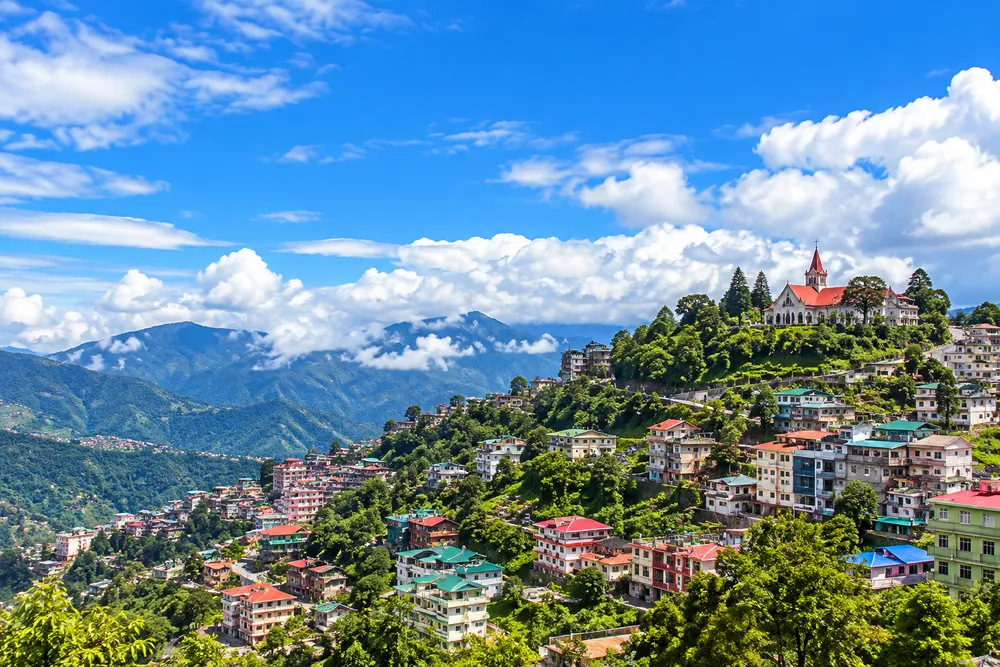
Kohima is the capital of Nagaland, built along a ridge in the eastern Himalayan foothills at around 1,400 metres. It works as the state's administrative and cultural centre and is usually the first stop for travellers heading into Nagaland's hill country. The town carries real weight in Naga history and identity: it was the site of one of the most decisive battles of the Second World War, it sits at the meeting point of several Naga tribes with distinct languages and dress, and it is close to natural landmarks such as Dzükou Valley and Japfu Peak. A war cemetery, a state museum, markets and access to nearby villages fit within a single walkable hill town, and Kohima becomes the main base for the Hornbill Festival each December.
Why visit Kohima?
Kohima sits at the centre of Naga cultural life. Nagaland recognises sixteen major tribes, and several, including the Angami, Chakhesang and Rengma, have a visible presence in the town through language, dress and food. The town is built across a steep ridge, so streets run up and down the hillside, with surrounding valleys visible from several points.
History is a major draw. The Battle of Kohima, fought between April and June 1944, halted the Japanese advance into British India and is remembered as one of the turning points of the war in Asia. The Kohima War Cemetery, built where much of the fighting took place, is one of the most visited sites in the Northeast.
Food, markets and handicrafts round out a visit: Naga cuisine relies on smoked meat, bamboo shoot and fermented ingredients rarely found elsewhere in India, and the local market shows everyday trade rather than a curated tourist stop. The state museum and cathedral add a heritage layer, and the short distance to Khonoma, Dzükou Valley and Japfu Peak means a day trip is easy to fit in. Kohima is also the practical base for the Hornbill Festival, since Kisama is a short drive away.
Best places to visit in Kohima
Kohima War Cemetery
Maintained by the Commonwealth War Graves Commission, the cemetery sits on Garrison Hill, where some of the heaviest 1944 fighting took place. Stone markers cover the terraced hillside alongside memorials to soldiers from Britain, India and other Commonwealth nations. Allow 45 minutes to an hour. It is centrally located and easy to reach on foot or by a short taxi ride.
Naga Heritage Village, Kisama
About 12 km from central Kohima, Kisama hosts the annual Hornbill Festival but is open through much of the year. Each Naga tribe has built a traditional morung, or tribal house, on site, showing regional architectural differences even outside festival dates. Allow one to two hours; a taxi takes about 25 to 30 minutes.
Kohima State Museum
The museum houses Naga tribal artefacts, including tools, jewellery, weapons and clothing from different communities, plus exhibits on regional history. It's a useful stop before visiting villages or Kisama, since it explains differences between tribes. Budget 45 minutes to an hour; the museum is in town and reachable by local transport.
Kohima Cathedral (Cathedral of Mary Help of Christians)
Among the largest cathedrals in the Northeast, it stands on a hill overlooking the town. Part of its construction was funded by contributions that included donations from Japanese war veterans, a gesture of reconciliation tied to the nearby WWII battle. Allow 30 to 45 minutes; the site also gives a wide view over Kohima.
Local Ground and the Naga Bazaar
Kohima's main market is where residents do their daily shopping, which makes it a genuine place to see bamboo shoot, dried and fermented fish, king chillies, seasonal produce and handwoven textiles sold directly by local sellers. An hour covers a walk-through, longer for shopping or street food. It is busiest in the mornings and closed on Sundays.
Kohima and Naga culture
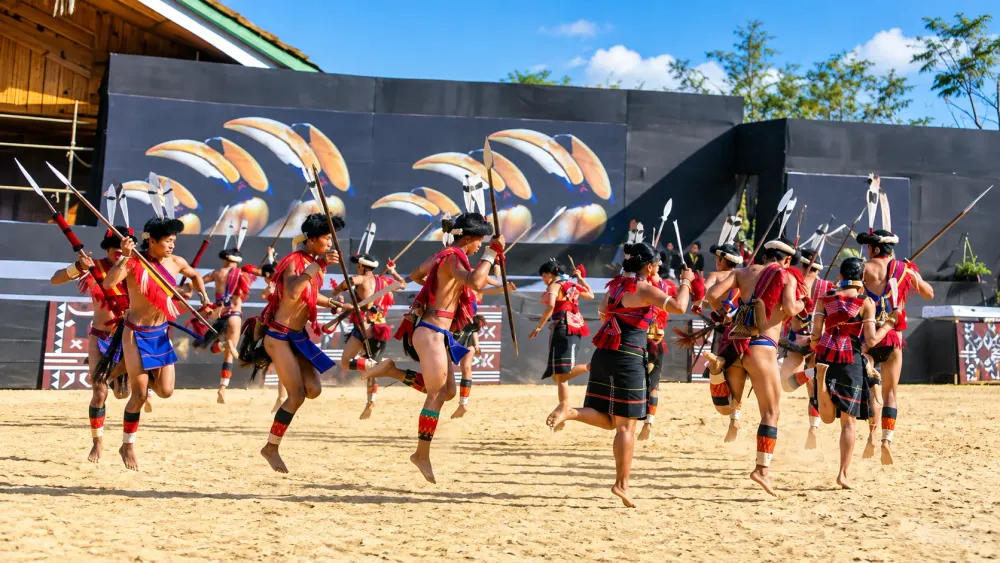
Nagaland has sixteen officially recognised tribes, and Kohima, as state capital, brings people from most of them together for work, trade and festivals. Each tribe keeps its own language, and Nagamese, a simplified form of Assamese, works as a common language between communities.
Traditional clothing varies by tribe and can signal status or clan. Shawls are the clearest example: Angami, Chakhesang, Sumi and other tribes each use distinct patterns and colours, with more elaborate designs sometimes carrying social meaning. Beaded ornaments, and historically items like boar tusks or hornbill feathers, are worn on ceremonial occasions rather than as everyday dress today.
Naga food culture centres on smoking, fermenting and drying, suited to the hill climate and limited historical access to refrigeration: smoked pork, bamboo shoot, axone (fermented soybean) and dried fish are common, often combined with local chillies. Handicrafts include bamboo and cane work, wood carving and weaving, mostly still done at a household or village level. Traditional music relies on log drums, gongs and group singing, and stays part of festivals and community events rather than being staged purely for visitors.
Village life still follows customary structures in parts of Nagaland, with village councils holding real authority over local matters. When visiting villages near Kohima, remember that daily life, farming and religious practice come first. Ask before photographing people, dress modestly near churches or council areas, and treat any cultural display as a living practice rather than a performance for outsiders.
Hornbill Festival and Kohima
Nagaland's largest annual event is held at the Naga Heritage Village in Kisama, about 12 km from Kohima, typically from 1 to 10 December. Confirm exact dates with an official Nagaland tourism source before booking, since schedules are occasionally adjusted.
Each tribe sets up and staffs its own morung at Kisama during the festival, giving a rare chance to see traditional food, dress, dance and games from across the state in one place. The festival also includes a motor rally, a rock music competition, indigenous games and craft demonstrations.
Kohima is the main base for the festival period: most accommodation, transport and services run through the town, and visitors commute out to Kisama for the day. This is the busiest and most expensive time of year, so book accommodation and transport well ahead.
Things to do in Kohima
The war cemetery, cathedral, museum and market sit within a compact central stretch, walkable with short taxi rides between the farther points; a full day at an unhurried pace covers them well.
The market is worth returning to for both food and textiles, and it changes character between morning and afternoon. Eating at a local eatery rather than a hotel restaurant gives a more accurate sense of Naga food, including smoked meats and fermented condiments.
Beyond town, the Naga Heritage Village at Kisama works well outside festival dates, and a trip to Khonoma adds village life and conservation work by the Angami community. Photography is strongest early morning and late afternoon, and the war cemetery photographs well before it gets crowded.
Short walks are possible around the cathedral hill and the war cemetery grounds; travellers with more time can add the longer treks to Dzükou Valley or Japfu Peak covered below.
How to reach Kohima
Kohima has no airport or railway station of its own, so most journeys route through Dimapur.
By air: Dimapur Airport is the nearest, roughly 74 km away, about two and a half to three hours by road depending on traffic and conditions.
By rail: Dimapur is also the nearest railway station, with connections to major cities in Assam and beyond; the onward leg to Kohima is by road.
From Guwahati: Guwahati has better flight and rail connectivity than Dimapur, so many travellers fly there first, then connect to Dimapur or travel by road, roughly 330 km and seven hours or more depending on route and conditions.
From Dimapur: shared taxis, private taxis and buses run to Kohima along NH29. Conditions vary with the season and journeys take longer in the monsoon, so build in flexibility rather than a tight connection.
Best time to visit Kohima
Winter (December–February) is cool to cold with clear skies and good visibility, overlapping with the early-December Hornbill Festival. Nights can be cold, so warm layers matter.
Spring (March–April) is milder and comfortable for sightseeing and short treks before the rains.
Monsoon (May–September) brings heavy rain, and roads to and from Kohima, particularly toward Dimapur, can be affected by landslides. It's generally the least practical season for a first visit, though the hills are greenest.
Autumn (October–November) is often considered the best period: clearer than the monsoon and cooler than late spring, good for both sightseeing and outdoor activity.
Early December, during the Hornbill Festival, is by far the busiest and most popular time, so plan accommodation and transport well ahead.
Kohima food guide
Naga cuisine is built around smoking, drying and fermenting, suited to a hill climate with limited historical refrigeration. Smoked pork is a staple, often cooked with bamboo shoot, local greens or axone, a fermented soybean paste with a strong flavour.
Bamboo shoot, fresh and fermented, appears in soups, meat dishes and sides, alongside dried and fermented fish. The Naga king chilli, among the hottest grown anywhere, is used sparingly in chutneys rather than as a base ingredient.
Rice is the main staple alongside meat or vegetable preparations. Nagaland is a legally dry state, so alcohol is not openly sold, even though rice beer has historical significance in some communities. Local eateries near the market area tend to give a more authentic experience than restaurants aimed at outside visitors, though it's best to ask locally for current recommendations.
Kohima 2-day itinerary
Day 1: Start at the Kohima War Cemetery in the morning for the best light and fewer crowds. Continue to the State Museum for context on the region's tribes, then walk through the Local Ground market in the afternoon for food and textiles. In the evening, look for a local eatery serving Naga food.
Day 2: Visit Kohima Cathedral in the morning for its architecture and the view over town, then take a taxi to the Naga Heritage Village at Kisama to see the tribal morungs. Use the late afternoon for central Kohima or a return visit to the market before continuing your journey.
Kohima 3-day itinerary
Day 1: Same as Day 1 above: war cemetery, state museum and local market.
Day 2: A half-day or full-day trip to Khonoma village to see terrace farming and Angami conservation work, returning to Kohima by evening.
Day 3: Kohima Cathedral and Kisama, as in the two-day plan. Travellers with an early start and reasonable fitness can instead use this day for a shorter approach walk into Dzükou Valley, though reaching the main valley and back comfortably usually needs more than one day.
Day trips from Kohima
Khonoma village, about 20 km away, is known for terrace farming, a community-led conservation programme, and its history as the site of the Battle of Khonoma during the 19th-century Anglo-Naga conflict. It's a comfortable half-day or full-day trip by road.
Dzükou Valley lies south of Kohima, generally accessed via Viswema village, known for its grassy landscape and seasonal wildflower blooms. The trek takes several hours each way, so most travellers either commit to a long single day or plan an overnight stay near the valley.
Japfu Peak, near Kigwema village, is Nagaland's second-highest peak and known for a very tall rhododendron tree recognised as one of the tallest of its kind. The trek is more demanding than Dzükou Valley and is usually a dedicated day trip, sometimes combined with Dzükou by experienced trekkers.
Where to stay in Kohima
Kohima has a working range of accommodation for a state capital of its size, from simple guesthouses and budget lodges to mid-range hotels with standard amenities. Homestays in and around town and in some nearby villages offer a closer look at daily Naga life.
During the Hornbill Festival, demand rises sharply and rooms fill up well in advance, so book early. Outside the festival, Kohima is easier to find a room in, though weekends and local holidays are still worth booking ahead for. Prices and availability change often and are best checked directly at the time of booking.
Practical Kohima travel tips
Permits: Indian citizens need an Inner Line Permit (ILP), arranged online in advance or at a designated counter. Foreign nationals generally register with local authorities shortly after arrival; check current requirements before travelling, since rules have changed more than once.
Cash: ATMs are available in Kohima town but less reliable in surrounding villages and on trek routes, so carry enough cash before heading to Khonoma or Dzükou Valley.
Connectivity: Mobile coverage in town is generally workable but drops off in villages and on treks. Some outside-state prepaid SIMs have faced restrictions in Nagaland, so check with your provider or arrange a local SIM if you need reliable data.
Weather and clothing: Mornings and evenings can be cold even outside winter because of the elevation, so layered clothing works better than one heavy jacket; carry rain protection during the monsoon.
Local etiquette: Nagaland has a strong Baptist Christian tradition, and Sundays are generally quiet, with many shops, markets and some transport services closed or reduced. Plan sightseeing and travel days around this.
Photography: Always ask before photographing people, particularly in villages, and be sensitive around religious sites and community events.
Transport: Shared taxis are the most common way to travel between towns and villages, and services can be less frequent outside the festival season, so confirm return transport before a day trip to Dzükou Valley or Khonoma.
Frequently asked questions
Is Kohima worth visiting? Yes. It combines Naga culture, a major WWII history site, hill views and access to Dzükou Valley and Khonoma in one short stop.
How many days do you need in Kohima? Two days cover the main in-town sights. Three days allow one day trip, such as Khonoma or a short approach to Dzükou Valley.
Do I need a permit to visit Kohima? Indian citizens need an Inner Line Permit (ILP), available online or at designated counters. Foreign nationals are generally required to register with local authorities on arrival.
Is Nagaland safe for tourists? Kohima and the main tourist circuit are generally safe for travellers who follow standard precautions and check current local advisories before travelling.
What is Kohima famous for? The Battle of Kohima and its war cemetery, its role as a base for the Hornbill Festival, and its position as the cultural centre of the Naga tribes.
What is the nearest airport to Kohima? Dimapur Airport, about 74 km away, roughly two and a half to three hours by road.
Is alcohol available in Kohima? Nagaland is a legally dry state, so alcohol sale is restricted. Traditional rice beer has cultural significance but is not openly sold.
When is the Hornbill Festival held? Usually 1 to 10 December at the Naga Heritage Village in Kisama. Confirm exact dates with an official Nagaland tourism source before booking.
Can I visit Dzükou Valley as a day trip from Kohima? It's possible but tiring, since the trek itself takes several hours each way. Many travellers prefer an overnight stay near the valley.
What language is spoken in Kohima? Nagaland has many tribal languages; Nagamese, a Naga-influenced form of Assamese, is widely used alongside English.
What should I pack for Kohima? Layered clothing for the hill climate, comfortable walking shoes, and rain protection if travelling during the monsoon.