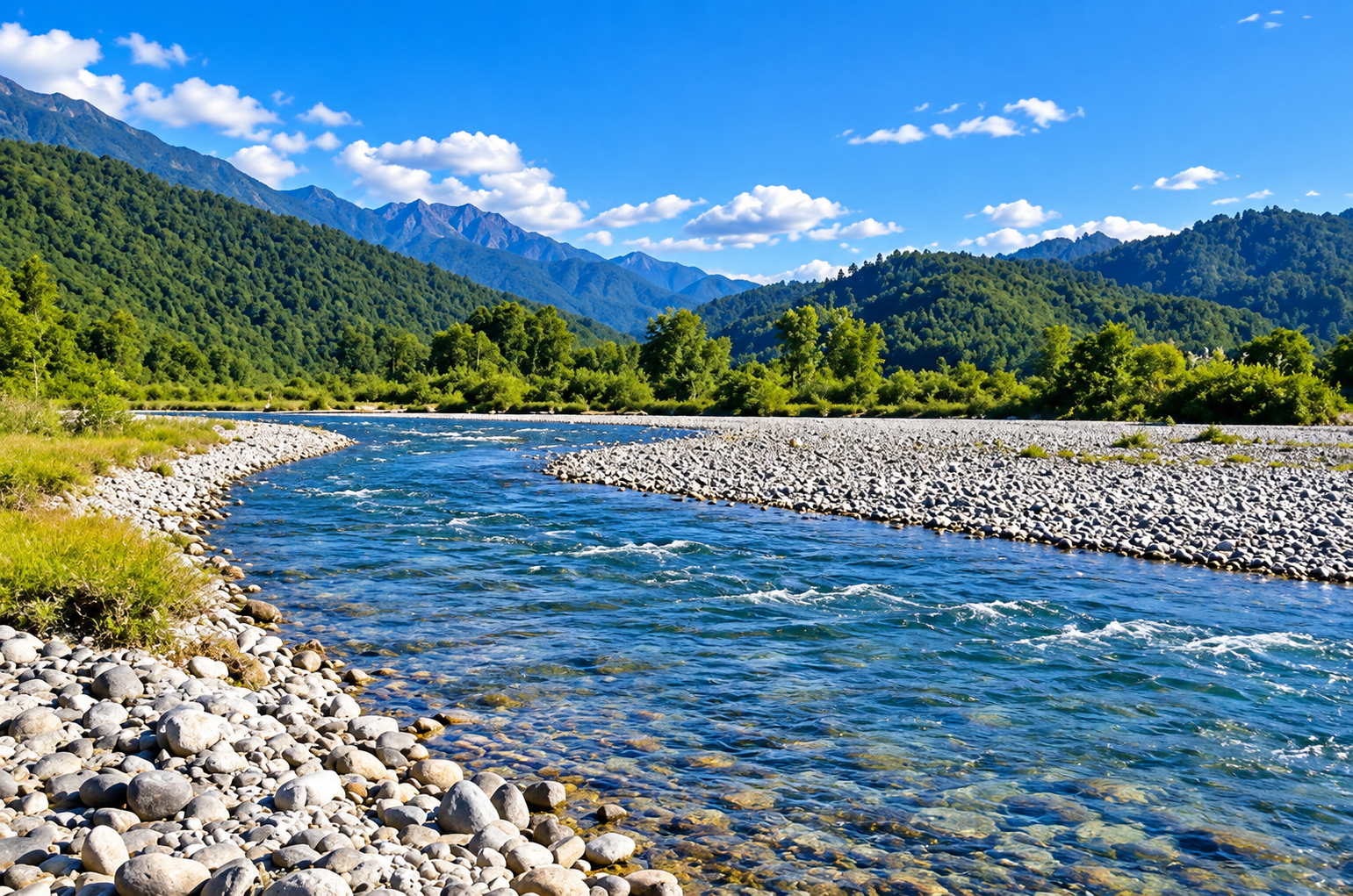
Aalo, also written Along, is the district headquarters of West Siang in central Arunachal Pradesh. It is a small market town in a river valley, sitting where the Yomgo (also called the Siyom) meets the smaller Sipu. Most visitors know it as the overnight stop between Pasighat and Mechuka, and that is a fair description of its practical role. But it is also a base for seeing Galo villages, cane-and-bamboo bridges and orange country at a slow pace, without the crowds found at better-known Arunachal Pradesh stops.
This guide explains where Aalo is, what to see in and around town, how to reach it, when to go and how to fit it into a wider itinerary. Where sources disagree on distances or details, that is noted rather than smoothed over, and anything time-sensitive is flagged for you to confirm before you travel.
Where Is Aalo in Arunachal Pradesh?
Aalo is the headquarters of West Siang district. The district borders Upper Siang and Siang to the east, Lower Siang and Assam to the south, the Subansiri districts to the west, and the international border to the north. The town itself lies in a river valley at the meeting of the Yomgo (Siyom) and Sipu rivers, at a relatively low elevation compared with the higher Himalayan stops further north.
Aalo is reached by road. From Pasighat, the usual approach from Assam, the drive is commonly quoted at roughly 100 km, and travel operators typically plan a few hours for it in normal conditions. Some published sources give differing distances to Itanagar, so check the route you actually plan to take rather than relying on a single figure.
The town's practical role is as a staging point. Roads from here continue north toward Mechuka in the Shi Yomi district, and the town has the shops, fuel and accommodation that thin out quickly once you leave it. For anyone exploring West Siang or heading for the far north-west of the state, Aalo is the natural place to rest, restock and sort out logistics.
Why Visit Aalo?
Aalo does not have a headline attraction, and it is better understood as a place that rewards a couple of unhurried days.
Galo cultural landscape. The area is the home of the Galo community, and the villages around town give a view of daily life shaped by farming, river valleys and the Donyi-Polo faith. This is lived culture, so it works best when approached as a guest.
Rivers and valleys. The Yomgo and Sipu rivers define the setting. Viewpoints over the valley, riverside stretches and the occasional islands in the river give the town a scenery that is more about water and green hills than dramatic peaks.
Village experiences. Short drives lead to villages where you can walk, talk with hosts and see how the valley is farmed.
Scenic road journeys. The road from Pasighat and the road onward to Mechuka are part of the appeal, with long stretches of river, forest and hillside.
Local markets and everyday life. Aalo is a working district town, and its market is a good place to see local produce and everyday trade. The area is known for its oranges.
Access to other parts of Arunachal. Aalo connects the Siang valley with Mechuka and the north-west, so it is useful as part of a longer route.
Best Places to Visit in and Around Aalo
The list of attractions is short, and the value lies in combining several small stops.
Patum Bridge
A long iron bridge over the Yomgo (Siyom), a few kilometres from the main town and one of the most photographed sights in the area. Travellers come for the view along the river and back toward the town. Plan on half an hour to an hour, and go in the softer light of morning or late afternoon if you can. The name is also spelled Tatum in some sources.
Cane and Bamboo Hanging Bridges
Traditional suspension bridges made from cane and bamboo cross rivers in the area. They are examples of local craftsmanship, and some visitors walk across them for the experience of seeing the water through the woven floor. One commonly cited example lies some kilometres out of town over the Siang, though exact locations and condition vary. Ask locally which bridges are currently safe and accessible, and treat any crossing with caution.
Kazu Village and Nearby Villages
A village a short drive from Aalo, popular for its views and for the chance to meet local Galo residents. Other villages mentioned in regional accounts include Kabu, Bagra, Darak, Jirdin and Kayi. A visit takes an hour or two, longer if you are invited to sit and talk. Go with a local guide or host where possible, and ask before photographing people or homes.
Donyi-Polo Temple and Ramakrishna Mission
Regional guides mention the Donyi-Polo temple, which reflects the traditional faith of the area, and the Ramakrishna Mission campus among the town's man-made sights. Both are short stops within Aalo, and both should be visited respectfully, with attention to any local rules.
Kamki Mithun and Jersey Cross-Breeding Farm
Listed by regional tourism sources as an attraction roughly 25 km from Aalo. It is a working livestock facility rather than a purpose-built tourist site, so confirm access and opening arrangements locally before making the trip.
River Activities on the Siyom
The Siyom is used for rafting and angling in season. These depend on water levels, guides and equipment, so treat them as options to arrange through a local operator rather than assume. Do not enter fast-moving water without qualified local guidance.
Things to Do in Aalo
- Walk or drive through nearby Galo villages, with a local host or guide if possible
- Visit Patum Bridge and other river viewpoints
- Spend time in the town market and try local produce
- Photograph the valley in morning and evening light
- Take short excursions to hanging bridges or riverside stretches, subject to local conditions
- Ask about river activities such as rafting and angling, and confirm safety and availability with an operator
- Sit down for a meal at a local eatery or homestay and ask about the food
The best experiences here are usually the least scheduled. Leave some time unplanned.
Interactions with communities work best when you ask permission, listen more than you talk and avoid treating homes or ceremonies as photo opportunities.
Aalo and Galo Culture
The Galo are one of the Tani groups of Arunachal Pradesh, and they form the majority population in and around Aalo. Villages in the valley are organised around farming, kinship and community life, with the Donyi-Polo faith, centred on reverence for the sun (Donyi) and moon (Polo), shaping much of the traditional calendar.
Homes and villages. Traditional houses in the region are often raised structures built with local materials, though newer construction is common. Many households have adapted to modern life while keeping traditional practices.
Food. Local cooking uses rice, vegetables, herbs, bamboo shoot and, in many households, meat and fish prepared in local styles. What you are offered varies by household and season.
Festivals. Mopin, held in spring, is one of the best-known festivals of the community, associated with agriculture and celebrated with dance, ritual and feasting. Dates and public access vary, and it is a community event, not a show staged for visitors. If you hope to attend, ask through a local host or guide well in advance and follow their guidance.
Etiquette. Greet people politely, ask before taking photographs, dress modestly in villages and religious places, and accept hospitality graciously. Avoid stereotyping the community or assuming that any village is open to visitors at any time.
How to Reach Aalo
By air. There is no simple direct commercial flight to Aalo. The most practical airport for most travellers is Dibrugarh in Assam, from where the journey continues by road via the Bogibeel bridge to Pasighat and then on to Aalo. Confirm current flight options with airlines before booking.
By rail. Railway options are limited in the immediate area. Regional sources mention Silapathar in Assam as the nearest station, but larger stations further away in Assam are generally used for connections. Check the current train and station information before planning around it.
By road from Assam. The commonly used route runs from Dibrugarh (or another Assam gateway) to Pasighat, then along the Siang valley road to Aalo. Operators often plan this over a full day with a stop in Pasighat.
From Pasighat. The drive from Pasighat to Aalo is commonly quoted at roughly 100 km and a few hours in normal conditions.
Toward Mechuka. The road north from Aalo climbs into hill terrain and requires a full day of driving. It is dealt with in its own section below.
Local transport. Shared vehicles and private taxis are typically used in the region. This guide does not quote fares or schedules because they change frequently. Confirm locally, and expect that services may be less frequent than in larger towns.
Road conditions. Roads in Arunachal Pradesh can be affected by landslides, rain and repair work, especially in the monsoon. Build buffer time into your plan.
Best Time to Visit Aalo
Winter (November to February). Cooler and generally drier, with comfortable days and cold mornings and evenings. Good for road travel and village walks, and popular for travellers who want clearer skies.
Spring (March to April). Pleasant weather with greener surroundings. This period includes the spring festival season in the region, though attendance at any specific event depends on local arrangements.
Summer and monsoon (May to September). Warm and humid, with heavy rain especially from June to September. Road conditions can be affected by landslides and flooding, rivers run high and visibility is often poor. This is the most challenging season for travel, and best for flexible travellers who accept the risk of disruption.
Autumn (October to early November). Often a good window as the monsoon clears, with fresher air and improving roads. A useful time for those combining Aalo with Mechuka.
Overall, October to April tends to be more comfortable for most visitors. If you are going on to Mechuka, check current road and weather conditions before you leave.
How Many Days Do You Need for Aalo?
2 days. Enough to break the journey between Pasighat and Mechuka, or to see Patum Bridge, the market and a village if you arrive early. It does not leave much room for anything unplanned.
3 days. A comfortable length for a slower look at the area, with a village visit, a river viewpoint and time in town, either as a base or as part of a longer route.
4 days. Allows for a short excursion, unhurried time with a local host and a buffer for road delays. A reasonable choice if you want Aalo as a destination rather than a stopover.
If you are travelling on to Mechuka, add the driving days separately, since the road north takes most of a day in each direction.
Aalo to Mechuka Route
Many travellers combine the two because Aalo is the last major town before the road climbs toward Mechuka. It offers accommodation, fuel and supplies, and it splits the journey from Pasighat into manageable legs.
Published travel itineraries commonly describe the distance as roughly 190 km, with about 5 to 6 hours of driving in good conditions. Treat these as planning estimates rather than guarantees. Road works, weather and landslides can lengthen the journey considerably, and the road is not one to rush.
The route passes through changing terrain, from river valley to hill country, and the drive itself is a large part of the experience. Plan to leave early, carry water and snacks, and expect variable phone coverage. Many travellers arrange a driver familiar with the road, particularly outside the dry season.
Where to Stay in Aalo
Aalo has a range of basic accommodation, including hotels, guesthouses and, increasingly, homestays.
Hotels. Typically simple and functional, aimed largely at domestic travellers and officials on district work. Expect basic rooms rather than resort-style facilities.
Guesthouses. Small, often family-run, offering straightforward rooms and sometimes meals.
Homestays. Where available, they give a closer view of local life. Standards and facilities vary, so ask your host or operator what to expect.
Since prices, availability and facilities change, this guide does not name properties or quote rates. Book through a local operator or contact accommodation directly, and confirm hot water, power backup and meal arrangements in advance.
Food to Try in Aalo
Regional cooking in Arunachal Pradesh tends to be simple and seasonal, built around rice, greens, herbs, bamboo shoot, fish and meat prepared in local styles. Fermented and smoked preparations are part of the wider regional food culture, and flavours may be different from what many visitors are used to.
Oranges from the surrounding area are a well-known local product, best in season. The town market is the easiest place to see what is available.
To explore food responsibly, eat where locals eat, ask what is fresh that day, and accept that menus may be limited. If you have dietary restrictions or allergies, tell your host early. Do not ask for dishes to be prepared in ways that disrespect local customs, and avoid wasting food.
Permits and Travel Documents
Indian citizens who are not residents of Arunachal Pradesh generally need an Inner Line Permit (ILP) to enter the state. ILPs are typically applied for through the official state portal or through designated offices. Foreign nationals require a Protected Area Permit, usually arranged through a registered tour operator.
Permit fees, validity, procedures and issuing points change from time to time, so confirm current details on the official portal or with the relevant authority before you travel. Carry a printed and digital copy of your permit, along with valid photo ID, since checkpoints are a normal part of travel in the state.
Aalo Travel Tips
- Cash. Carry enough cash, since ATMs can be unreliable and digital payments depend on connectivity.
- Connectivity. Expect patchy mobile coverage outside the main town, and download maps and documents in advance.
- Fuel. Fill up in Aalo before heading north, since fuel becomes harder to find.
- Road conditions. Check with your driver or local contacts before setting out, especially during and after rain.
- Weather. Rain can arrive quickly, and conditions vary between valley and hills.
- Clothing. Layers, rain protection and comfortable footwear for uneven village paths and wet ground.
- Photography. Ask before photographing people, homes and religious sites, and follow any local rules.
- Respect. Treat village visits as visits to someone's home, and follow the guidance of your host.
- Leave no trace. Carry out your litter, avoid plastic waste, and keep rivers and trails clean.
Sample Aalo Itinerary
Day 1: Pasighat to Aalo. Drive from Pasighat to Aalo, allowing several hours and a stop along the way. Check in, walk around the town market in the late afternoon and go to Patum Bridge for the view at sunset.
Day 2: Villages and river. Visit a nearby Galo village with a local host, then spend the afternoon at a river viewpoint or one of the local bridges, depending on conditions. Try local food for dinner.
Day 3: Onward or slow morning. Either start early for the drive toward Mechuka, or spend a slower morning in town before returning toward Pasighat. If you plan to continue north, confirm road conditions the night before and fuel up.
Adjust the plan around road conditions and your own pace, and keep a buffer day if you are on a tight schedule.
Frequently Asked Questions
Where is Aalo? Aalo is the district headquarters of West Siang in Arunachal Pradesh, in a river valley where the Yomgo (Siyom) and Sipu rivers meet.
Is Aalo and Along the same place? Yes. Along is the older spelling, and Aalo is the name now commonly used.
How do you reach Aalo? Usually by road via Pasighat, with Dibrugarh in Assam being the most practical airport for many travellers.
What are the best places to visit in Aalo? Patum Bridge, nearby Galo villages, local cane-and-bamboo bridges, the town market and river viewpoints are among the most commonly mentioned.
How many days are needed for Aalo? Two to three days suits most travellers, with a fourth day useful for a slower pace or buffer time.
What is the best time to visit Aalo? October to April is generally more comfortable, while the monsoon brings heavier rain and more road disruption.
Can Aalo be combined with Mechuka? Yes. Aalo is the usual overnight stop before the drive to Mechuka, and many itineraries combine the two.
Do you need an ILP for Aalo? Non-resident Indian citizens generally need an Inner Line Permit for Arunachal Pradesh, and foreign nationals need a Protected Area Permit. Confirm the current procedure before you travel.
Conclusion
Aalo in Arunachal Pradesh is a modest town with a lot of surrounding landscape and culture, and it suits travellers who prefer small stops and slow travel to a packed sightseeing list. It works well as a base for exploring West Siang, as a rest stop on the road to Mechuka, or as a destination in its own right for those with a few spare days.
Go with realistic expectations, confirm permits and road conditions before you set out, and treat village visits with the respect they deserve. Done that way, a few days around Aalo can add depth to a wider Arunachal itinerary.