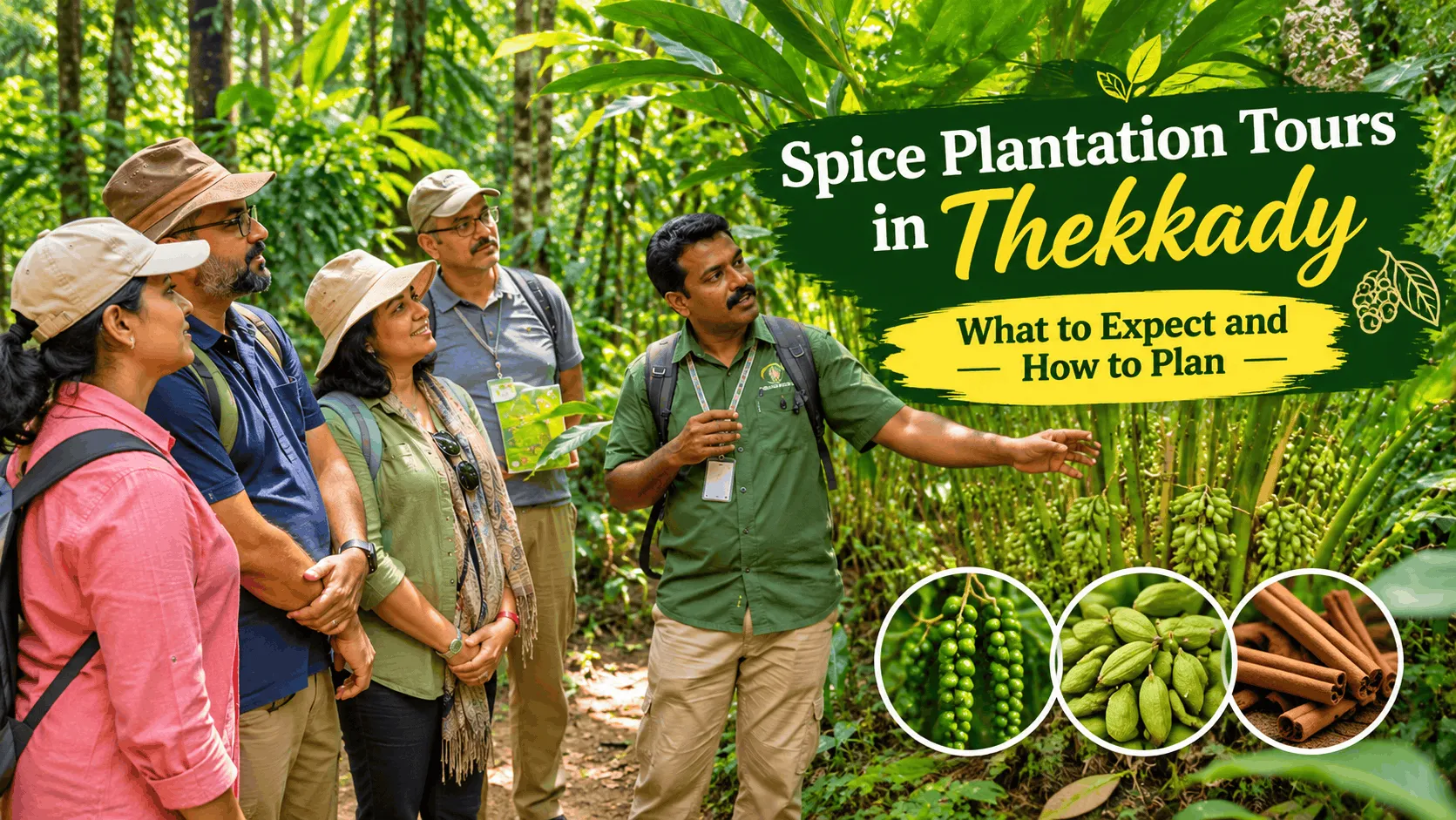
Few places in Kerala connect a traveller to the origins of everyday flavours as directly as the hills around Thekkady. Spice plantation tours in Thekkady let visitors walk among the plants behind the black pepper on the table and the cardamom in a cup of tea, usually with a guide who explains what each plant is, how it grows and how it reaches the kitchen.
The experience is quieter than most sightseeing. There are no grand monuments. What you get is shade, damp earth, the smell of crushed leaves and a slow lesson in agriculture. Some visitors find that more memorable than a busier day out, and others find it too gentle. Knowing what to expect helps you decide.
This guide explains the landscape, the main spices you may meet, what a guided visit usually involves and the questions worth asking before you book. It treats general knowledge about spice cultivation separately from what a particular plantation offers, because the two are not the same. If you are still deciding whether Thekkady suits your plans, our Thekkady travel guide gives the wider picture.
Why Thekkady and Kumily are associated with spice cultivation
Thekkady and the neighbouring town of Kumily sit in the high-range hills of Kerala's Western Ghats, close to the Periyar Tiger Reserve. Kumily is the town most visitors pass through, and the spice gardens and plantations around it have long drawn people interested in how these crops grow.
The association comes from the setting. Hill country with plenty of rainfall, cool air and tree cover suits several spice crops, and Kerala's long history as a spice-growing and spice-trading region gives the plantations a cultural weight beyond the crops themselves. Many visitors come curious about that history as much as about the plants.
It is worth being careful with big claims. Different plantations grow different crops, and visitors should not assume that a given property grows every spice mentioned in a guidebook. What a plantation actually cultivates, and what it shows to tourists, is something to confirm with the operator.
Understanding the plantation landscape
A plantation near Thekkady rarely looks like a tidy field. Spice crops are often grown under or alongside taller trees, so a walk can feel more like a stroll through a managed forest than across farmland. Pepper vines climb trunks. Cardamom grows in shaded clumps. Other plants fill the gaps beneath.
The terrain is hilly, and paths may be earthen, sloping or damp. That affects comfort and what you wear, which is covered later. It also affects what you can see: shade, humidity and slope are part of why the crops grow well here, so the landscape itself is part of the lesson.
Some visits are short and stay close to a central area, while others cover more ground. Ask how much walking is involved before you commit.
Common spices grown in the region
Visitors to the Thekkady area most often hear about pepper and cardamom, since both are closely linked with Kerala's hill country. Depending on the property, a guide may also point out cloves, nutmeg, cinnamon, ginger, turmeric, vanilla, coffee or other crops.
The words "may" and "depending" matter here. A small garden might show many plants in a compact space, while a working plantation might focus on a few crops grown at scale. Neither is better. They are different experiences, and it helps to know which one you are booking.
If a plant is out of season or not grown on the property, a good guide will say so. Be a little suspicious of any tour that promises every spice on every visit.
Understanding pepper cultivation
Black pepper comes from a climbing vine. In plantations it is typically trained up a supporting tree or post, and the vine produces long strings of small berries. The berries start green and change colour as they ripen. How they are then processed decides what ends up in your spice jar: dried berries become black pepper, while other methods produce different kinds.
On a visit, you may be shown a vine, a cluster of berries and the way the plant clings to its support. Seeing pepper on the vine surprises many people, because it looks nothing like the dry black spheres they know.

Whether you see berries on the vine depends on the season and the individual property. If that is a priority for you, ask directly.
Cardamom and its growing environment
Cardamom is a shade-loving plant that favours cool, humid conditions, which is why it is so closely associated with Kerala's hills. It grows as a clump of leafy stems, and its flowers and capsules form close to the ground. The capsules are the part used as a spice.
A guide might explain why the plant prefers shade, how it differs from other crops and why growers often work through the plantation more than once at harvest time, since capsules do not all ripen together. These are general features of the crop. Whether a particular plantation lets you watch any of this happen is a separate question.
Many visitors searching for a cardamom plantation in Thekkady are hoping to see the plant in its natural setting. That is usually possible on a visit to a property that grows it, but it is worth checking in advance, because not every spice garden does.
Other spices visitors may learn about
Beyond pepper and cardamom, a guided walk can introduce a wider range of plants. A few examples of what some guides discuss:
- Cinnamon, which comes from the inner bark of a tree
- Clove, which is the dried flower bud of a tree
- Nutmeg and mace, two different spices from the same fruit
- Ginger and turmeric, which grow from underground stems
- Vanilla, an orchid that needs careful handling
- Coffee, grown in some hill estates
Again, none of these is guaranteed. Ask which plants you will actually see on the property you plan to visit, and treat the others as general background.
What happens during a guided plantation visit?
Most guided visits follow a similar pattern, though details vary by operator. A guide meets the group, introduces the property and leads a walk among the plants, pausing to name them and explain how they grow. You may be invited to smell leaves, touch bark or look closely at a flower or fruit, though what is permitted depends on the plant and the property.
Group sizes, duration and pace differ. Some visits last under an hour, while others stretch longer. If you travel with children or older relatives, ask whether the pace can be adjusted. For a wider view of how a plantation visit fits into a stay in the area, see our list of things to do in Thekkady.

A good guide does more than recite names. They explain why the plants grow where they do, how people have worked the land and what has changed. If you have questions, ask them. The best visits feel like conversations.
Learning about harvesting and processing
Plantation visits often include some explanation of how spices are harvested and prepared. The general outline is simple. Crops are picked at a stage that suits the spice, then cleaned, dried and sorted. Drying methods and timing vary by crop.
Here you need to separate general knowledge from the experience on offer. A guide can describe harvesting and drying even if you do not see it happen. Some visitors may see drying areas or processing in progress, while others will only hear about it. Do not assume you can take part in harvesting, processing or tasting. Ask whether those activities are actually offered, whether they cost extra and whether they depend on the season.
Many plantations also sell spices, and some visitors like to take a few home. If that interests you, our guide to shopping in Thekkady goes into what to look for. For the tour itself, the learning is the point.
Questions to ask before choosing a plantation tour
Before you pay for anything, ask the operator a few plain questions.
- Which spices and crops does this plantation actually grow?
- How long does the visit last, and how much of it is on foot?
- Is the tour guided, and does the guide speak a language you understand?
- What is included, and what costs extra?
- Is the group private or shared, and how large is it?
- Are tasting, harvesting or processing demonstrations offered, or only described?
- What is the cancellation policy if the weather turns?
- Is the path suitable for children, older relatives or anyone with limited mobility?
Do not rely on a single review or a vague promise. A clear, specific answer is a good sign, and an evasive one is worth noting. Verify opening hours, prices and booking arrangements directly, since these can change.
Best conditions and seasons for visiting
Thekkady's climate shapes the experience. In the cooler months, walking is generally more comfortable, while heavy rain can make paths slippery and reduce what you can comfortably see. Even so, the hills can look especially green after rain, and some travellers prefer that. If you are considering a wet-season trip, our article on Thekkady in the monsoon explains what to expect.
Different crops flower and fruit at different times, so what you see will vary through the year. If you want to see a specific stage, such as berries on a pepper vine, ask the operator what is likely during your dates.
Morning visits often feel more pleasant than the middle of the day, though timings depend on the operator.
What to wear and carry
Dress for a damp, hilly walk. Comfortable clothes in breathable fabric work well, and closed shoes with a good grip are safer than sandals on soft or sloping ground. Long sleeves and trousers help against insects and brushing plants.
Carry water, a light rain jacket or umbrella, insect repellent and a hat or cap. A small bag for your phone and camera keeps your hands free. If you have allergies, particularly to plants or pollen, think about that before you handle leaves and flowers.
Responsible plantation tourism
A plantation is a working landscape, and often someone's livelihood. A responsible visit respects that.
Choose operators who are open about what they do and who treat their guides and workers fairly. Stay on marked paths, avoid picking plants or fruit unless a guide invites you to, and keep noise low. Carry out any waste you produce. If you buy anything, ask where it was grown, and be sceptical of exaggerated claims about origin or health benefits.
It also helps to remember that the surrounding hills are home to wildlife and a fragile ecosystem. Follow instructions from your guide, and do not feed or disturb animals.
Photography and visitor etiquette
Plantations are photogenic, and most guides are comfortable with visitors taking pictures of plants and landscapes. Still, ask before photographing people, especially workers at their tasks, and respect any refusal. Avoid flash near plants or animals, and do not move or break plants for a better angle.
Be patient with the guide's pace. Stopping every few steps for a photograph is understandable, but it can delay the group. If you want more time, say so, and consider a private tour.
If you use a drone, check the rules and ask permission first. Many properties and areas have restrictions.
Frequently asked questions
How long does a spice plantation tour in Thekkady take?
It varies by operator. Some visits are short, and others take longer. Ask the operator how long the guided walk lasts and whether it includes extras.
Which spices will I see?
That depends on the plantation. Pepper and cardamom are widely associated with the area, but not every property grows every spice. Ask which plants the guide will show.
Can I take part in harvesting or processing?
Do not assume so. Some visits include demonstrations or hands-on activities, while others only explain the process. Confirm in advance.
Is a plantation tour suitable for children or older visitors?
Often it can be, but terrain, distance and pace differ. Ask about slopes, steps and the length of the walk before booking.
What is the best time of year for a spice garden tour in Thekkady?
Cooler months tend to be more comfortable for walking, and the hills look green after rain. Which crops you see depends on the season, so ask what to expect during your dates.
Will there be a chance to buy spices?
Some plantations sell spices, but this varies. If buying matters to you, ask about it in advance and compare prices and quality.
Do I need to book in advance?
It is wise to check. Availability and arrangements can change, so confirm directly with the operator.
Conclusion
A spice plantation visit near Thekkady and Kumily is a slow, sensory introduction to a crop landscape that shaped Kerala's history. You learn how pepper climbs, why cardamom likes shade and how plants you know only as powders and pods look in the open air.
The best experiences come from choosing carefully. Ask which spices are grown, what the visit includes and whether the activities you hope for are confirmed. Dress for the hills, respect the people who work the land, and let the guide set the pace. Go with realistic expectations and a curious mind, and the plantation walk can become one of the more rewarding parts of your trip.