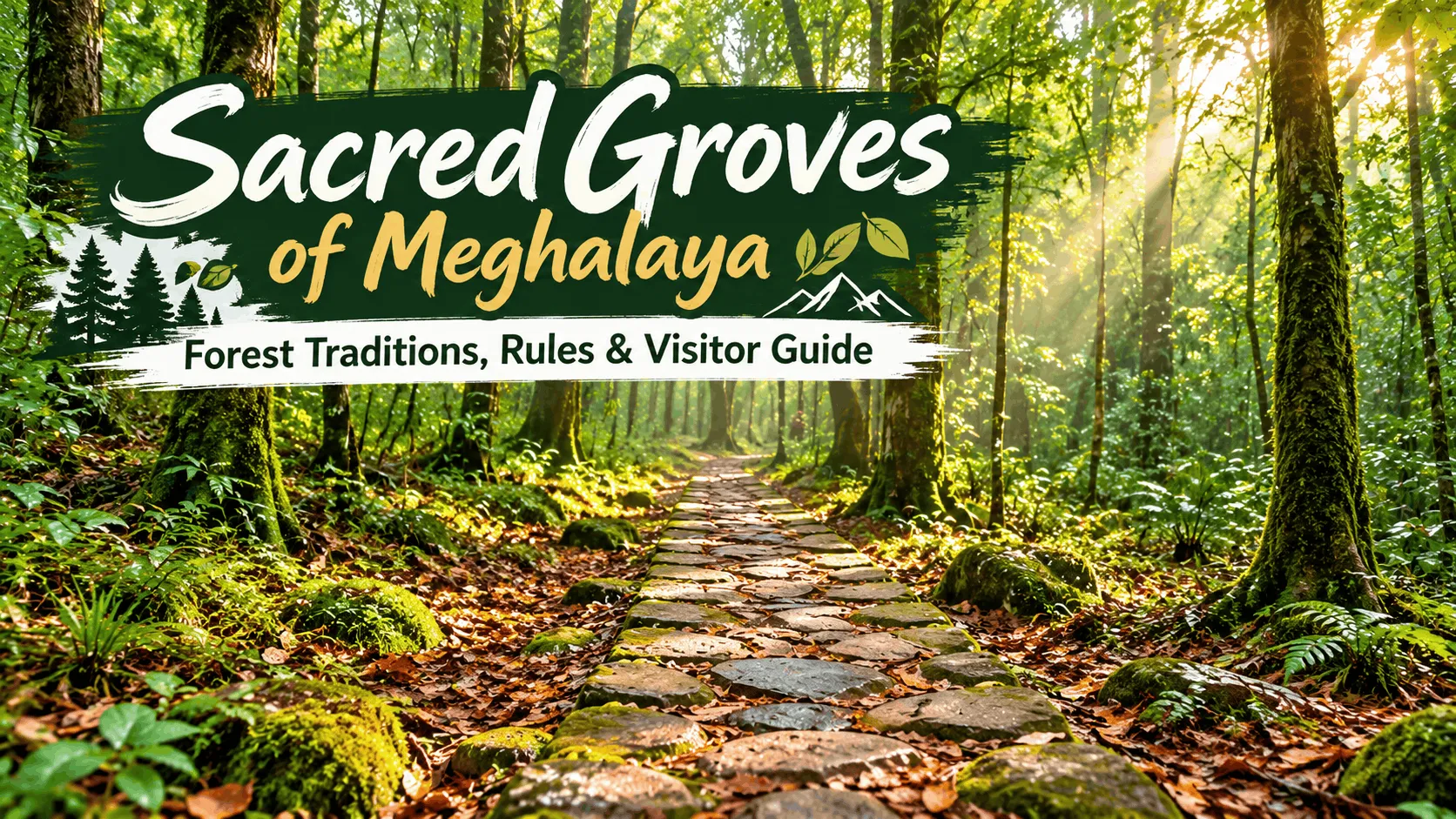
Step into a sacred grove in Meghalaya and the change is immediate. The air is cooler, the light is softer and the trees are thick with moss, ferns and climbing plants. Many of these forests have been protected for generations, not by fences or forest guards, but by the communities who live around them and the customs they follow.
The sacred groves in Meghalaya are places where culture and ecology meet. For local communities, they are tied to belief, ritual and village life. For ecologists, they are reservoirs of plant and animal life in a changing landscape. For travellers, they offer a chance to experience a living forest tradition, provided you visit with care and respect.
This guide explains what sacred groves are, how they connect to Khasi and Pnar traditions, what to know before visiting Mawphlang Sacred Grove, and how to plan a responsible visit.

What Is a Sacred Grove?
A sacred grove is a patch of forest set aside and protected by a community for religious or cultural reasons. In many parts of India, such groves are associated with a deity, ancestors or village protection, and community rules govern what may or may not be done inside them.
In Meghalaya, according to the Meghalaya Biodiversity Board, sacred groves are known locally by names such as Khlaw Kyntang, Law Kyntang or Law Lyngdoh in the Khasi Hills, and Khloo Blai in the Jaintia Hills. The Board notes that the groves vary greatly in size, from very small patches to large forests.
Sacred Groves and Khasi Cultural Traditions
The Meghalaya Biodiversity Board links the state's sacred groves to the traditional religions of the Khasi (Seng Khasi) and the Pnar (Niam Tre). It describes a widely held belief that a forest deity resides in the grove and protects the village, and that taking material from the grove would offend that deity.
A few points are important to keep in mind:
- Customs vary. Beliefs, rituals and rules differ from grove to grove and community to community. What applies in one grove may not apply in another.
- Not every community shares the same beliefs. Meghalaya is home to Khasi, Pnar (Jaintia), Garo and other communities, with different religious traditions, including Christianity, traditional faiths and others.
- Groves are living cultural spaces. The Board notes that rites and rituals are performed in groves at regular intervals in some communities.
For broader context on the communities of the region, see our guide to the tribes of Northeast India.
Mawphlang Sacred Grove: What Visitors Should Know
Mawphlang Sacred Grove, in the East Khasi Hills, is one of the best-known sacred forests of Meghalaya and is listed by Meghalaya Tourism among the state's sacred groves and forest sanctuaries. It is usually visited as a day trip from Shillong; check the current distance and road conditions locally.
What makes it notable
- Biodiversity: Mawphlang Sacred Grove is recognised as a Key Biodiversity Area. The KBA factsheet reports around 70 bird species, including the globally threatened Tawny-breasted Wren Babbler, as well as small mammals including several bat species.
- Community protection: the KBA factsheet notes that the grove has been protected mainly through local tradition, with a custom of not collecting fruits, flowers, leaves or wood.
- Monoliths: visitors often see monoliths near the grove, reflecting the wider tradition of memorial stones in the Khasi Hills.
Visiting basics
- Visitors typically explore the grove with a local guide, who can explain the customs and the rules that apply.
- Entry fees, guide charges and visiting hours are not published on the official pages reviewed for this article. Confirm current details locally or through Meghalaya Tourism before you go.
- Follow your guide's instructions at all times.
Biodiversity and Ecological Importance
According to the Meghalaya Biodiversity Board, sacred groves:
- Act as refuges for endemic, rare and endangered species
- Show higher species diversity than many disturbed forests
- Provide ecosystem services, including soil conservation, erosion control, water quality maintenance and seed dispersal
- Offer habitat for birds, mammals and pollinators
The Board cites studies showing that some plant species in the state are found only in sacred groves, which highlights their importance for conservation.
These forests also matter for water. Many communities depend on springs and streams that flow from forested catchments, and sacred groves can help protect those sources.
Traditional Beliefs, Customs and Community Stewardship
How groves are protected
Sacred groves in Meghalaya have long been protected through community customs rather than formal law. The Meghalaya Biodiversity Board describes prohibitions on cutting trees and picking flowers, fruit or twigs in groves. Community institutions, village councils and traditional leaders play important roles in deciding how groves are used and protected.
Common sacred grove rules
Rules differ by grove, but visitors may be asked to:
- Not take anything out of the grove, including leaves, twigs, flowers, seeds or stones
- Stay on paths and follow the guide
- Avoid disturbing ritual sites or monoliths
- Keep noise low
- Follow photography instructions given by the guide or community
Always ask before you enter. Rules are set by the community and should be followed as given.
Challenges
The Meghalaya Biodiversity Board notes that sacred groves face pressure from changing lifestyles, a decline in traditional values and degradation in some areas. The Mawphlang KBA factsheet lists road construction, occasional removal of plant material and poaching as threats. Responsible visiting can help, rather than add to, these pressures.
How to Visit a Sacred Grove Respectfully
- Ask permission where needed, and enter with a local guide if one is available.
- Listen to the rules before you begin and follow them throughout.
- Take nothing. Leave every leaf, twig, flower and stone where it is.
- Do not touch or climb monoliths or ritual structures.
- Stay on the path to avoid trampling plants and disturbing wildlife.
- Keep your voice low and avoid playing music.
- Do not smoke, light fires or leave litter.
- Ask before photographing people or ritual sites.
- Respect closures. If an area is closed for a ceremony or any other reason, do not enter.
Best Time to Visit and Practical Planning
Season
Many travellers prefer the drier months, roughly October to April, when trails are less muddy and views are clearer. The monsoon brings heavy rain, which makes paths slippery but keeps the forest lush. Check weather conditions before you go.
Planning
- Start early to allow time for travel and the guided walk.
- Wear comfortable walking shoes with good grip.
- Allow a few hours for the visit, including travel and the guided walk.
- Confirm visiting hours, fees and guide availability locally before visiting.
For broader trip planning across the state, see our Meghalaya travel guide.
What to Bring and What to Avoid
Bring
- Comfortable walking shoes
- Rain jacket or umbrella
- Water bottle (carry it back out)
- Cash, as digital payments may not always be possible
- Insect repellent, used outside the grove if the guide prefers
- A small bag for your own litter
Avoid
- Picking or collecting anything from the grove
- Loud music or noise
- Smoking or lighting fires
- Plastic and other litter
- Drones, unless explicitly permitted
- Leaving the path without the guide's permission

Nearby Attractions and Suggested Itinerary
Around Mawphlang
- Mawphlang village: explore the village and its surroundings.
- Walking trails: the area is a starting point for some walking routes in the Khasi Hills; ask locally about current trail conditions and whether a guide is recommended.
- Shillong: return to the city for markets, cafés and museums.
Suggested half-day plan from Shillong
- Morning: drive from Shillong to Mawphlang.
- Mid-morning: guided walk through Mawphlang Sacred Grove.
- Late morning: explore Mawphlang village and the monoliths.
- Afternoon: return to Shillong, or continue to another nearby destination depending on time and road conditions.
If you are planning a wider trip across the region, our Northeast India travel guide covers routes and planning tips.
Responsible Tourism and Conservation
Sacred groves have survived because communities chose to protect them. Visitors can support that protection by:
- Hiring local guides and following their advice
- Paying fees charged by the community, where applicable, as these may support upkeep
- Respecting closures for rituals or conservation
- Sticking to small groups to reduce disturbance
- Choosing responsible operators who work with local communities
- Sharing respectfully online, without encouraging rule-breaking or overcrowding
If you would like to visit sacred groves as part of a guided, community-respectful journey, explore our Northeast India tours.
Frequently Asked Questions
What are sacred groves in Meghalaya?
They are forests protected by local communities for cultural and religious reasons. In the Khasi Hills they are known as Law Kyntang or Law Lyngdoh, and in the Jaintia Hills as Khloo Blai, according to the Meghalaya Biodiversity Board.
Can tourists visit Mawphlang Sacred Grove?
Yes. Visitors usually explore it with a local guide. Confirm current fees, timings and rules locally.
Can I take anything from a sacred grove?
No. Many groves prohibit taking leaves, flowers, fruit, twigs, wood or stones. Follow the rules given by the community or guide.
Are all sacred groves open to visitors?
Not necessarily. Some may be closed to outsiders or open only at certain times. Ask locally.
Why are sacred groves important?
They protect rare and endemic species, support water sources and ecosystem services, and are central to local cultural traditions.
When is the best time to visit?
Many travellers prefer October to April for drier trails, but groves can be visited in other seasons with care.
Do I need a guide?
A local guide is strongly recommended to explain customs, rules and the grove's significance.
Conclusion
The sacred groves in Meghalaya are more than beautiful forests. They are places of belief, community care and remarkable biodiversity. Visit them slowly, follow local rules, take nothing and leave nothing, and you will help ensure these forests continue to thrive for the communities who protect them.