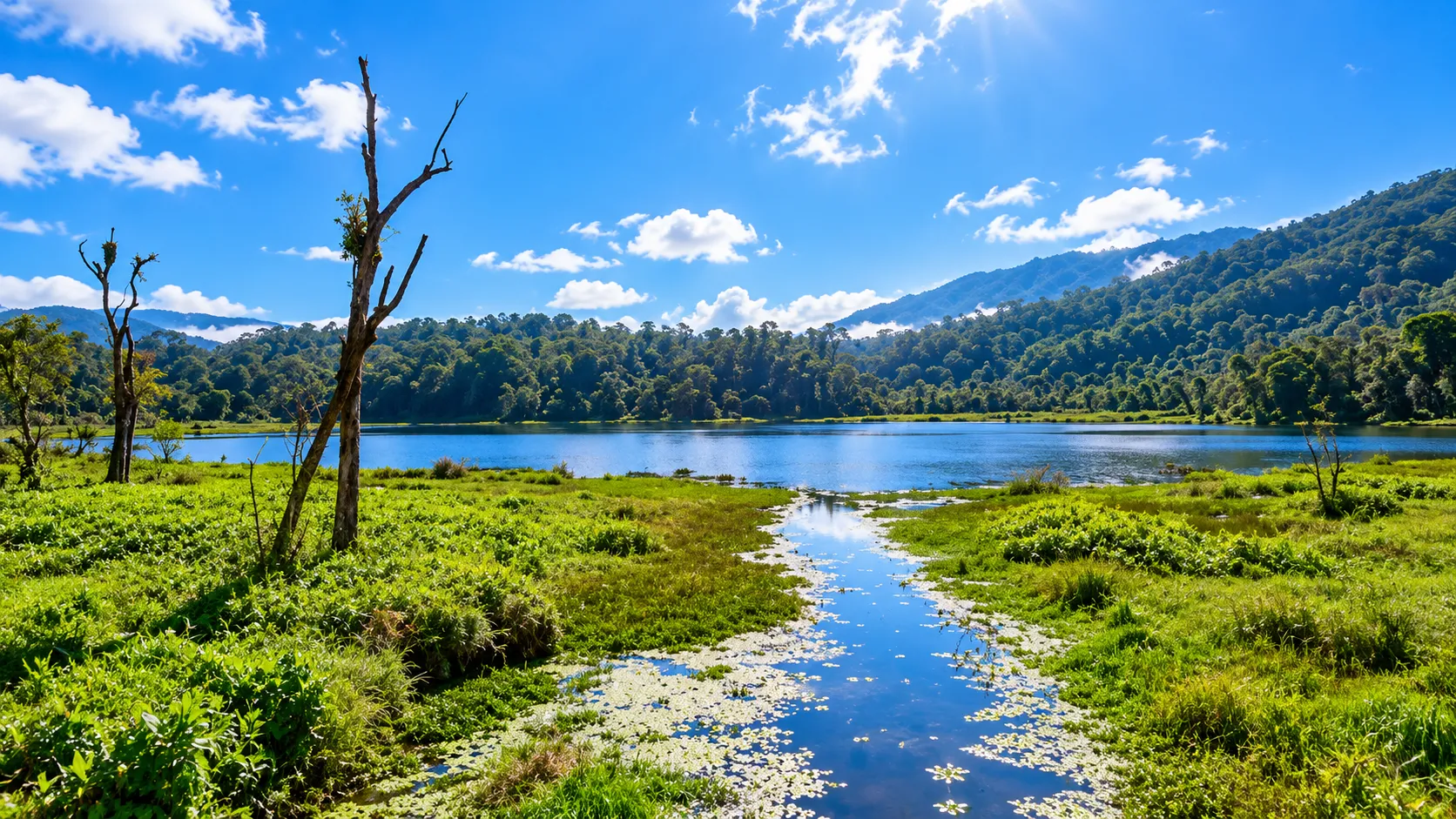
Palak Lake is the lake most often named as the largest in Mizoram, and it sits far from the state's usual tourist routes, in the south, near the Myanmar border region. That distance is part of the picture. It is a place for travellers who are comfortable with long hill roads and who are willing to check details locally, because published information about the lake is sparse and sometimes contradictory.
This guide explains where Palak Lake is, what the surrounding landscape and ecology are known for, what visitors can realistically expect, and how to plan access and travel responsibly. It separates confirmed facts from guesses, and it flags where sources disagree, including on the lake's protected status.
Where Is Palak Lake?
Palak Lake lies in Siaha district in southern Mizoram, near Phura village. It falls within the Mara Autonomous District Council, according to the Ministry of Tourism's Incredible India listing. Siaha, also spelled Saiha, is the district headquarters.
Local names vary, and it helps to know them before you search. Palak Dil is the Mizo name, with dil meaning lake. Pala Tipo is the Mara name, usually translated as "swallowing lake" or "submerging lake". You will also see spellings such as Pala Dipo and Pala Tipa. They refer to the same lake, and the spelling differences reflect transliteration.
Published distances from Siaha town disagree widely, with figures ranging from a few dozen kilometres to well over a hundred. We have not repeated any of them. Ask a local driver or the district administration for the current route and conditions, and do not rely on a number found online.
For the wider state, see our Mizoram travel guide.
Why Is Palak Lake Notable?
The first reason is size. Several official and reference sources, including the Ministry of Tourism and district information pages, describe Palak as the largest lake in Mizoram. Published measurements vary. One survey cited by the India Water Portal gives roughly 400 by 600 metres and about 13 metres in depth, while other sources list areas such as 30 hectares or 1.5 square kilometres, and some may include more than the open water. Treat any figure as approximate.
The second is its place in the landscape. The Key Biodiversity Areas programme lists Palak Dil as a confirmed site, and the Ministry of Tourism notes that it falls within the Indo-Burma biodiversity hotspot. Surveys of the lake and its forest recorded a large number of bird species, which is discussed below.
The third is culture. The lake lies in Mara country, and its name comes from a local story about a lake that swallowed or submerged a settlement. The story is told in several versions, and it is part of how the Mara and Mizo communities relate to the place. Treat it as living folklore, not as a tourist attraction to be retold casually.

Landscape, Ecology and Wildlife
Palak is a natural lake in a depression in the hills. The India Water Portal, drawing on survey work, says two small mountain streams flow into it and one flows out, which keeps a steady flow of fresh water. The surrounding hills are moderately steep, and the forest is described as tropical wet evergreen, with dipterocarp forest, palms, rattans, cane-brakes and reeds along the margin.
A notable feature reported by the same sources is a set of low-lying swamps near the lake that become shallow lakes in the monsoon. That affects both the look of the area and how easy it is to move around, so plan for wet ground in the rainy season.
On birds, sources give different figures. The Ministry of Tourism says more than 70 species are listed with the lake, and a later survey cited by the India Water Portal recorded 136 species across three seasons in the lake and surrounding forest. The Ministry also says aquatic birds and wild ducks there are not found elsewhere in Mizoram, though we could not confirm that claim from a second source, so we are not repeating it as fact. None of this means you will see a particular bird. Bird numbers change with season and survey method, and a short visit may show very little.
Mammals and other wildlife are mentioned in district information for the wider sanctuary area, including barking deer, leopard, elephant and rhesus macaque. Treat that as a general description of the area, not a promise of sightings. Animals are wild and shy, and we do not describe the lake as a wildlife-viewing destination.

What About Protected Status?
This is where sources disagree, so it deserves a careful look.
- A 2001 Mizoram government gazette notification stated an intention to declare a Palak Lake Wildlife Sanctuary of 15.50 square kilometres.
- Wikipedia and several district information pages describe a Palak Wildlife Sanctuary that includes the lake.
- A Wildlife Institute of India publication on Mizoram's protected areas lists Palak Wildlife Sanctuary as de-notified.
- The Key Biodiversity Areas factsheet, based on a 2005 assessment, says there was a plan to declare the lake a sanctuary and that approval was pending.
Given this, we are not describing Palak Lake as a currently protected sanctuary. Whether any part of the area has protected status today is a question for Mizoram's Environment, Forests and Climate Change Department, and it affects what visitors may do. The same KBA factsheet notes that forest around the lake has faced pressure from forest resource use, jhum cultivation and invasive species, so the surroundings are a working landscape and not untouched wilderness.
Things to Do and What to Expect
Because we found no current official list of visitor activities or facilities, it is best to set modest expectations.
Confirmed in official material:
- The Ministry of Tourism's sample seven-day Mizoram itinerary places Siaha View Point, Siaha Bazaar and Palak Lake in a single day, with a short trek into the Palak area mentioned, and describes the lake as a place to notice the serenity and surrounding biodiversity.
- The Ministry's lake page describes birds as the main wildlife interest.
Not confirmed from any source we could verify:
- Boating, fishing, entry fees, opening hours or any ticketing.
- Visitor centres, viewing platforms, marked paths, toilets, food stalls or shops.
- Overnight accommodation at or beside the lake.
- Organised guides, and whether permission is needed to approach the lake or walk in the surrounding forest.
In practice, plan to look at the lake, enjoy the setting and, with local guidance, watch for birds from permitted places. Bring what you need, assume there are few facilities and let a local contact or the district authorities tell you what is allowed.
Siaha town has its own viewpoint and market, listed in the Ministry's itinerary, which makes it a more practical base for services.
How to Reach Palak Lake
Most travellers begin in Aizawl, which has Lengpui Airport and, since 2025, a rail link to Sairang near the capital. Check current flights and train services before you plan. Our Siaha travel guide covers the district town where most trips to the lake would be organised.
From Aizawl, Siaha is reached by road through southern Mizoram. The journey is long and slow on hill roads, and we cannot confirm journey times, the best route or current road conditions. Ask your driver and local contacts, and leave generous time.
Local transport is informal. Shared vehicles serve the main towns, but timings, fares and frequency may change, and services may be limited on Sundays and holidays. A hired vehicle with a driver who knows the district is usually more flexible, particularly for the last stretch to the lake. We could not verify any public transport to Phura village.
Visitors from other parts of India have generally needed an Inner Line Permit to enter Mizoram, and foreign nationals have separate arrangements. Local reporting in 2026 said new guidelines had been approved, with details not fully published at that time, so check official Mizoram government channels. Because the lake lies in an autonomous district council area, ask the Siaha district administration or the council whether anything additional applies.
Best Time to Visit
We found no official seasonal guidance specific to the lake, so this section reflects general conditions in Mizoram and what sources say about the area.
The drier months, roughly November to March, are generally easier for travel. A travel portal gives November to May as the favoured period for Siaha. Roads are more reliable in the dry months, and views are usually clearer.
The monsoon, roughly late spring to early autumn, brings heavy rain, landslides, leeches and slow roads. The swamps around the lake can fill, and moving around may be harder. If you travel then, allow extra time and check conditions each morning.
Birdlife changes through the year, and sources describe both resident and migratory species, so a visit in one season may differ from another. We cannot say when particular birds are present. Check weather and road conditions close to departure.
Planning Your Visit: Supplies, Accommodation and Local Guidance
Siaha town is the practical base. Expect simple guesthouses and hotels there, though we are not naming properties and could not verify current availability. Book ahead, ask for written confirmation and expect basic facilities, with variable hot water and occasional power cuts. Do not assume you can stay at the lake itself.
Bring supplies for the day, since facilities near the lake are unconfirmed:
- Water, snacks and a packed meal.
- Sturdy shoes with grip, rain gear and a light warm layer.
- Insect repellent and leech protection in wet conditions.
- Binoculars, which let you watch birds from a distance.
- A basic first aid kit and personal medicines.
- A power bank, offline maps and printed copies of permits and identification.
- Cash, since ATMs and digital payments may be unreliable.
- A bag for your rubbish.
Local guidance matters here more than usual. The lake lies in Mara country, and local people understand the terrain, the weather and what is appropriate. Ask your host or the district authorities whether a local guide is advisable, and hire local people where you can. Sundays are quiet in Mizoram, with many services closed.
Suggested Travel Plan
We are not giving a detailed itinerary, because we cannot verify the geography between the lake, Siaha and other places. Treat the following as a planning pattern.
- Use Siaha as your base and allow at least two nights, so a day for the lake does not depend on a long same-day drive from elsewhere.
- Spend the first day settling in, taking in the Siaha viewpoint and bazaar listed in the Ministry's itinerary, and asking local contacts about road conditions and access to the lake.
- Plan the lake as a full-day outing, with an early start and time in hand for slow roads and weather.
- Keep a spare day for delays, weather or a closed route.
Phawngpui National Park, Mizoram's Blue Mountain, is also in Siaha district, according to the Wildlife Institute of India's listing, which may suit travellers building a longer trip in the south. Confirm the route and permission separately. For other protected areas in the state, our Murlen National Park guide explains how to research access to a protected forest.
For lakes elsewhere in Mizoram, see our Serlui B Lake travel guide.
Responsible Travel and Nature Protection
- Follow local instructions, and ask before entering forest or farmland. Land around the lake is used by communities.
- Do not litter. Carry out everything you bring in, including small items, and avoid single-use plastic.
- Keep your voice low and your movements slow near the water. Noise carries across a lake and disturbs birds.
- Do not feed or approach wildlife, and do not use recorded calls to attract birds.
- Do not swim, wade or put anything in the water unless local people clearly say it is safe and permitted.
- Do not collect plants, feathers or other natural items, and do not light fires.
- Treat the lake's folklore respectfully, and do not play at hauntings or spirits for entertainment.
- Ask before photographing people, homes or farms, and accept a refusal.
- Buy food and supplies from local sellers, and pay fairly for local guides and transport.
- Respect closures and rules, even if they limit what you can see.
What to Confirm Before Travelling
- Whether the lake and surrounding area are open to visitors now, and whether permission is needed.
- The current protected-area status of the lake and any rules that follow from it.
- Entry procedures, fees and timings, if any.
- The route from Siaha, road conditions and whether a vehicle can reach the lake.
- Whether a local guide is advisable or required.
- Facilities at the lake, if any, and accommodation in Siaha.
- Inner Line Permit rules and any additional requirements for the autonomous district council area.
- Weather forecast and landslide reports for your dates.
- Local transport options and Sunday or holiday limits.
Frequently Asked Questions
Where is Palak Lake?
Palak Lake is in Siaha district in southern Mizoram, near Phura village, within the Mara Autonomous District Council.
Is Palak Lake the largest lake in Mizoram?
Official tourism and district sources describe it as the largest lake in the state. Published measurements vary, so treat any size figure as approximate.
What does Pala Tipo mean?
Pala Tipo is the Mara name for the lake and is commonly translated as "swallowing lake" or "submerging lake". Palak Dil is the Mizo name.
Is Palak Lake a protected wildlife sanctuary?
Sources disagree. A 2001 notice stated an intention to declare a sanctuary, but a Wildlife Institute of India listing shows it as de-notified. Confirm the current status with the forest department.
Can I see wildlife at Palak Lake?
Birds are the main documented interest, with surveys recording many species. Sightings cannot be promised, and animals are wild and unpredictable.
How do I reach Palak Lake?
Most travellers go by road from Aizawl to Siaha and then continue to the lake with local guidance. Published distances differ, so confirm the route locally.
What is the best time to visit Palak Lake?
The drier months, roughly November to March, are generally easier. No official seasonal guidance specific to the lake was available, and the monsoon brings heavy rain and slow roads.