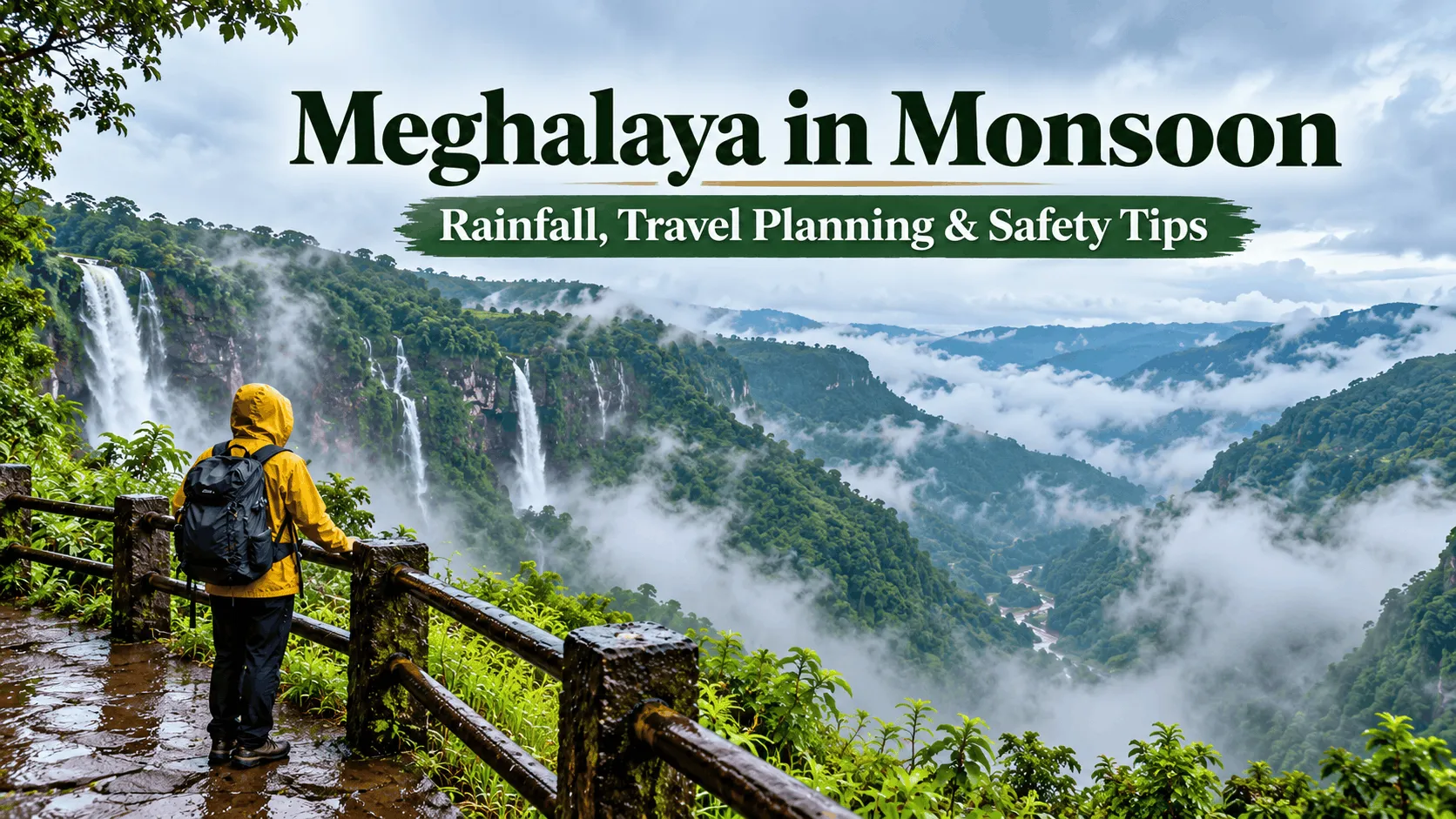
It can be, if you plan for rain instead of hoping to avoid it. Meghalaya in monsoon is at its most dramatic: waterfalls run full, the hills are saturated green, and clouds drift through the valleys. It is also the season of heavy rain, slippery steps, viewpoints hidden in cloud, murky rivers and road disruption that can change a plan overnight.
Monsoon travel tends to suit you if you:
- enjoy mist, rain and rich green landscapes more than blue skies
- can keep your itinerary flexible and accept that a stop may be cancelled
- are comfortable with shorter walking days and slower travel
- are happy to follow local advice, including advice to stay put
You may prefer a drier month if you:
- need clear views or a fixed schedule
- are planning a demanding trek or river activity
- have a tight flight or train connection straight after a hill road journey
- are uneasy about weather uncertainty
Neither choice is wrong. If you are still comparing seasons, "best time to visit Meghalaya" gives the year-round picture. This guide focuses on how to do the monsoon well.

2. Meghalaya in Monsoon: When Does the Rainy Season Start and End?
The general pattern. The monsoon in Meghalaya is commonly described as running from about June to September. Rain also increases in the months before it and often lingers into October, so the season has soft edges. That is a seasonal pattern, not a forecast for your travel dates.
What happened in 2026 (as an example, not a prediction). India Meteorological Department (IMD) bulletins from the first week of June 2026 reported the monsoon setting in over Kerala on 4 June and forecast heavy rainfall for Assam and Meghalaya as it advanced across the Northeast. By October, IMD bulletins from 11 October said conditions were becoming favourable for further withdrawal of the southwest monsoon from many parts of Northeast India. The same bulletins still forecast isolated to scattered rain over Assam and Meghalaya for mid-October. The latest bulletin I could find was dated 14 October 2026.
Always check before you go:
- The IMD website for the current all-India bulletin and its district-wise warnings page.
- Meghalaya Tourism and the district administration for advisories.
- Your driver or host, who will know which roads and sites are affected that week.
Do this a few days before travel, again the evening before, and again each morning on the road.
3. What the Weather Can Be Like Across Different Areas
Rainfall in Meghalaya varies enormously over short distances, so a single "Meghalaya weather" number is not very useful.
- Shillong sits on the plateau and is much drier than the southern edge. Our Meghalaya travel guide notes IMD long-term (1991 to 2020) annual averages of about 2,100 mm for Shillong, compared with about 11,176 mm for Sohra. Those are yearly figures, not monsoon-only, and not a forecast.
- Sohra (Cherrapunji) and Mawsynram on the southern edge are among the wettest places on Earth. Expect long spells of rain, low cloud and sudden changes.
- Dawki and the Jaintia Hills are lower and often wet. Boating on the Umngot depends on water levels and can be suspended in the monsoon, and the river is often murky then.
- The Garo Hills are far from Shillong and need their own check of forecasts and road conditions.
Even on a dry-looking day, cloud can hide viewpoints for hours. Mornings are often clearer, so start early.
4. Advantages of Visiting During the Rainy Season
- Full waterfalls. Meghalaya's waterfalls are highly seasonal: dramatic in and just after the monsoon, much reduced in winter.
- Intense greenery and mist. Valleys and plateaus look their most vivid, and the "abode of clouds" lives up to its name.
- A different atmosphere. Cloud, rain and quiet hill roads give a mood that the dry months don't.
- A slower pace. The season rewards fewer stops, long lunches, cafés in Shillong and time with local hosts.
- Often quieter than the winter peak. Travel sources describe a surge in visitors from about September to February, so the heart of the monsoon is typically less busy. Do not assume lower prices, and check current rates.
5. Challenges Travellers Should Prepare For
- Heavy rain and reduced visibility. Fog and cloud can wipe out a viewpoint, and driving visibility can drop quickly.
- Slippery trails and steps. Stone steps, root-bridge paths and forest tracks get slick, and the climb back up from places like Nongriat is demanding even in dry weather.
- Swollen, murky rivers. Water that looks calm can rise quickly. Swimming spots and boat rides may be closed.
- Road disruption. Landslides, waterlogging and roadworks can slow or stop travel (see section 7).
- Changing local conditions. A site open in the morning may close by afternoon.
- Leeches and damp. Forest trails can be leech-prone in the wet season, and clothes and gear stay damp. Ask your guide what to expect.
- Flight and train knock-on effects. A long hill drive that runs late can threaten tight connections from Guwahati.
6. Waterfalls, Rivers and Viewpoints: Safety Considerations
Rainy-season waterfalls are the main attraction, and also where most caution is needed. Think of the following as rules, not suggestions.
Safety checklist:
- Watch from official viewpoints and behind barriers. Never go beyond them for a photo.
- Keep away from cliff edges, wet rock and slopes that look loose or undercut.
- Do not enter or cross swollen rivers or flooded streams, on foot or in a vehicle.
- Obey closures, warning signs and the instructions of local guides and village officials. If an area is restricted, stay out.
- Do not swim in rivers or plunge pools in the rainy season unless local people confirm it is safe and permitted, and even then, think twice.
- Do not rely on how a river looked earlier. Water can rise fast, including from rain falling upstream.Wear shoes with real grip, and use handrails.
- Never enter a wild cave without an experienced, locally arranged guide. Caves can flood.
- Turn back early if the weather worsens. No photo is worth it.
- Tell your host where you are going and when you expect to return.
7. Road Conditions, Landslides and Journey Planning
Roads are the part of Meghalaya in monsoon that most affects your plan. Hill roads are narrow and winding, and heavy rain brings landslides, debris and waterlogging.
Examples of what can happen (dated):
- In June 2026, a major landslide cut the Shillong–Dawki road. The district administration ordered a closure beyond Laitlyngkot village, and named alternative routes via Sohra and Sohbar, or via Jowai and Amlarem. We have not confirmed the current status of this road.
- In August 2025, authorities restricted traffic on a section of the Shillong–Dawki highway at set hours, including overnight, and advised against non-essential travel in heavy rain or at night.
- District disaster-management advisories in past seasons have recommended avoiding unnecessary travel to Sohra during heavy rain, and have warned of dense fog and poor visibility on stretches such as the Shillong–Pynursla road.
Journey-planning rules:
- Don't drive at night on hill roads, especially in rain or fog.
- Allow generous extra time on every leg, and don't schedule hard deadlines the same day.
- Ask before you leave. Your driver, host or the local administration will know the day's road status.
- Have a Plan B for each day, such as an alternative route or an indoor alternative.
- Keep flexibility at the end of the trip. Leave a buffer before flights or trains.
- Know the emergency number. Authorities have advised dialling 112.
- Never push a driver to cross a flooded or blocked road. If your driver says no, treat that as the answer.
No route can be promised open in all seasons.
8. What to Pack for a Monsoon Trip
Packing checklist:
- Waterproof rain jacket or poncho (an umbrella alone is not enough in wind)
- Quick-dry layers, plus a warm layer for cool, wet evenings
- Shoes with deep grip, and a spare dry pair
- Several pairs of spare socks (long socks can help on leech-prone trails)
- Dry bags or heavy-duty zip bags for phone, documents, camera and clothes
- Waterproof cover or rain liner for your daypack
- Power bank and charging cables
- Offline maps downloaded in advance, since mobile signal can be weak
- Small torch or headlamp, with spare batteries
- Water bottle, snacks and cash for small fees and rural areas
- Basic first-aid kit and personal medication
- Insect repellent and a small towel
- Printed or saved copies of bookings and emergency contacts

9. Clothing, Footwear and Protecting Electronics
Clothing. Layers beat bulk. A breathable waterproof shell over quick-dry layers copes with sweat and rain better than cotton, which stays wet for hours. Pack more spare tops and socks than you think you need.
Footwear. Choose shoes or boots with proper tread, since Meghalaya's stone steps and wet roots are slippery. Leave smooth-soled shoes and flimsy sandals for the hotel. Break in new shoes before you travel, and dry your shoes overnight where you can.
Electronics.
- Keep phones, cameras and power banks in dry bags, not just pockets.
- Carry a few silica gel packets in your camera bag if you have them.
- Wipe lenses with a dry cloth and let gear dry before sealing it away.
- Charge devices whenever power is available, as outages can occur in rural areas and during storms.
- Back up photos regularly.
- Store important documents and cards in sealed bags.
10. Choosing Activities and Destinations in Wet Weather
Pick activities that still work if the weather turns, and keep fragile or risky ones flexible.
Often workable in rain (check local access):
- Shillong. Museums such as the Don Bosco Centre for Indigenous Cultures, cathedrals, cafés, Iewduh (Bara Bazaar) and Ward's Lake.
- Sohra viewpoints and waterfalls. Visit from official viewpoints when open. In cloud you may see nothing, so keep time in hand.
- Village visits and homestays. A slow day with a local host can be the best part of a monsoon trip.
- Mawphlang Sacred Grove. Visit with a local guide, who will know whether paths are safe.
For waterfalls, caves and root bridges around Sohra, our Cherrapunji travel guide has more detail. Confirm what is accessible that week.
Treat as weather-dependent, or skip:
- Nongriat and root-bridge treks. The steps are long, steep and slick. Decide on the day, with local advice, and don't be afraid to skip it.
- Boating at Dawki and Shnongpdeng. Depends on water levels, and may be suspended.
- River swimming, caving and rafting-type activities. Generally unsuitable in heavy rain.
- Far-flung drives. Long hill-road days are best saved for forecast-clear windows.
11. How to Build a Flexible 3-Day or 5-Day Itinerary
These are illustrative planning frameworks, not confirmed schedules or tours. Check current road status, opening times and weather before you commit.
Principles:
- Use as few bases as possible. Shillong is the most flexible.
- Do the weather-sensitive stop first, and keep the flexible ones for later in the day.
- Build in a spare half day or full day.
- Decide each evening what tomorrow looks like.
3-day outline (Shillong and Sohra)
- Day 1: Guwahati to Shillong. Allow for a long transfer. Easy evening in town.
- Day 2: Sohra day trip (or overnight), starting early. If it is closed or clouded in, switch to Shillong indoor options.
- Day 3: Shillong sights or a relaxed return, with a buffer before any onward transport.
5-day outline (adding the Jaintia Hills or Dawki if conditions allow)
- Day 1: Guwahati to Shillong.
- Day 2: Shillong and nearby sights, as a weather buffer.
- Day 3: Sohra.
- Day 4: Dawki or Jowai, only if roads are open and rivers are calm. Otherwise stay in Shillong or take a second Sohra day.
- Day 5: Return, with a safe buffer.
12. Accommodation, Transport and Booking Considerations
- Ask about flexibility. Choose bookings with clear cancellation or change terms, and read them before paying.
- Ask about access. Ask hosts how the road to the property fares in heavy rain, and whether they have backup power and hot water.
- Pick a sensible base. Staying in Shillong and making day trips reduces transfers, though Sohra, Nongriat or riverside stays suit travellers who accept limited facilities and weather disruption.
- Hire a driver you can talk to. A local driver knows the roads and can make the "turn back" call. Agree the fare and route in advance, and confirm what happens if a road is closed.
- Keep onward travel loose. Avoid tight same-day connections after a hill drive.
- Consider travel insurance, and read what it covers for weather disruption.
If you would like help building a monsoon-friendly trip, you can browse our tours and ask the team whether a specific itinerary can run, or be adapted, for the dates you have in mind.
13. Responsible Tourism During Heavy Rain
- Respect closures. If a site, bridge or road is closed, it is for a reason.
- Don't pressure guides, drivers or hosts into unsafe decisions. They are part of the community and live with the consequences.
- Protect root bridges and sacred sites. Wet roots and paths are fragile. Follow local rules, don't climb on railings and take nothing from sacred groves.
- Support local guides and homestays. Rain can mean cancellations, so pay fairly and be kind about changes.
- Reduce waste. Rain washes litter into streams. Carry your rubbish out.
- Be patient on the road. Many roads are also lifelines for residents and emergency vehicles.
- Ask before photographing people, and don't intrude on homes in bad weather.
14. Frequently Asked Questions
Is Meghalaya worth visiting in the monsoon? Yes, if you like rain, mist and waterfalls and can be flexible. If you need clear views or a rigid schedule, a drier month is a better fit.
Which months are the monsoon in Meghalaya? Commonly June to September, with rain increasing beforehand and often continuing into October. Use current IMD bulletins for the actual season, since timing varies each year.
Is the monsoon over in Meghalaya now? IMD bulletins up to 14 October 2026 pointed to further withdrawal across Northeast India, with some rain still forecast over Assam and Meghalaya. Check the current IMD bulletin and district warnings for the latest.
Are the waterfalls better in the rainy season? They are fuller and more dramatic, but cloud can hide them, and the viewing areas can be wet and restricted. Stay behind barriers.
Is it safe to travel in Meghalaya in the monsoon? Many people do, but conditions change fast. Landslides, fog, slippery trails and rising rivers are real risks. Use local advice, avoid night driving, obey closures and keep your plans flexible.
Can I do the Nongriat root bridge trek in the rain? Treat it as a day-of decision. The steps are long and slippery. Ask local guides, and skip it if conditions are poor.
Will I be able to visit Dawki? Sometimes. The Shillong–Dawki road was cut by a landslide in June 2026, and boating depends on water levels. Confirm road and boat status shortly before you go.
What should I pack for Meghalaya in monsoon? A waterproof jacket, quick-dry layers, grippy shoes, spare socks, dry bags, a power bank and offline maps. See the checklist in section 8.
Is the monsoon cheaper? Don't assume so. Prices vary by property and date, so compare current rates.
How far ahead should I check the weather? Look a week out for a general picture, then again 2 to 3 days before, the night before, and each morning.
Conclusion
Meghalaya in monsoon rewards travellers who treat the weather as part of the trip. Expect heavy rain, build in buffers, avoid night driving, stay behind barriers, and never approach swollen rivers or restricted areas. Keep one eye on IMD and local advisories, listen to your driver and host, and be ready to swap a plan for a safer one. With flexible plans and the right gear, a rainy-season trip can be one of the most atmospheric ways to see the "abode of clouds."