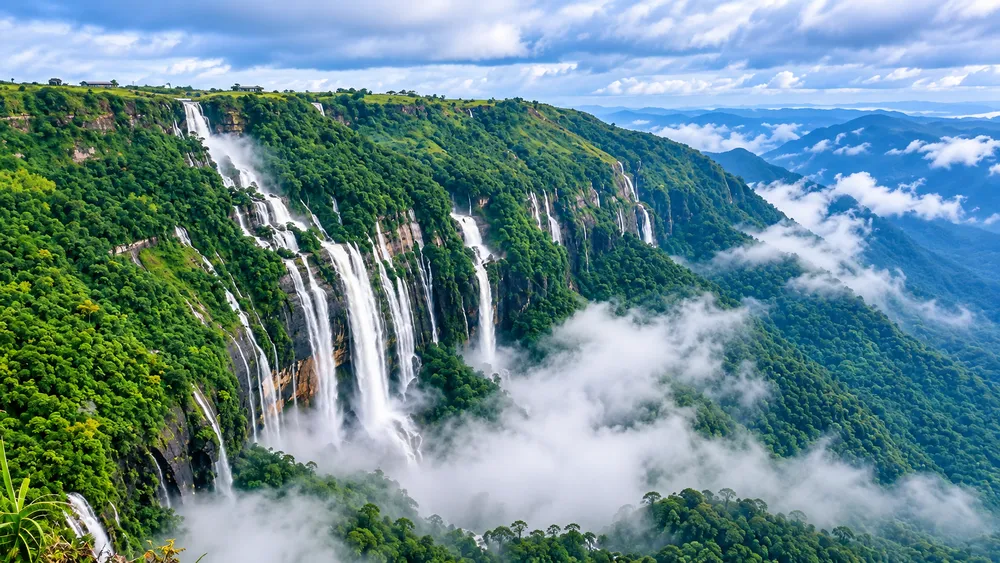
Mawsynram is a small Khasi village in the East Khasi Hills district of Meghalaya, sitting at an elevation of around 1,400 to 1,500 metres. It is best known for its extremely high rainfall, regularly cited among the wettest inhabited places on Earth, but the village itself is a quiet, close-knit community rather than a built-up tourist town. Thick cloud, deep green hillsides and limestone caves define the landscape, and local life still runs around the rhythm of the monsoon: houses built to shed water quickly, and locals still using the traditional knup, a cane and banana-leaf shield worn on the back, when moving through heavy rain. For travellers, Mawsynram offers a slower, less commercial alternative to nearby Cherrapunji, built around landscape and weather rather than a long list of sights.
Where is Mawsynram?
Mawsynram sits in the East Khasi Hills district of Meghalaya, close to the southern edge of the Khasi plateau where the hills drop toward the Bangladesh plains. It is roughly 60 km from Shillong, the state capital, and around 170 km from Guwahati, the nearest major transport hub in Assam.
The surrounding landscape is defined by steep, forested hills, limestone terrain riddled with caves, and deep valleys that fill with cloud for much of the year. The road from Shillong winds through Khasi hill country, passing smaller villages and viewpoints, and on clear days it offers wide views over the plains to the south.
Why visit Mawsynram?
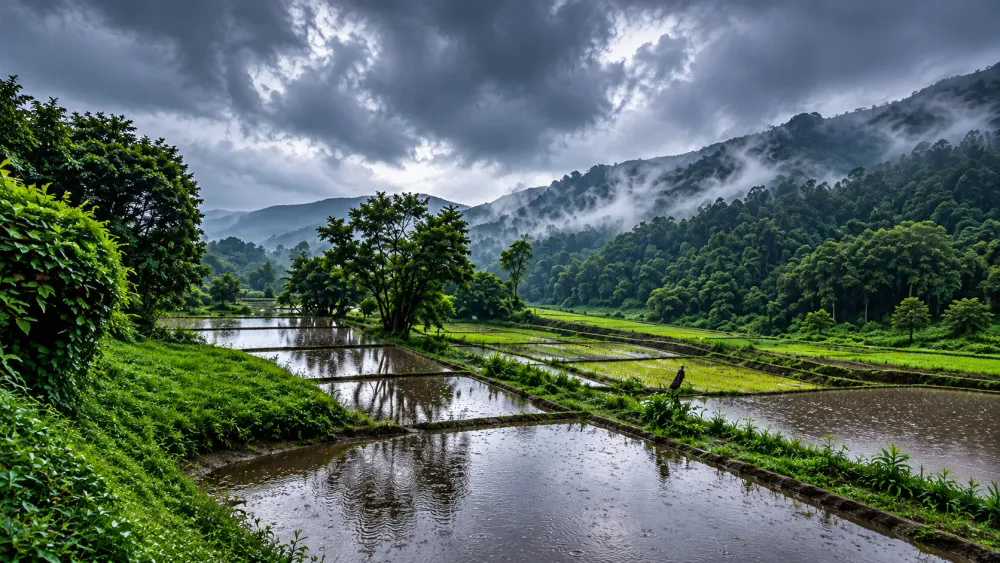
The rainfall itself is the starting point: Mawsynram's climate produces near-constant monsoon downpours for weeks at a stretch, an experience genuinely different from a normal rainy season elsewhere in India. Beyond the rain, the landscape stays green through most of the year, with mist rolling through the valleys even outside peak monsoon.
The area is good for quiet nature experiences rather than organised activities: walking through the village, watching cloud move across the hills, and spending time in a Khasi community that has not been rebuilt around tourism. Streams swell with the rain and small seasonal waterfalls appear in the surrounding valleys during the monsoon, though most are informal and unnamed rather than developed viewpoints.
Monsoon photography is a specific draw for some travellers: heavy cloud, water-streaked hillsides and dramatic light between downpours. Local culture is understated rather than staged, with Khasi customs and rain-adapted daily life on display simply because that is how the village functions, not as a performance for visitors.
Mawsynram weather and rainfall
Mawsynram is regularly cited as one of the wettest places on Earth, with average annual rainfall figures reported in different sources ranging from roughly 11,000 to over 12,000 mm. Exact records vary depending on the measurement period and source, so treat any single precise figure as an approximation rather than a fixed statistic.
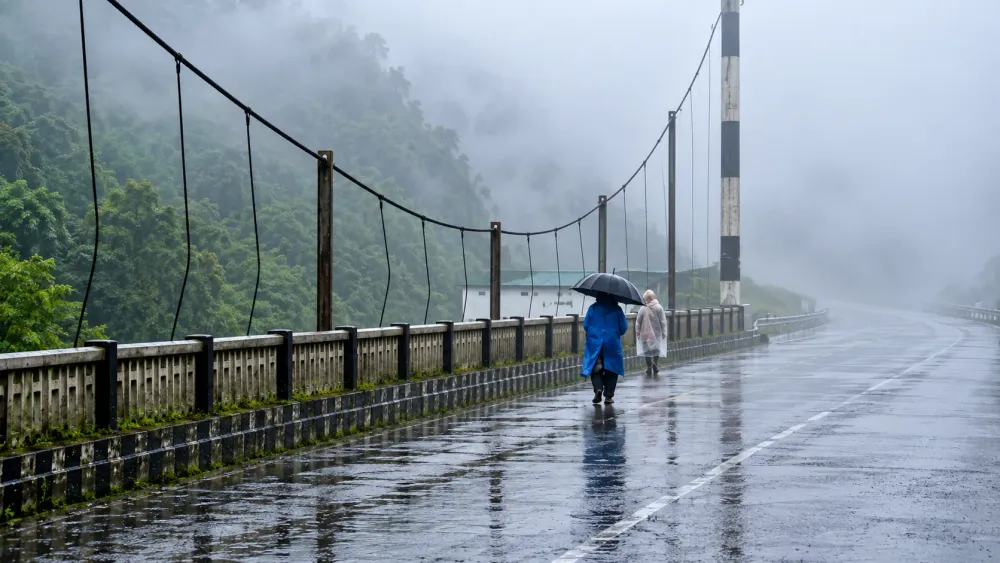
Monsoon (roughly June to September) brings the heaviest and most continuous rain, often for days without a real break, with cloud sitting low over the hills for much of that period. Winter (December to February) is markedly drier and cooler, with clearer skies and better visibility, making it the easier season for sightseeing. Spring (March to May) sees rising humidity and increasing rain as the monsoon approaches, while pre-monsoon showers can already be heavy by May. Even outside the core monsoon months, short, intense showers are common given the region's overall wet climate, so rain gear is worth carrying at any time of year.
Places to visit in and around Mawsynram
Mawjymbuin Cave
A limestone cave near the village, known for a natural stalagmite formation that resembles a Shivling, formed by mineral-rich water dripping from the cave ceiling. It is considered a sacred site by many visitors and draws pilgrims around Maha Shivratri, alongside general sightseers. The cave is a short walk from the village and accessible for most of the year, though paths can be slippery during heavy rain.
The village and surrounding countryside
Mawsynram village itself, with its rain-adapted houses and daily rhythms, is as much a reason to visit as any single site. Walking through the village and the surrounding countryside gives a direct look at how a community is built around one of the wettest climates on the planet. This works in any season, though the experience changes considerably between the dry winter and the full monsoon.
Clear-day viewpoints toward the plains
On clear days, particularly outside the monsoon, points along the road and the edge of the plateau give wide views south toward the Bangladesh plains, a feature shared with the wider Khasi Hills region. Visibility depends heavily on weather, so this is opportunistic rather than a guaranteed sight.
Things to do in Mawsynram
The core activities in Mawsynram are simple: scenic drives along the Shillong–Mawsynram road, slow walks through the village and surrounding hills, and time spent simply watching the weather move across the landscape. Photography, especially of cloud, rain and the deep green hillsides, is a natural fit given the conditions.
Village exploration works well with a local guide who can point out details a visitor would otherwise miss, from rain-adapted architecture to seasonal farming. During the monsoon, watching streams swell and small waterfalls form in the valleys is a common, low-key activity rather than a planned excursion to a named site.
How to reach Mawsynram
From Shillong: Mawsynram is about 60 km away, roughly a 1.5 to 2 hour drive by private taxi or shared vehicle, depending on road and weather conditions. This is the most common way travellers reach the village.
From Guwahati: Guwahati is the nearest major air and rail hub, around 170 km from Mawsynram. Most travellers fly or take a train into Guwahati, then continue to Shillong before the final leg to Mawsynram, a combined journey that typically takes five to six hours or more by road.
By road and taxi: Private taxis from Shillong are the most flexible option and the most commonly used by visitors. Shared taxis and local transport exist on some routes but are less predictable in frequency, so it is worth checking current options locally rather than assuming a fixed schedule.
Road conditions can be affected by heavy rain, particularly during the monsoon, so building extra time into a journey to or from Mawsynram is sensible rather than optional.
Best time to visit Mawsynram
Visiting during the heavy monsoon, roughly June to September, gives the most dramatic version of Mawsynram: near-constant rain, thick cloud, and a landscape at its greenest. This is also when sightseeing is hardest, since visibility drops, some paths become slippery, and outdoor time is limited by the weather itself.
Visiting during the drier months, particularly winter from December to February, makes sightseeing considerably easier, with clearer skies and better road conditions, but without the intense rainfall that defines Mawsynram's reputation. There is no single correct choice here: the decision comes down to whether the priority is experiencing the rain itself or having an easier, more flexible trip.
Mawsynram vs Cherrapunji
Mawsynram and Cherrapunji sit in the same general area of the East Khasi Hills and share a similar landscape of steep, forested hills and heavy monsoon rainfall, but they differ in a few practical ways.
Landscape and rainfall: both places have a comparable hill and valley landscape shaped by extremely high rainfall. Cherrapunji (also known as Sohra) historically set records for rainfall in shorter measurement periods, while Mawsynram is more often cited for higher long-term average annual rainfall; precise rankings vary between sources and years.
Accessibility and infrastructure: Cherrapunji is closer to Shillong and has considerably more developed tourism infrastructure, including multiple well-known attractions, more accommodation options and better signage for visitors. Mawsynram is somewhat further from Shillong and has far fewer developed sights, fewer places to stay and less visitor infrastructure overall.
Experience: Cherrapunji suits travellers who want a fuller day of named attractions and easier logistics, while Mawsynram suits those who want a quieter, less visited version of the same landscape, built more around atmosphere and village life than a list of stops. Neither is a clearly better choice; they serve different kinds of trips.
Where to stay
Accommodation in Mawsynram itself is limited compared with Shillong or Cherrapunji, generally consisting of simple guesthouses and a small number of homestays rather than larger hotels or resorts. Many travellers instead base themselves in Shillong or Cherrapunji and visit Mawsynram as a day trip, given the manageable driving distance.
For those who prefer to stay closer to experience the rain overnight, it is worth confirming current availability and facilities directly before travelling, since options are limited and can change. This guide does not list specific properties, prices or facilities, as these vary and are best checked at the time of booking.
What to pack for Mawsynram
A proper rain jacket is essential rather than optional, ideally one built for sustained heavy rain rather than light showers. Waterproof or quick-drying footwear makes a real difference, since regular shoes stay wet for days in this climate.
A rain cover for your backpack, or a dry bag for electronics, documents and spare clothing, protects gear from rain that can be near-continuous during the monsoon. Quick-dry clothing works better than cotton, which stays damp far longer in this level of humidity.
Protect cameras and phones with a dedicated rain cover or a simple waterproof bag, since sudden downpours are common and give little warning. Warm layers are worth packing even in the rainy season, since temperatures at this elevation drop in the evenings, and a compact umbrella is useful for short walks around the village even though it is less practical than a jacket on longer outdoor stretches.
Responsible travel in Mawsynram
Mawsynram is a small, lived-in village, not a built tourist attraction, so treat homes, farmland and daily activity as part of a real community rather than backdrops. Ask before entering private property and before photographing people directly.
Carry out any waste you bring in, particularly plastic, since waste management infrastructure in small hill villages is limited. Around streams and any wet, slippery terrain, be cautious: rocks near water can be extremely slippery given the near-constant moisture, and conditions change quickly during heavy rain.
Photograph the village and its people respectfully, asking first rather than assuming consent, and avoid framing daily life as a spectacle. Supporting local businesses, guides and homestays where available helps keep tourism income within the community rather than routing it entirely through outside operators.
Suggested Mawsynram itinerary
1-day itinerary
Leave Shillong early in the morning to allow time for the drive and changeable weather. Visit Mawjymbuin Cave, then spend time walking through the village and surrounding countryside. Use any clear spells for photography or a viewpoint stop toward the plains, and plan to be back on the road to Shillong before evening, since road conditions can change quickly after dark or in heavy rain.
2-day itinerary
Day 1: Travel from Shillong to Mawsynram, visit Mawjymbuin Cave, and spend the afternoon walking through the village at an unhurried pace, staying overnight in Mawsynram or a nearby village if accommodation is available.
Day 2: Use the morning for further village exploration, a scenic drive through the surrounding hills, and any viewpoint stops the weather allows, before returning to Shillong in the afternoon.
Frequently asked questions
Is Mawsynram the wettest place on Earth? Mawsynram is widely reported as one of the wettest places on Earth, with average annual rainfall figures in various sources ranging from roughly 11,000 to over 12,000 mm. Exact rankings vary by measurement period and source, so treat any single number as an approximation.
How far is Mawsynram from Shillong? Roughly 60 km, about a 1.5 to 2 hour drive depending on road conditions and weather.
Is Mawsynram worth visiting if I've already been to Cherrapunji? Yes, if you want a quieter, less developed version of the same landscape. Mawsynram has fewer marked attractions and far fewer visitors, which suits travellers who prefer scenery and village life over a checklist of sights.
What is there to see in Mawsynram itself? The main verified attraction is Mawjymbuin Cave, with the rest of the experience built around the landscape, the village and the rainfall itself rather than a long list of sights.
When does it rain the most in Mawsynram? The heaviest rainfall falls during the monsoon months, roughly June to September, when rain can be near-continuous for days at a time.
Can I visit Mawsynram during the monsoon? Yes, and many travellers visit specifically for the monsoon experience, but expect limited visibility, wet roads and fewer options for long outdoor walks.
Is there an entry fee or permit needed for Mawsynram? No special permit is generally required for domestic travellers visiting Meghalaya; standard ID is usually sufficient. Confirm current requirements before travelling, since local rules can change.
What should I wear in Mawsynram during the rains? Quick-dry clothing under a proper rain jacket, waterproof or quick-drying footwear, and a dry bag or cover for electronics and documents.
Is Mawsynram suitable for a day trip from Shillong? Yes. A day trip covering Mawjymbuin Cave and the surrounding landscape is realistic, though an overnight stay allows a slower pace, especially if the weather is poor.
Does Mawsynram have hotels? Accommodation options are limited compared with Shillong or Cherrapunji, generally simple guesthouses and homestays rather than large hotels. Availability is best checked directly before travelling.
What is the best time to visit Mawsynram? It depends on what you want: heavy monsoon months give the most dramatic rainfall and cloud cover but limit outdoor movement, while drier months make sightseeing and walking easier but with less of the signature rain experience.