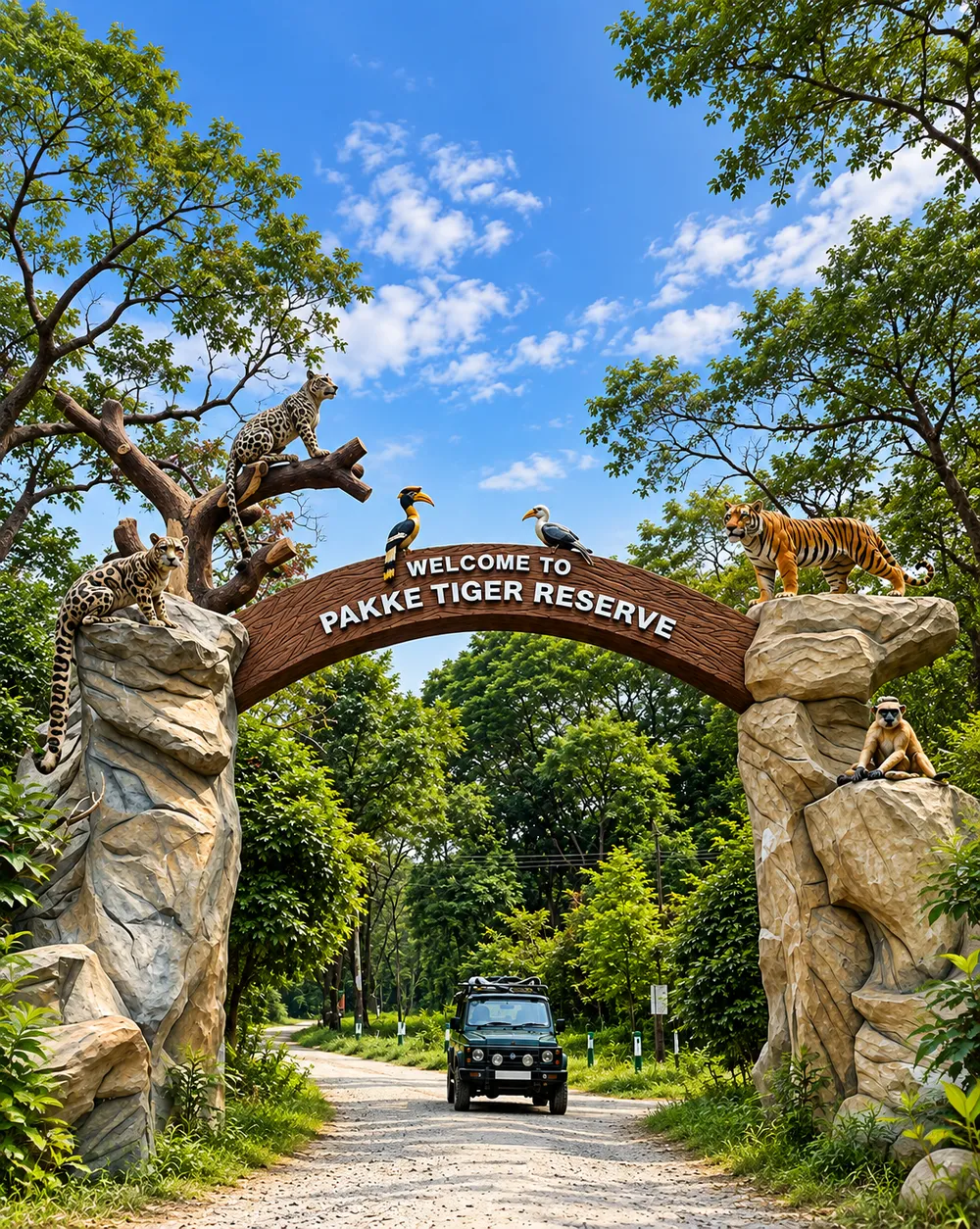
Pakke Tiger Reserve covers about 862 square kilometres of forested foothills in western Arunachal Pradesh, on the edge of the Assam plains. It is also known as Pakhui, and the protected area is often called Pakke Wildlife Sanctuary. The reserve sits in the Eastern Himalayan foothills and its forest runs from low riverine ground up into hills, so a single trip can take in several habitats. That range is one reason it supports a long list of plants, mammals and birds.
Pakke is best known for its hornbills and for a conservation story led by the local Nyishi community. This guide covers where the reserve is, what lives there, when to go, how to reach it and how to plan a short trip. Prices, timings and rules change, so we mark where you should check locally before you travel.
Where is Pakke Tiger Reserve?
The reserve lies in Arunachal Pradesh, in the Pakke Kessang district (older sources place it in East Kameng, from which the newer district was carved out). Its boundaries follow rivers: the Bhareli, also called the Kameng, runs along the west and north, and the Pakke River runs along the east. Forest continues beyond the reserve on most sides. The protected area is contiguous with Nameri Tiger Reserve across the border in Assam, which matters for animals that move between the two.
Elevation ranges from roughly 150 to 2,000 metres, and the lower forest is mostly Assam valley semi-evergreen.
Access is from Assam. Most visitors reach Pakke through one of three gateways. Seijosa, on the eastern side, is the most used and has the most facilities. Bhalukpong, on the western side, is the border town where you enter Arunachal from Assam. Pakke Kessang lies to the north and is reached from the Itanagar or Seppa direction. Tezpur, the nearest large town in Assam, is the usual starting point for the road trip, and Guwahati is the main air and rail hub behind it.
Why visit Pakke Tiger Reserve?
Birds are the second reason. The reserve is famous for its hornbills, and sources commonly cite around 300 bird species overall. Photographers come for hornbills, forest birds and the landscape.
Conservation is the third. The reserve is a Project Tiger reserve, and it won the India Biodiversity Award in 2016 in the category for conservation of threatened species, for its Hornbill Nest Adoption Programme. That programme began in 2011 as a partnership between the Nature Conservation Foundation, the Ghora Aabhe Society (a council of village elders) and the Arunachal Pradesh Forest Department. Nyishi villagers, many of them former hunters, are paid to find, monitor and protect hornbill nests. Reports from the project say around 40 nests have been monitored and roughly 220 chicks helped to fledge up to 2024.
Community involvement also shows in the Pakke Paga Hornbill Festival, held at Seijosa, usually in January. It began in 2015 to recognise the Nyishi role in hornbill conservation, and the 2026 edition was reported for 18 to 20 January. Dates change each year, so check before planning around it.
Wildlife you may see in Pakke
The reserve is documented as home to tiger, leopard, Asian elephant, gaur, sambar and barking deer, along with several hornbill species. Sources also give rough counts of about 40 mammal species, 30 amphibians and 36 reptiles, but the exact figures vary between publications, so treat them as approximate.
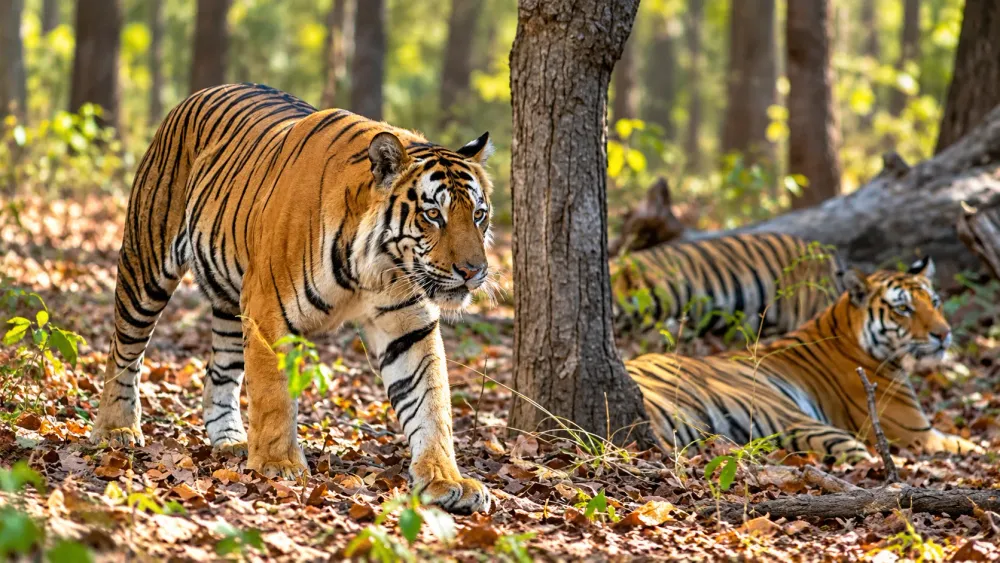
Tigers live here, but they are elusive and are rarely seen by visitors. Most travellers who look for them find tracks, calls or nothing at all. Leopards are similarly hard to spot. Elephants, gaur and deer may be encountered, especially near water and forest edges, but nothing is guaranteed and much depends on the season, the time of day and luck.
Birdwatching in Pakke
Pakke matters to birdwatchers mainly because of its hornbills. Four species are documented in the reserve: great hornbill, wreathed hornbill, oriental pied hornbill and rufous-necked hornbill. The rufous-necked is globally threatened, and the great and wreathed hornbills are also of conservation concern, so seeing them is a good reason to visit.
Many birders look for them at fruiting trees and along the river, and the Pakke River is used by roosting hornbills in the evening according to conservation monitoring reports. Beyond hornbills, the reserve is commonly cited as having roughly 300 bird species. We do not list individual species here beyond the hornbills, since a reliable checklist should come from the forest department or a local naturalist rather than from a guess.
A guide who knows the area makes a real difference, both for finding birds and for identifying calls.
Best time to visit Pakke Tiger Reserve
Most sources recommend the cooler, drier months, roughly November to March, with some extending the window from October to April.
Winter, from about November to February, is generally the most comfortable time. Rain is scarce, forest tracks are more likely to be passable, and days are pleasant. Mornings can be misty and cool, which is good for birding. This is also when the Pakke Paga Hornbill Festival takes place, usually in January.
Spring and early summer, roughly March to June, bring warmer and more humid conditions. Some sources say animals gather near water in the hotter weeks, which may improve chances of seeing elephants and deer. The forest stays green, though you should expect heat and the occasional heavy shower.
The monsoon, from about July to September, is the least suitable period for most visitors. Heavy rain can make roads and forest tracks difficult, access inside the reserve may be restricted, and leeches and insects are more of a nuisance. The landscape is vividly green and amphibians and reptiles are active, so it may suit specialists, but general visitors should plan around it.
How to reach Pakke Tiger Reserve
Almost everyone travels through Assam.
By air, the nearest airport is Tezpur, though flight availability is limited and changes, so confirm current schedules before you rely on it. Guwahati is the main airport with wide connections and is roughly 235 to 240 km from Seijosa by road.
By rail, Guwahati is the main railhead. Closer stations exist in Sonitpur district, and Tezpur is the most convenient town for onward road travel, but there are no trains into Arunachal itself. Check with the railway for current services and plan a road leg from the station.
By road, Seijosa is the main entry point. Distances from Tezpur to Seijosa are quoted differently across sources, from around 60 km to around 85 km, so confirm locally with your driver or operator. Bhalukpong to Seijosa is often given as roughly 55 km. The road from Tezpur via Bhalukpong is signposted along the main Tezpur to Bomdila road, while the route through the Assam plains to Seijosa has been reported to have few signs, so ask for directions if you drive yourself.
For local transport, shared taxis and buses have been reported between Tezpur and Seijosa, and you can hire a taxi from Tezpur, Bhalukpong or Guwahati. We do not list schedules because they change. Ask at your hotel or with a local driver a day ahead. Jeeps or 4WD vehicles are commonly recommended inside the reserve, and private vehicles may not be allowed beyond the entry gates, so ask which arrangement applies.
Safari and wildlife experiences
Pakke's activities are built around guided forest time rather than a fixed safari circuit. What is available depends on the season and on the forest department, so confirm before you go.
Wildlife drives use forest department or camp vehicles on tracks inside the reserve, and access varies with the weather. Birdwatching is the most reliable activity, usually done on foot or from a vehicle with a guide, with early mornings and late afternoons as the best times. Nature walks may be offered through forest areas near community camps, and a guide will point out signs of animals, plants and insects. Guided experiences through the forest department or local naturalists are widely recommended and add a great deal, especially for identification.
We do not name operators, timings or fees. Those change and should come from the forest department office in Seijosa or from a verified local provider.
How many days do you need?
Two days is the minimum that makes the journey worthwhile, and three is more comfortable.
Two-day plan
Day 1: Travel from Tezpur or Guwahati to Seijosa. Complete permit and entry formalities and settle into your accommodation. If time allows, take an evening walk or a short birding session near your stay.
Day 2: Go out early for a guided drive or walk, with the best light and bird activity. After a break in the middle of the day, spend the afternoon on a second short outing. Head back toward Tezpur or Bhalukpong in the evening or the next morning, depending on your onward plans.
Three-day plan
Day 1: Arrive in Seijosa, arrange permits and go on an easy evening walk.
Day 2: Full day in the reserve with a morning drive, a midday rest and an afternoon walk or birding session. Ask your guide about hornbill roosting sites near the river in the evening.
Day 3: A final early outing, then travel on. Many visitors continue to Nameri National Park in Assam, or head into western Arunachal toward Bomdila, Dirang or Tawang.
Where to stay
Accommodation near Pakke is basic and limited, and it falls into a few categories. We do not name properties or quote prices, since availability changes and you should confirm directly.
Forest rest houses are run by the forest department and are usually booked through the local office. They are simple and close to the reserve. Community or eco camps, some of them run with local Nyishi communities, offer huts or cottages in forest settings and often include guided walks. Homestays and small guesthouses in Seijosa give you a base in the town with local meals. Hotels in Tezpur or Bhalukpong offer more comfort and are useful for a night before or after, though they add driving time.
What to pack
Pack light, and pack for humidity. Binoculars are the most useful item you can carry, because most wildlife here is seen at a distance or high in the canopy. Bring a camera with a zoom lens if you photograph birds, plus spare batteries and a dry bag or rain cover for it.
Rain protection matters in every season, so carry a lightweight rain jacket or poncho. Walking shoes with good grip suit muddy and uneven forest tracks. Insect protection is essential: use repellent, wear long sleeves and trousers, and consider leech socks in wet months. Carry drinking water and some snacks, since food options near the forest are limited. Light layers work best, because mornings can be cool and middays warm. Pack any personal medication you need, plus a basic first-aid kit, as medical help is far from the forest.
Responsible wildlife tourism
Pakke exists because the people around it chose to protect it, so visitors should follow the same spirit.
Follow your guide's instructions, particularly around elephants, which can be dangerous. Do not feed animals, and keep a safe distance. Do not litter, and carry every piece of waste out with you.
For birds, do not disturb nests or roosting sites, and keep well back from nesting hornbills. Avoid excessive use of playback, since repeated calls stress birds and disrupt their behaviour. If your guide uses playback, ask them to keep it minimal. Respect forest regulations, including entry rules, closures and restricted zones, and remember that fees and permits fund protection work.
Pakke travel tips
Permits: Indian citizens who do not live in Arunachal Pradesh need an Inner Line Permit, Foreign nationals need the appropriate permit for Arunachal, so check the current rules. You may also need forest department permission and to pay entry fees, which can change. Confirm all of this before you travel.
Cash: Carry enough cash for small purchases, guides and local meals, since ATMs and card payments may be scarce in small towns like Seijosa.
Connectivity: Mobile coverage can be patchy in and around the reserve. Download maps and messages in advance and tell someone your plan.
Road conditions: Roads are generally described as fine for most of the year, but heavy rain can slow travel and affect forest tracks. Start early, allow buffer time and ask locally about current conditions.
Local guides: A guide from the area can help you find birds, read signs and follow local rules. Ask the forest department or your accommodation for a recommendation.
Frequently asked questions
Where is Pakke Tiger Reserve located?
It is in the Pakke Kessang district of Arunachal Pradesh, on the edge of the Assam plains, with Seijosa as the main entry town.
Is Pakke Tiger Reserve the same as Pakke Wildlife Sanctuary?
The reserve and the wildlife sanctuary are the same protected landscape. It is also spelled Pakhui, and the area has been known as Pakhui Tiger Reserve.
What is the best time to visit Pakke Tiger Reserve?
Most sources recommend roughly November to March, with some extending the window to October and April. The monsoon is generally the least suitable time.
Can you see tigers in Pakke?
Tigers live in the reserve, but they are elusive and rarely seen by visitors. No one can promise a sighting, so plan for the forest and birds as well.
Which birds is Pakke known for?
Pakke is best known for its hornbills. Four species are documented: great, wreathed, oriental pied and rufous-necked.
How do I reach Pakke Tiger Reserve?
Travel to Tezpur or Guwahati in Assam, then continue by road to Seijosa. Guwahati is the main airport and rail hub, and Tezpur is the nearest large town.
How far is Seijosa from Tezpur?
Sources quote different figures, roughly 60 to 85 km. Confirm with a local driver or operator before you plan your timing.
Do I need a permit to visit Pakke?
Indian citizens who do not live in Arunachal need an Inner Line Permit. Foreign nationals need the relevant permit as well. Entry permission and fees may also apply, so check before you go.
Are safaris available in Pakke?
Guided drives and walks are generally available, but the details depend on the season and the forest department. Confirm what is offered and book ahead.
How many days should I spend at Pakke?
Two days is the minimum that feels worthwhile, and three is more relaxed. Add extra time if you want to continue to Nameri or Tawang.
Where can I stay near Pakke?
Options include forest rest houses, community or eco camps, homestays in Seijosa and hotels in Tezpur or Bhalukpong. Book ahead in winter and confirm what is included.
Is Pakke good for birdwatching?
Yes, especially for hornbills. Roughly 300 bird species are commonly cited, but a local guide will give you a better sense of what is around at the time of your visit.
Is there a festival at Pakke?
The Pakke Paga Hornbill Festival takes place at Seijosa, usually in January, and celebrates the Nyishi role in hornbill conservation. Dates change each year.