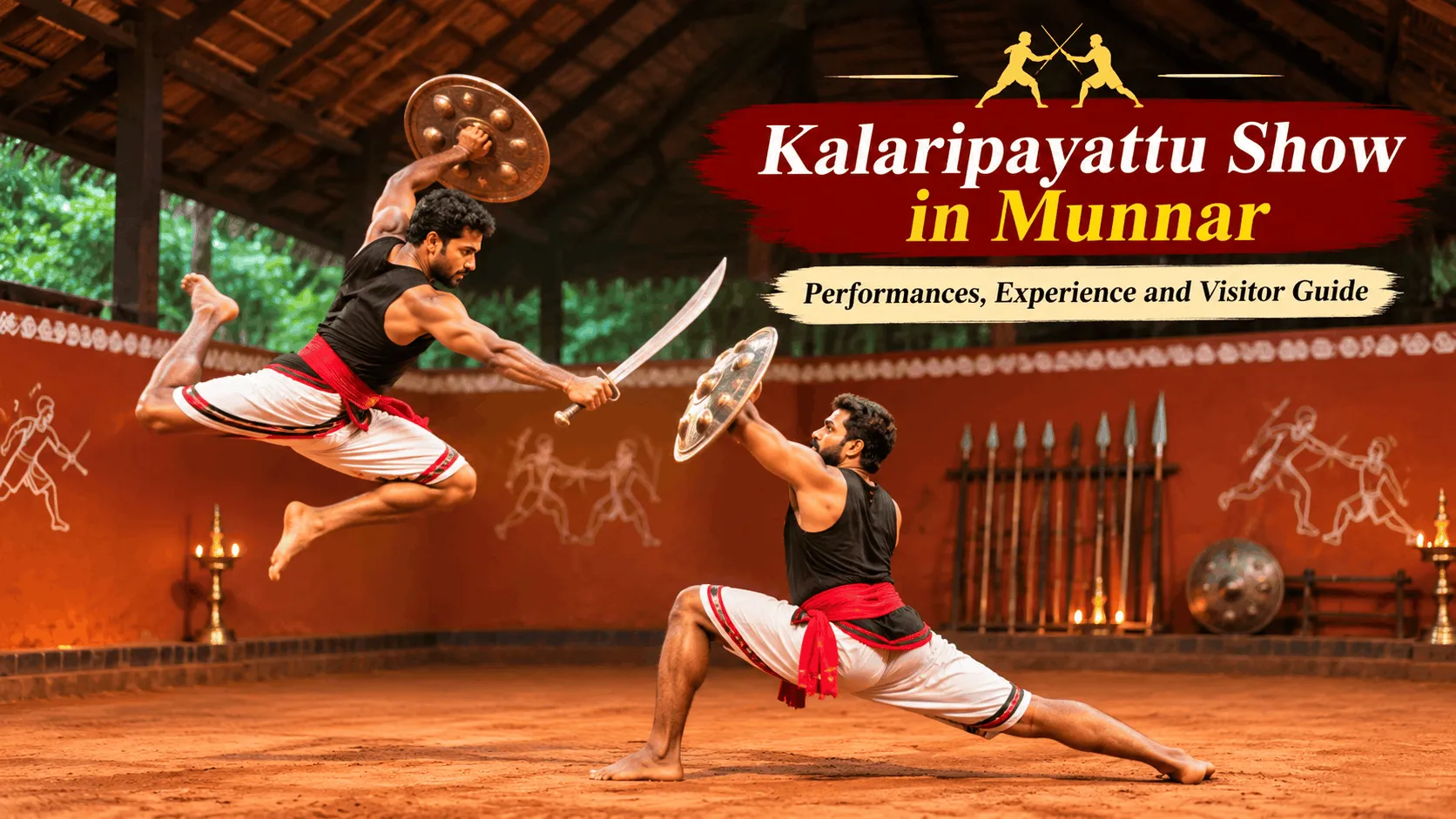
After a day among tea slopes and viewpoints, a Kalaripayattu show in Munnar is one of the few evening experiences that puts Kerala's living traditions in front of you. The performance is short, physical and quite different from the scenery that fills most Munnar itineraries.
This guide separates two things that are often blurred together. The first is Kalaripayattu itself: what it is, where it comes from and what its techniques involve. The second is what visitors can actually watch in Munnar today. The history comes from general knowledge of the art. The venue and timing details come from travel listings that we have not been able to confirm with the venues, so we flag them clearly and tell you what to check before you go.
Kalaripayattu: A Brief Introduction
Kalaripayattu is a traditional martial art of Kerala, and it is widely described as one of the oldest martial systems in India. The name is usually explained as combining "kalari", the training space, with "payattu", meaning practice or combat. A traditional kalari is a dedicated training hall, often with a sunken floor, and it is treated as a place of discipline and respect, not just a gym.
The art is more than fighting. Traditional training joins physical conditioning, weapon skills and unarmed combat with an understanding of the body, including massage and healing practices handed down in the same schools. Students traditionally begin with the body and only later move to weapons.
Because Kalaripayattu has a long association with Kerala, it is often grouped with other regional performing traditions. You will see it promoted alongside Kathakali and other cultural performances, although these are separate art forms with their own histories.
Traditional Techniques and Performance Elements
Descriptions of Kalaripayattu usually divide training into stages. A stage-wise outline helps you recognise what you are watching, though a short stage show will only sample these.
Body conditioning
Training begins with exercises for strength, flexibility and balance. These include leaps, kicks, low stances and rapid changes of direction. In a performance this often appears as the opening section, where performers show control, speed and agility.
Wooden weapons
Training then moves to wooden weapons such as staffs and sticks of different lengths. These teach distance, timing and footwork before a student handles metal.
Metal weapons
Later stages involve swords, shields, spears and daggers. Some traditions also include the urumi, a flexible bladed weapon that takes great skill to control. Performances that include these are the part many audiences remember, because the movement is fast and precise.
Empty-hand techniques
The final stage covers unarmed combat, including strikes, holds and locks. Practitioners also study vital points of the body, which links the combat side of the art to its healing side.
What a stage show changes
A performance for visitors is a demonstration and not a contest. Sequences are rehearsed, choreographed for an audience and shortened to fit a set time. That does not make them less skilled, but it is worth knowing that a show gives you a sample of the art and not a full picture of how it is taught.
Where to Find a Kalaripayattu Performance in Munnar
Here we move from the art to the local situation. Several travel listings name the same two venues for Kalaripayattu shows around Munnar.
- Kalari Kshethra: Listings describe it as a centre for Kalaripayattu and Kathakali, with addresses given near Chithirapuram, on the Kochi Road side of Munnar.
- Punarjani Traditional Village: Listings place it in the Pallivasal or Anachal area and describe it as another venue with Kathakali and martial arts performances.
These names come from third-party travel sites and review pages, not from our own checks, and their details do not always match. One source gives Kalari Kshethra a Chithirapuram address, while another describes it as being in the Silent Valley area. Treat the information as a starting point and confirm the exact location, the current programme and whether the show is running on your dates by contacting the venue directly or asking your hotel to confirm. We do not list phone numbers or booking links here because we could not verify them.
If you are planning around Chithirapuram, our guide to the area, covered in our Chithirapuram near Munnar travel guide, explains what else sits nearby.
What to Expect From a Performance
Travel sources broadly agree on the structure. The show is usually described as an evening event of about an hour. Some venues reportedly stage a Kathakali programme first, followed by Kalaripayattu, so you can see both in one outing. Visitors are often described as sitting in a small arena or theatre close to the performers.
A typical programme, as described by listings and reviews, runs from body control and acrobatic movements to weapon sequences, sometimes with a short demonstration of unarmed techniques. Some listings mention fire sequences, but we cannot confirm this for every venue, so do not assume it will be part of your show.

One reviewer on a major travel platform described the show as slow to start and more engaging after the first fifteen minutes. It is a useful reminder that experiences vary, and that expectations matter more than hype.
Timings, Duration and Tickets: What Is and Is Not Verified
This is the section to read carefully, because the figures vary.
Reported timing: Several sources say Kathakali runs from about 5:00 pm to 6:00 pm and Kalaripayattu from about 6:00 pm to 7:00 pm, with some listings mentioning later sessions. We cannot confirm whether this holds on every day or in every season.
Reported duration: The martial arts show is commonly described as lasting about one hour. If you add the preceding dance programme and arrive early, plan on up to two hours.
Tickets: Listings give different prices, with figures from about Rs 200 to Rs 400 per person per show. Because the numbers do not agree, we do not give a price. Ask for the current price when you confirm your visit.
Before you go, check:
- the current show times and whether there is a show on your day
- the ticket price and whether it covers one show or both
- how tickets are sold, in advance or at the venue
- whether seating is limited on busy days
- how long the performance runs and when you should arrive
Is a Kalaripayattu Show Suitable for Families and Children?
Many families attend, and the show is generally described as accessible to visitors of different ages. Still, a few points are worth considering.
The performance involves weapons and fast movement, so seat young children where they can see safely and keep them seated. Evenings in Munnar are cool, so bring a light jacket. If your child gets restless in quiet settings, a one-hour show may feel long, and arriving early to watch the performers prepare, where offered, can help ease them in. Ask the venue whether there is any age guidance, because we cannot confirm one.
Photography and Visitor Etiquette
Photography rules vary by venue and sometimes by performance, so ask before you take out a camera. Some places may restrict flash or filming, and we cannot confirm which. As general courtesy:
- Switch off flash, which can distract performers who are handling weapons.
- Do not stand or move in front of other spectators.
- Keep your phone silent and avoid talking during the performance.
- Ask before photographing performers up close, especially during preparation.
- Applaud at the end of sequences rather than during intense moments.
Kalaripayattu has ritual elements, including salutations to teachers and the training space, so treat the show as a cultural performance and not just a spectacle.
Planning Your Visit
An evening show fits neatly after a day of sightseeing. Plan the day so that you finish near the venue and avoid a long drive after dark. Hill roads are slower than distance suggests, and mist can reduce visibility in the evening.
Roads on the high range have their own demands, and our Gap Road guide explains why many travellers avoid driving certain stretches after dark, which is a useful rule when you are planning an evening outing.
A few practical steps help:
- Confirm the show and its timings a day or two ahead.
- Arrange transport for the return, since evening options can be limited.
- Eat after the show or have a snack beforehand, depending on timing.
- Arrive early if you want a good seat or want to see the preparation.
- Carry cash and a card in case the venue's payment options are limited, and ask what is accepted.
Other Cultural Experiences Around Munnar
If you enjoy this kind of experience, there are other ways to meet Kerala's culture without leaving the hills.
- Kathakali: Several venues pair a Kathakali performance with the martial arts show, which lets you see the classical dance-drama tradition in the same evening.
- Tea heritage: The Tea Museum and estate roads give context to the plantation history that shaped Munnar. Check current timings locally.
- Heritage and landscape on the eastern side: Marayoor lies on the drier side of the high range and is often described as a place to learn about ancient sites and local landscapes.
- Nature and wildlife: For a daytime contrast, our Munnar wildlife guide covers protected areas and responsible wildlife watching.
If you want a more active day before an evening show, our Munnar trekking guide explains how to choose a walk safely, including guides and permissions.

Conclusion
Kalaripayattu is a rich tradition, and a stage show gives visitors a short, lively introduction to it. In Munnar, the practical side matters most: confirm the venue, the current timing and the ticket price directly, since listings disagree. Go with realistic expectations, respect the performers, and use the evening to see a different side of Kerala from the one you find in the tea hills.
Frequently Asked Questions
Is there a Kalaripayattu show in Munnar?
Yes, travel listings describe regular evening Kalaripayattu performances in the Munnar area, commonly naming Kalari Kshethra and Punarjani Traditional Village. We have not confirmed these directly, so check with the venue before you plan around a show.
What time is the Kalaripayattu show in Munnar?
Sources commonly report an evening show from about 6:00 pm to 7:00 pm, often after a Kathakali programme. Timings can change, so confirm the schedule for your date.
How long does the performance last?
The martial arts show is usually described as about one hour. Allow up to two hours if you also attend a preceding dance show or arrive early.
How much does a Kalaripayattu show in Munnar cost?
Listings give different figures, so we do not quote one. Ask the venue for the current ticket price and whether it covers one show or more.
Is the show suitable for children?
Many families attend, but the performance involves weapons and fast movement. Keep young children seated where they can see safely, and ask the venue about any age guidance.
Can I take photographs during the show?
Rules vary, so ask before you take photos or film. Avoid flash and keep movement to a minimum so you do not distract the performers or other guests.
Is a stage show the same as traditional Kalaripayattu training?
No. A show is a rehearsed demonstration made for an audience. Traditional training is a long, structured practice that moves from body conditioning to weapons and unarmed combat.