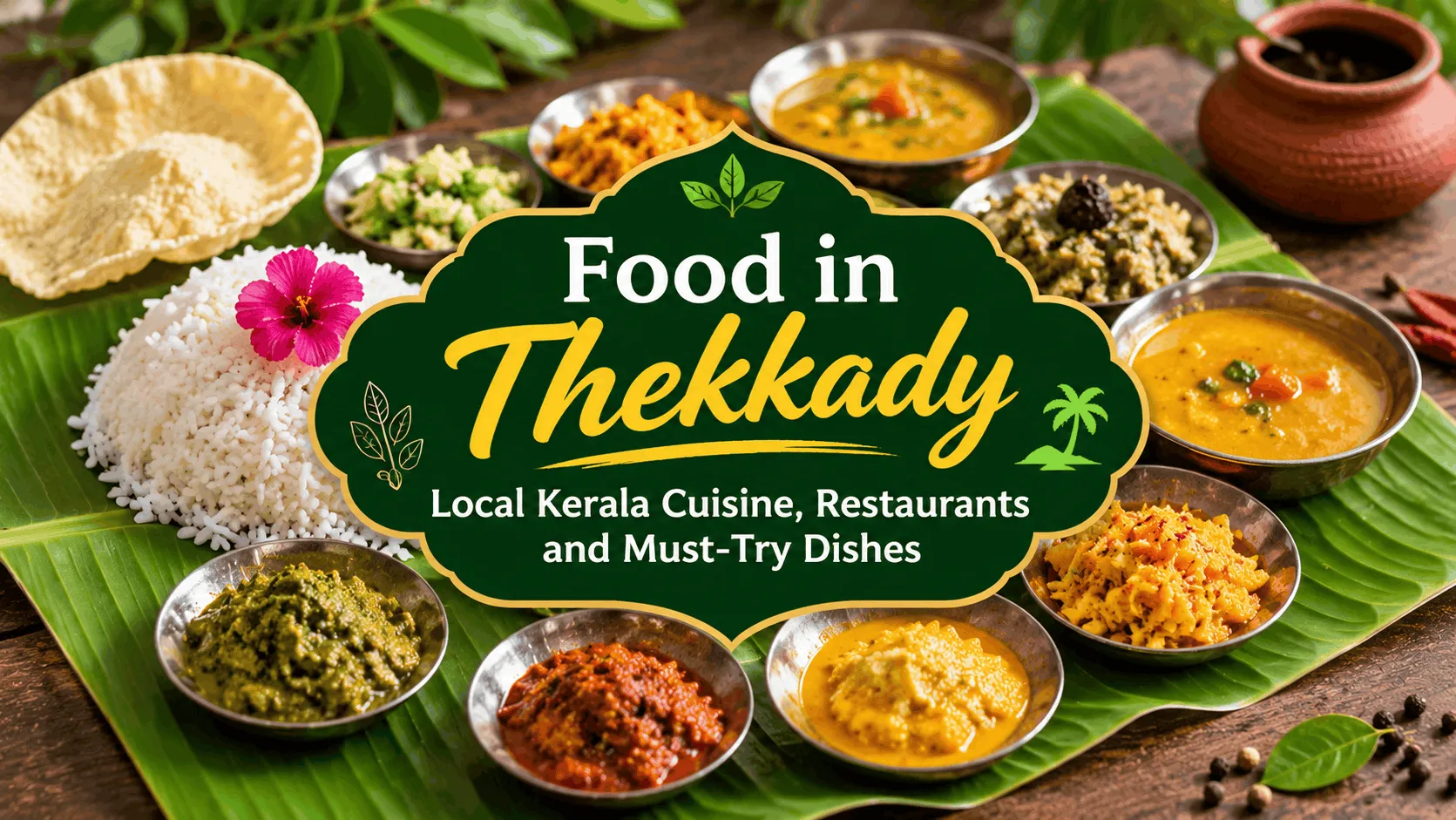
Food in Thekkady is shaped by the hills around it. The town sits beside the Periyar Tiger Reserve in Kerala's Idukki district, where cardamom, black pepper, cloves and cinnamon grow on the slopes. The cooking here uses those spices fresh, along with coconut, curry leaves, rice and whatever the nearest market has that morning.
Most visitors come for the wildlife, the forests and the views, then find that meals become one of the best parts of the trip. A breakfast of appam and stew, a banana leaf lunch, or a plate of fish curry with tapioca tells you as much about the region as any viewpoint does. If you are still planning your wider itinerary, our Thekkady travel guide covers the practical side of the trip, while this article stays with the plate.
Below you will find what to eat in Thekkady, how the cuisine differs from the coast, which dishes suit vegetarians, and how to pick a good local eatery without relying on guesswork.
What makes Thekkady's food culture distinctive?
Three things set eating here apart from the rest of Kerala.
The first is altitude and climate. Thekkady is in the Western Ghats foothills, so the cooking leans on crops that suit hill country: tapioca, plantains, pepper, cardamom and tea, rather than the backwater staples of fish and coconut toddy.
The second is the border. Kumily, the town beside Thekkady, is close to Tamil Nadu, and the exchange of people and produce has left a mark. You may notice sambar that tastes a little different from the coastal version, dosas and idlis on many breakfast menus, and vegetable dishes that borrow from both sides of the border.
The third is the community mix. Hindu, Christian and Muslim kitchens each have their own signature dishes, and many Kerala menus blend them. Syrian Christian recipes bring appam, stew and rich meat roasts. Malabar-style kitchens add biryani and spiced seafood. Hindu vegetarian kitchens contribute the vegetable-heavy sadya feast.
Because menus differ from one restaurant to the next, treat every dish in this guide as something you are likely to find rather than something guaranteed. Ask what is fresh that day.
Traditional Kerala dishes visitors should try
If you want a short list of Thekkady famous food, start here. These dishes appear on menus across the region, in simple eateries and larger restaurants alike.
- Kerala sadya or meals, a full spread of rice with several vegetable dishes, pickles and papad
- Appam with vegetable or chicken stew
- Puttu with kadala (black chickpea) curry
- Idiyappam, or string hoppers, with egg curry or coconut milk based stew
- Kerala parotta with beef, chicken or vegetable curry
- Meen curry, a sour fish curry made with kudampuli (Malabar tamarind)
- Kappa (tapioca) with fish curry, a hill-country favourite
- Thoran, a dry stir-fry of vegetables with grated coconut
- Payasam, the milk or jaggery based pudding that ends most celebratory meals
You will rarely see all of these in one place. A small tea shop may do three of them well, which is often better than a long menu that tries to cover everything.
Popular breakfast dishes: appam, puttu, idiyappam and more
Breakfast is where Kerala cuisine in Thekkady is easiest to enjoy, because the dishes are light, filling and almost always freshly made.
Appam is a bowl-shaped rice pancake with a soft, spongy centre and crisp lace edges. It pairs well with stew, a mild coconut milk gravy of vegetables or chicken, scented with whole spices. Puttu is steamed rice flour and grated coconut, cooked in cylindrical moulds and served with kadala curry or with ripe banana and sugar. Idiyappam is rice noodle pressed into thin coils and steamed, and it soaks up whatever curry you pour over it.
Other breakfast options you may come across include dosa, idli, upma and plain boiled tapioca with chutney. Tea and filter coffee are the usual drinks, and the tea often comes from the surrounding hills.

Lunch and dinner: Kerala meals, rice dishes and curries
Rice is the centre of lunch. The classic version is a Kerala meal served on a banana leaf or a steel plate: red or white rice, sambar, rasam or buttermilk, two or three vegetable sides, a pickle, a crisp papad and often a fish or meat curry on the side. Many local restaurants offer "meals" at lunchtime with refills of rice and curry, and they tend to run out by mid afternoon.
Dinner is lighter in many homes, with parotta, chapati, appam or rice and a curry. In restaurants you will see more variety: fried rice and biryani sit beside traditional dishes, and some places serve grilled or fried fish in the evening.
A few dishes worth knowing by name:
- Sambar, a lentil and vegetable stew with tamarind
- Avial, mixed vegetables in a thick coconut and yogurt sauce
- Olan, ash gourd and cowpeas in mild coconut milk
- Pachadi and kichadi, yogurt based side dishes
- Kerala biryani, often made with short grain rice and a gentler spice level than northern versions
Vegetarian food options in Thekkady
Vegetarian food in Thekkady is easy to find, because Kerala's cooking has always had a strong plant-based side. A full sadya or lunch meal is vegetarian by default, and breakfast staples such as idli, dosa, puttu with kadala curry and upma contain no meat.
Look for vegetable dishes like thoran, avial, olan, beans or cabbage poriyal, and dal curries. Some restaurants in Kumily are fully vegetarian, often serving South Indian thalis and North Indian dishes as well. Others are mixed kitchens, so if you avoid meat strictly, ask whether the vegetarian dishes are cooked separately. Coconut oil is the usual cooking fat, and ghee appears in festive dishes, so travellers with a vegan diet should ask before ordering.
Non-vegetarian Kerala specialities
Meat and fish are central to many local kitchens. A few that visitors enjoy:
- Meen curry and meen fry, with fish marinated in chilli, turmeric and pepper
- Karimeen pollichathu, pearl spot fish wrapped in banana leaf and cooked in a spice paste, usually from the lowland areas but offered at some restaurants here
- Chicken or mutton roast, slow cooked with onions, pepper and coconut slivers
- Duck roast and egg roast, popular in Christian households
- Beef fry and beef curry, widely eaten in Kerala and served with parotta
- Pork dishes, found at restaurants that serve them, mainly in Christian-run places
Availability depends on the restaurant. Some places in town serve only chicken and fish, others only vegetarian food, and some follow halal practices. Menus on display or a quick question to the staff will answer this faster than guessing.
Local spices and their influence on regional cooking
Spices are the reason many travellers come to this part of Kerala, and they define the flavour of what you eat. Black pepper gives Kerala cooking its heat, long before chilli arrived. Cardamom shows up in tea, desserts and meat dishes. Cloves and cinnamon flavour biryani, stews and roasts. Turmeric and curry leaves sit in almost every pan.
In everyday cooking, spices are usually added in layers: whole spices into hot oil first, ground spices later, and a final tempering of mustard seeds, dried chilli and curry leaves at the end. That is why even a simple dish can taste so rounded.
If you want to see where these ingredients grow and how they are processed, our guide to spice plantation tours in Thekkady explains what to expect. For the table, the useful point is that fresh spices change the taste of a dish, so a modest restaurant using local pepper and cardamom can beat a polished one using old stock.
Where to find local food in Thekkady and Kumily
Most eateries cluster in Kumily, the town at the entrance to Thekkady, and along the main road leading to the Periyar reserve. You will find a mix of the following:
- Small family-run restaurants and tea shops serving meals, parotta and breakfast
- Restaurants attached to hotels and resorts, often with a wider menu
- Vegetarian restaurants offering South Indian thalis and snacks
- Homestays that cook Kerala dishes for guests, usually with advance notice
- Roadside stalls selling fried snacks, bananas and fresh juice
We have not listed individual restaurant names here, because menus, prices and opening hours change often and are best confirmed on the day. Ask your hotel or host for a current recommendation, and check recent reviews and photos before you go.
Eating plans fit easily around sightseeing. When you build your days using our list of places to visit in Thekkady, plan a meal stop near each area so you are never searching for food when you are hungry and tired.
Tips for choosing restaurants and local eateries
A few habits make eating out in Thekkady more reliable.
Look at the crowd. A place filled with locals at lunchtime usually serves fresh food at fair prices. Check what is on the counter or the menu board, and choose dishes that are made in large quantities that day, like the meals. Ask what is freshest: fish especially depends on the day's delivery.
Look at hygiene in simple ways. Clean plates, a tidy kitchen area and covered food are good signs. Drink bottled or properly filtered water, and prefer food that is served hot.
Ask about spice. Kerala food can be hot. If you prefer mild dishes, say so when you order, since most kitchens can adjust. Confirm prices before ordering if the menu is not displayed. Carry some cash for small eateries, as card machines are not universal.
Finally, expect timing differences. Many local places serve breakfast early, close in the afternoon, and reopen for dinner. In the busy season, popular restaurants fill quickly, so go a little before the usual meal hour.
Food considerations for families and different dietary preferences
Families will find that Kerala cuisine suits children well. Appam with stew, idiyappam, idli, plain dosa, rice with mild curry and fresh fruit are gentle options. Ask for dishes without chilli, and keep fried snacks for treats.
For travellers with allergies, coconut, peanuts, shellfish and mustard seeds are common ingredients, so speak to the staff clearly and, if you can, write the allergy down in English or Malayalam. Gluten free diets are manageable, since rice-based dishes are everywhere, though some fried items and parotta contain wheat. Jain travellers and those avoiding onion and garlic can ask for dishes without them, but this works best at fully vegetarian restaurants and homestays with advance notice.
Always tell the restaurant about the restriction before you order. Staff usually respond helpfully when they know what you need.
Suggested food experiences for a short visit
If you only have a day or two, you can still cover a lot.
Start with a Kerala breakfast of appam and stew, or puttu and kadala curry, with a cup of local tea. Eat a full banana leaf meal at lunch, with rice and a couple of vegetable sides. Mid afternoon, try hot banana fritters (pazhampori) or fried banana chips with tea. For dinner, order a fish curry with tapioca or a chicken roast with parotta, depending on your diet. End with payasam if it is on the menu.

Savoury snacks like banana chips travel well, so you can take a small packet home. If you want ideas on what else to bring back, our article on shopping in Thekkady goes into more detail.
Frequently asked questions
What is Thekkady famous for in terms of food?
Thekkady is known for Kerala dishes flavoured with locally grown spices such as pepper and cardamom. Appam with stew, puttu with kadala curry, banana leaf meals and fish curry with tapioca are all common choices.
Is vegetarian food easy to find in Thekkady?
Yes. Kerala meals, idli, dosa, puttu with kadala curry and vegetable dishes like thoran and avial are widely served. Some restaurants in Kumily are fully vegetarian. Ask staff about ingredients if you follow a strict diet.
What should I eat for breakfast in Thekkady?
Appam with stew, puttu with kadala curry or banana, idiyappam with curry, and dosa or idli with sambar are typical breakfasts. Most come with tea or filter coffee.
Is the food in Thekkady very spicy?
It can be, but most kitchens will make a dish milder on request. Kerala cooking uses pepper, chilli and aromatic spices, so tell the staff your preference when you order.
Can I find beef and pork dishes in Thekkady?
Beef is common in Kerala and served at many local restaurants, often with parotta. Pork is available at some places. Availability varies, so check the menu or ask before you sit down.
Is it safe to eat at local eateries?
Most travellers eat at local places without problems. Choose busy restaurants, eat freshly cooked hot food, and drink bottled or filtered water.
Do all restaurants in Thekkady serve the same dishes?
No. Menus and availability differ by restaurant, season and day. A dish you read about may not be offered everywhere, so ask what is freshly made.
Can I try a home-cooked Kerala meal in Thekkady?
Some homestays and hosts prepare meals for guests, usually with advance notice. Ask your accommodation whether this can be arranged.
Conclusion
Eating well in Thekkady takes little effort. Start the day with appam or puttu, have a banana leaf meal at lunch, and finish with a curry that tastes of pepper and coconut. Vegetarians, meat eaters and families can all find plenty to enjoy, as long as they ask a few questions about ingredients and spice before ordering.
Go with an open mind, eat where the locals eat, and let the menu surprise you. The food will make your time in the hills feel more complete.