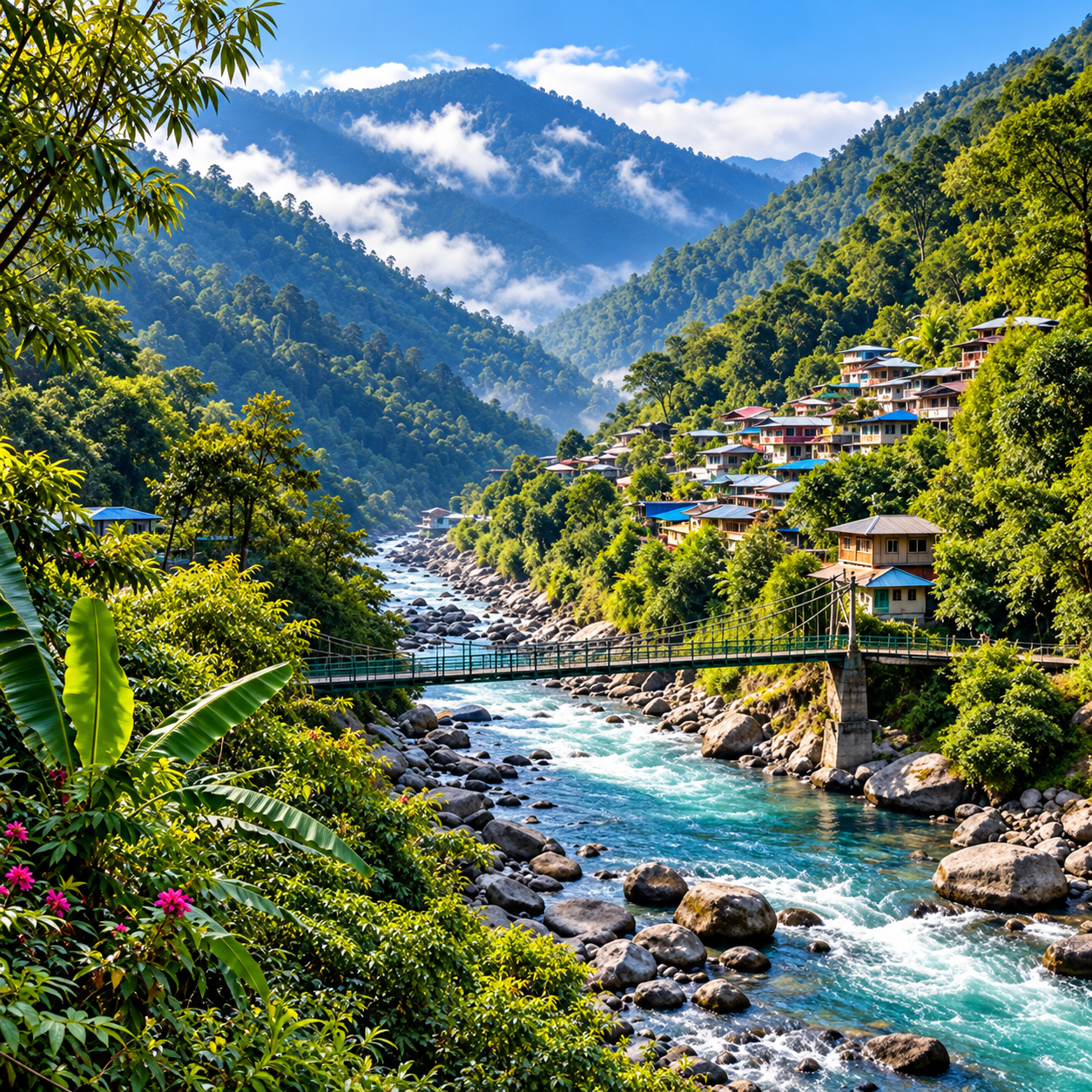
Daporijo is the district headquarters of Upper Subansiri in central Arunachal Pradesh, a river town on the Subansiri at around 600 metres above sea level. Most travellers meet it as a night halt on the long road between Ziro and Aalo, and that is exactly why it is worth understanding properly. It sits at the meeting point of Tagin, Galo and Nyishi communities, its festivals and villages give a direct look at central Arunachal life, and its slower, less commercial feel suits people who like roads and rivers more than checklists.
This guide covers where Daporijo is, what to see in and around it, its cultural setting, how to reach it, when to go and how it fits into a wider Arunachal road trip. Where sources disagree, or where details change often, that is stated plainly so you can confirm before you travel.
Where Is Daporijo?
Daporijo is in Upper Subansiri district in Arunachal Pradesh, on the banks of the Subansiri, one of the state's principal rivers and a major tributary of the Brahmaputra. The surrounding country is forested hill terrain, with paddy fields and villages along the valley and river islands visible in places.
The town lies on the Trans-Arunachal Highway corridor (NH-13, previously numbered NH-52), the long east-west route that links much of the state. Regional travel accounts describe Daporijo as roughly midway between Ziro and Aalo, though the exact split depends on the route and road conditions, so treat that as a rough guide rather than a measured fact.
As a stop, Daporijo matters because it breaks a long drive into two manageable legs. Without an overnight here, the Ziro to Aalo stretch becomes a very long day, and you also miss the district's villages and river landscape.
[INTERNAL LINK: Arunachal Pradesh Travel Guide]
Why Visit Daporijo?
Daporijo does not offer a single headline sight, and it is better judged as a place to slow down for a day or two.
Mountain landscapes. Forested hills rise around the town, and the approach roads climb and drop through changing terrain, with long views along the valley on clear days.
Rivers. The Subansiri is the main feature. Travel operators describe riverside drives upstream, sandy stretches along the bank and river islands visible from viewpoints. What you can actually reach depends on water level and road condition.
Local communities. The district is home to the Tagin, Galo and Nyishi communities, each with its own language, dress and customs. Village visits, done respectfully, are among the most meaningful experiences here.
Rural Arunachal. Daporijo is a working district town, not a tourist centre. That means simple facilities, ordinary markets and a chance to see everyday life without staging.
Less-commercialised travel. Compared with better-known destinations, the town sees fewer visitors and has less tourism infrastructure. That is both its appeal and its limitation.
The road-trip experience. Much of the value of Daporijo lies in how you get there and what you pass on the way.
Places to Visit in and Around Daporijo
The number of well-documented attractions is small, so this list sticks to places that appear consistently in regional sources and flags where details are thin.
The Subansiri River and Riverside Viewpoints
The river is the town's defining feature, and viewpoints over the Subansiri, including the river islands, are the most straightforward sight in Daporijo. Plan an hour or two, more if you drive upstream. Accessibility depends on the season and water level, and swimming or entering the water should only be considered with local advice.
Meghna Cave Temple
A cave temple dedicated to Shiva, described in regional accounts as a short drive from the town, reached by a forest path. Some accounts mention inscriptions inside, but this is not consistently documented, so treat it as unconfirmed. Allow around an hour including the walk, and ask locally about current access and any rules for visitors. Approach it as a place of worship.
Kamala Reserve Forest
Regional guides mention a reserve forest area near the town, with bamboo and hardwood forest. Access arrangements are not clearly documented, so check with local contacts or forest authorities before planning around it. Do not expect guaranteed wildlife or bird sightings.
Nearby Tagin and Galo Villages
The district has many villages, and several are reachable as day excursions. Official district information lists circles at varying distances from Daporijo, for example Dumporijo at around 13 km and Baririjo at around 35 km, which gives a sense of how the district is laid out. Village visits work best with a local guide or host, and time needed varies from an hour to a full day depending on distance and road conditions.
Nacho
Nacho, the headquarters of a Tagin-inhabited circle, is listed by district sources at about 108 km from Daporijo. It is a long drive rather than a casual excursion, and it is better treated as a separate trip that needs advance planning and local advice.
Daporijo and Tribal Culture
Daporijo sits where Tagin, Galo and Nyishi communities meet. Regional sources also refer to Hill Miri and Adi-Gallong groups in the wider district. These are distinct communities, and lumping them together as one "tribal culture" would be inaccurate.
Traditional lifestyles and agriculture. Farming, including paddy cultivation and shifting or terraced fields depending on the area, remains central to village life alongside newer forms of work.
Village architecture. Houses in the region are traditionally built with local materials, and one tour operator notes that Galo houses are built on stone without nails. Newer construction is common, and many villages combine older and newer styles.
Food. Home cooking generally centres on rice, greens, herbs, bamboo shoot, fish and meat. Menus in town are simple, and the best food experiences usually come through hosts.
Festivals. Si-Donyi is the festival most associated with Daporijo. It celebrates the sun and moon and is a major event for the people of Upper Subansiri, with festivities centred on the town in recent years, including a golden jubilee edition in 2024. Dates and public access vary, so confirm through local contacts. It is a community celebration, not a performance for visitors.
Responsible cultural tourism. Ask before photographing people or homes, follow your host's guidance, dress modestly in villages, avoid treating traditional dress or ceremonies as props, and buy crafts directly from makers where you can.
Things to Do in Daporijo
- Walk through the town market and see what local produce is on sale
- Drive to a Subansiri viewpoint and spend time by the river
- Visit a nearby village with a local host or guide
- Take a scenic drive along the highway corridor and stop where the view opens up
- Photograph the valley in morning and late afternoon light
- Visit the Meghna Cave Temple respectfully, if access is confirmed
- Ask about a picnic along the riverbank, which some operators arrange on request
- Time your visit around Si-Donyi if you want to see the festival, and plan well in advance
None of these are packaged tourist attractions, so build in flexibility and let local conversations shape the day.
How to Reach Daporijo
By air. Daporijo is not a straightforward destination for flights, and the practical airport options are in neighbouring regions. Travellers commonly use airports in Assam or near Itanagar as gateways. Check current airport and airline options before booking, since services change.
By road from Assam. The common approach is by road from Assam through the foothills into central Arunachal, then along the highway network to Daporijo. Regional accounts describe the journey from Guwahati as very long, so many travellers break it with an overnight halt elsewhere.
By road from Itanagar. One traveller account describes reaching Daporijo by shared vehicle from Itanagar, and the route passes through hilly, forested country.
From Ziro and Aalo. Daporijo connects with both by road. A tour operator lists the drive from Daporijo to Aalo at around six hours, which gives a sense of the scale, though timings vary with weather and conditions.
Local transport. Shared vehicles and private taxis are typically used across the region. This guide does not quote schedules or fares because they change often. Confirm locally, and expect services to be less frequent than in larger towns.
[INTERNAL LINK: Ziro Valley Travel Guide]
Best Time to Visit Daporijo
Winter (November to February). Cooler and generally drier, with clearer skies and more reliable roads. Good for travelling the highway corridor, though early mornings and evenings can be cold.
Spring (March to April). Pleasant weather and greener hills. Rain becomes more likely later in the season.
Monsoon (May to September). Heavy rain, landslide risk and river flooding are realistic concerns on this part of the highway. Views are often obscured by cloud, and delays are common. This is the most difficult season for travel.
Autumn (October to early November). Often a good window as rains ease and skies clear, though roads may still be recovering from monsoon damage in places.
In general, late autumn through early spring gives the most comfortable travel. Whatever the season, check road conditions before leaving each town.
Daporijo as Part of an Arunachal Road Trip
Daporijo's main role is as a link in the central Arunachal route.
Ziro. The Apatani valley lies to the east side of the corridor, and many itineraries pair Ziro with Daporijo as consecutive stops.
Aalo. Continuing west, the road leads to Aalo, and many road trips run Ziro to Daporijo to Aalo, then on to Mechuka or Pasighat.
Mechuka. Travellers heading to Mechuka commonly go through Aalo, so Daporijo is a possible earlier stop on the way.
Itanagar. The state capital region is a common starting or finishing point for the trip.
The sensible approach is to use Daporijo as an overnight halt between longer drives and treat any extra time as a bonus, not a fixed plan. Adding too many stops to a route with slow roads usually leads to rushed days.
[INTERNAL LINK: Aalo Travel Guide] [INTERNAL LINK: Mechuka Travel Guide]
How Many Days Are Enough for Daporijo?
2 days. One night as part of the Ziro to Aalo route, with a half-day for the riverside and town, or two nights with a proper day for a village excursion. This is realistic for most road trips.
3 days. Allows an unhurried day of river and village visits, a rest day, and some slack for road delays. A good choice if you want to attend a festival or spend time with local hosts.
Most road-trippers stay one night. Staying longer only makes sense if you have specific plans, such as a festival, a village stay or a longer excursion with a local guide.
Where to Stay in Daporijo
Accommodation in Daporijo is basic. Expect a mix of hotels and guesthouses aimed largely at officials, domestic travellers and road-trippers, and, in some cases, homestays arranged through local contacts or operators.
Some travel accounts note that hot water can be limited and that the accommodation is unlikely to be the highlight of the trip. It is sensible to arrive with modest expectations, confirm facilities in advance and ask about power backup.
This guide does not name properties or quote prices, since they change. Book through a local operator or contact accommodation directly, and consider booking ahead in festival periods.
Food in Daporijo
Regional food in Arunachal Pradesh is simple and seasonal. In Daporijo, meals at guesthouses and small eateries are often rice-and-curry style, with vegetables, lentils and, where available, fish or meat.
Local cooking, especially in villages, draws on bamboo shoot, herbs, greens, rice and smoked or fermented preparations. Flavours may differ from what many visitors expect, and portions and menus are limited. The best way to try local food is through a host or a village meal arranged in advance.
Tell hosts about dietary needs early, carry snacks for long drives, and avoid wasting food.
Permits for Visiting Daporijo
Indian citizens who are not residents of Arunachal Pradesh generally need an Inner Line Permit (ILP) to enter the state. ILPs are typically applied for through the official state portal or through designated offices. Foreign nationals require a Protected Area Permit, usually arranged through a registered tour operator.
Fees, validity, processing times and issuing points can change, so confirm current details through the official portal or the relevant authority before you travel. Carry printed and digital copies of your permit and valid photo ID.
Practical Daporijo Travel Tips
- Cash. Carry enough cash, since ATMs and digital payments can be unreliable.
- Connectivity. Mobile coverage varies and can drop out on the road, so download maps and documents in advance.
- Fuel. Fill up before long stretches, since fuel stops are less frequent outside towns.
- Road conditions. Check with local contacts or drivers each morning, especially in and after rain.
- Weather. Conditions change quickly in hill country, so carry rain protection.
- Clothing. Layers for cool mornings and evenings, and sturdy footwear for village paths.
- Travel buffers. Add slack to every driving day, since delays are normal.
- Local etiquette. Greet people politely, ask before taking photographs and follow local guidance at religious and cultural sites.
- Waste management. Carry out your litter, avoid single-use plastic where you can and keep rivers and trails clean.
3-Day Daporijo Itinerary
Day 1: Arrive from Ziro or Itanagar. Drive to Daporijo, allowing a full day and stops along the way. Check in, walk around the town in the evening and see the river.
Day 2: River and village. Visit a Subansiri viewpoint in the morning, then go to a nearby village with a local host in the afternoon. If access is confirmed, add the Meghna Cave Temple. Try a local meal.
Day 3: Onward. Continue toward Aalo, allowing around six hours according to operator itineraries, plus stops. Confirm road conditions and fuel before leaving.
Adjust the plan around weather and your own pace, and keep a spare day if your schedule allows.
Frequently Asked Questions
Where is Daporijo? Daporijo is the district headquarters of Upper Subansiri in central Arunachal Pradesh, on the banks of the Subansiri river.
What is Daporijo known for? It is known as the administrative centre of Upper Subansiri, for its river setting, for the Tagin, Galo and Nyishi communities of the region and for the Si-Donyi festival.
How do you reach Daporijo? By road, typically from Assam via central Arunachal, or from Itanagar, Ziro or Aalo. Air gateways are in neighbouring regions, so check current options.
What are the best places to visit around Daporijo? The Subansiri river viewpoints, the Meghna Cave Temple, nearby villages and, for longer trips, more distant circles such as Nacho.
How many days are needed for Daporijo? One night suits a road trip, and two to three days allows a more relaxed visit with a village excursion.
What is the best time to visit Daporijo? Late autumn through early spring is generally more comfortable, while the monsoon brings heavier rain and road disruption.
Is Daporijo on the Ziro to Aalo route? Yes. It lies along the central Arunachal highway corridor and is commonly used as an overnight halt between the two.
Do you need an ILP for Daporijo? Non-resident Indian citizens generally need an Inner Line Permit for Arunachal Pradesh, and foreign nationals need a Protected Area Permit. Confirm the current process before you travel.
When is the Si-Donyi festival? Dates vary, so confirm through local contacts or district tourism sources before planning a trip around it.
Conclusion
Daporijo is a quiet district town with a river, a mix of communities and a role as the connecting link of a long road. It suits travellers who enjoy slow journeys, village visits and simple stays more than polished attractions. Go with modest expectations, confirm permits and road conditions before each leg, and treat every village visit as a visit to someone's home. Handled that way, Daporijo can add real depth to a central Arunachal route.