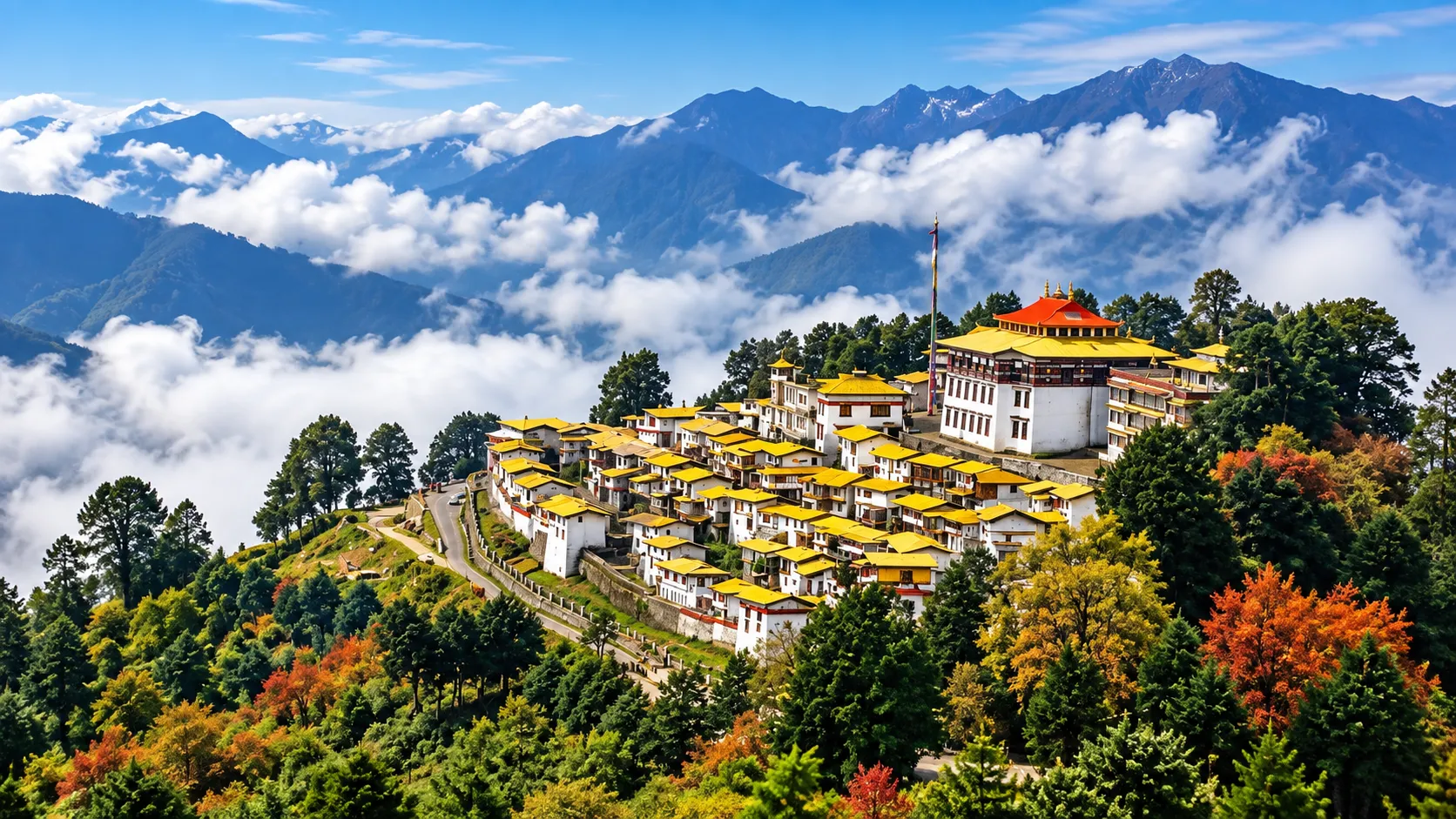
Bhalukpong is a small border town in West Kameng district, where Assam's plains meet the forested foothills of Arunachal Pradesh. Most people know it as the point where the road into western Arunachal begins, the first stop before Bomdila, Dirang and Tawang. That reputation sells it short. The town sits beside the Kameng River, it has a famous orchid centre close by, and two large wildlife areas, Pakke and Nameri, are within reach.
This guide treats Bhalukpong as a place to spend time, and also as the doorway to the western circuit. It covers where the town is, what to see, how to get there, the weather, permits and sample itineraries. I have avoided road distances, travel times, fees and schedules, since these change and are best confirmed locally before you go.
Where Is Bhalukpong?
Bhalukpong lies on the southern edge of Arunachal Pradesh, in West Kameng district, right on the boundary with Assam. The Kameng River runs past the town. On the Assam side the same river is known as the Jia Bhoreli, and the district across the boundary is Sonitpur, whose main town is Tezpur.
The town is low-lying compared with the mountain towns higher up the route. Looking north from here you see wooded ridges rising toward the Eastern Himalaya, and the road starts climbing soon after you leave. That change in landscape, from river plain to hill forest, is one of the most noticeable things about arriving here.
Why Visit Bhalukpong?
The first reason is the river. The Kameng is broad and clear in many seasons, with stony banks that suit slow walks and quiet sitting. The second is the forest. The hills around town are green for most of the year, and the mix of river, trees and cloud gives the place a calm, unhurried feel.
Mountain scenery is the third. Even from the foothills, the view of layered ridges prepares you for what lies farther up the road. Nature and adventure experiences are the fourth, since birdwatching, forest walks and, in season, river activities are available in the area. The fifth is access: Bhalukpong is the natural starting point for western Arunachal. The sixth is the cluster of attractions nearby, covered below.
For travellers heading up to Tawang, a night here can also help you ease into the trip instead of rushing straight on.
Places to Visit in and Around Bhalukpong
I have limited this list to well-known attractions. Time estimates are rough visit lengths, not travel times, and opening rules can change, so confirm locally.
Kameng riverbank, Bhalukpong. The river is the town's main attraction. It is an easy, free-roaming stop for photographs and a quiet walk, reachable on foot from most of the town. An hour or two is usually enough, longer if you enjoy sitting by the water.
Tipi orchid centre. Tipi is a short drive from Bhalukpong and is known for its orchid research and display centre. Arunachal Pradesh is rich in orchid species, and this is among the easiest places to see them. It is reachable by road. Allow an hour or two, and check opening hours and the flowering season, since blooms vary through the year.
Pakke Tiger Reserve. Pakke lies across the Kameng in Pakke-Kessang district and is known for its forest and birdlife, including hornbills. It is best treated as a separate outing, reached by road with a local driver or guide. Plan most of a day, and confirm entry rules, permissions and seasonal access with the forest department, as they vary.
Nameri National Park. Nameri is on the Assam side, in Sonitpur district, along the Jia Bhoreli. It is known for forest walks and birdwatching, and some river activities are offered in season. Access is by road, and entry arrangements are handled by the forest department, so verify current rules. Plan half a day to a full day.

Bhalukpong as a Gateway to Arunachal Pradesh
The road north from Bhalukpong is the standard route into western Arunachal. It climbs through forest to Bomdila, continues to Dirang, crosses Sela Pass and then descends toward Tawang. Each stage changes the scenery and the climate, from warm river valleys to cold high passes.
Bomdila is known for its monasteries and its hill-town setting, and many travellers stay a night there. Dirang sits in a wide valley and has its own dzong and hot springs. Tawang, the final destination for most, is known for its large monastery and high mountain surroundings. You can read more in our
I am not giving driving times for these stages. They depend on road conditions, weather, landslides, checkpoints and how often you stop. Ask your driver or tour operator for current estimates, and build slack into the plan, especially in the rains and in winter.
How to Reach Bhalukpong
Bhalukpong is reached by road from Assam, and most visitors approach from Guwahati or Tezpur.
From Guwahati. Guwahati is the largest city in the region and has a major airport and railway station, which makes it the usual arrival point for visitors from elsewhere in India. From there you continue by road toward Tezpur and on to Bhalukpong, by hired car or a long-distance shared vehicle.
From Tezpur. Tezpur is the nearest sizeable town in Assam and a common base. It has an airport, though flight schedules change, so check with the airlines. From Tezpur, Bhalukpong is reached by road, with taxis and local transport commonly available.
By rail. Guwahati is the major railhead. Stations closer to the Tezpur area also exist, but services and timetables change, so check the official railway channels before you plan around them.
By road. Hired cars give the most flexibility, especially if you plan to continue to Bomdila and Tawang. Shared vehicles run on parts of the route, but I cannot confirm current schedules. Check with local operators.
Best Time to Visit Bhalukpong
Bhalukpong's low elevation gives it a warmer, more humid climate than the mountain towns above it, so the weather in town and the weather on the route can differ a lot.
Spring. Spring is generally warm and green, with flowers and active birdlife. It is a good time for the river, the orchid centre and the forest areas, though showers can start early.
Summer. Summer can be hot and humid in the foothills. Mornings and evenings are more comfortable, and the higher towns offer relief if you are continuing north.
Monsoon. The rains are heavy, the hills are lush and the river runs high. They also bring landslides, road disruption and access limits in some forest areas. If you travel then, keep your plans flexible.
Autumn. Autumn often brings clearer skies, fresher air and good views. It is widely considered a comfortable season for the whole route.
Winter. Winter is cool in Bhalukpong and good for birdwatching, with misty mornings. Bomdila, Dirang and especially Tawang are much colder, and snow can affect Sela Pass, so plan the onward journey carefully.

Things to Do in Bhalukpong
River scenery. Spend time on the Kameng's banks, early or late in the day, when the light is soft and the town is quiet.
Nature walks. Gentle walks around the town and in the surrounding forest reward unhurried travellers. Stay on marked paths, and use a local guide in protected areas.
Photography. The river, the forest edge and the road climbing into the hills all make good subjects. Ask before photographing people.
Nearby sightseeing. Combine the Tipi orchid centre, Pakke and Nameri across one or two days.
Local culture. The region is home to several communities, and a conversation with a local host or a visit to a market gives a feel for daily life. Treat what you see as living culture, not as a show.
Adventure activities. Some activities, such as river rafting at Nameri, have been offered seasonally. Availability, operators and safety standards vary, so verify them locally and choose licensed providers.
Permits and Entry Requirements
Arunachal Pradesh is a protected area, and entry is regulated. Indian citizens who are not residents of the state generally need an Inner Line Permit, and foreign nationals have separate requirements. Procedures, fees, forms and the places where permits can be obtained have changed over time and can change again.
Do not rely on older articles, forum posts or a previous trip. Check the current rules with the official Arunachal Pradesh government sources before you travel, and carry the permit and valid photo ID. Some areas on the onward route, and some forest areas, may have their own entry rules as well.
Where to Stay
Accommodation near Bhalukpong falls into a few broad groups. Simple hotels and guesthouses are the most common choice and suit travellers who want a bed, a meal and an early start. Nature-style stays and eco camps near the river or forest offer more atmosphere, with the trade-off that facilities may be basic. Some travellers choose to stay on the Assam side, in or near Tezpur, where the choice of rooms is wider.
Location matters. A stay in Bhalukpong keeps you close to the river and saves time in the morning if you are heading north. A stay near Nameri or Tezpur may suit you better if wildlife or Assam connections come first. I have not listed property names or prices, because both change often. Ask for current rates, and check whether meals, hot water and power backup are included.
What to Pack
- Comfortable, grippy shoes for river banks and forest paths
- Rain protection, such as a light waterproof jacket or umbrella
- Light layers for the warm foothills
- Warm clothing if you continue to Bomdila, Dirang or Tawang
- A camera, spare batteries and a power bank
- Personal medication and a small first-aid kit
- Drinking water, sun protection and insect repellent
- Permit copies and photo ID
Bhalukpong Itinerary
These are frameworks, not fixed schedules. Adjust them to the weather, road conditions and what is open when you travel.
1-day Bhalukpong itinerary
- Start with a morning walk along the Kameng.
- Visit the Tipi orchid centre.
- Have lunch in town and rest during the warmest hours.
- Spend the late afternoon at the river for photographs and sunset.
2-day nature-focused itinerary
- Day 1: Riverside walk in the morning, the Tipi orchid centre after that, and an easy evening in town.
- Day 2: A full day for Pakke Tiger Reserve or Nameri National Park, depending on the season and entry rules. Return to Bhalukpong or Tezpur for the night.
Bhalukpong to Bomdila to Dirang to Tawang route framework
- Stage 1, Bhalukpong to Bomdila: climb into the hills and stay overnight in Bomdila, acclimatizing slowly.
- Stage 2, Bomdila to Dirang: visit the dzong and valley, with time for the hot springs if conditions allow.
- Stage 3, Dirang to Tawang: cross Sela Pass and arrive in Tawang, allowing extra time for weather and checkpoints.
- Stage 4 and beyond: spend at least a full day in Tawang, then plan your return with similar slack.
If you would like help shaping a route, Tribal Discovery Tour can talk through options with you.
Responsible Travel
Bhalukpong's appeal rests on a clean river and intact forest, so treat them carefully. Carry your litter out, avoid single-use plastic where you can, and do not leave waste on the riverbank. Keep soap and chemicals out of the water. In forest areas, stay on marked paths, keep noise low and never feed wildlife.
Respect people as well. Ask before photographing residents, dress modestly in villages and religious places, and buy from local businesses where possible. Follow instructions from forest officials, guides and community members, and be flexible when weather or local conditions change the plan.
Frequently Asked Questions
Where is Bhalukpong?
Bhalukpong is a border town in West Kameng district, Arunachal Pradesh, on the Kameng River, where the state meets Assam.
Is Bhalukpong worth visiting?
Yes, for a short stop or a night. The Kameng River, forest scenery and nearby Tipi, Pakke and Nameri make it a destination as well as a gateway.
What are the best places to visit in Bhalukpong?
The Kameng riverbank, the Tipi orchid centre, Pakke Tiger Reserve and Nameri National Park in Assam are the best-known options.
How do I reach Bhalukpong?
Most travellers come by road from Tezpur or Guwahati in Assam. Check airline, railway and vehicle schedules before travelling.
Is Bhalukpong on the way to Tawang?
Yes. The usual road route to Tawang passes Bhalukpong, then continues through Bomdila, Dirang and Sela Pass.
What is the weather like in Bhalukpong?
Bhalukpong is low-lying with warm, humid summers, heavy monsoon rain and mild winters. Higher towns on the route are much colder.
When is the best time to visit Bhalukpong?
Autumn and spring are generally pleasant, winter suits birdwatching, and the monsoon brings rain and possible road disruption.
Do I need a permit for Bhalukpong?
Visitors who are not Arunachal residents generally need a permit. Rules change, so verify current requirements with official sources.
Can I stay overnight in Bhalukpong?
Yes. Options usually include hotels, guesthouses and riverside or nature-style stays, in Bhalukpong or on the Assam side.
What should I pack for Bhalukpong and Tawang?
Pack light layers, rain protection, comfortable shoes, warm clothing for the mountains, a camera and personal medication.