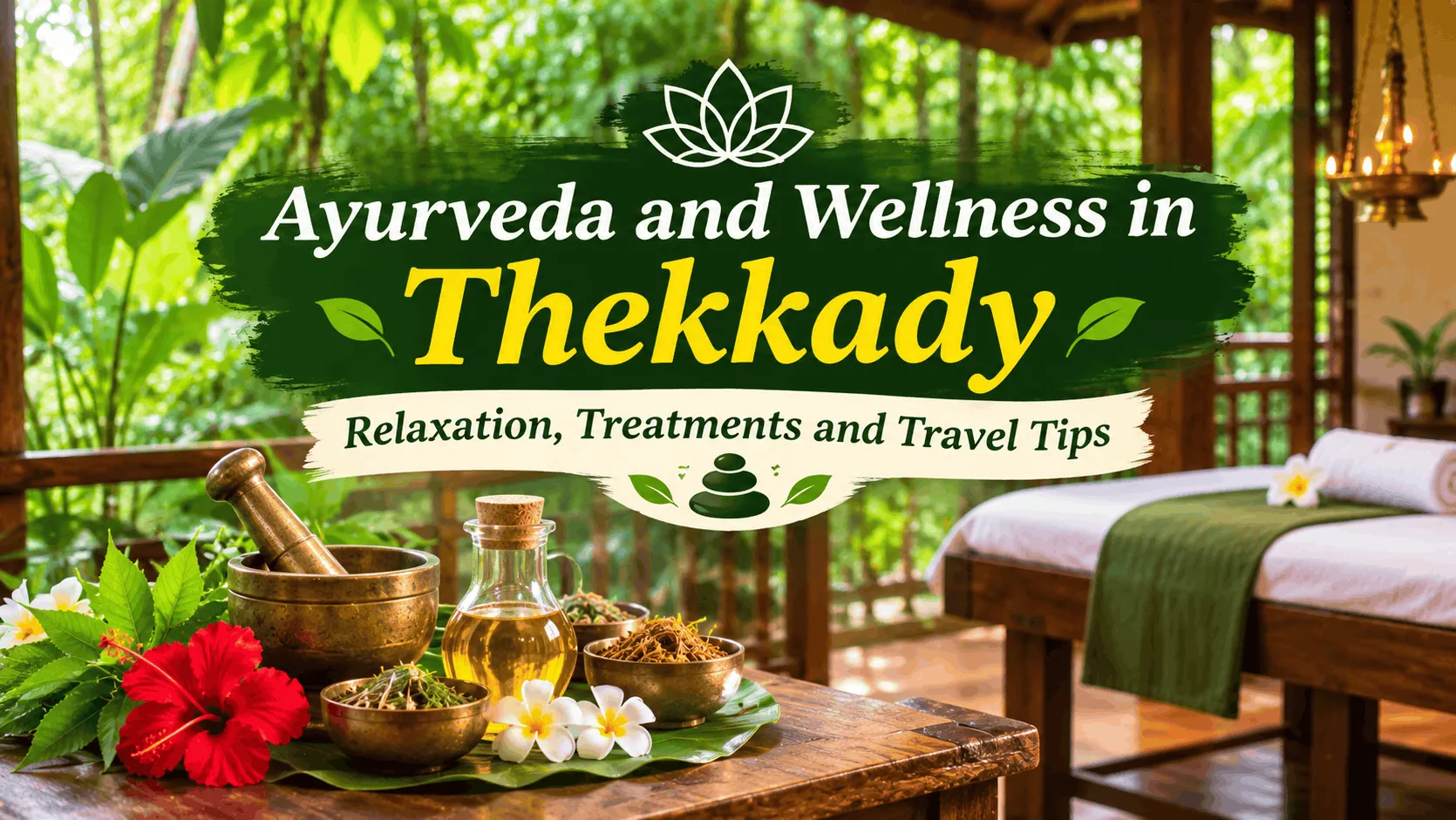
Thekkady is known for its forest, its lake and its spice-scented air, and those same surroundings suit a slower kind of holiday. After a morning in the hills, a quiet hour in a wooden treatment room with the smell of warm herbal oil can feel like the right way to end a day. That pairing is the reason many visitors now look into Ayurveda in Thekkady alongside their sightseeing.
This guide is for travellers who are curious but unsure where to start. It explains what Ayurveda is, which therapies and wellness experiences are commonly offered in Kerala, what a consultation involves and how to judge a centre before you pay. It does not recommend a particular facility, quote prices or promise any health result. Those details change, and they should come from the provider you choose and from a qualified healthcare professional.
Understanding Ayurveda and its place in Kerala
Ayurveda is a traditional system of medicine from India. The word combines the Sanskrit terms for life and knowledge. Its texts describe health in terms of balance between the body, the mind and the environment, and its practitioners use diet, herbal preparations, massage, routine and lifestyle advice. A central idea is that each person has a particular constitution, described through three principles called vata, pitta and kapha. Practitioners use these terms to guide their recommendations.
Kerala holds a special place in this tradition. The state has a long history of Ayurvedic practice, a network of Ayurveda colleges, hospitals and family traditions, and a climate and plant life that support medicinal herbs. Many of the therapies travellers hear about, such as oil massages and warm herbal poultices, are associated with Kerala's style of practice. Kerala Tourism has also promoted Ayurveda for decades, which is why wellness centres appear in resorts, standalone clinics and hospitals across the state.
A note on expectations: this article describes how the therapies are offered. It makes no claim that any treatment cures, prevents or treats a condition. If you have a health concern, a doctor's advice comes first.
Why travellers explore wellness experiences in Thekkady
Thekkady has a few features that suit wellness travel. The climate at this altitude is cooler than the Kerala coast, the setting is green and quiet, and the pace of life around the Periyar Tiger Reserve is slow compared with a city. Visitors often spend their days on boat rides, forest walks and spice plantation tours, and a massage or a gentle yoga session fits naturally between them.
Wellness here also draws on local ingredients. The hills around Kumily grow cardamom, pepper and other spices, and many travellers enjoy herbal teas, plantation visits and cooking that uses the same plants. If you are still shaping the overall trip, our Thekkady travel guide gives the wider picture of the destination, and this article stays with the wellness side of it.
People come for different reasons. Some want a single relaxing massage after a trek. Others plan a longer stay built around daily treatments, quiet time and simple meals. Be clear about which of these you want, because it affects the centre you choose and the length of the programme.
Common Ayurvedic therapies and wellness experiences
Treatment menus differ from one centre to another, and not every therapy is available everywhere. The names below are widely used in Kerala. Treat them as a vocabulary list that helps you read a menu, and ask each centre what it actually offers and why a therapy is suggested for you.
Abhyanga and oil massage
Abhyanga is a full-body massage with warm herbal oil, usually given by one or two therapists. It is the most common starting point for a first-time guest and the one most often sold as a relaxation treatment. The oil used and the length of the session vary, so ask what is in the oil if you have allergies or sensitive skin.
Shirodhara
In Shirodhara, a steady stream of warm oil or another liquid is poured over the forehead while you lie down. Guests often describe it as calming. The technique is specific, so it should be done by trained staff and not rushed.
Pizhichil and herbal poultices
Pizhichil involves warm oil poured over the body while therapists massage in coordination. Kizhi therapies use cloth bundles filled with herbs, powders or cooked rice, warmed and applied to the body. Njavara kizhi and podi kizhi are two names you may see. These are heating treatments, so tell the therapist about any heat sensitivity, skin condition or circulation concern.
Panchakarma
Panchakarma is a structured programme of cleansing and preparatory procedures that runs over several days or weeks under a physician's supervision. It is a medical programme, and it is a poor fit for a casual short visit. If you are interested, plan it in advance, speak with a qualified doctor first and make sure the centre has a physician on site throughout. Do not read any claims about detoxification or weight loss into it. This article makes none, and a responsible centre will not promise them either.
Yoga, meditation and herbal teas
Many centres and resorts also offer yoga, breathing practices and meditation sessions, often outdoors or in a quiet hall. Some serve herbal drinks and Ayurvedic meals. These are gentler additions for guests who do not want a full treatment, and they can be taken without a consultation, although you should still mention any physical limitations to the instructor.

What to expect during an Ayurvedic consultation
A proper treatment usually begins with a consultation. This is a conversation with a physician, called a vaidya, who asks about your health history, current symptoms, medications, allergies, sleep, digestion, diet and daily routine. The vaidya may check your pulse and examine you, and may talk about your constitution in Ayurvedic terms. Based on this, the physician suggests which therapies, if any, are suitable and for how long.
Several things are worth knowing:
- Be honest and complete. Mention every medical condition, every medicine or supplement you take and any surgery, injury or allergy.
- Say if you are pregnant, may be pregnant or are breastfeeding. Many therapies are adjusted or avoided in these cases.
- Ask the physician to explain the reasoning in plain language. A good practitioner is comfortable doing this.
- You can decline any therapy. A recommendation is not an obligation.
If a centre offers treatment with no consultation at all for anything beyond a basic relaxation massage, treat that as a reason to ask more questions.
Choosing an Ayurveda centre or wellness facility
Thekkady and Kumily have resorts with their own wellness areas, standalone clinics and day spas. The quality, scope and training standards behind these differ widely, and a polished lobby tells you little. Look at substance.
The Kerala Department of Tourism runs a classification scheme for Ayurveda centres. It has historically been known by the names Green Leaf and Olive Leaf, and it was revised in 2019, so the categories may be labelled differently today. A classified centre has been assessed against standards that include qualified staff, treatment rooms and quality of medicines. Classification is a useful starting point, but check the current categories on the Kerala Tourism website and ask to see the certificate and its validity dates. Some travel writers note that these ratings describe facilities and standards, and not the outcome of any treatment, so use the rating as one factor among several.
Also look for these signs:
- A named physician with a recognised Ayurveda degree.
- Therapists who have formal training and are supervised.
- A clear consultation process before treatments begin.
- Transparent information about what each treatment includes and how long it takes.
- Clean, well-ventilated rooms and a calm, professional atmosphere.
Read recent guest reviews from several sources, and treat very glowing or very vague reviews with care. We have not verified individual centres for this article, so we do not name any. When you shortlist, check each one yourself.
Questions to ask before booking a treatment
Put these questions to any centre before you commit. Their answers, and the way they answer, say a lot.
- Who is the physician, and what are their qualifications and registration?
- What training do the therapists have?
- Is a consultation included, and does it happen before any therapy?
- What exactly does each treatment involve, and how long does it last?
- What oils, herbs or ingredients are used, and can they be checked for allergens?
- What is the full price, what does it include and are there extra charges?
- Is the therapist the same gender as I prefer, and is a private changing area provided?
- What is the cancellation and refund policy?
- How are towels, linen and equipment cleaned between guests?
- What happens if I feel unwell or uncomfortable during a session?
Written answers are better than verbal ones. A trustworthy centre will give them without pressure.

Hygiene, practitioner qualifications and safety considerations
Qualifications matter. In India, the standard degree for an Ayurvedic physician is the BAMS, which stands for Bachelor of Ayurvedic Medicine and Surgery. Some physicians hold a postgraduate degree as well. Ask to see credentials and proof of registration with the relevant state or national body for Indian systems of medicine. Therapists are trained separately, and a certificate or documented training is a reasonable thing to ask for.
Hygiene is easy to check with your own eyes. Rooms should be clean and dry, with fresh linen or a clean cover on the treatment table for each guest. Oils should be stored properly, and equipment should be cleaned between sessions. Consent matters too. You should be given a clear explanation before treatment, draping that respects your privacy and the freedom to stop at any point.
Safety considerations apply to everyone, and they deserve extra attention in some cases:
- Speak to your own doctor before any treatment if you have a medical condition, such as heart disease, high blood pressure, diabetes, a skin condition, joint problems, or breathing difficulties.
- Check with your doctor if you take regular medication or blood thinners, since some treatments involve heat, pressure or herbal products.
- Pregnant and breastfeeding travellers should seek medical advice first, and should tell the centre.
- Do a patch test if you have sensitive skin or allergies, and tell the therapist about them.
- Avoid heavy meals just before a massage, and follow any post-treatment rest instructions.
- Stop and speak up if anything feels painful, too hot or uncomfortable.
Herbal medicines and supplements sold at centres deserve the same caution. Ask what is in them, check that they are labelled, and discuss them with your own doctor before taking them with other medication. Children and older travellers may need a modified approach, so ask the physician.
Combining wellness experiences with a Thekkady holiday
The easiest way to blend wellness with sightseeing is to give it a planned place in the day. A treatment after a long walk or boat ride is pleasant, while a heavy massage before an early start can leave you tired. Keep a day without a fixed schedule if you plan more than one session.
Some practical ideas help:
- Place one or two treatments across a three to four day stay, not one each day, unless you have a physician's plan.
- Use a morning yoga or meditation session as a gentle start before a late-morning activity.
- Leave space around sessions, since you may want to rest afterwards.
- Check that a treatment time does not clash with a booked forest activity or a boat ticket.
Where you stay can shape how easy this is, since some properties have their own treatment rooms and others do not. Our guide to the best resorts and places to stay in Thekkady covers accommodation in detail, so use it for that side of the planning. Whichever you choose, confirm treatment availability and booking rules directly with the property.
Best time to plan a wellness-focused visit
Wellness can be enjoyed throughout the year, because treatments happen indoors. The season affects the experience around them. The cooler months from roughly November to February are comfortable for combining treatments with walks and outings, and our piece on Thekkady in winter describes what to expect from that weather.
The monsoon months, roughly June to August, have a long tradition in Kerala as a time that many Ayurvedic practitioners favour for treatment programmes. Some centres run special packages then, and they often fill up, so book early if this appeals. The trade off is that rain can limit sightseeing and make roads and trails slippery.
If your priority is rest, choose a quieter period and avoid public holidays and peak weekends, when facilities are busier. Ask the centre about its busy periods and any closure dates before you commit.
Practical tips for first-time visitors
A first visit goes more smoothly with a bit of preparation.
- Book in advance, especially in the main season, and keep a written confirmation.
- Start with a short session so you can judge how you respond.
- Wear or bring clothes you do not mind getting oily, since herbal oils can stain.
- Expect to be draped or to wear a disposable garment. Ask about privacy if you are uncomfortable.
- Drink water and plan a light schedule afterwards.
- Keep valuables in your room, and keep your phone on silent in the treatment room.
- Respect local custom. Dress modestly when you arrive and move through the property.
Responsible travel applies here too. Choose centres that treat staff fairly, avoid single-use plastic where possible, and use local ingredients sensibly. Our guide to responsible tourism in Thekkady explains how visitors can support the community and the environment while they enjoy the area.
Frequently asked questions
Is Ayurveda in Thekkady suitable for everyone?
No. Some people should avoid certain therapies or have them adjusted, including those with some medical conditions, pregnant travellers and people on regular medication. Talk to your own doctor and to the centre's physician before booking.
Do I need a consultation before an Ayurvedic massage?
For a basic relaxation massage, many centres offer a short discussion with the therapist. For anything beyond that, a consultation with a qualified physician is the responsible approach, and a good centre will recommend it.
How do I know if an Ayurveda centre is genuine?
Check the physician's qualifications and registration, ask about therapist training, and look for a government classification and its current validity. Compare answers across a few centres, and read recent reviews from independent sources.
How long does a typical treatment last?
It varies by therapy and centre. Some sessions are under an hour and others are longer, and structured programmes such as Panchakarma run for days or weeks. Ask the centre for the exact duration and what it includes.
Can Ayurvedic treatments cure illnesses or help with weight loss?
This guide makes no such claim, and you should be wary of any centre that does. Ayurveda is a traditional system, and treatments are offered for relaxation and wellbeing. Speak to a qualified healthcare professional about any medical condition.
Is it safe to combine treatments with trekking or boat rides?
It depends on the treatment and on you. Some treatments leave people relaxed or tired, so avoid scheduling a heavy session right before a strenuous activity. Ask the physician or therapist about timing.
What should I wear and bring?
Bring comfortable, easily changed clothing and a change of clothes you do not mind staining. Tell the staff about allergies and medication. Most centres provide towels and a disposable garment, but ask when booking.
How far ahead should I book?
Book as early as you can, especially for the main season and for longer programmes. Confirm availability, prices and cancellation terms in writing.
Conclusion
Ayurveda can add a calm, restorative layer to a trip to Thekkady, particularly after days spent in the forest and on the lake. The best experiences come from preparation: understand the therapies, choose a centre on evidence and not on appearance, ask direct questions and speak with a qualified healthcare professional if you have a medical condition, are pregnant or take medication. Keep your expectations realistic, start with a simple session and let the setting do part of the work.
If you would like help fitting wellness time around the rest of your Thekkady plans, Tribal Discovery Tour can help you build an itinerary with room to rest.