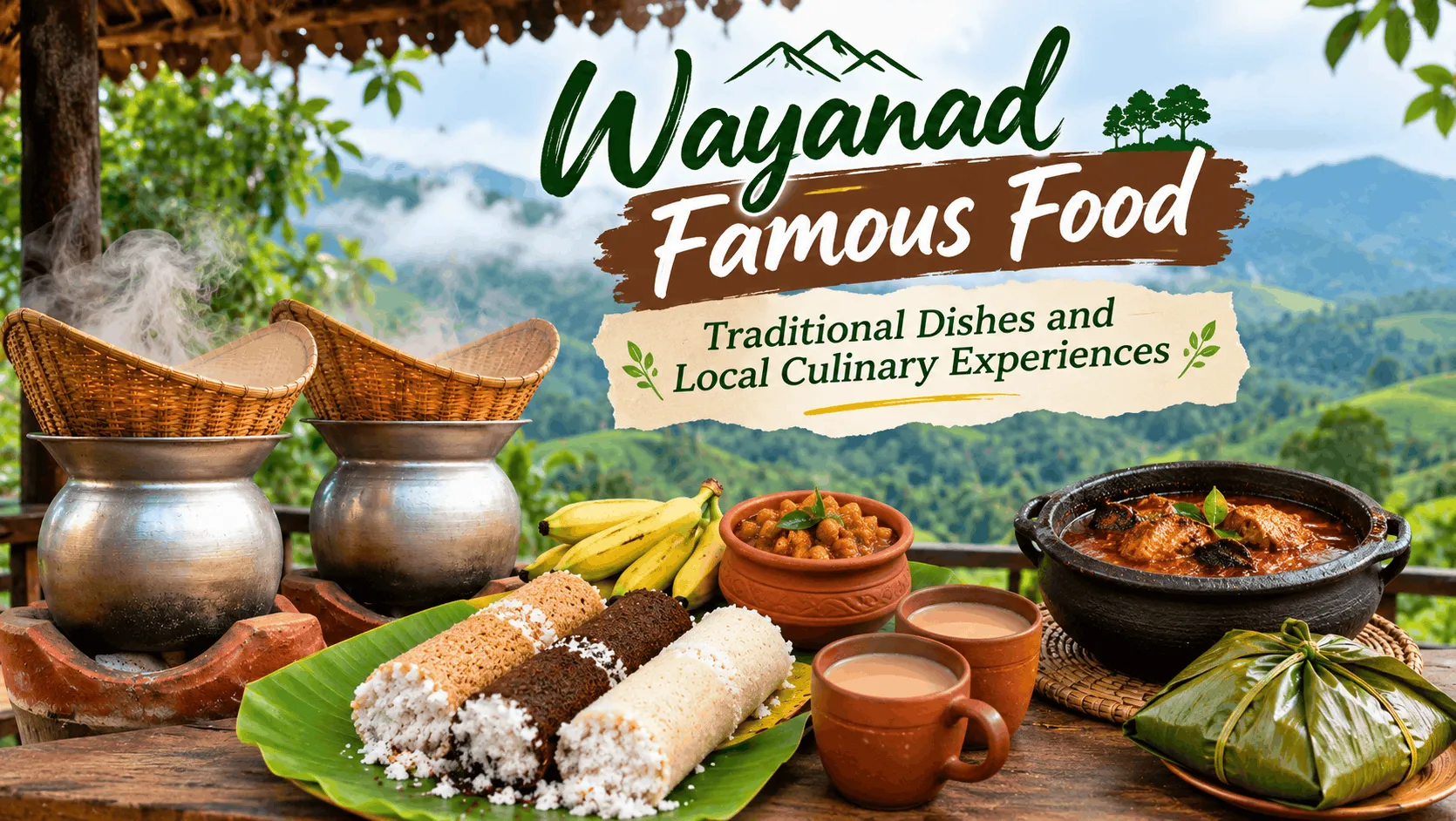
Wayanad famous food starts with rice, greens and the ingredients of a plantation and forest district, then branches into community kitchens that cook quite differently from one another. Some dishes here are tied to the district through local crops and a protected rice tradition. Others are Kerala favourites you will find across the state. This guide separates the two, explains what shapes the cooking, and offers practical ways to eat well without turning anyone's food heritage into a show. Seasonal availability varies, so confirm what is being served before you plan a meal around it.
How geography, agriculture and local traditions shape Wayanad cuisine
Wayanad is a plateau on the Western Ghats with paddy fields in the valleys, spice and coffee estates on the slopes and forest around both. That mix explains much of the food. Rice is the base of most meals, tapioca is widely eaten, and seasonal leaves and tubers appear alongside it. Coastal Kerala brings in coconut and fish, and Malabar cooking contributes its biryanis and snacks.
Several communities live here, including Adivasi groups and Muslim families, and their kitchens differ. A useful rule is to ask a host about their own family or community's food instead of assuming there is one Wayanad cuisine.
Famous traditional dishes of Wayanad
Some dishes are closely associated with Wayanad. Others are Kerala staples that you will enjoy here but would find elsewhere too. The table keeps the two apart.
| Dish | What it is | Wayanad link |
| Bamboo rice payasam (mulayari payasam) | Dessert made with bamboo rice, usually jaggery and milk or coconut milk | Strongly linked to the district's forests |
| Gandhakasala or Jeerakasala rice dishes | Ghee rice and payasam made with fragrant local rice | Tied to Wayanad's protected rice varieties |
| Kuthari (red rice) porridge | A traditional breakfast porridge | Described as a Wayanad staple |
| Chakkavaratti payasam | Dried jackfruit cooked with coconut milk and jaggery | Reported as once a wedding favourite |
| Wayanad biryani | Biryani with a local touch, cooked in Muslim households | Blends Kozhikode and Kannur styles |
| Kappa with fish curry or chammanthi | Tapioca with a spicy side | Popular here, eaten across Kerala |
| Appam with stew, puttu with kadala curry, sadya | Everyday and festive Kerala food | Common across Kerala |

Local rice varieties and indigenous ingredients
Wayanad has two scented rice varieties that received a Geographical Indication registration in 2010. Gandhakasala is known for a sandalwood-like fragrance, and Jeerakasala resembles cumin seeds in appearance and aroma. Both are traditionally used for festive dishes such as ghee rice and payasam, and broken Gandhakasala rice is often used for payasam. They are more expensive and less common than everyday rice, so do not assume a plate of "Wayanad rice" is one of them.
Everyday ingredients include red rice, tapioca, jackfruit, taro (chembu) and its leaves, and seasonal greens. Onmanorama's food trail names greens such as murikku, ponnam kani and thakara among those cooked in season, and green leaves appear with almost every meal. Coffee, pepper, cardamom and other spices grown here flavour dishes and are popular to take home.
Bamboo rice and other seasonal ingredients
Bamboo rice is the seed of flowering bamboo, collected in the forest instead of grown in a field. Flowering happens at long and irregular intervals, so supply is unpredictable. Sources describe it as a specialty of certain areas, usually made into payasam, and some restaurants use it in biryani.
That unpredictability matters for visitors. If you are offered bamboo rice, ask where it came from and how it was collected, because rules protect forest produce. Do not forage yourself. Bamboo shoots are also described as a monsoon ingredient, and many wild greens and tubers are seasonal, so what is on the menu changes through the year.
Traditional cooking methods and food preparation
Home cooking in Wayanad leans on steaming, boiling, shallow frying and slow cooking in coconut or spice bases. Rice batters are steamed for puttu and kallu puttu, appam batter is fermented, and banana leaves are used for serving and, in some dishes, for wrapping. Sources about community-run meals mention clay pots and locally sourced ingredients, and they describe grilled dishes prepared in a traditional way. Methods differ by household, so treat any one description as an example and not as a rule for the district.

Indigenous food traditions and their cultural significance
For many Adivasi communities in Wayanad, food is closely linked to forest, farm and season. Published guides name groups such as the Kuruma, Paniya and Kurichiya, but they do not cook alike, and many popular write-ups are written by resorts or tour sellers. Some of them link dishes such as bamboo rice payasam, kallu puttu or boiled tubers with honey to Kuruma households. Take such statements as one source's account, not a rule, and do not assume a dish belongs to a single community.
The respectful approach is simple. Ask your host who prepared the food and what it means to them. Pay fairly for community-run meals, and ask before photographing people or kitchens. Our guide to local life in Munnar village takes the same approach to understanding place through local life instead of a checklist.
Local culinary experiences visitors can explore
The most dependable experiences are the simple ones:
- A home-style meal at a homestay or plantation stay, ordered in advance.
- A banana leaf sadya at a local restaurant, especially during festival periods.
- A breakfast of puttu, appam or porridge at a small eatery in Kalpetta or Sulthan Bathery.
- Plantation visits that include coffee or spice tasting, where an estate offers them.
- Village or tribal circuit experiences organised with community involvement. The district tourism council has promoted these, so ask it what is currently offered.
This guide does not list specific restaurants, food trails or prices, because they change and cannot be confirmed here.
Food experiences to consider while travelling through Wayanad
Plan meals around the geography. The district is long, so a good meal in Vythiri will not be near Mananthavady, and distances add up. Our Wayanad travel guide lays out the three travel clusters, which helps you decide where to stop for a meal.
If your day includes Karapuzha Dam, check locally for food options before you go instead of assuming facilities.
Tips for travellers interested in local cuisine
- Ask what is seasonal and what is made to order. Bamboo rice dishes and festive rice dishes may need notice.
- Check provenance for bamboo rice and honey before you buy.
- Say clearly if you are vegetarian, avoid beef or pork, or have allergies. Spice levels can be high.
- Do not forage or collect forest produce yourself.
- If you drive up from Kozhikode, plan a meal stop before or after the ghat section instead of stopping on bends. Our Thamarassery Churam guide explains how to handle that road.
Frequently asked questions about Wayanad's famous food
What is Wayanad famous food?
Wayanad is known for scented Gandhakasala and Jeerakasala rice, bamboo rice payasam, red rice porridge, Wayanad biryani and seasonal greens, alongside Kerala favourites such as sadya and appam with stew.
Which traditional dishes should I try in Wayanad?
Try a rice-based sadya, a payasam made with local rice, a breakfast of puttu or appam, and tapioca with fish curry or chammanthi. Add bamboo rice payasam if it is available.
Is Wayanad known for bamboo rice?
Yes. Bamboo rice is widely mentioned in connection with Wayanad's forests, but supply is irregular and it is not on every menu.
What ingredients are commonly used in Wayanad cuisine?
Rice, coconut, tapioca, jackfruit, taro, seasonal greens, jaggery, spices and coffee are common. Fish and chicken feature in many households.
Are traditional tribal food experiences available in Wayanad?
Some are offered by homestays, community groups and the district tourism council. Availability changes, so ask who runs the experience and confirm details beforehand.
Is Wayanad food different from other parts of Kerala?
It shares much with Malabar and wider Kerala cooking, but local rice varieties, bamboo rice, forest greens and community-specific dishes give it a distinct character.
What should food lovers try during a Wayanad trip?
A meal made with Gandhakasala or Jeerakasala rice, a payasam, a plate of seasonal greens and a home-style meal at a local stay would give a good first picture.
Conclusion
Wayanad famous food is best understood as a set of overlapping traditions, not a single menu. Start with the rice, ask what is in season, and be curious about who made the dish and why.
When you are ready to plan a trip around eating well, discover Wayanad's food culture with Tribal Discovery Tour and build a route that fits the season and your appetite.