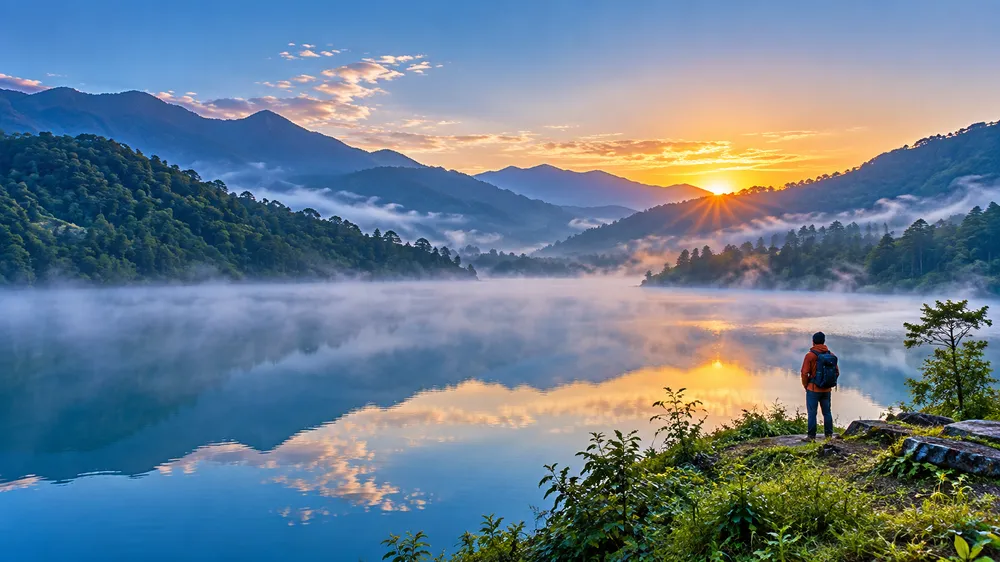
Tezu is the headquarters of Lohit district in Eastern Arunachal Pradesh, set on the banks of the Lohit River with the hills of the Mishmi plateau rising close by. It's one of the more practical bases for exploring Eastern Arunachal, both because it has its own small airport and because it sits on the route most travellers use to reach Parshuram Kund, Wakro, and onward destinations like Walong and Roing.
Tezu itself is a modest, unhurried town rather than a sightseeing hub, home to a mix of communities that includes the Mishmi people alongside settlers of other faiths, reflected in a temple, monastery, and gurudwara that stand within the same compound in town. For anyone building a longer Eastern Arunachal itinerary, Tezu works less as a standalone destination and more as a comfortable, well-connected stop to base a few days from.
Why Visit Tezu?
Tezu's appeal is mostly about what it opens up rather than what's in the town itself. The Lohit River runs through the valley, hills surround the town on most sides, and the pace of life here is noticeably slower than in more visited parts of Arunachal Pradesh. For travellers heading into Eastern Arunachal — toward Wakro, Parshuram Kund, or further on to Walong near the China border — Tezu is the natural staging point, with better road connections and its own airport compared to more remote stops further along the route.
There's also a cultural dimension worth taking seriously rather than glossing over: the Mishmi communities of this region have their own distinct customs, crafts, and history, visible in the local museum and in daily life around town, though this is lived culture rather than something staged for visitors.
Where Is Tezu?
Tezu sits in Lohit district in the eastern part of Arunachal Pradesh, on the banks of the Lohit River. It's connected to Assam via national highway routes running through Tinsukia, and the wider region includes the Mishmi Hills and the route toward the Dibang and Lohit valleys further north and east.
Nearby districts and towns that commonly appear alongside Tezu in an Eastern Arunachal itinerary include Roing (Lower Dibang Valley) to the north and Wakro and Walong further along the Lohit valley toward the border.
Places to Visit in Tezu
Parshuram Kund
A Hindu pilgrimage site on the Lohit River, associated in legend with the sage Parshurama. It draws large numbers of pilgrims each year, particularly around Makar Sankranti in January, and sits roughly 48 km from Tezu via Tohangam, within the Kamlang reserve forest area. Even outside the main pilgrimage season, it's a scenic stop worth a half-day, though the drive itself takes a meaningful chunk of that time.
Tezu District Museum and Craft Centre
Established in 1956, this museum holds a collection of traditional weapons, costumes, ornaments, and other cultural material connected to the tribal communities of the region, including the Mishmi people. It's a compact visit, generally an hour or less, and a useful stop for context before heading further into the district.
Tezu Botanical Garden
A quieter, low-key green space within the town, useful for an easy walk rather than a major attraction in its own right. It fits comfortably into a slower day in Tezu alongside other in-town stops.
Glow Lake (Glaw Tuwi)
A high-altitude lake accessible by trek from the Tezu area, set among forest and hills. It's positioned as a destination for more adventurous travellers rather than a casual day trip, and practical details — trail conditions, guide requirements, and duration — are worth confirming with a local operator rather than assuming, since this isn't a maintained tourist trail with fixed infrastructure.
Things to Do in Tezu
- Visit the Tezu District Museum and Craft Centre for cultural context
- Walk through the Botanical Garden and along the Lohit River
- Day trip to Parshuram Kund, particularly meaningful during the January pilgrimage season if that timing works for your trip
- Explore the town's markets for local produce and handicrafts
- Talk to locals about Mishmi culture and history rather than treating it as a photo opportunity
- Use Tezu as a base for a guided trek toward Glow Lake, for travellers with the time and interest
Most of what Tezu offers rewards a slower pace rather than a packed schedule — this isn't a town built around a checklist of sights.
Mishmi and Local Cultural Context
The Mishmi people are the principal indigenous community of the Lohit and neighbouring districts, with their own language groups, craft traditions, and history in the region. Tezu's museum and craft centre give a starting point for understanding this, but the more meaningful way to engage with Mishmi culture is through respectful conversation and observation during your visit, rather than expecting a curated cultural show.
Avoid assuming any specific festival or ceremony will be happening during your visit unless you've confirmed it directly and recently — cultural events follow their own calendars, and treating them as guaranteed tourist experiences does a disservice to the communities involved. If you do have the chance to witness something like this, approach it as a guest, not an audience member owed a performance.
Places to Visit Near Tezu
Wakro: A small town further along the Lohit valley, often used as a stop on the way toward Walong, with its own orange orchards and hill views.
Walong: Near the India-China border, significant both scenically and historically (notably from the 1962 war), and a natural extension for travellers with extra time and the right permits in hand.
Roing: The headquarters of Lower Dibang Valley district, reachable from Tezu and commonly paired with it on an Eastern Arunachal loop.
How to Reach Tezu
By air: Tezu has its own airport with scheduled flights connecting to Dibrugarh, Guwahati, and Imphal. Frequency is limited, so check current schedules directly with the airline before building a trip around specific flight days.
By rail: The nearest railway station is Tinsukia in Assam, from where the journey continues by road.
By road: Tezu is reached from Assam via Tinsukia, either through the Dirak check gate route (via Rupai and Doomdooma) or via Sadiya, crossing the Bhupen Hazarika Setu and continuing through Sunpura. Both routes are commonly used, and Inner Line Permits can reportedly be issued on the spot at the Dirak and Sunpura check gates for visitors arriving that way.
(Flight schedules, road conditions, and on-the-spot permit arrangements at check gates can change — confirm current details directly with the airline or district administration before travelling.)
Best Time to Visit Tezu
Winter (November–February): Generally considered a comfortable season, with clearer skies and cooler, pleasant daytime temperatures. This period also includes the Parshuram Kund pilgrimage season around Makar Sankranti in January, which brings more visitors to the area.
Spring (March–April): Pleasant transitional weather, with the valley greening up ahead of summer.
Summer (May–June): Warmer and more humid than the cooler months, though still generally manageable compared to the plains of Assam.
Monsoon (June–September): Heavy rainfall is common across Eastern Arunachal in this period, and road conditions on routes into and around Tezu can be affected. This is the least reliable season for road travel in the region.
Autumn (October): A good transitional window as the monsoon clears and before winter sets in.
October to April broadly covers the more reliable travel window, with winter offering the added draw of the Parshuram Kund pilgrimage season if your timing allows.
How Many Days Are Enough?
1 day: Enough for the town itself — the museum, botanical garden, and a walk along the river — if you're passing through as part of a longer Eastern Arunachal route.
2 days: Allows a day in town plus a day trip to Parshuram Kund, which is a reasonable minimum if that site interests you.
3 days: Gives room for the town, Parshuram Kund, and either a slower pace throughout or a start toward Wakro or Roing without feeling rushed.
Tezu tends to work best as one stop within a longer Eastern Arunachal loop rather than a trip planned around Tezu alone.
Suggested Tezu Itinerary
Day 1: Arrive in Tezu. Visit the Tezu District Museum and Craft Centre and spend the afternoon at the Botanical Garden and along the Lohit River.
Day 2: Day trip to Parshuram Kund, allowing a full day given the drive via Tohangam.
Day 3: Depart toward Roing or continue further into the Lohit valley toward Wakro, depending on the rest of your itinerary.
Where to Stay in Tezu
Tezu has a small number of hotels and guesthouses in the main town, generally simple and geared toward domestic travellers and pilgrims heading to Parshuram Kund. Homestays are less common here than in some other parts of Arunachal Pradesh but may be available through local contacts or tour operators.
(Specific property names, prices, and current availability aren't included here since they change often — check directly with a hotel or local operator before booking.)
Permits and Travel Requirements
Indian citizens need an Inner Line Permit (ILP) to enter Arunachal Pradesh, applied for online through the state's eILP portal or in person through a Deputy Commissioner's office or Arunachal Bhawan. For travellers entering via the Tinsukia-Dirak or Sadiya-Sunpura routes toward Tezu, on-the-spot ILP issuance has reportedly been available at the respective check gates, though this kind of arrangement can change.
Areas further along the Lohit valley, particularly toward Walong near the international border, may involve additional permit considerations beyond the standard ILP.
(Permit rules, issuing locations, and requirements for areas near the border change from time to time — confirm current requirements with the Arunachal Pradesh ILP portal or local district administration before travelling.)
Practical Travel Tips
- Carry cash for smaller towns and markets, since digital payment coverage is inconsistent outside the main town.
- Fuel up where possible before heading toward smaller stops like Wakro or Parshuram Kund, since fuel availability thins out along the route.
- Expect variable mobile connectivity once outside Tezu town itself.
- Pack for a range of temperatures, since mornings and evenings are cooler than midday even outside winter.
- Check road conditions before day trips, especially during and just after the monsoon.
- Carry your ILP and ID at all times, since checkpoints are a normal part of travel in this region.
- Approach religious sites like Parshuram Kund respectfully, particularly during pilgrimage season when it's an active place of worship, not just a viewpoint.
- Ask before photographing people, particularly in villages and at cultural or religious gatherings.
Frequently Asked Questions
Where is Tezu? Tezu is the headquarters of Lohit district in Eastern Arunachal Pradesh, on the banks of the Lohit River.
What is Tezu famous for? Its role as a Lohit district hub, its proximity to Parshuram Kund, and its Mishmi cultural heritage, alongside a notably mixed-faith community reflected in its temple, monastery, and gurudwara sharing one compound.
How do I reach Tezu? By air via Tezu's own airport (connected to Dibrugarh, Guwahati, and Imphal), by rail to Tinsukia followed by road travel, or by road from Assam via Tinsukia.
What are the best places to visit in and around Tezu? Parshuram Kund, the Tezu District Museum and Craft Centre, the Botanical Garden, and Glow Lake for more adventurous travellers.
What is the best time to visit Tezu? October to April generally, with winter also bringing the Parshuram Kund pilgrimage season around Makar Sankranti.
How many days are enough for Tezu? One day covers the town; two to three days allow a Parshuram Kund day trip and a more relaxed pace, or a starting point toward Wakro or Roing.
Is Tezu good for families? Tezu itself is a manageable, low-key town suitable for families, though onward trips like the Glow Lake trek are better suited to more adventurous travellers.
What places can be combined with Tezu? Roing to the north, and Wakro and Walong further along the Lohit valley, are the most natural additions to a Tezu-based Eastern Arunachal itinerary.