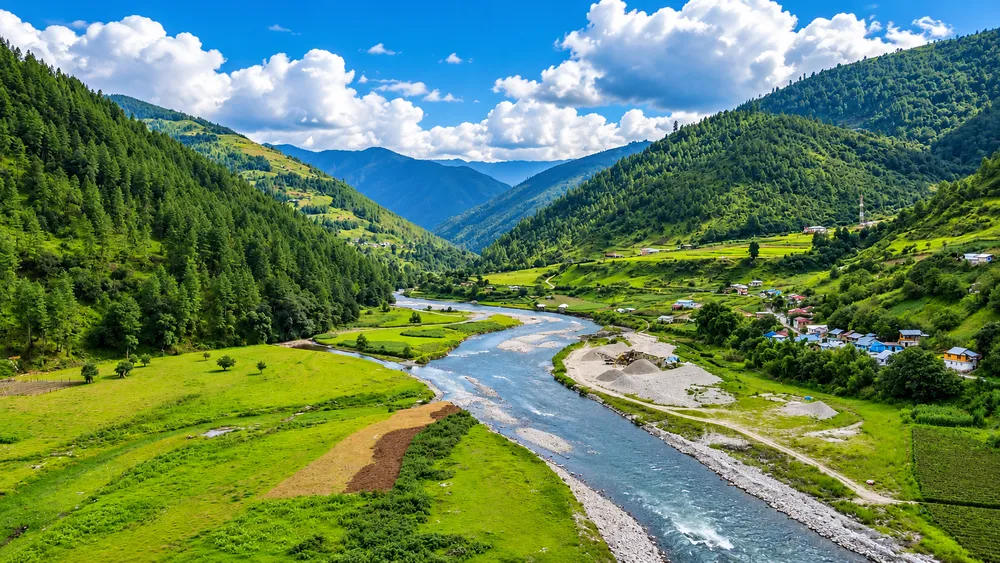
Sangti Valley sits a short drive from Dirang in West Kameng district, a broad stretch of farmland and orchard along the Sangti River with the Eastern Himalaya rising on either side. It's one of the easiest additions to a Dirang stop on an Arunachal Pradesh road trip — close enough that most travellers see it as a half-day detour rather than a separate destination, though it rewards a slower visit if your schedule allows one.
The valley is farmland first and viewpoint second: apple, kiwi, orange, and apricot orchards line the road, Monpa villages sit along the valley floor, and the Sangti River runs through the middle of it. From November into winter, the valley is also known for hosting migratory black-necked cranes, which is what put it on the map for a lot of visitors in the first place. Because Sangti sits directly off the main Bomdila-Tawang route through Dirang, it fits naturally into a longer itinerary without adding much extra travel.
Why Visit Sangti Valley?
The draw here is the setting rather than any single sight. The valley is wide and open compared to a lot of the more closed-in hill terrain elsewhere in West Kameng, which makes for good long views down the length of it, especially in the softer light of early morning or late afternoon. Orchards and farmland run right up to the villages, and it's common to see wild horses and grazing cattle along the road.
It's also a place that works well simply slowed down. There isn't a checklist of attractions to move through quickly, and the valley rewards travellers who spend an hour or two walking rather than driving straight through. Photography, quiet village walks, and the chance of spotting the black-necked cranes in winter are the main reasons people build in time here, and all three benefit from not rushing.
Where Is Sangti Valley?
Sangti Valley is in West Kameng district, close to Dirang, and is reached by a short side road off the main Bomdila-Tawang highway. Distance from Dirang is generally cited as somewhere between 7 and 15 km depending on the source and the exact point measured from, so treat it as a short drive of well under half an hour rather than a fixed number.
It sits within easy reach of other West Kameng stops — Dirang itself, the nearby hot springs, and Dirang Dzong are all close enough to combine with a Sangti visit on the same day.
[INTERNAL LINK: Dirang Travel Guide]
Places to Visit in and Around Sangti Valley
The Valley Floor and Villages
The main experience in Sangti is simply the drive and walk through the valley itself — small Monpa villages, farmland, and the Sangti River running alongside the road. There's no single "sight" to check off; this is best treated as an hour or two of unhurried walking or driving, stopping wherever the view or the light is good.
Orchards
Apple, kiwi, orange, and apricot orchards line much of the valley, and depending on the season, some are open to walk through or buy fruit directly from. Timing depends on harvest season, so this is worth checking locally rather than expecting it year-round.
Black-Necked Crane Habitat
Sangti is one of only two known wintering sites for the black-necked crane in India, the other being Zemithang in Tawang district. The cranes are typically present from around November through the winter months, foraging in harvested paddy fields. Sightings are not guaranteed, since they depend on the birds' movements that season, weather, and time of day — early morning is generally considered the better window if you're specifically hoping to see them.
(Worth noting: the valley has seen a fair amount of new construction in recent years in areas the cranes traditionally used for foraging, so the experience described in older write-ups may not fully match what you'll see today. It's still worth a visit, just without assuming the setting is exactly as pristine as it once was.)
Dirang Dzong
A short distance from Sangti, near Dirang, this old fort complex is now mostly in ruins but retains its stone walls and offers views over the surrounding area. It's a natural add-on if you're combining Sangti with a Dirang stop.
Things to Do in Sangti Valley
- Walk or drive slowly through the valley, stopping at villages and orchards along the way
- Photograph the valley in early morning or late afternoon light
- Look for black-necked cranes in winter, without expecting a guaranteed sighting
- Talk to homestay hosts or villagers about the Monpa community and local farming
- Try local food where available, largely tied to what homestays or small eateries offer that day
- Simply spend unstructured time in the valley rather than treating it as a quick photo stop
Birdwatching beyond the cranes is also worth doing quietly and without expectation — the valley and surrounding forest support other species, but sightings depend on season, time of day, and a fair amount of luck.
Sangti Valley and Dirang
Sangti works best as a half-day extension of a Dirang stop rather than a destination you'd base yourself in for its own sake. Most travellers stay in Dirang and drive out to Sangti for a few hours, combining it with the hot springs or Dirang Dzong on the same day. If you'd rather stay inside the valley itself, a small number of homestays make an overnight possible, but Dirang remains the practical base for anyone wanting more choice in food and accommodation.
Best Time to Visit Sangti Valley
Winter (November–February): The main season for visiting, largely because of the black-necked cranes, which are typically present from November onward. Days are cool and clear more often than not, though nights get cold.
Spring (March–April): Pleasant weather and greener surroundings, with orchards coming back to life after winter, though the cranes will have already left by this point.
Summer (May–June): Milder than lower-altitude parts of Arunachal Pradesh, but this is also when the valley is furthest from its main draw for most visitors.
Monsoon (June–September): Rain affects visibility and can make roads in the wider region less predictable. Not the ideal season for a Sangti detour if clear valley views are the goal.
Autumn (October): A transitional window with generally improving weather as the monsoon clears, just ahead of the cranes' arrival.
If seeing the black-necked cranes matters to your trip, November through winter is the window to plan around. If you're mainly after the valley scenery and orchards, spring is a strong alternative with fewer specific constraints.
How to Reach Sangti Valley
Sangti is reached by a short side road off the main Bomdila-Tawang highway, branching off near Dirang. Most travellers combine it with a Dirang stop rather than visiting it as a separate leg of a trip:
- From Dirang: A short drive by private vehicle or taxi, generally well under 30 minutes depending on where in the valley you're headed.
- From Tezpur/Bhalukpong: These are the wider regional gateways into West Kameng; from either, the route runs through Bomdila to Dirang, from where Sangti is the short final leg.
(Exact drive times and current road conditions on the side road into the valley are worth confirming locally, since conditions can vary seasonally.)
How Many Days Are Enough?
Day visit: A few hours is enough to drive through the valley, stop at a viewpoint or two, and get a feel for the setting, especially if you're combining it with Dirang sightseeing the same day.
1-night stay: Gives you an early morning in the valley, which matters if you're hoping to see the black-necked cranes or simply want the valley in softer light without a day-trip time pressure.
2-night stay: Only worth it if you want genuinely unstructured time — slow walks, photography at different times of day, and no fixed agenda. Most travellers won't need this long, but it suits anyone treating Sangti as a rest stop rather than a sightseeing leg.
Staying overnight, even for one night, generally gives a different experience from a quick midday stop, mainly because of the early morning light and the better odds of seeing wildlife before the day's activity picks up.
Where to Stay in Sangti Valley
A small number of homestays and guesthouses operate within the valley itself, generally simple and family-run, and some eco-stay style properties have appeared in recent years alongside the valley's other new construction. Dirang, a short drive away, offers a wider range of guesthouses and hotels if you'd rather stay there and visit Sangti during the day.
(Property names, prices, and current availability aren't included here since they change often — check directly with a homestay or a local operator before booking.)
Suggested Sangti Valley Itinerary
Morning: Drive from Dirang into Sangti Valley, aiming for early light if birdwatching is a priority.
Late morning: Walk through a village or two, visit an orchard if the season allows, and spend time along the river.
Midday: Return to Dirang for lunch, or continue on to Dirang Dzong and the hot springs if combining sights in one day.
Afternoon (optional, if staying overnight): Return to the valley for late-afternoon light and a quieter second look before dinner at your homestay.
This slots easily into a broader Bomdila-Dirang-Tawang road trip without adding a full extra day, unless you choose to stay overnight in the valley itself.
Practical Travel Tips
- Dress in layers. Mornings and evenings are cold, even when midday is pleasant.
- Wear comfortable, sturdy footwear for walking on village paths and uneven ground near the river.
- Carry cash. Card and digital payment options are limited this far off the main towns.
- Expect patchy mobile connectivity once off the main highway.
- Check road conditions before heading out, especially outside the drier months.
- Eat what's offered locally rather than expecting a wide menu — homestay meals are usually simple, seasonal, and freshly made.
- Photograph respectfully, particularly around villages and any local farming activity — ask before photographing people directly.
- Treat the cranes and other wildlife as something to observe quietly, not to approach or disturb, especially given how sensitive this species is to disruption.
- Be mindful of the valley's ongoing development. Some areas that were open farmland a few years ago now have new guesthouses and buildings, so keep expectations realistic if you've seen older photos of the valley.
Frequently Asked Questions
Where is Sangti Valley? Sangti Valley is in West Kameng district, Arunachal Pradesh, a short drive from Dirang off the main Bomdila-Tawang highway.
How far is Sangti Valley from Dirang? Sources cite anywhere from about 7 to 15 km, so treat it as a short drive of well under half an hour rather than a fixed distance.
Is Sangti Valley worth visiting? Yes, particularly for travellers interested in valley scenery, orchards, and a quieter pace, though it's best approached as a peaceful stop rather than a destination packed with sights.
What is Sangti Valley known for? Its farmland-and-orchard landscape along the Sangti River, and as one of only two known Indian wintering sites for the black-necked crane.
When can I see black-necked cranes in Sangti Valley? Typically from around November through the winter months, though sightings aren't guaranteed and depend on the birds' movements that season.
How do I reach Sangti Valley? By road via Dirang, a short drive off the main Bomdila-Tawang highway, most easily arranged by private vehicle or taxi from Dirang.
Should I stay overnight in Sangti Valley or visit from Dirang? Either works. A day visit from Dirang covers the main experience; an overnight stay gives you early morning light and better odds of spotting wildlife, at the cost of Dirang's wider range of accommodation and food options.
What is the best time to visit Sangti Valley? November through winter for the black-necked cranes, or spring for pleasant weather and greener orchards without that specific draw.