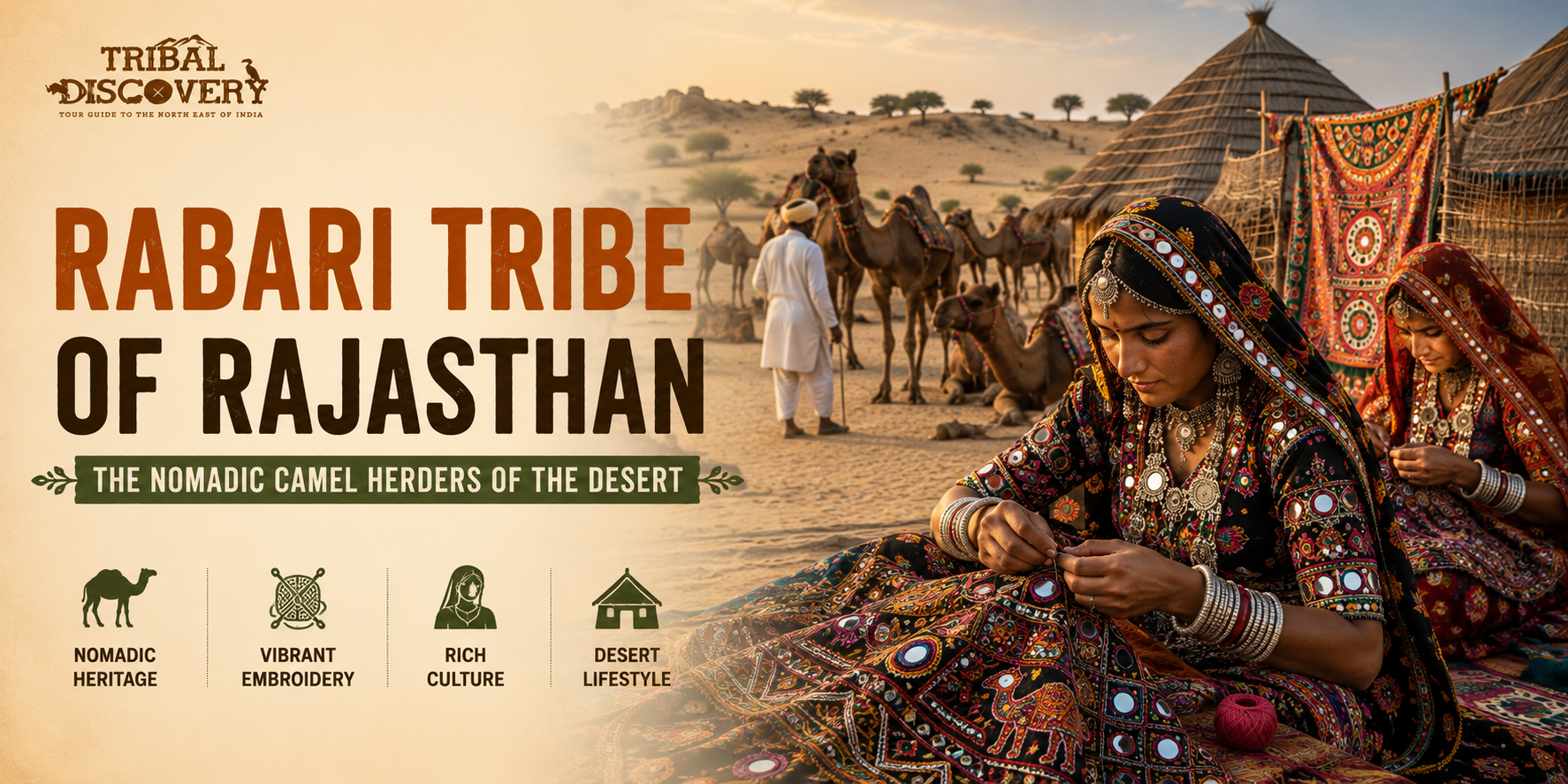
Rajasthan is a state of many stories, and few communities carry as many layers of history, color, and quiet resilience as the Rabari. The Rabari are a nomadic camel-herding people in Rajasthan whose name means "outside the way," and that identity, of being apart from the mainstream while remaining entirely rooted in their own world, defines everything about them. For travelers who want to go beyond temples and palaces and encounter a living, breathing culture still connected to ancient rhythms, the Rabari offer one of the most extraordinary windows into India's nomadic heritage.
Who Are the Rabari People?
About 270,000 Rabaris are settled in the deserted lands of western India, spread across Gujarat, Rajasthan, Punjab, and the Sindh Province of Pakistan. In Rajasthan, they are concentrated in the Thar Desert region and the Pali district, particularly around Jawai. Scholars believe that the Rabaris have ancient connections to the Rajputs and over the centuries evolved into a distinct community with a nomadic lifestyle centered around herding and trading livestock.
Originally, the Rabari were nomadic people who bred camels exclusively, travelling from village to village to find new pastures and selling products derived from the camel, including milk, wool, and leather. Over time, many families transitioned to semi-nomadic life, maintaining herds of sheep and goats alongside camels while settling in villages for longer stretches. Despite modernisation, their cultural identity has remained remarkably intact.
Daily Life and Social Structure
The Rabari culture is deeply intertwined with their pastoral lifestyle and is characterized by a strong sense of community, oral traditions, and a unique social structure. The community is organized into clans, and each clan has its own customs and rituals.
Their sacred occupation is to nurture and graze the cattle, camels, and goats, and they wander to different locations for over six months chasing the rains. Men typically lead the herds across long seasonal routes while women manage the household, the children, and the community's economic affairs. This division makes Rabari women some of the most independently capable women in any traditional community in India.
Since the community is devoted to Lord Shiva and Goddess Parvati, they seek the advice of Mata Parvati in every essential matter, and the majority of economic decisions are looked at by the women of the community. This gives Rabari women a powerful, respected role that stands in sharp contrast to many other traditional communities in the region.
The Art of Rabari Women
Among the Rabari's most celebrated contributions to Indian cultural life is their extraordinary textile art. From unique art particularly mirror work to mud relief sculpture work, Rabari women are very skilled. They use this art to beautify their homes and entire villages with block elements like elephants, camels, peacocks, and women carrying water pots.
Their embroidery is not decorative for its own sake. Every motif, color combination, and mirror arrangement carries meaning tied to community identity, clan affiliation, and life stage. Young Rabari girls begin learning embroidery from childhood, stitching their own dowry items by hand over years before marriage. This tradition means every piece is both a personal statement and a community legacy. Rabari textile art is characterized by intricate embroidery, vibrant colours, geometric patterns, and the use of mirrors, with their unique designs reflecting their heritage and culture.
The Remarkable Leopard Connection at Jawai
One of the most extraordinary aspects of Rabari culture, especially for travellers visiting the Jawai region in Pali district, is their relationship with leopards. Rabaris believe that leopards are sacred protectors, often associated with local deities. Even if a leopard kills their livestock, Rabaris do not retaliate violently. Instead, they consider it part of nature's balance. This belief system has allowed leopards to thrive outside national parks, making Jawai one of the best leopard-sighting destinations in India and a rare example of genuine human-wildlife harmony rooted in indigenous spiritual values.
Festivals and Celebrations
Rabaris celebrate major festivals like Navratri, Holi, and Diwali, but with unique rituals that blend Hindu beliefs and tribal customs. Navratri holds special importance, with dances, songs, and worship of local goddesses. The Pushkar Camel Fair is also a deeply significant tradition for the Rabari community, where families gather to trade livestock, display embroidered textiles, and celebrate their identity through music and dance.
How to Experience Rabari Culture
The most authentic way to encounter Rabari life is to visit villages in the Jawai or Sirohi region with a local guide who already has relationships within the community. A Jawai visit during October or November combines a leopard safari at dawn with a guided Rabari village walk, offering a uniquely layered experience of wildlife and culture within the same landscape. Purchasing embroidery or textile work directly from Rabari women artisans is one of the most respectful and impactful ways to support the community economically while bringing home a genuinely meaningful piece of craft heritage.
Dress modestly, move with patience, and follow your guide's lead on how to interact respectfully. The Rabari are a dignified community with a quiet pride in their identity, and they welcome curiosity that comes with genuine respect.
Frequently Asked Questions
Q1. Who are the Rabari tribe of Rajasthan?
The Rabari are a nomadic camel-herding community native to Rajasthan and Gujarat, with around 2,70,000 members across western India. Their name means "outside the way," reflecting their origins as wanderers who herded livestock across the Thar Desert and surrounding regions.
Q2. What is the Rabari tribe known for?
The Rabari are best known for their mirror embroidery and textile art, camel herding traditions, strong community matriarchy in economic decisions, and their remarkable peaceful coexistence with leopards in the Jawai region of Rajasthan.
Q3. Where can I meet the Rabari tribe in Rajasthan?
The Jawai region in Pali district and the Sirohi district are the best areas to visit Rabari villages in Rajasthan. Many tour operators combine Jawai leopard safaris with guided Rabari village visits as part of a single experience.
Q4. Are Rabari women known for any particular craft?
Yes, Rabari women are celebrated for their intricate mirror embroidery, geometric patterned textiles, and mud relief wall sculpture. These crafts carry deep cultural meaning and are passed down through generations, with girls beginning their embroidery training from childhood.
Q5. Do Rabari people still live a nomadic lifestyle?
Many Rabari families have transitioned to semi-nomadic life, settling in villages while still undertaking seasonal herding migrations. A significant portion of the community continues to follow traditional herding routes for extended parts of the year.
Q6. What is the best time to visit Rabari villages in Rajasthan?
October to March is the best window, when the weather is comfortable, herding activity is visible, and cultural festivals like Navratri and Pushkar Fair fall within the season.
Experience Rabari Culture with Tribal Discovery Tours
Meeting the Rabari community is one of the most quietly profound cultural experiences Rajasthan offers. At Tribal Discovery Tours, we design immersive journeys into Rajasthan's nomadic and tribal landscapes, connecting travellers with Rabari villages, artisan communities, and the extraordinary Jawai leopard territory through experiences that are built on local trust and cultural respect.
Let us help you experience the desert's living heritage.
Plan your Rajasthan tribal journey at Tribal Discovery Tour.