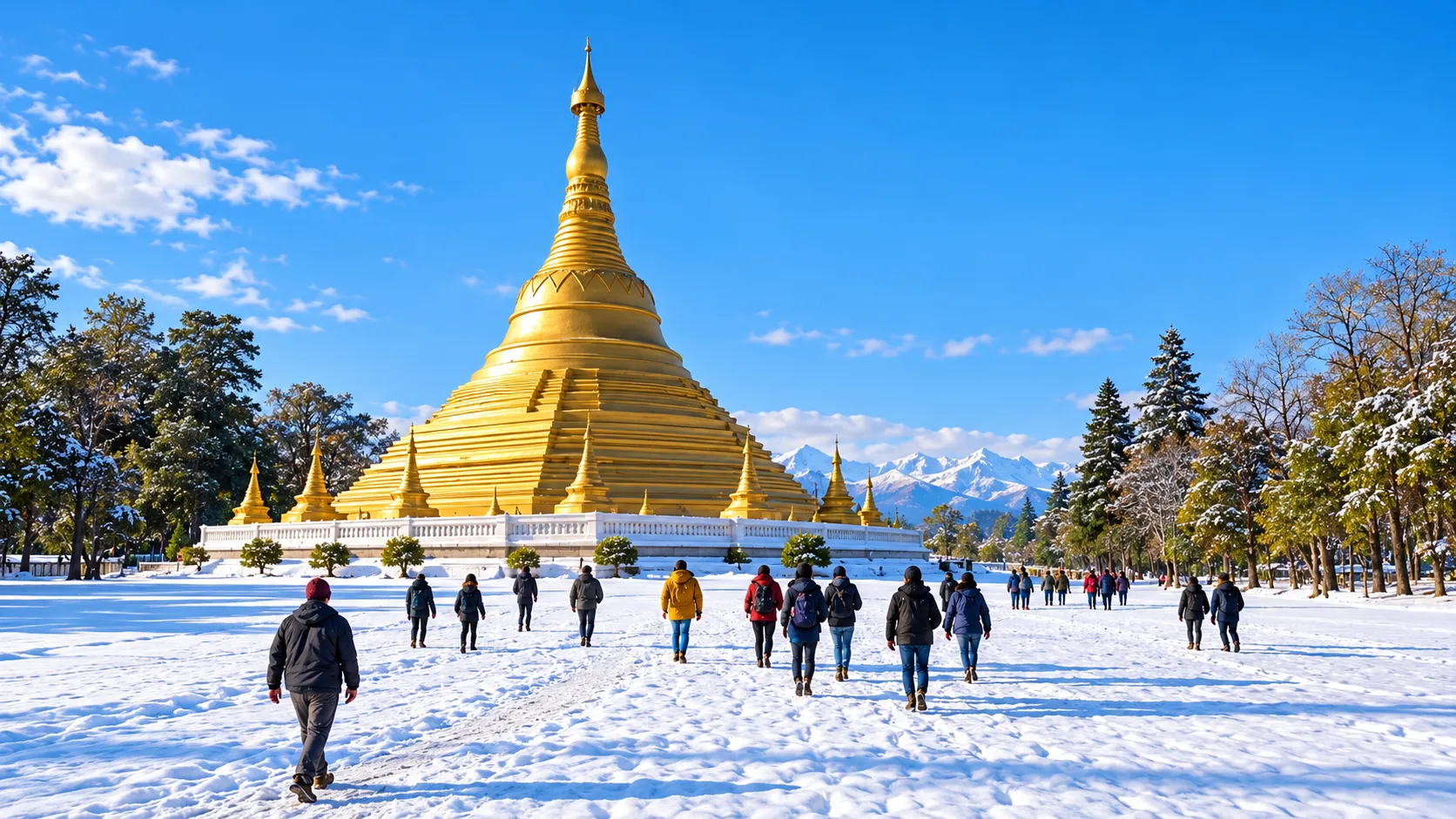
Namsai sits in the southeast of Arunachal Pradesh, close to the Assam border, and it feels different from the mountain towns most visitors picture when they think of the state. The land here is mostly low and green, with rivers, rice fields, tea country nearby and a strong Theravada Buddhist presence. Gilded temples and prayer halls stand in villages where daily life carries on around them.
Travellers add Namsai to an Arunachal Pradesh trip for three main reasons. It has one of the state's best-known Buddhist sites, it is a gentle introduction to eastern Arunachal, and it rewards people who like to slow down. This guide covers where Namsai is, what to see, how to reach it and how to plan two or three days.
Where Is Namsai?
Namsai is a district in eastern Arunachal Pradesh, with its headquarters at Namsai town. It lies toward the south and east of the state and borders Assam, which is why many travellers arrive from the Assam side. It was created as a separate district from Lohit district, so older guides may still describe the area as part of Lohit.
The terrain is flatter than much of Arunachal Pradesh. Rivers cross the plains, hills rise in the distance and the landscape is mostly farmland and forest. It makes a different kind of destination from the high Himalayan districts, and it is much warmer.
In an eastern Arunachal itinerary, Namsai often serves as an early stop or a quiet base. From here, travellers continue toward other places in the east, such as Tezu and Parshuram Kund, or toward Miao and Namdapha. See our
Why Visit Namsai?
Nature. The district is green and open, with river scenery, forest edges and farmland. You do not come here for dramatic peaks. You come for space and quiet.
Buddhist culture. Namsai is closely associated with the Khamti community, whose Theravada Buddhist tradition shapes local temples, festivals and village life. This is unusual in India, where Buddhism in the Himalayan regions is more often the Tibetan Mahayana tradition.
Local communities. The area is home to several communities, and a few days here gives you a chance to see how they live, eat and celebrate.
Landscapes. Expect lowland scenery in place of alpine views, with light that is good for photography in the early morning and late afternoon.
Slow travel. Namsai suits travellers who prefer a few good experiences to a packed schedule. It works well after a long mountain journey, when you want somewhere calmer.
Places to Visit in Namsai
Namsai does not have a long list of formal tourist sights, and this guide would rather say so than pad it. The places below are the ones most worth your time. Opening arrangements change, so check locally.
Golden Pagoda (Kongmu Kham). This is the headline attraction, covered in the next section.
Village Buddhist temples and monasteries. Besides the Golden Pagoda, many Khamti villages have their own temples, often with painted or gilded halls and quiet grounds. They are active places of worship, so go as a respectful visitor, not as a sightseer. Ask permission before entering and before taking photographs. Ask your host or a local guide which temples are open to visitors and when.
Namsai town and local market. The town centre is useful for food, supplies and a sense of everyday life. A walk through the market in the morning shows local produce and gives a chance to talk to people. It takes an hour or two and needs no planning.
Countryside and river scenery. Rural roads around Namsai pass farmland, bamboo, small settlements and river crossings. Stop where it is safe and ask before photographing people or private land.
Nearby add-ons. Parshuram Kund, a Hindu pilgrimage site in Lohit district, and the town of Tezu can be combined with a Namsai stay. Check the route and timing with local operators before you commit.
Golden Pagoda and Buddhist Culture
The Golden Pagoda, known locally as Kongmu Kham, is a Buddhist temple complex near Namsai and the site most visitors have in mind when they plan a trip here. It is built in a style associated with Southeast Asian, particularly Burmese, Theravada architecture, with tiered golden roofs, a central Buddha image and decorative detail that reflects the Khamti community's links across the border region.
Some facts are well established. The complex is an active place of worship connected with the Khamti community, and it is recognised as a landmark of the district. Other details, such as the date of construction, the people who built it and the dimensions of the complex, should be taken from a verified source.
Religious traditions here are worth approaching with care. Stories about relics, blessings or the powers of images are matters of faith, and they are best reported as what devotees believe, not as historical fact. A good way to learn is to ask monks or local people what the site means to them.

Practical points: dress modestly, with shoulders and knees covered, and remove shoes before entering halls. Speak quietly, avoid pointing your feet at Buddha images and ask before photographing monks or worshippers. Opening hours, entry rules and any fees can change.
Things to Do in Namsai
Only activities that fit the area are listed here.
Nature exploration. Walk along quiet roads, watch birds and look at the farmland and forest edges. Take local advice before going near rivers, since levels change with the rains.
Scenic drives. The roads between villages and toward nearby towns give a good sense of the landscape. Hire a driver who knows the area, and leave time to stop.
Cultural experiences. Visit temples with respect, join a festival if your dates match, and ask your host about local customs. The Khamti new year festival, Sangken, is usually held in April.
Village visits. If you want to visit a village, arrange it through a local host or guide, and treat it as a visit to someone's home, not a tour stop.
Photography. Early morning light on the pagoda, mist over fields and everyday village scenes all reward patience. Ask before photographing people.
Local food. Try regional dishes at local eateries or homestays. Ask what is in a dish if you have dietary needs.

Local Culture, Communities & Food
The Khamti are the community most closely linked with Namsai's Buddhist character, and their language, script, dress and festivals form an important part of local life. Other communities also live in the district, and each has its own traditions. No single description fits everyone, so listen to what people tell you about themselves and avoid generalisations.
Food is one of the easiest ways into local culture. Rice is central across much of the region, and dishes often use local vegetables, bamboo shoots, river fish and meat, depending on the household and community. Ask hosts what they recommend, and be mindful that some people avoid certain foods for religious reasons.
If you stay in a homestay or are invited to a meal, accept graciously and follow your host's lead on etiquette. If you attend a festival, ask where to stand, what to wear and whether photography is welcome. Treat traditions as living practice, not as entertainment, and try to buy crafts or food directly from the people who make them.
How to Reach Namsai
Distances, travel times, fares and schedules are not given here because they change and I cannot verify them. Check each item before you travel.
Airports. There is no single obvious airport for every traveller. Dibrugarh in Assam is widely used as a gateway for eastern Arunachal, and Tezu in Lohit district also has an airport
Railway. Tinsukia and Dibrugarh in Assam are the railway stations most commonly used. Check timetables on official railway channels.
Road travel. Most visitors finish the journey by road, by hired car, taxi or shared vehicle. Roads in the region are affected by rain and maintenance, so allow extra time and ask locally about current conditions.
Routes from Assam. The common approach is from upper Assam into eastern Arunachal. The exact route depends on where you start and on current road and bridge access.
Permits. Indian citizens who are not residents of Arunachal Pradesh generally need an Inner Line Permit, and foreign nationals have separate requirements. Rules, fees and application methods change, so verify them with the official sources before you travel.
Best Time to Visit Namsai
Namsai's lower elevation means its climate is warmer and more humid than the mountain districts. I have not given temperature or rainfall figures. Check a current forecast before you go.
Cooler, drier months. The months after the monsoon through the winter are generally the most comfortable for sightseeing, photography and long drives. Mornings can be misty and cool.
Spring. Warmer weather returns, and festival season around April can offer a chance to see local celebrations. Crowds and demand for rooms may rise.
Summer and monsoon. Expect heat, humidity and heavy rain. Landscapes are very green, but roads can be affected and outdoor plans may need to change. Keep your itinerary flexible if you travel then.
Where to Stay in Namsai
Accommodation in and around Namsai is generally modest. Typical options include simple hotels and guesthouses in town, government lodges and homestays in some villages. Some travellers also base themselves in nearby larger towns in Assam and make day trips.
Staying in Namsai town puts you close to food, transport and the pagoda. A homestay gives more contact with local life, though facilities may be basic. Book ahead around festivals. I have not named properties or quoted prices, since both change and I cannot verify them.
Suggested Namsai Itinerary
These are frameworks. Adjust them to weather, road conditions and what is open.
2-Day Namsai Itinerary
Day 1. Arrive and settle in. Visit the Golden Pagoda in the afternoon, when the light is soft, and spend time at the complex without rushing. Eat locally in the evening.
Day 2. Take a morning walk through Namsai town and its market. Then drive through the surrounding countryside, stopping at a village temple if you have arranged it through a local host. Leave in the afternoon.
3-Day Namsai Itinerary
Day 1. Arrive, rest and visit the Golden Pagoda late in the day.
Day 2. Spend the morning in the market and town, then take a slow rural drive and a village visit arranged in advance. Return for an early dinner and a quiet evening.
Day 3. Use the morning for photography or a nature walk, then continue to a nearby destination such as Tezu and Parshuram Kund, or toward Miao, depending on your plans. Confirm routes and timing locally.
If you would like help shaping a route, Tribal Discovery Tour can talk through options with you.
Travel Tips for Namsai
What to pack. Light, breathable clothing, a rain jacket, comfortable walking shoes, sun protection, insect repellent, a torch and personal medication. Carry modest clothing for temples.
Connectivity. Mobile coverage may be uneven in villages and rural stretches. Download maps and keep important numbers offline.
Cash and ATMs. Carry some cash, since card and digital payments may not be accepted everywhere. ATMs are likely in town, but availability and reliability should be checked.
Road travel. Allow generous time, avoid driving at night where possible and ask locally about road conditions, especially after rain.
Weather. Check forecasts, and pack for both heat and rain.
Local etiquette. Greet people politely, dress modestly in villages and temples, and follow the lead of your host.
Photography. Ask before photographing people, monks and worshippers, and follow any signs at religious sites. Avoid using drones near temples or people unless you have clear permission.
Responsible tourism. See the next section.
Responsible Tourism in Namsai
Treat temples and religious ceremonies with respect. Dress modestly, remove shoes where asked, keep your voice low and never touch sacred objects or monks without invitation. If a ceremony is under way, observe quietly from a distance unless invited closer.
Respect local communities by asking before photographing, accepting hospitality graciously and not treating villages as attractions. Spend money locally by using local guides, homestays, restaurants and craft sellers where you can.
Look after the environment. Carry your waste out, avoid single-use plastic, keep soap and chemicals out of rivers and stay on paths. Follow instructions from local people and officials, and be flexible when weather or customs change your plans.
Frequently Asked Questions About Namsai
Where is Namsai?
Namsai is a district in southeastern Arunachal Pradesh, bordering Assam, with its headquarters at Namsai town.
Is Namsai worth visiting?
Yes, if you value Buddhist culture, quiet landscapes and slow travel. It is less suited to travellers looking for high mountains or adventure sports.
How do I reach Namsai?
Most travellers go by road from Assam, using Dibrugarh or Tinsukia as gateways. Verify current flights, trains and routes before travelling.
What is Namsai known for?
It is known for the Golden Pagoda and its Khamti Theravada Buddhist culture, along with lowland scenery.
What is the best time to visit Namsai?
The cooler, drier months are generally the most comfortable. The monsoon is green but can disrupt roads.
How many days are enough for Namsai?
Two days cover the main sights, and three allow a more relaxed pace with village visits and nearby add-ons.
What are the main places to visit in Namsai?
The Golden Pagoda is the main attraction, along with village temples, Namsai town and the surrounding countryside.
Do tourists need permits?
Non-resident Indian citizens generally need an Inner Line Permit, and foreign nationals have separate rules. Verify current requirements with official sources.
Where can I stay in Namsai?
Options usually include simple hotels, guesthouses and homestays. Book ahead around festivals and confirm facilities directly.
What should I carry to Namsai?
Carry light clothing, rain protection, comfortable shoes, modest clothing for temples, insect repellent, medication, some cash and offline maps.