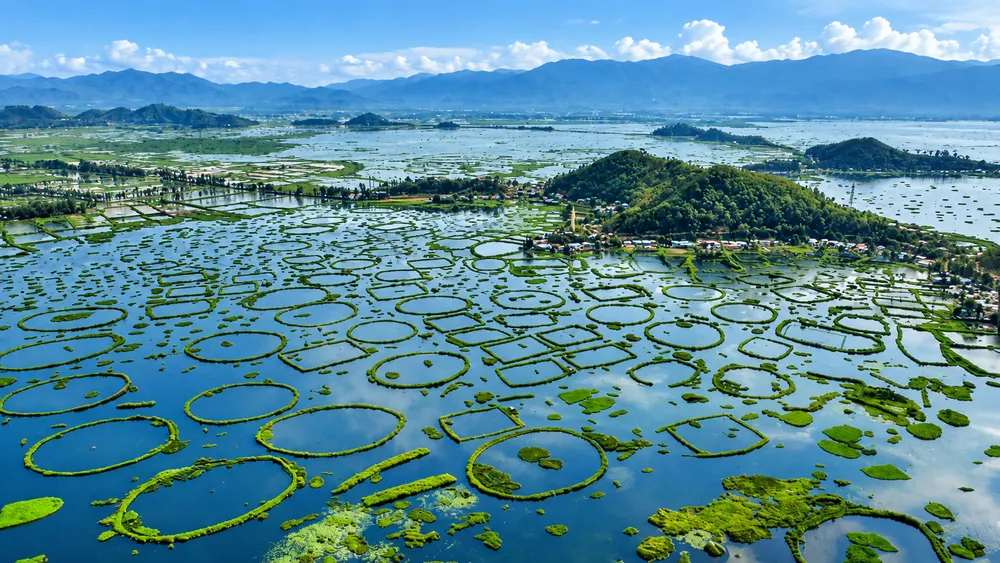
Loktak Lake is the largest freshwater lake in Northeast India, located south of Imphal in Manipur. It is known for its phumdis, floating masses of vegetation, soil and organic matter that drift across the surface and give the lake its unusual appearance. Its southern part forms Keibul Lamjao National Park, home to the endangered Sangai deer.
For travellers, Loktak offers wide lake views, fishing communities, wildlife conservation and historical sites at nearby Moirang. This guide explains what to see, how to reach Loktak Lake, when to go and how to visit responsibly.
Before you plan: Check current travel advisories for Manipur and confirm local conditions with a reliable operator or official source before booking.
Why Visit Loktak Lake?
Quick answer: Loktak Lake is worth visiting for its floating phumdis, lake landscapes, Keibul Lamjao National Park and the Sangai deer, the traditional fishing life around the lake, and historical sites in Moirang.
- Lake landscape: A large, shallow lake surrounded by hills, with shifting patterns of water and vegetation.
- Floating phumdis: The lake's most distinctive feature and the reason it looks unlike most lakes.
- Local communities: Fishing and farming communities depend on the lake for their livelihoods.
- Cultural significance: Loktak is central to Manipuri life, economy and identity.
- Wildlife: Keibul Lamjao protects the Sangai deer and supports a range of wetland birds.
- Photography: Morning mist, fishers at work, circular phumdi formations and hills on the horizon.
Loktak Lake has been designated a Ramsar Wetland of International Importance since 1990.
What Are the Floating Islands of Loktak Lake?
Quick answer: Phumdis are floating mats made of vegetation, soil and decaying organic matter. They are thick enough to support plants and, in some cases, small huts, but they float on the water rather than being anchored land.
- How they form: Plants and organic matter accumulate and bind together over time, forming mats that float.
- Seasonal behaviour: Phumdis can partly sink or settle in the dry season and float higher when water levels rise.
- Shapes: Many phumdis are naturally irregular. The neat circular shapes seen in photographs are often fishing enclosures, known locally as athaphum, created by fishers to trap fish.
- Homes on the lake: Some fishers live in small huts, known as phumsang, built on phumdis.
Ecological importance: Phumdis provide habitat for plants, fish and birds, and they form the base of Keibul Lamjao National Park.
Cultural importance: They are part of how local fishing communities work and live on the lake.
Phumdi growth and management are an ongoing conservation topic, as changes in water levels and the spread of phumdis affect the lake's health.
Keibul Lamjao National Park
What makes it distinctive: Keibul Lamjao, in the southern part of Loktak Lake, is widely described as the only floating national park in the world, because much of its area consists of phumdis.
Sangai deer: The park is the natural habitat of the Sangai, or brow-antlered deer, Manipur's state animal. The Sangai is endangered and found in the wild only here. Its hooves are adapted to moving on the soft, floating ground.
Relationship with Loktak Lake: The park depends on the lake's water levels and phumdi health. Changes in the lake directly affect the Sangai's habitat.
Conservation significance: The park was created to protect the Sangai, which was once thought to be extinct. Its survival depends on careful management of the entire lake system.
Responsible wildlife viewing:
- Sightings are never guaranteed. The Sangai is shy and its habitat is dense.
- Use designated viewpoints and follow forest department instructions.
- Keep noise to a minimum and do not feed or approach animals.
- Check current access arrangements, timings and entry rules with the forest department before visiting.
Places to Visit Around Loktak Lake
Sendra
An island with tourist facilities offering panoramic views over the lake and phumdis. It is a popular viewpoint and photography stop. Confirm current facilities and access before visiting.
Moirang
A town near the western shore of the lake with historical and cultural importance.
- INA Memorial and Museum: Moirang is associated with the Indian National Army (INA), which is recorded as having hoisted its flag on Indian soil here in April 1944. The memorial complex and museum display material related to the INA and the Second World War campaign in the region.
- Cultural significance: Moirang is also connected to Meitei cultural traditions and folklore, including the Lai Haraoba festival associated with the local deity. Confirm dates and visitor access locally.
Keibul Lamjao National Park
The park's viewpoints give a chance to see the floating habitat and, with luck, the Sangai.
Thanga and nearby villages
Settlements around the lake, including Thanga, are home to fishing communities. Visit with a local guide and respect privacy.
Things to Do at Loktak Lake
- Sightseeing: Viewpoints at Sendra and around the lake.
- Photography: Early mornings are best for mist and soft light.
- Boating: Local boat rides may be available depending on season and local arrangements. Confirm before planning around it.
- Nature observation: Birdwatching is best in winter, when migratory species are present.
- Cultural experiences: Learn about fishing traditions and Moirang's history with a local guide.
Best Time to Visit Loktak Lake
Quick answer: October to March is generally the best time to visit Loktak Lake, with pleasant weather, clearer views and good birdwatching.
| Season | Months | Weather | Lake Views | Roads and Activities |
| Winter | December to February | Cool, dry; foggy mornings | Good; migratory birds | Good for travel |
| Spring | March to April | Pleasant | Good | Good |
| Summer | May to June | Warm; rain begins | Fair | Showers may disrupt plans |
| Monsoon | July to September | Heavy rain | Higher water; fewer clear days | Road delays and limited outdoor time |
| Post-monsoon | October to November | Fresh, clear | Very good | Good; festival season in Manipur |
The Sangai Festival, organised by Manipur Tourism, has traditionally been held in November. Confirm whether and when it is scheduled for 2026.
How to Reach Loktak Lake
- Imphal: The capital of Manipur and the base for visiting Loktak.
- By air: Imphal has an airport (Bir Tikendrajit International Airport) with flights from major Indian cities. Check current routes.
- By road: Loktak and Moirang lie south of Imphal. Moirang is roughly 45 km from Imphal, and the drive generally takes 1 to 1.5 hours depending on traffic and road conditions.
- Taxi/private vehicle: The most practical option for visiting multiple sites in a day.
- Public transport: Local buses and shared vehicles have operated between Imphal and Moirang; check current services locally.
- Rail: Railway connectivity to Imphal has been under development. Check the current status before relying on it.
Permits: Manipur has an Inner Line Permit system for visitors from outside the state. Foreign nationals may have separate registration requirements. Verify current rules with official Manipur government sources before travel.
How Many Days Are Enough?
- Half-day: Sendra viewpoint and a quick lake visit from Imphal.
- 1 day: Sendra, Keibul Lamjao and Moirang.
- 2 days: Add Imphal's cultural sites, or stay near the lake for early-morning views.
Suggested Manipur Itinerary Including Loktak Lake
Day 1: Imphal
- Arrive in Imphal.
- Visit Kangla Fort and Ima Keithel, the market run by women.
- Overnight in Imphal.
Day 2: Loktak Lake and Moirang
- Early drive to Loktak Lake.
- Sendra viewpoint.
- Keibul Lamjao National Park.
- INA Memorial and Museum in Moirang.
- Return to Imphal or stay near Moirang.
Day 3: Imphal and surroundings
- Imphal War Cemetery and cultural sites.
- Local food and markets.
- Departure or onward travel.
Where to Stay
- Imphal: The widest range of hotels and guesthouses; best for most travellers.
- Moirang: Limited, simpler options; convenient for early lake visits.
- Sendra: Tourist facilities have existed on the island; check current operation and booking process.
Book ahead during festival periods.
Responsible Tourism at Loktak Lake
- Respect local communities: Ask permission before visiting homes or phumsang huts.
- Avoid litter: Carry all waste out; plastic is especially harmful to the wetland.
- Protect the ecosystem: Do not damage phumdis, vegetation or fishing enclosures.
- Wildlife etiquette: Keep distance, stay quiet and follow park rules.
- Fishing communities: Do not disturb nets, traps or boats.
- Responsible photography: Ask before photographing people, especially fishers at work.
Practical Travel Tips
- Weather: Carry layers in winter; rain gear from May to September.
- Clothing: Modest, comfortable clothing.
- Footwear: Shoes with grip for viewpoints and wet paths.
- Cash: Carry cash; card acceptance is limited outside Imphal.
- Connectivity: Coverage is generally available in Imphal and major towns but may be restricted or patchy at times. Check the current situation.
- Transport: Hire a taxi for the day.
- Photography: Avoid photographing security installations or personnel.
- Local etiquette: Remove shoes where required and follow local customs.
Frequently Asked Questions
Where is Loktak Lake? In Manipur, south of Imphal, near Moirang.
What is Loktak Lake famous for? Its floating phumdis and Keibul Lamjao National Park, home of the Sangai deer.
What are phumdis? Floating mats of vegetation, soil and organic matter.
Is Keibul Lamjao really a floating national park? Yes, much of it rests on phumdis, and it is widely described as the only floating national park in the world.
Can I see the Sangai deer? Possibly, but sightings are not guaranteed.
What is the best time to visit Loktak Lake? October to March.
How far is Loktak Lake from Imphal? Moirang is roughly 45 km from Imphal, about 1 to 1.5 hours by road.
Is boating available at Loktak Lake? Local boat rides may be available depending on season; confirm locally.
Do I need a permit to visit Manipur? Visitors from outside Manipur may need an ILP. Verify current rules.
How many days are enough? One day for the lake and Moirang; two to three days for a wider Manipur trip.
Conclusion
Loktak Lake is unlike any other lake in India, with floating phumdis, a national park that rests on water and communities whose lives are shaped by the lake. Visit in the dry season, check current conditions in Manipur before travelling and treat both the ecosystem and the people with care.
If you would like help planning a Manipur trip that includes Loktak Lake, Moirang and Imphal, Tribal Discovery Tour can help you shape a realistic itinerary.