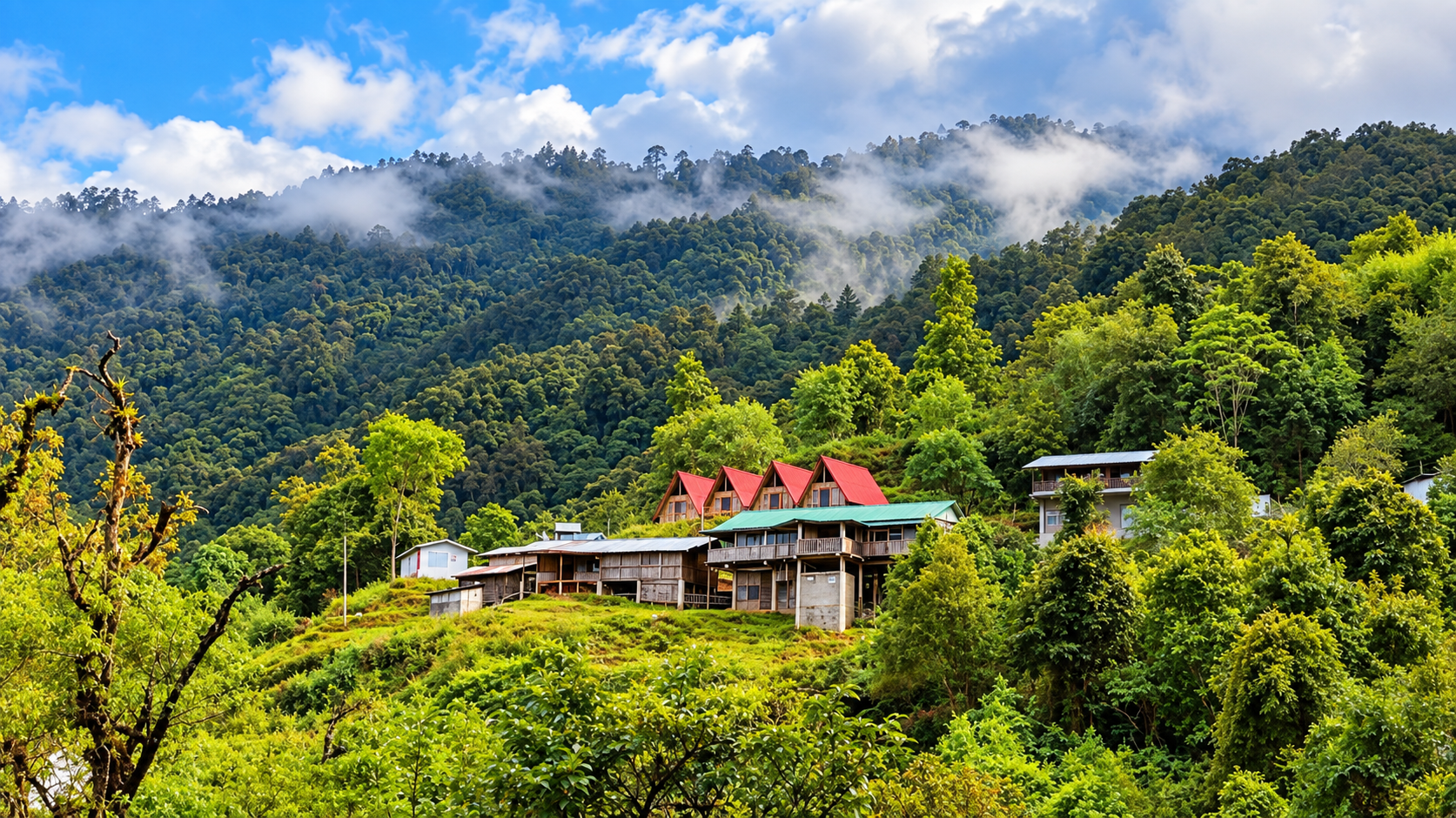
Eaglenest Wildlife Sanctuary is a forested mountain sanctuary in West Kameng district in western Arunachal Pradesh, known among birdwatchers for the range of habitats packed into a single road that climbs from foothills to a high ridge. It is not a comfortable, easy destination. Access is by a rough track, accommodation is basic, and the birds do not appear on demand. But for people who want to spend several days in a remote Eastern Himalayan forest, it is one of the best-documented birding areas in Northeast India.
This guide explains what the sanctuary is, why birders go, which species and other wildlife are documented, when to visit, how to reach it and how to plan responsibly. Where sources disagree on numbers or distances, that is noted. Wildlife sightings are never guaranteed, and anything about camps, permits or access should be confirmed before you book.
What Is Eaglenest Wildlife Sanctuary?
Eaglenest Wildlife Sanctuary lies in the Himalayan foothills of West Kameng district in Arunachal Pradesh. It covers roughly 217 square kilometres of forest, and it forms part of the Kameng Elephant Reserve. It sits next to Sessa Orchid Sanctuary, and the Bhalukpong to Bomdila highway runs along its eastern side, with Pakke Tiger Reserve beyond.
Elevation. The most widely cited elevation range is about 500 to 3,250 metres, though a few sources give slightly different upper limits. That range matters because it means the forest changes as you climb, from lowland wet evergreen forest through subtropical broadleaf forest to temperate oak and rhododendron forest and, at the top, conifers.
The name. It comes from the Red Eagle Division of the Indian Army, which was posted in the area in the 1950s.
Why it matters. Eaglenest is significant for biodiversity because of that elevation range, and because it sits within a larger protected landscape of connected forest. It is also an example of community involvement in conservation, with the local Bugun community playing a central role in managing tourism and protecting the forest.
Why Is Eaglenest Famous?
Eaglenest's reputation rests on three things.
Its birdlife. The sanctuary has a long list of recorded bird species. Published figures vary, with sources citing anything from around 450 to about 700 species, so it is safer to say that several hundred species have been recorded than to quote one number.
A bird described in the 21st century. The Bugun liocichla was formally described in 2006 and named after the Bugun community, whose forests it inhabits. Its discovery put the sanctuary on the map for birders worldwide.
Roadside access to varied habitats. A single track runs through the sanctuary, so travellers can bird from the road across several forest zones without long treks, which is unusual in mountainous country.
Eaglenest is often described as one of India's leading birding destinations. That is a widely shared view among birdwatchers, but it is an opinion, not a measurable ranking, so this guide avoids treating it as fact.
Birds of Eaglenest Wildlife Sanctuary
No single list can be complete, and the species mentioned below appear in multiple regional and birding sources. Whether you see any of them depends on season, weather, luck and your guide's skill.
Endemic and Rare Species
Bugun liocichla. A colourful, range-restricted bird known from a very small area near the road in the sanctuary. Estimates of the population and range vary between sources, and it is regarded as one of the rarest birds in the region. Do not plan a trip on the assumption you will see it. Many visitors do not, and responsible guides do not disturb it.
Forest Birds
Sources frequently mention Ward's trogon, Beautiful nuthatch, Wedge-billed babbler, Mrs Gould's sunbird, Fire-tailed sunbird, Sultan tit, Rufous-necked hornbill, laughing thrushes, barbets, parrotbills, warblers and babblers. Two pheasants, Blyth's tragopan and Temminck's tragopan, are also listed, though they are notoriously hard to see.
Raptors
Regional lists mention species such as Rufous-bellied hawk-eagle, Northern goshawk and Pied falconet. Open ridge and pass areas are useful for watching raptors and swifts in flight.
Other Notable Species
Woodpeckers, robins, shortwings, accentors, thrushes and minivets appear in various lists. Habitat and elevation strongly shape what you find, so ask your guide which zone is best for a particular group.
None of these species is guaranteed, and different sources list different species. Treat any bird list as an indication of what has been recorded, not a promise.
Other Wildlife in Eaglenest
Birds get the attention, but the sanctuary supports other wildlife too.
Mammals. Sources mention Red panda, Clouded leopard, Golden cat, Marbled cat, Bengal tiger, Gaur, Arunachal macaque, Capped langur and Asian elephant, along with Himalayan black bear. Some of these have been documented by camera traps and others by occasional sightings. Several sources state plainly that most of these mammals are very hard to see. Do not expect to see any of them.
Butterflies and moths. The sanctuary is known for its butterfly diversity, with sources citing anywhere from over 160 to nearly 400 butterfly species recorded, and more than a thousand moth species. Numbers differ between sources, and butterfly activity depends strongly on season and weather.
Reptiles and amphibians. Snakes, lizards and amphibians are part of the forest ecosystem. Take care on trails and wear suitable footwear.
Plants. The forest includes rhododendrons, orchids and bamboo across the elevation range. Do not collect plants.
Wildlife sightings are unpredictable. The realistic aim is to spend time in the forest, listen and observe patiently, and treat any mammal sighting as a bonus.
Best Time to Visit Eaglenest for Birdwatching
Winter (mid-November to February). Cold at night, especially at higher camps, but bird activity is described as still good. Camps are typically less busy than in spring.
Spring (March to April). Often described as the best months for birds, with rhododendrons in bloom. Camps are in high demand, so book well in advance. Some sources extend the good period into May.
Monsoon (June to September). Several sources say the sanctuary is closed to the public during these months, and landslides are a serious risk on the access road. Do not plan a trip in this period.
Autumn (October to early November). Some sources include October in the season, with conditions improving after the rains, but road recovery from monsoon damage can affect access.
Weather affects birding more than any calendar. Mist and rain reduce visibility and activity, and clear mornings are usually the most productive. Have flexible plans, and allow enough days to make up for a bad one.
How to Reach Eaglenest Wildlife Sanctuary
Overall approach. Most travellers come from Assam via Bhalukpong on the state border, then follow the road through Sessa Orchid Sanctuary to Tenga, the nearest town. From Tenga, a rough track climbs to the sanctuary and the camps.
By air. Tezpur airport in Assam is often cited as the nearest, though flights are limited and sources give different distances (roughly 120 to 150 km). Many travellers fly into Guwahati instead. Check current flight options before booking.
By road from Guwahati. One source estimates about 335 km and 8 to 9 hours by road, and another mentions around 8 hours from Guwahati airport. Treat this as a rough guide, since road conditions vary.
From Tezpur to Tenga. Around 3.5 hours by car, according to one guide.
From Tenga to the camps. Sources describe another 1.5 to 2 hours uphill to Lama Camp, the first camp, because of the condition of the track. Some sources give different distances for Tenga from the sanctuary boundary, so confirm with your operator.
By rail. Bhalukpong is often listed as the closest railway station, but sources give very different distances, so do not rely on this without checking.
Local transport. Buses and shared taxis run to Tenga, but you will need a vehicle for the final stretch. Sources commonly advise using a 4x4 with a local driver and keeping the vehicle for the whole stay. This guide does not quote fares or schedules because they change often.
Navigation tip. Some travellers note that few local people recognise the name Eaglenest, so it can help to ask for directions to the nearby village of Singchung.
Best Bases and Accommodation
Accommodation inside the sanctuary is limited and basic. Two camps are commonly cited: Lama Camp and Bompu Camp, described in several sources as run by the Bugun community. Lama Camp is described as the first camp on the route.
Expect simple tented or basic lodging, limited comfort and no luxury facilities. Some visitors also base themselves in Tenga or along the Bhalukpong road and drive up daily, though sources warn that this makes for long days.
Verify before publication or booking. Camp management, booking contacts and arrangements can change. Confirm the current details directly with the community organisation or a registered operator, and book well ahead in the peak months. This guide does not quote prices or availability.
How Many Days Do You Need?
Several sources recommend at least three days, and some suggest much longer for a full birding trip. These are frameworks, not fixed schedules.
2-day birding framework. Arrive, bird along the road on the way up, and spend one morning and one afternoon at the main sites. This is rushed and only makes sense for people short on time or already based nearby.
3-day framework. A more realistic minimum, with a first day to arrive and settle, a full day at higher and lower elevations, and a third day to revisit productive spots or return slowly with stops.
4-day wildlife-focused framework. Adds time for a second chance at difficult species, butterfly and moth watching, night walks with a guide where permitted, and a buffer for weather. Some birders spend a week or more here.
Allow extra days for the drive from Assam.
What to Pack for Eaglenest
- Binoculars, ideally with good low-light performance
- A camera and a lens suited to forest conditions, if you photograph wildlife
- A field notebook or a checklist app
- Layered clothing, since temperatures range from warm foothills to cold ridges
- A waterproof jacket and rain cover for gear
- Good walking shoes with grip
- Insect protection, including for leeches in wet weather
- Water and snacks for long days
- Personal medication and a basic first-aid kit
- A torch or headlamp, a power bank and dry bags
Camps are basic, so carry anything you cannot do without.
Birdwatching Tips for Eaglenest
Start early. Bird activity is often highest around dawn, and forest light is best in the early hours.
Observe quietly. Move slowly, talk softly and stand still for a while. Many birds appear when you stop.
Hire local guides. Guides know which zones are productive and how to find birds without disturbing them. Local guides are widely recommended, and in many cases required.
Be patient. Some species may take several days to see, and some you will miss.
No playback abuse. Avoid using recorded calls to lure birds, especially for rare or range-restricted species like the Bugun liocichla. Repeated playback can stress birds and disrupt breeding.
No feeding wildlife. Feeding changes behaviour and can harm animals.
Respect nesting areas. Keep your distance from nests, and follow your guide's instructions if a site is sensitive.
Responsible Wildlife Tourism
Maintain distance. Use binoculars and long lenses instead of approaching animals.
Do not disturb animals. Avoid flash photography near nests and roosts, and do not chase or corner wildlife.
Do not remove plants. Orchids, ferns and other plants should stay where they are.
Avoid litter. Carry out everything you bring in.
Respect local communities. The Bugun community has a central role in conservation and tourism here. Follow their guidance, ask before photographing people and buy local services where you can.
Follow sanctuary rules. Rules on entry, vehicles, timing and behaviour apply in protected areas.
Follow guide and forest department instructions. They are there for your safety and for the safety of the wildlife.
Eaglenest vs Other Arunachal Wildlife Destinations
Different protected areas suit different trips, and this section compares experiences without ranking them. Treat it as general orientation and confirm details before planning.
|
Category |
Eaglenest |
Pakke Tiger Reserve |
Namdapha National Park |
|
Birding |
Strong for Eastern Himalayan mountain species along a single road |
Adjacent lowland and foothill forest, also well regarded for birds |
Large area with lowland and montane habitat, generally more remote |
|
Mammals |
Several rare species recorded, but sightings are unlikely |
Also recorded for mammals, sightings still unpredictable |
Large protected area with rich wildlife, sightings uncertain |
|
Accessibility |
Rough mountain track, 4x4 usually needed |
Close to the Assam border, generally easier to reach |
Remote, longer travel |
|
Forest experience |
Mountain forest from foothills to ridge, cold and misty at height |
Lowland and foothill forest |
Wide, remote wilderness |
|
Trip length |
Often at least three days |
Often shorter trips are possible |
Usually longer and more logistically involved |
Eaglenest, Pakke and Sessa are neighbours, and some travellers combine them. Details for each vary by season and by local management, so check with operators.
Eaglenest Travel Tips
Permits. Indian citizens who are not residents of Arunachal Pradesh generally need an Inner Line Permit, and foreign nationals need a Protected Area Permit. Entry to the sanctuary may involve additional arrangements, and one birding guide mentions an upfront permit and local guides with a 4x4. Confirm the current process with the forest department or a registered operator.
Weather. Conditions change quickly. Carry rain protection and warm layers.
Connectivity. Expect patchy or no mobile coverage in the sanctuary. Download maps and documents in advance.
Cash. Carry enough cash, since digital payments and ATMs are unreliable.
Road conditions. The track is unpaved and steep in places, and landslides are a risk, especially in wet weather.
Guide requirements. Local guides are widely recommended, and access arrangements may require them.
Photography etiquette. Ask before photographing people, avoid disturbing wildlife for a photo and follow guide instructions.
Events. An annual Eaglenest Bird Festival is described as a state government event. Dates vary, so confirm before planning around it.
Frequently Asked Questions
Where is Eaglenest Wildlife Sanctuary? It is in West Kameng district in western Arunachal Pradesh, in the Himalayan foothills, near Tenga and the Bhalukpong to Bomdila highway.
How do you reach Eaglenest? Usually by road from Assam via Bhalukpong to Tenga, then along a rough track to the camps. Many travellers hire a 4x4 with a driver.
What birds are found there? Several hundred species have been recorded. Commonly mentioned birds include Ward's trogon, Beautiful nuthatch, Mrs Gould's sunbird, hornbills, laughing thrushes and babblers, though sightings are never guaranteed.
Can you see the Bugun liocichla? It is possible, but far from certain. The bird has a very small known range, and many visitors do not see it.
What is the best time for birdwatching? Many sources point to March and April, with mid-November to February also good. The sanctuary is reported closed during the monsoon.
How many days are needed? Three days is a common minimum, and four or more gives a better chance of seeing key species.
Is a guide recommended? Yes. Local guides know the forest and the birds, and arrangements often include them.
What should you carry? Binoculars, layered clothing, rain protection, good shoes, insect protection, water, medication and a torch.
Is an ILP required for Arunachal Pradesh? Non-resident Indian citizens generally need an Inner Line Permit, and foreign nationals need a Protected Area Permit. Confirm the current process before you travel.
Where can you stay? Basic camps such as Lama Camp and Bompu Camp are commonly mentioned, or you can base yourself at Tenga. Confirm current arrangements before booking.
Can I see mammals such as red pandas or clouded leopards? They have been recorded, but sightings are very rare. Treat them as unlikely.
Conclusion
Eaglenest Wildlife Sanctuary rewards patient travellers who value forest, altitude and quiet mornings more than comfort. Plan for several days, go with local guides, book camps well ahead, keep expectations realistic about the Bugun liocichla and any mammals, and confirm permits and access arrangements before you set out. Approached that way, a few days at Eaglenest can be a memorable part of a birding trip through Arunachal Pradesh.