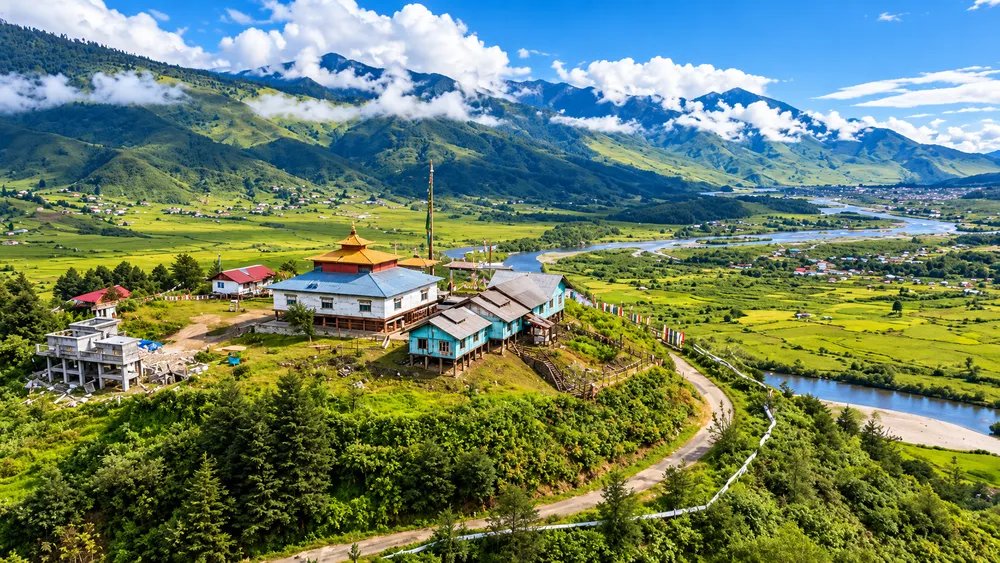
Dambuk is a tehsil in the Lower Dibang Valley district of Arunachal Pradesh, about 30 km west of the district headquarters, Roing. It sits in the state's far eastern reaches, close to the Assam border and the Dibang River, and for most travellers it's reached as part of a wider Eastern Arunachal circuit rather than as a stand-alone destination.
Dambuk's name is tied closely to oranges. Khasi Mandarin orange cultivation took hold here from the 1970s, and the valley's hillsides now carry large orange orchards that ripen through the winter months. That agricultural identity is also what built Dambuk's tourism profile: the Dambuk Orange Festival, a music-and-adventure event usually held in December, has drawn visitors here since 2015 and remains the single biggest reason outsiders plan a Dambuk trip.
Beyond the festival, Dambuk appeals to travellers who want mountains, a working river valley, and genuine road-trip terrain rather than a polished tourist circuit. Road access here only became reliable in the last decade, and that history still shapes how the place feels — remote, agricultural, and largely shaped by the Idu Mishmi communities who live across this part of the Dibang Valley.
Why Visit Dambuk?
Mountain and valley scenery. Dambuk sits in a river valley framed by the hills of Lower Dibang Valley district, with the kind of layered, forested terrain typical of Eastern Arunachal.
The Dibang River landscape. The river runs through the valley in braided channels, and the completion of a bridge across it gave Dambuk all-weather road access — before that, the subdivision was routinely cut off during monsoon.
Local and tribal culture. The area is home to the Idu Mishmi community, and travel here brings genuine contact with village life rather than a curated cultural show.
Orange orchards and agricultural surroundings. Hillsides given over to citrus cultivation are part of the everyday landscape here, not a staged attraction, and many farms allow visitors to walk through during harvest season.
A proper road-trip experience. Getting to Dambuk means hill roads, river crossings, and stretches with limited infrastructure. That's part of the draw for travellers who want the journey itself to be memorable, though it also means going in with realistic expectations about comfort and connectivity.
The Dambuk Orange Festival. Held in December, this four-day event of live music and adventure sports is the clearest tourism hook the region has, and it's covered in detail in the next section.
Where Is Dambuk?
Dambuk lies in the Lower Dibang Valley district of Arunachal Pradesh, roughly 30 km west of Roing, the district headquarters. Some local sources put the Dambuk–Roing road distance closer to 35 km, so treat the figure as approximate rather than exact.
The district itself sits in the state's easternmost stretch, bordering Assam to the south, and is one of the less populous districts in India — a marker of just how sparsely settled this part of Arunachal still is. Dambuk is roughly 268 km from Itanagar, the state capital, which underlines that this is a regional trip best planned around Eastern Arunachal rather than tackled as a detour from central or western parts of the state.
In practical terms, most visitors treat Roing as the base and gateway, with Dambuk itself as a shorter excursion or festival stop. Roing connects onward to other Lower Dibang Valley attractions and, further afield, to towns like Tezu and Pasighat, making it the natural hub for a longer Eastern Arunachal itinerary.
Orange Festival in Dambuk
The Dambuk Orange Festival, officially billed as the Orange Festival of Adventure and Music, began in 2015 and has grown into one of Northeast India's better-known offbeat festivals. It was created to spotlight the region's orange-growing economy, bring tourism to a district that had very limited outside visibility, and give the Idu Mishmi and other local communities a platform alongside touring musicians.
The festival typically runs over four days in December, though the exact dates move from year to year — past editions have been held in mid-to-late December, but Dambuk's 2026 dates have not been verified here and should be confirmed through official festival channels or Arunachal Pradesh tourism sources closer to the season.
What the festival is generally built around, based on past editions:
- Live music, with a lineup that has included indie, rock, alternative, folk and experimental acts, alongside artists from the Northeast.
- Adventure sports, which past editions have featured in some form — activities like ATV rides, white-water rafting, zip-lining and similar setups have been part of the programme historically, though the exact activity list changes year to year and should be checked against current organiser announcements.
- Orange orchard visits, since many local farms allow visitors to walk through during harvest season.
- Camping and open-air stays, given the festival zone sits within the valley rather than any built-up infrastructure.
- Food and local culture, including pop-up food stalls and interaction with Idu Mishmi village life.
If the festival is your main reason for visiting, build in flexibility. Road access, accommodation availability, and even the festival's confirmed dates can shift, and this is still a remote-area event rather than a fixed, large-venue festival with guaranteed year-round infrastructure.
Places to Visit in and Around Dambuk
Dambuk itself is a small tehsil, so most of the standout sights sit in the wider Roing and Lower Dibang Valley area, within a manageable drive.
Orange orchards, Dambuk — The valley's citrus farms are the area's most direct attraction outside festival season. Worth a visit if you're travelling in winter, when the fruit ripens; a couple of hours is enough for a walk through and conversation with local growers, where arranged respectfully.
Roing town — The district headquarters and the practical base for most trips to this region. Roing has more infrastructure than Dambuk and access to Nehru Van Udyan, a riverside park and garden at Deopani. Allow a half-day if you're using it purely as a stopover, longer if you want to explore the town itself.
Sally Lake — A small natural lake about 3 km from Roing, set against forest and offering valley views toward the Dibang River. A short, easy visit — an hour is generally enough.
Mehao Wildlife Sanctuary and Lake — Roughly 17 km from Roing, spread across a wide altitude range and home to species that can include wild duck, takin, hoolock gibbon and red panda, among others. A half-day at minimum if you want a proper walk around the lake and a chance at wildlife sightings, though sightings themselves aren't guaranteed.
Bhismaknagar Fort — About 30 km from Roing, this is one of Arunachal Pradesh's oldest archaeological sites, with fort ruins dating to around the 12th century CE, excavated in the early 1970s. It carries strong local legend, linked in Idu Mishmi oral tradition to the mythological king Bhishmaka. Plan for half a day including travel.
Mayudia Pass — Around 56 km from Roing, at an altitude of roughly 8,000 feet, reached via a winding stretch of hairpin bends locally called Baro Golai. Known for mist, dense forest and winter snowfall. This is a full-day excursion from Roing given the distance and road conditions, and it's best attempted only when the pass is confirmed open and weather is favourable.
Things to Do in Dambuk
- Sightseeing along the valley and riverbanks, taking in the Dibang River's braided channels and the surrounding hills.
- Village and community experiences, engaging respectfully with Idu Mishmi village life where locals are open to visitors — this works best through a local guide or homestay host who can make introductions appropriately.
- Nature walks and birdwatching, particularly around the wider Lower Dibang Valley, which carries dense forest cover and a wide range of altitude-linked habitats.
- Photography, from orange orchards in fruiting season to the river valley and surrounding hills — winter light tends to give the clearest, most photogenic conditions.
- Trying local food, including regional Arunachali and Idu Mishmi dishes where available, alongside the fresh oranges the area is known for.
- Festival experiences, if your visit lines up with the Dambuk Orange Festival — live music, orchard visits and camping under the given year's festival arrangements.
Best Time to Visit Dambuk
Winter (roughly November–February) is generally the best window. This is also orange harvest season, road conditions tend to be at their most reliable, and it coincides with the Dambuk Orange Festival when it's held. Expect cool temperatures, especially at night, and occasional cold snaps.
Spring (March–April) brings milder weather and greener surroundings as the monsoon builds, and it's a reasonable alternative if you want fewer crowds than festival season.
Summer (May–June) is warmer and more humid, with rising chances of rain as the season progresses.
Monsoon (roughly June–September) is the most difficult window. Heavy rain affects road conditions across Lower Dibang Valley, and parts of the region — including the Dambuk subdivision historically — have faced monsoon-season disruption even after the Dibang River bridge improved connectivity. Travel in this period only with flexible plans and a willingness to adjust or delay.
Festival season deserves its own note: December sees the biggest influx of outside visitors, which means more activity but also more pressure on the area's limited accommodation and road capacity. If you're going specifically for the Orange Festival, book transport and stays as early as you can once dates are confirmed.
How to Reach Dambuk
Dambuk has no airport or railway station of its own, so every route into it involves a final stretch by road.
Nearest airport: Dibrugarh Airport (Mohanbari) in Assam is the most practical air gateway, roughly 140–150 km from Roing, with onward road travel to Dambuk. Pasighat also has a smaller airport and can work as an alternate gateway on some Eastern Arunachal routes.
Nearest railway stations: Dibrugarh and Tinsukia in Assam are the closest stations with meaningful connectivity, both requiring a road journey onward into Arunachal Pradesh.
By road from Assam: Most travellers reach this region by driving in from Dibrugarh or Tinsukia, crossing into Arunachal Pradesh and continuing to Roing before the final stretch to Dambuk. Some routes also pass via the Dhola–Sadiya Bridge (also known as the Bhupen Hazarika Setu) across the Lohit river, depending on your exact starting point in Assam.
Private vehicle or taxi: This is the standard way to cover the Roing–Dambuk stretch and any onward sightseeing, since public transport in the district is limited. A local bus service between Dambuk and Roing has been introduced by the state transport service, run alongside private taxi operators, but frequency and current fares aren't something we can verify reliably here — check locally before relying on it for a tight schedule.
Permits: Indian citizens who aren't residents of Arunachal Pradesh need an Inner Line Permit (ILP) to enter the state, obtainable through the state's official e-ILP portal or designated checkpoints; foreign nationals require a Protected Area Permit (PAP). Permit rules and processes in Arunachal Pradesh have been under review and tightening in recent years, so confirm the current application process, required documents and any fees directly through official state channels shortly before you travel rather than relying on older guides.
How Many Days Are Enough?
1 day: Workable only as a short stop en route to or from Roing — enough for orchard visits or a look at the festival grounds, but not enough to properly cover the wider Lower Dibang Valley sights.
2 days: A reasonable minimum for Dambuk plus one or two nearby attractions such as Sally Lake or Bhismaknagar Fort, based out of Roing.
3 days: Enough to combine Dambuk with a fuller Roing-area circuit — Sally Lake, Mehao Wildlife Sanctuary, Bhismaknagar Fort, and, road conditions permitting, the longer excursion up to Mayudia Pass.
Suggested Dambuk Itinerary
Day 1 — Arrival and Roing Travel in from Dibrugarh or Tinsukia to Roing, settle in, and spend the afternoon at Nehru Van Udyan or Sally Lake, both close to town.
Day 2 — Dambuk Drive out to Dambuk for orange orchard visits (in season) and time along the Dibang River valley. If your visit coincides with the Orange Festival, this is the day to build around the festival programme. Return to Roing in the evening.
Day 3 — Mehao and Bhismaknagar, or Mayudia Choose between a half-day covering Mehao Wildlife Sanctuary and Bhismaknagar Fort, or a full-day excursion to Mayudia Pass if weather and road conditions allow. Head back toward Assam or continue further into Eastern Arunachal depending on your onward plans.
Where to Stay in Dambuk
Dambuk itself has limited lodging infrastructure outside the festival period, when temporary camping and eco-lodge-style arrangements are typically set up around the festival grounds. Outside festival dates, most travellers base themselves in Roing, which has a proper spread of hotels and guesthouses and functions as the practical hub for this part of Lower Dibang Valley.
Homestays in and around Dambuk do exist and are often the most authentic way to experience local Idu Mishmi hospitality, but specific names, pricing and current availability aren't something we can confirm here — arrange these through a known local operator, the district tourism office, or a trusted travel agency ahead of your trip rather than assuming walk-in availability, particularly during the Orange Festival window.
Practical Travel Tips
- Weather: Carry warm layers for winter nights, even though daytime temperatures can feel mild — hill valleys cool quickly after sunset.
- Road conditions: Roads into and around Dambuk can be affected by monsoon rain and landslides; check current conditions before setting out, and avoid this route during heavy monsoon if you can shift your dates.
- Permits: Arrange your Inner Line Permit (and PAP, if you're a foreign national) well before travel, and double-check the current application process, since rules in Arunachal Pradesh have been tightened and revised in recent years.
- Cash: ATM access is limited once you're off the main Roing corridor, so carry enough cash for the full trip.
- Connectivity: Mobile network coverage is patchy in and around Dambuk and thins out further on routes like Mayudia — don't rely on it for navigation.
- Clothing: Pack layers that work for cool mornings and evenings and warmer midday sun, plus rain protection regardless of season.
- Fuel: Fill up in Roing or Dibrugarh before heading toward Dambuk and beyond, since fuel stations thin out in the more remote stretches.
- Local etiquette: This is Idu Mishmi tribal land — ask before photographing people, villages or private property, and follow the lead of a local guide or host when visiting orchards or homes.
- Responsible tourism: Carry your waste out, especially around the Dibang riverbanks and festival grounds, and support local homestays, guides and orchard owners directly where you can.
Frequently Asked Questions
Where is Dambuk located? Dambuk is a tehsil in the Lower Dibang Valley district of Arunachal Pradesh, roughly 30 km west of Roing, the district headquarters.
What is Dambuk famous for? Dambuk is known for its orange orchards and for hosting the Dambuk Orange Festival, a music-and-adventure event held in December.
When is the Dambuk Orange Festival held? It's typically a four-day event held in December, though exact dates change year to year. Confirm 2026 dates through official Arunachal Pradesh tourism or festival channels before booking travel.
How do I reach Dambuk from Assam? By road via Dibrugarh or Tinsukia, continuing to Roing and then on to Dambuk. There's no direct airport or railway station at Dambuk itself.
What is the nearest airport to Dambuk? Dibrugarh Airport (Mohanbari) in Assam, roughly 140–150 km from Roing, is the most practical gateway; Pasighat's smaller airport is an alternate option on some routes.
Do I need a permit to visit Dambuk? Yes. Indian citizens who aren't Arunachal Pradesh residents need an Inner Line Permit, and foreign nationals need a Protected Area Permit. Check current requirements through official channels before travelling.
What is the best time to visit Dambuk? Winter, roughly November to February, offers the most reliable road conditions, cooler weather, orange harvest season, and usually coincides with the Orange Festival.
Can Dambuk be visited as a day trip? It's possible as a short stop if you're based in Roing, but a single day only really covers the orchards and a brief look around — it doesn't leave time for the wider Lower Dibang Valley attractions.
Is Dambuk connected by road year-round? A bridge over the Dibang River has brought all-weather road connectivity to the Dambuk subdivision, though heavy monsoon rain can still disrupt travel across the wider region, so it's worth checking current conditions before a monsoon-season trip.
What other places can I combine with a Dambuk visit? Roing, Sally Lake, Mehao Wildlife Sanctuary, Bhismaknagar Fort and Mayudia Pass are all within a manageable drive and commonly combined with Dambuk on a longer Eastern Arunachal itinerary.
Are there hotels in Dambuk itself? Lodging directly in Dambuk is limited outside the festival period. Most travellers stay in Roing and visit Dambuk as a day excursion, arranging homestays locally where available.
Conclusion
Dambuk works best as one stop within a longer Eastern Arunachal trip rather than a destination on its own — a place to see orange orchards, meet the Dibang Valley's landscape and Idu Mishmi communities firsthand, and, if your timing lines up, experience one of Northeast India's more distinctive festivals. Base yourself in Roing, build flexibility into your road plans, and confirm permits, festival dates and stay options through current, official sources before you commit to a schedule.