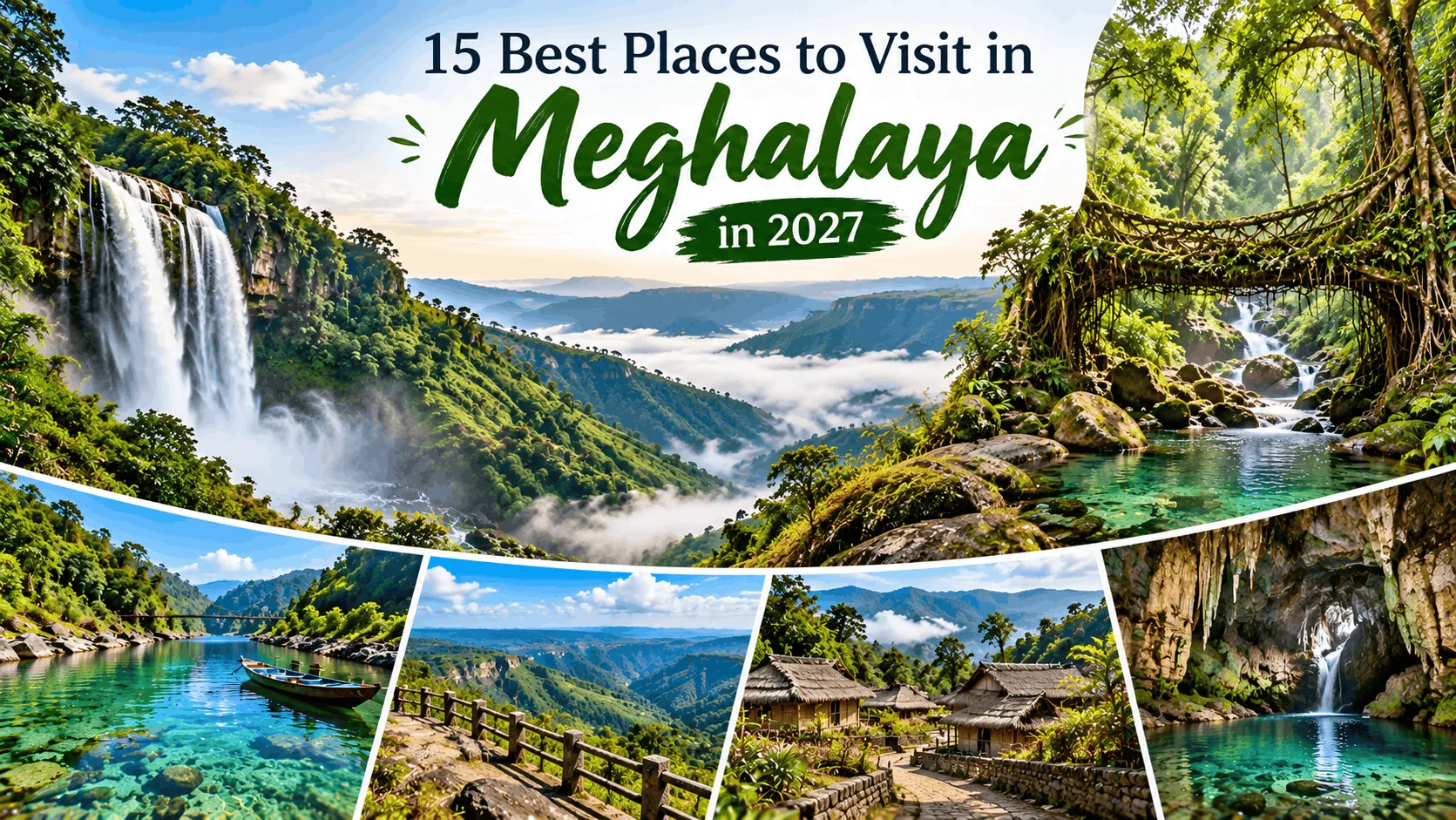
The best places to visit in Meghalaya include Shillong and nearby Umiam Lake, Laitlum and Mawphlang in the Khasi Hills, Sohra (Cherrapunji) and the living root bridges around Nongriat, rain-soaked Mawsynram, Mawlynnong village, the clear Umngot river at Dawki, the Jaintia Hills around Jowai with Krang Suri falls and the Nartiang monoliths, the caves of Shnongrim ridge, and the forests of the Garo Hills around Tura, Nokrek and Balpakram. Most first trips base themselves in Shillong and Sohra; the Jaintia and Garo Hills reward travellers with more time.
Meghalaya, often called the "abode of clouds", packs a lot into a small state: plateaus and gorges, some of the wettest places on Earth, root bridges grown by Khasi and Jaintia communities, and one of South Asia's longest cave systems. This guide gives you a broad overview of where to go. Conditions change with the seasons, so treat it as a starting point and check current access before you travel. For permits, culture and wider planning, see our Meghalaya travel guide.
How Meghalaya is organised for travellers
Meghalaya is divided broadly into three hill regions, each with its own communities and character:
- Khasi Hills: Shillong, Sohra, Mawsynram, Mawlynnong, Laitlum and Mawphlang. This is where most first-time visitors spend their time.
- Jaintia Hills: Jowai, Dawki and the Umngot river, Krang Suri, Nartiang and the caves of Shnongrim ridge.
- Garo Hills: Tura, Nokrek, Balpakram and Siju, in the west of the state. Further from Shillong and less visited.
Distances and drive times vary with road conditions and season, so confirm them with your driver or operator rather than relying on map estimates.

Khasi Hills
1. Shillong
Why visit: Meghalaya's capital is the natural base for most trips. Meghalaya Tourism describes it as a city founded in the 19th century under British rule, now known for its music scene, cafés and heritage walks.
Key attractions:
- Heritage walks around the older parts of the city
- Shillong Peak for views over the city, where open
- Markets, cafés and live music
Suggested time: 1 to 2 days, plus use it as a base.
Practical notes: Traffic can be heavy, so allow extra time for day trips out of the city.
2. Umiam Lake (Barapani)
Why visit: A large reservoir that Meghalaya Tourism describes as a gateway to Shillong, with calm waters suited to picnics and boating.
Suggested time: A half-day, or a stop on the way between Guwahati and Shillong.
Practical notes: Confirm boating availability and safety equipment locally.
3. Laitlum Canyons
Why visit: Sweeping views over ridges and gorges, especially when light falls into the valleys below.
Suggested time: A half-day from Shillong.
Practical notes: Views depend heavily on cloud. Clear mornings give the best chance; edges are steep, so stay back from drops.
4. Mawphlang Sacred Grove
Why visit: A forest preserved by the Khasi community for centuries and considered sacred. According to Meghalaya Tourism, cutting trees there is forbidden.
Suggested time: A half-day, ideally with a local guide.
Practical notes: Follow guide instructions, do not remove anything from the grove, and treat it as a sacred site rather than a park.
5. Sohra (Cherrapunji)
Why visit: Sohra is known for its waterfalls, such as Nohkalikai, its caves and the root bridge trails below it. Meghalaya Tourism also notes its citrus, which has earned it the name "Land of Oranges".
Highlights in brief:
- Waterfalls including Nohkalikai and Seven Sisters (Nohsngithiang)
- Mawsmai Cave
- Viewpoints over the plains of Bangladesh on clear days
- Trails down to the living root bridges
Suggested time: 1 to 2 nights, more if you plan to hike to Nongriat.
For detailed attractions, distances and itineraries, see our full Cherrapunji travel guide.
6. Nongriat and the living root bridges
Why visit: Living root bridges, grown over many years by guiding the roots of trees across streams, are among Meghalaya's best-known sights. The Double Decker bridge at Nongriat is the most famous.
What to expect: Meghalaya Tourism describes the walk as about 3 kilometres down a series of around 3,500 stone steps, with Rainbow Falls a further hour beyond. Remember you have to climb back up.
Suggested time: A full day, or an overnight stay in Nongriat to avoid rushing.
Practical notes: The steps are steep and can be slippery in rain. Wear grippy shoes, carry water and start early. Bridges are living structures in community care; follow local rules on access and swimming.

7. Mawsynram
Why visit: Mawsynram is widely cited as one of the wettest places on Earth. Meghalaya Tourism promotes it as such and gives annual rainfall of nearly 12,000 mm. The area also has caves, rock formations and waterfalls.
Suggested time: A day trip from Shillong.
Practical notes: Visibility can be poor in heavy rain; check road conditions in monsoon.
8. Mawlynnong
Why visit: This village is known for an award from Discover India magazine in 2003 that described it as the "cleanest village in Asia", according to Meghalaya Tourism, which gives its distance as about 72 km from Shillong. Village stays are promoted, and a living root bridge is nearby.
Suggested time: A half-day to a full day; stay overnight if you want a quieter experience.
Practical notes: Mawlynnong is a living village, not a showpiece. Respect homes and gardens, ask before photographing people, and use bins.
Jaintia Hills
9. Dawki and the Umngot river
Why visit: The Umngot river near Dawki is famous for its clear water, especially in the drier months. Meghalaya Tourism promotes Dawki-Umngot as "Asia's Cleanest River". Dawki lies near the India–Bangladesh border.
What to do: Boat rides on the river, riverside walks, and nearby villages such as Shnongpdeng.
Suggested time: A long day trip from Shillong, or an overnight stay near the river.
Practical notes: Water clarity depends on the season and recent rain; in the monsoon the river is often muddy and boating may be restricted. Do not approach the border without authorisation.
10. Jowai
Why visit: The main town of the Jaintia Hills and a base for exploring waterfalls, monoliths and caves in the region.
Suggested time: A night or two as a base.
Practical notes: Accommodation choice is smaller than in Shillong; book ahead.
11. Krang Suri Falls
Why visit: Krang Suri (spelled Krangshuri by Meghalaya Tourism) is listed among the state's waterfalls and is known for its blue pools.
Suggested time: A half-day, often combined with Jowai.
Practical notes: Paths and steps can be slippery. Check whether swimming is permitted and follow local guidance on water levels, especially after rain.
12. Nartiang Monoliths
Why visit: Nartiang is known for its cluster of standing stones, listed by Meghalaya Tourism as a heritage site of the Jaintia Hills.
Suggested time: 1 to 2 hours.
Practical notes: These are heritage stones with cultural significance; do not climb on them.
13. Shnongrim ridge and Krem Liat Prah
Why visit: East Jaintia Hills is home to Krem Liat Prah, described as the longest natural cave in South Asia at about 34 km and still being explored.
Suggested time: Depends entirely on the caving arrangements you can make.
Practical notes: Cave exploration requires specialist guides and equipment. Do not enter caves without an experienced, locally arranged guide, and check access and safety in advance.
Garo Hills
14. Tura and Nokrek
Why visit: Tura is the main town of the Garo Hills, and Tura Peak is listed among its attractions. Nokrek National Park, part of the Nokrek Biosphere Reserve, is associated with endangered hoolock gibbons.
Suggested time: 2 to 3 days including travel; the Garo Hills are far from Shillong.
Practical notes: Visitor facilities are more limited than in the Khasi Hills. Arrange park visits through the forest department or a local operator.
15. Balpakram National Park and Siju
Why visit: Balpakram National Park and the Siju area, with Siju Caves and Siju Bird Sanctuary, are listed by Meghalaya Tourism among the Garo Hills' attractions.
Suggested time: Add 1 to 2 days to a Garo Hills trip.
Practical notes: Access, permissions and guides should be confirmed in advance. Roads can be slow, particularly in the monsoon.
Best time to visit Meghalaya
- October to April (roughly): generally drier, with clearer views, better trekking conditions and clearer water at Dawki. Meghalaya Tourism notes winter is a busy season, so book accommodation early.
- Monsoon (roughly June to September): waterfalls are at their fullest and landscapes intensely green, but heavy rain brings slippery trails, poor visibility and possible landslides. Meghalaya Tourism advises checking forecasts and landslide warnings.
Conditions vary from year to year and place to place, so check forecasts and local advice before each day out.
Getting there and getting around
- By air: Shillong has an airport, but many travellers fly into Guwahati in Assam and continue by road. Check current flights on airline websites.
- By road: Shillong is connected to Guwahati by road. Most sightseeing in Meghalaya is done by road.
- Getting around: A hired car with a driver is the most flexible way to combine several places. Shared vehicles run between main towns but are less convenient for sightseeing.
- Permits and registration: Indian visitors do not need an Inner Line Permit for Meghalaya, but visitor registration requirements have applied at times. Check current rules on official Meghalaya government channels before travelling.
Where to stay
- Shillong: the widest choice, and a practical base for day trips to Umiam, Laitlum, Mawphlang and Mawsynram.
- Sohra: for waterfalls and an early start to Nongriat.
- Nongriat: simple stays for those hiking to the root bridges.
- Mawlynnong and Dawki area: village stays and riverside camps for a quieter night.
- Jowai: for the Jaintia Hills.
- Tura: for the Garo Hills.
Facilities vary, especially in villages. Confirm amenities directly before booking.
Budget considerations
We have not listed prices, as they change with season and demand. The main factors are:
- Private vehicle hire: often the largest cost, but shared across a group.
- Peak season: winter and holiday periods tend to cost more and book out.
- Entry fees and parking: many sites charge small fees; carry cash.
- Guides: worthwhile for root bridges, caves and sacred groves.
If you prefer a planned route, our Meghalaya Explorer tour (Shillong, Dawki and Cherrapunjee) covers several of the highlights above.
Responsible travel in Meghalaya
- Respect sacred sites such as Mawphlang; follow guide instructions and remove nothing.
- Treat villages as homes. Ask before photographing people or entering private spaces.
- Carry your rubbish out, especially on trails to the root bridges.
- Stay on paths and do not damage living root bridges.
- Use local guides for caves, forests and sacred groves.
- Follow local rules on swimming, boating and photography.
Sample route ideas
- 3 to 4 days: Shillong, with day trips to Laitlum and Mawphlang, then Sohra.
- 5 to 6 days: add Nongriat overnight and a day for Mawlynnong and Dawki.
- 7 days or more: add Jowai, Krang Suri and Nartiang, or a separate trip to the Garo Hills.
For combining Meghalaya with Assam and other states, see our Northeast India travel guide.
Conclusion
Meghalaya rewards travellers who slow down. Shillong and Sohra make an easy introduction, the root bridges and Dawki add memorable days, and the Jaintia and Garo Hills open up quieter landscapes for those with more time. Check the season, confirm access before each outing, and leave room in your plans for rain and clouds, which are, after all, what the state is named for.