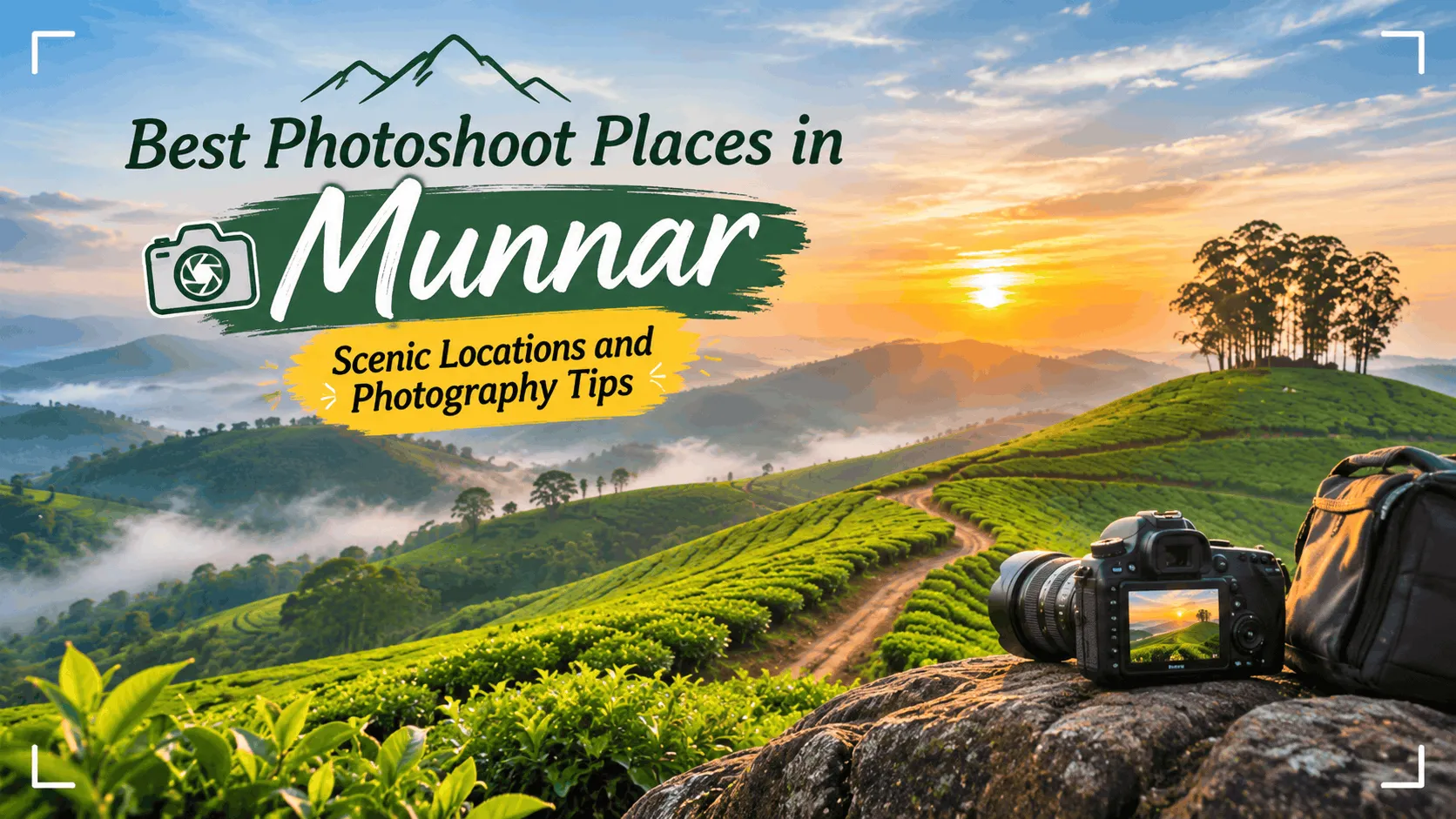
Munnar sits high in the Western Ghats of Kerala, and the terrain does most of the work for a photographer. Tea estates roll over the hills in neat, curving rows. Mist settles into the valleys. Ridge lines stack up behind each other until they fade into haze. Whether you are shooting a couple's session, a family trip or a content reel, you rarely need to go far to find a frame.
The challenge is choosing where to spend your limited light. Munnar's best photoshoot places are spread along a few different roads, and each one suits a different kind of picture. This guide covers the main munnar photoshoot places, what each one is good for, when to go and how to behave once you are there. If you are still planning the wider trip, our Munnar Travel Guide covers routes, seasons and where to stay.

Best photoshoot places in Munnar
Tea plantation landscapes
Tea gardens are the reason most people come to Munnar with a camera, and they photograph well in almost any weather. The repeating rows create natural leading lines, and the bright green stands out against both blue sky and grey mist. Look for stretches where the road or a footpath cuts across the slope, because a path or a person gives the eye somewhere to land.
These are working estates, so treat them that way. Roadside stretches are easy to shoot from the verge. If you want to step between the rows for portraits, ask a local guide or the estate staff first, and keep clear of the bushes themselves. Never pluck leaves or trample plants for a better angle.
Best time: early morning for mist and soft light, or the last hour before sunset for warm tones across the rows.
Photo Point and Echo Point
Photo Point is a roadside stop known for its views over tea gardens, and its name tells you how people use it. It is easy, fast and suited to quick family shots or a simple travel portrait with plantations behind you. Because it sits along the Mattupetty route, it fits naturally into a day of driving.
Echo Point is a few kilometres further along the Top Station road, around 15 km from Munnar town, and sits beside a lake with hills and tea around it. It is better for layered landscapes and atmospheric hill shots than for tight portraits. One local guide to the area suggests late afternoon gives the best light here. If you want to compare both stops before you go, our post on Photo Point and Echo Point goes into more detail.
Best time: late afternoon for Echo Point, and mid-morning to afternoon for Photo Point when the view is clear.
Top Station
Top Station is the highest accessible viewpoint in the Munnar area, at roughly 1,700 metres, about 32 km from Munnar town on the Munnar to Kodaikanal road at the Kerala and Tamil Nadu border. From here you look across the Western Ghats and down toward the valley on the Tamil Nadu side. The drive from town takes about an hour and a half, so plan to leave early.
This is the place for sunrise and for cloud photography. Local sources suggest arriving before 9:00 AM if you want to catch the low clouds that drift across the viewpoint. After that the view can flatten out, and on cloudy or foggy mornings you may see very little, so keep your expectations flexible. Our guide to Top Station covers the approach road and what to expect on arrival.
Best time: sunrise through about 9:00 AM, on a day with a clear forecast.
Pothamedu View Point
Pothamedu View Point is close to town, roughly 3 to 5 km depending on the route you take, and looks across the Kannan Devan Hills with tea plantations as well as coffee and cardamom estates in the mix. That variety gives you more texture than a view of tea alone. On a clear day, travellers report glimpses of the Muthirapuzha River and even the Idukki Arch Dam in the distance.
Because it is so near the town, Pothamedu is the easiest sunrise or sunset location to fit around a hotel stay. It suits couples and families who want golden light without a long drive. Our write-up on Pothamedu View Point explains how to get there and what to look for.
Best time: sunrise or sunset, when the hills pick up warm colour and the haze softens the distance.
Lakes and dams
Mattupetty Dam and its lake, along with Kundala Lake, sit along the same sightseeing corridor as Photo Point, Echo Point and Top Station. Water changes the mood of a Munnar frame. Calm surfaces reflect the hills in the early morning, and boats add colour and scale for travel photography. These stops are often busy at midday, so go early or late if you want clean backgrounds without crowds.
Best time: morning for still water and fewer people.
Gardens and flower spots
Munnar also has garden settings that work well when the hills are shrouded in cloud and wide landscapes will not deliver. The Forest Rose Garden, which many day tours include as an early stop, offers colour and greenery at close range. This is a good fallback for portraits and family pictures when visibility is poor, because flowers and foliage carry a photograph even without a distant view.
Best time: soft morning light, or overcast conditions, which flatter flowers and skin tones evenly.
Lockhart Gap and other roadside viewpoints
Lockhart Gap lies on the Munnar to Madurai road, which is also the route toward Thekkady, and is named for a gap between two mountains that some visitors see as heart shaped. It makes a useful stop if your day includes that road. Roadside viewpoints in the region are also worth a pause, but pull over safely and never stand in the carriageway for a photo.
Best time: clear mornings, when the gap and the slopes around it are visible.
Eravikulam National Park
Eravikulam is a protected area, and entry, access zones and camera rules are set by the forest authorities. I have not listed fees, hours or photography restrictions here because they can change, so check with the park's official counter or a local guide before you plan a shoot there. Treat wildlife with distance and keep to marked areas.

The best time of day for each kind of photograph
Light does more for a Munnar photo than any camera setting.
Sunrise is the best slot for mist, clouds and layered ridges. Top Station and Pothamedu both suit it, though Top Station needs a very early start. Mornings also give you cleaner backgrounds, because tour groups arrive later.
Mid-morning light is still gentle and works for water reflections at the lakes and for garden portraits.
Midday is the weakest time. The sun is high, shadows are hard, and the hills can look flat. Use this window for lunch, a tea factory visit or a drive between locations.
Late afternoon and sunset bring warm tones across the tea rows. Echo Point and Pothamedu both reward you here, and golden light is flattering for couple and family portraits.
Remember that Munnar's weather shifts fast. A clear start can become fog within an hour. Build a little flexibility into your plan and keep a garden or a sheltered spot in reserve.
Photography tips for different shoots
Landscape photography
Look for layers. Place a foreground element such as a path, a tree or a person in front of the ridges, then let the mid ground and the distant hills build depth. Shoot slightly underexposed in bright conditions to hold detail in the sky, and use a wide lens for sweeping tea slopes. A polarising filter helps with glare and deepens the greens, and a tripod is useful for pre-dawn light.
Portrait photography
Soft, even light flatters faces. Overcast conditions and early morning are better than noon sun. Stand your subject away from the background so the plantation blurs gently behind them, and use a short telephoto or the portrait mode on your phone. Choose clothing that contrasts with green. Warm shades such as mustard, rust, maroon or white stand out against tea slopes, while green outfits disappear.
Couple photoshoots
Couples do well at Pothamedu and on quiet roadside tea stretches at sunrise or sunset. Natural, unposed moments often look better than rigid poses, so walk together, laugh and let the photographer capture movement. Flowing fabrics catch Munnar's breeze nicely. Arrive early on weekends and holidays so you have space to work.
Family photography
Keep sessions short and flexible with children. Garden spots and open viewpoints work best because there is room to move. Shoot candid frames while kids explore, and save the formal group picture for a moment when everyone is comfortable. Safe distance from steep drops and road edges matters more than the perfect angle.
Travel and content creation
Mix wide scene setters with close details such as tea leaves, a steaming glass of tea or a hand on a railing. Shoot vertical and horizontal versions of key views if you plan to publish to more than one platform. Record ambient sound at lakes and tea stalls to add texture to video.
Weather, clothing and equipment
Munnar is cool at altitude, and mornings can be chilly even on a bright day, so carry a light jacket or layers. Monsoon months, roughly June to August, bring heavy rain, and travel advisories about landslides have been issued during particularly wet spells. The hills are very green then, but road conditions and visibility can be difficult, so check the forecast and local advisories before heading to high viewpoints.
Pack a rain cover or a plastic bag for your camera, a microfibre cloth for lens fog and a spare battery, since cold and long drives drain power faster. Wear shoes with good grip for wet slopes. A lightweight tripod, a wide lens and a short telephoto cover most situations, and a smartphone with a clean lens is enough for many travellers.
Permissions, restrictions and responsible behaviour
Photography rules differ by location. Reserved forests, national park areas and some private estates may have their own regulations on cameras, tripods and entry, and these can change. Ask on arrival, follow signage and listen to local staff.
Drones are regulated in India. Do not fly one without checking the current rules and getting any required permission. If you plan a commercial or professional shoot, confirm requirements with local authorities or the property owner in advance.
Keep your impact low. Stay on paths, take your waste with you and never pick plants or flowers. Respect people who live and work here, and ask before photographing workers, local residents or their homes. Park only where it is safe and legal, and avoid blocking narrow hill roads.
One-day photography itinerary for Munnar
This route follows the Mattupetty and Top Station corridor and finishes near town. Timings are approximate and depend on weather and traffic.
- Early morning, Top Station. Leave town in the dark so you arrive for sunrise and morning cloud. Allow time to walk around and shoot different angles.
- Mid-morning, Kundala Lake. Stop on the way back for reflections and boats before crowds build.
- Late morning, Echo Point. Shoot the lake and layered hills. If you want better light here, swap this stop with a later slot in your day.
- Midday, Mattupetty Dam and Photo Point. Use the harsh light for sightseeing and quick family pictures rather than serious portraits.
- Lunch break. Rest, charge batteries and review your images.
- Afternoon, tea estate walk or Forest Rose Garden. Do portraits and detail shots in softer afternoon light, and always ask before entering estate land.
- Sunset, Pothamedu View Point. Finish with warm light over the hills, close to town.
Frequently asked questions
What are the best munnar photoshoot places for couples?
Pothamedu View Point and quiet tea garden stretches at sunrise or sunset are popular choices. Top Station suits couples who are happy to start very early for clouds and big views.
What is the best time of day for a photoshoot in Munnar?
Early morning and the last hour before sunset give the softest, warmest light. Midday is usually the weakest time for scenic pictures.
Do I need permission to take photographs in Munnar?
Many roadside viewpoints are open to visitors, but rules vary for protected areas, private estates and professional shoots. Check on arrival and confirm in advance for commercial work.
Can I use a drone in Munnar?
Drone use is regulated in India. Check the current rules and get any required permission before flying, and do not fly near wildlife, crowds or restricted areas.
What should I wear for a Munnar photoshoot?
Layers for cool mornings, shoes with grip and clothing in colours that stand out from green, such as white, mustard, rust or maroon.
Which month is best for photography in Munnar?
It depends on what you want. The monsoon (roughly June to August) gives intensely green hills but heavy rain and travel risks. Check seasonal conditions and the forecast before you book.
Can I do a photoshoot in one day?
Yes. Focus on one corridor, start at sunrise and finish at sunset, as in the itinerary above.
Conclusion
Munnar rewards photographers who plan around light. Top Station and Pothamedu deliver sunrise drama, Echo Point and the lakes add layered hills and water, and the tea estates give every portrait a green backdrop. Check access rules, respect the land and the people who work on it, and leave room for the weather to change. With a sensible schedule and a flexible mindset, you can come home with frames that show Munnar at its best.