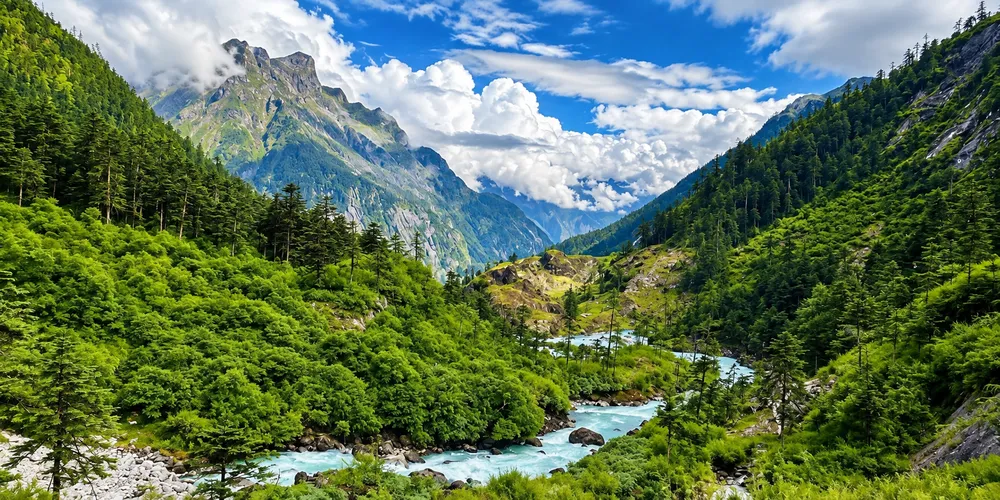
Anini is the headquarters of Dibang Valley district in Arunachal Pradesh and one of India's most remote and sparsely populated district headquarters. Getting there takes planning: a long mountain road from Roing, a high pass that can get snow in winter and a landscape where road conditions decide your schedule more than any itinerary. For travellers who want space, mountains and a genuine sense of distance from mainstream tourism, Anini is deeply rewarding.
This guide explains how to reach Anini, the best time to go, permit requirements, what to expect from homestays and how to travel responsibly in Idu Mishmi country.
What Makes Anini Special?
Quick answer: Anini is special because of its remoteness, its high mountain landscapes in Dibang Valley, its Idu Mishmi cultural context and the near-total absence of commercial tourism.
Dibang Valley. Dibang Valley district covers a large area of high mountains and forests along India's northeastern frontier. According to the 2011 Census, it was the least populated district in India, with a population density of roughly one person per square kilometre.
Remoteness. Anini is reached by a single long road from Roing. There is no quick way in, and weather or landslides can close the road for hours or days.
Landscape. Deep river valleys, steep forested slopes, high ridges and, in winter, snow on the surrounding peaks. The drive itself is part of the experience.
Limited infrastructure. Accommodation is simple, shops are few and fuel, cash and network access are limited. This is part of the appeal and also the main planning challenge.
Why travellers choose Anini. Experienced travellers come for quiet mountain landscapes, a slower rhythm of life and the chance to spend time in a region with very little tourist infrastructure.
Where Is Anini?
Anini lies in the far north of Dibang Valley district, near India's international border. Its geographical context:
- Dibrugarh (Assam): The main air and rail gateway for the region.
- Roing: Headquarters of Lower Dibang Valley district and the last significant town before the climb to Anini.
- Lower Dibang Valley: The district you pass through first, including Roing and the Mayudia area.
- Dibang Valley: The upper district where Anini is located.
The journey typically runs Dibrugarh → Roing → Mayudia → Hunli → Anini.
[INTERNAL LINK: Roing and Mayudia travel guide]
Anini and Idu Mishmi Culture
The Idu Mishmi are the main indigenous community of Dibang Valley and Lower Dibang Valley. Their relationship with the land, forests and rivers is central to their cultural identity.
- Traditional culture: Idu Mishmi belief traditions include ritual specialists, often referred to as igu, who perform ceremonies at important moments of community and family life.
- Weaving: Idu Mishmi textiles are woven on traditional looms and often feature distinctive geometric patterns.
- Dress: Traditional attire is worn at festivals and important occasions. In everyday life, most people wear contemporary clothing.
- Festivals: Reh is the most prominent Idu Mishmi festival, celebrated in early February. It involves rituals, community gatherings and cultural events. Confirm dates and whether public programmes are open to visitors before planning around it.
- Local life: Farming, government work, small businesses and community responsibilities shape daily life. Many families maintain close links between towns and villages.
Approach Idu Mishmi culture with curiosity and respect. Ask questions, listen, and follow the guidance of your hosts.
Things to Do in and Around Anini
Anini is not an attraction-checklist destination. Its value lies in landscape, people and time.
- Take in the landscape: Walk around town and nearby roads for views of valleys, rivers and mountain ridges.
- Village experiences: With a local guide or host, visit nearby villages to understand everyday life. Always go with an introduction rather than walking in unannounced.
- Local culture: Visit during a festival period if permitted, or spend time with your homestay family learning about local food and traditions.
- Photography: Mountain light, river valleys and winter snow on the peaks. Always ask before photographing people.
- Nature: Forests in the Dibang region are rich in biodiversity. Dibang Wildlife Sanctuary covers a large part of the district; check access rules with the forest department.
- Nearby exploration: On the way, Mayudia pass and the Mehao area near Roing are worth stopping at.
Anini Homestays & Accommodation
What to expect:
- A small number of homestays, guesthouses and government accommodation options.
- Simple rooms, shared or basic bathrooms and home-cooked meals.
- Hot water, heating and electricity may be limited or intermittent.
- Few options overall, so book ahead and confirm by phone before setting out.
Tips:
- Carry a warm sleeping layer or liner, especially in winter.
- Confirm meal arrangements, as there are few restaurants.
- Carry cash for payment.
How to Reach Anini
Step 1: Reach Dibrugarh
- By air: Dibrugarh (Mohanbari) Airport has flights from major Indian cities. Check current routes.
- By rail: Dibrugarh is well connected by train with Guwahati and other cities.
- Some travellers also check regional flights to Tezu or Pasighat, but availability varies and should be verified.
Step 2: Dibrugarh to Roing
- Approximate distance: 150 to 170 km.
- Approximate time: 4 to 5 hours.
- The route goes via Tinsukia and the Dhola-Sadiya (Bhupen Hazarika) Bridge.
- Roing is where most travellers overnight.
Step 3: Roing to Anini
- Approximate distance: 230 to 250 km.
- Approximate time: 8 to 10 hours or more.
- The road climbs over Mayudia and continues through Hunli to Anini.
Why Roing is the ideal stopover
- Breaks a very long journey into two manageable days.
- Lets you start early for Anini.
- Last reliable stop for fuel, cash and supplies.
Approximate road conditions
Much of the route is mountainous. Expect sharp bends, steep sections, possible roadwork and landslide-prone stretches. The Mayudia section can see snow and ice in winter.
Why keep buffer days
- Landslides can block the road, especially from May to September.
- Snow at Mayudia can halt traffic in winter.
- Vehicle breakdowns in remote stretches take time to resolve.
Plan at least one to two buffer days in any Anini itinerary.
Anini to Roing Distance & Travel Time
Quick answer: The Anini to Roing distance is approximately 230 to 250 km. The drive usually takes 8 to 10 hours or more, depending on weather and road conditions.
Why road time is longer than distance suggests:
- Winding mountain roads with low average speeds.
- Ongoing construction and repair sections.
- Landslides and debris clearing.
- Snow and ice near Mayudia in winter.
- Limited daylight in winter months.
Always leave early, avoid driving after dark and check the road status locally before departure.
Best Time to Visit Anini
| Months | Weather | Road Reliability | Travel Notes |
| October to November | Clear, cool | Generally good | Best overall window; clear views |
| December to February | Cold; snow possible | Variable; Mayudia may close | Snow landscapes; pack serious warm gear |
| March to May | Mild, warming | Mostly good; showers increase | Greenery; pre-monsoon rain |
| June to September | Heavy monsoon rain | Poor; frequent landslides | Not recommended |
October to November: Stable weather, clear mountain views and generally reliable roads.
December to February: Cold, with snow likely at higher points. Beautiful, but road closures are possible. Reh festival falls in early February.
March to May: Pleasant and green, with more rain as May approaches.
Monsoon: The most difficult period. Landslides frequently block the route.
Inner Line Permit for Anini
- Indian citizens need an Inner Line Permit (ILP) for Arunachal Pradesh. It can be applied for online through the official Arunachal Pradesh portal. Ensure the permit covers Dibang Valley district.
- Foreign nationals require a Protected Area Permit (PAP). Rules for border districts can be specific, so check the current requirements for Dibang Valley.
- Carry printed and digital copies of your permit and ID.
Permit rules, covered districts and fees can change. Verify with official Arunachal Pradesh government sources before travel.
What to Pack for Anini
Anini Travel Essentials
| Category | What to Carry |
| Clothing | Thermals, fleece, down jacket, warm cap, gloves, woollen socks |
| Footwear | Waterproof trekking shoes, comfortable sandals |
| Medicines | Personal medicines, motion sickness tablets, basic first aid, ORS |
| Documents | ILP/PAP (printed + digital), photo ID, copies |
| Power | Power banks, spare batteries, charging cables |
| Navigation | Offline maps downloaded in advance |
| Rain protection | Rain jacket, waterproof bag covers |
| Food and water | Dry snacks, refillable bottle, water purification tablets |
| Cash | Enough for the full trip; ATMs may be limited |
| Other | Torch/headlamp, sunscreen, sunglasses, lip balm |
Mobile Network & Internet in Anini
- Expect limited mobile coverage in Anini and long stretches with no signal on the road.
- Mobile data may be slow or unavailable.
- Inform family of your plans before leaving Roing.
- Download offline maps and keep important documents stored offline.
Coverage changes over time, so ask locally in Roing about current connectivity.
Is Anini Suitable for First-Time Arunachal Travellers?
It depends on the traveller.
Anini may suit you if:
- You are comfortable with long mountain drives.
- You can handle basic accommodation and limited connectivity.
- You are flexible about schedules.
It may not be ideal if:
- You have limited time and no buffer days.
- You need reliable comfort, connectivity or medical access.
- You are prone to severe motion sickness.
First-time Arunachal travellers can visit Anini successfully with good planning and a local operator. Others may prefer to start with Ziro or Tawang and come back later.
Suggested 3-Day Anini Itinerary
This assumes you are starting from Roing.
Day 1: Roing to Anini
- Early start. Stop at Mayudia for views.
- Continue through Hunli. Reach Anini by evening.
Day 2: Anini
- Walk around town and nearby viewpoints.
- Village visit with a local guide.
- Evening with your homestay hosts.
Day 3: Anini to Roing
- Early departure back to Roing.
Suggested 5-Day Dibang Valley & Anini Itinerary
Day 1: Arrive in Dibrugarh; drive to Roing.
Day 2: Roing to Anini via Mayudia and Hunli.
Day 3: Explore Anini and surroundings.
Day 4: Buffer day or deeper exploration near Anini.
Day 5: Return to Roing; visit the Mehao area if time allows.
Add a further day for the return to Dibrugarh.
Responsible Travel in Dibang Valley
- Cultural respect: Ask before entering homes or sacred spaces, and follow the guidance of hosts.
- Photography: Always ask before photographing people, rituals or homes.
- Local businesses: Stay in local homestays, hire local drivers and guides and buy local products.
- Environment: Carry your waste out. Avoid plastic.
- Wildlife: Do not buy wildlife products. Follow forest department rules.
Frequently Asked Questions
Where is Anini? In Dibang Valley district, Arunachal Pradesh, reached by road from Roing.
How do I reach Anini? Fly or take a train to Dibrugarh, drive to Roing, then continue by road to Anini.
How far is Anini from Roing? Approximately 230 to 250 km, usually 8 to 10 hours or more.
How far is Dibrugarh from Roing? Approximately 150 to 170 km, about 4 to 5 hours.
Do I need a permit for Anini? Yes. Indians need an ILP and foreigners a PAP. Verify current rules.
What is the best time to visit Anini? October to November is generally the best.
Are there homestays in Anini? Yes, a limited number. Book ahead and confirm by phone.
Is there mobile network in Anini? Limited, and there are long stretches without signal on the road.
Is Anini the remotest place in India? It is among India's most remote district headquarters, in the least populated district per the 2011 Census.
How many days do I need for Anini? At least 3 days from Roing, plus buffer days.
Can I see snow in Anini? Snow is possible in winter, especially on higher ground and near Mayudia.
Conclusion
Anini asks for patience: a long road, basic facilities and a willingness to let weather set the pace. In return you get wide mountain views, a quiet town at the edge of India and time with the communities of Dibang Valley.
Plan with realistic buffers, secure your permit early and travel lightly on the land. If you would like help planning the Dibrugarh to Roing to Anini route, Tribal Discovery Tour can help you build a safe and realistic itinerary.